
Executive Overview
In the modern quest to eliminate added sugars from our diets, artificial sweeteners have emerged as the ubiquitous companion of health-conscious consumers. Among them, sucralose—widely recognized by its flagship brand name, Splenda—stands as one of the most frequently consumed non-nutritive sweeteners (NNS) on the planet. Found in everything from diet beverages and protein powders to sugar-free baked goods and condiments, sucralose promises the pure, unadulterated taste of sugar without a single calorie.
However, as society leans further into low-sugar lifestyles, public scrutiny has intensified. A wave of viral social media claims, coupled with a steady stream of emerging clinical investigations, has sparked a persistent, high-stakes question across search engines and health forums alike: Is sucralose actually bad for you?
To answer this comprehensively, one must separate sensationalized internet myths from rigorous scientific evidence. Regulatory bodies like the U.S. Food and Drug Administration (FDA) and the European Food Safety Authority (EFSA) have consistently deemed sucralose safe within established limits. Yet, modern landmark studies are beginning to paint a more complex picture, suggesting that high-intensity sweeteners may subtly influence the gut microbiome, alter glycemic responses, and complicate metabolic health in ways researchers are only just beginning to understand.

This deep-dive investigation explores the chemistry of sucralose, unpacks the latest clinical research regarding gut bacteria and blood sugar, evaluates the critical difference between pure sucralose and commercial tabletop blends, and offers a practical guide on how to navigate alternative sweeteners to best suit your personal health goals.
Detailed Chronology: The Evolution of Sucralose and Its Regulatory Journey
Understanding how sucralose became a cornerstone of the modern food supply requires examining its journey from a laboratory accident to a global dietary staple.
- 1976 (The Accidental Discovery): Sucralose was discovered somewhat serendipitously during collaborative research between Tate & Lyle and Queen Elizabeth College scientists. Researchers were investigating novel chlorinated derivatives of sucrose for use as chemical intermediates. A researcher misheard an instruction to "test" a compound as a directive to "taste" it, discovering that the modified sugar molecule possessed an intensely sweet flavor profile without the accompanying caloric payload.
- 1991 (Initial Regulatory Approvals): Following extensive toxicological evaluations, Canada became the first country to approve sucralose for human consumption. This kicked off a cascade of global safety reviews involving hundreds of animal and human clinical trials.
- 1998 (FDA Approval): The U.S. Food and Drug Administration officially approved sucralose as a general-purpose sweetener for food and beverages. Shortly thereafter, it hit supermarket shelves in the iconic yellow packets under the brand name Splenda, rapidly capturing a massive share of the artificial sweetener market.
- 2010s (Emerging Questions on Metabolism): As the global consumption of non-nutritive sweeteners surged, independent researchers began moving beyond acute toxicity studies to investigate chronic physiological impacts. Early epidemiological studies and small-scale trials raised initial flags regarding metabolic adaptation, insulin sensitivity, and shifts in human gut flora.
- 2022–2025 (Landmark Gut and Glycemic Studies): A series of high-profile clinical trials—most notably a landmark 2022 study published in the journal Cell, followed by subsequent 2025 evaluations—demonstrated that non-nutritive sweeteners like sucralose could directly impair glycemic responses and alter both the gut and oral microbiome in subset populations, even at doses well below the FDA’s Acceptable Daily Intake (ADI).
- 2023 (The WHO Guidance Shift): The World Health Organization (WHO) issued a definitive global guideline advising against the use of non-sugar sweeteners for long-term weight control or the reduction of non-communicable diseases, urging populations to pivot toward naturally occurring sugars (like fruit) and unsweetened beverages instead.
- Present Day (Balancing Convenience and Caution): Today, sucralose remains an approved, legally sanctioned food additive, but consumer perception has shifted. Modern health paradigms treat artificial sweeteners not as risk-free magic bullets for weight loss, but as complex chemical tools requiring mindful, moderate consumption.
Supporting Context & Metrics: Chemistry, ADIs, and Commercial Realities
To critically evaluate sucralose, one must first understand what it is on a molecular level and how much of it the human body can safely handle.

What Is Sucralose, Exactly?
Sucralose is a synthetic, chlorinated derivative of sucrose (table sugar). During its industrial manufacturing process, three specific hydroxyl (hydrogen-oxygen) groups on the sucrose molecule are selectively replaced with chlorine atoms.
This structural modification transforms the molecule in a crucial way: human digestive enzymes cannot recognize or break down the altered bonds. Consequently, sucralose passes through the human gastrointestinal tract largely unmetabolized, yielding zero calories. Because the molecular geometry is roughly 600 times sweeter than standard table sugar, only minuscule amounts are required to achieve the desired sweetness in foods and beverages.
Acceptable Daily Intake (ADI) Metrics
Regulatory agencies establish safety baselines known as the Acceptable Daily Intake (ADI), defined as the amount of a substance that can be consumed daily over a lifetime without appreciable health risk.
- FDA ADI: Set at 5 milligrams per kilogram (mg/kg) of body weight per day.
- EFSA ADI: Set at a higher threshold of 15 mg/kg of body weight per day.
To put these numbers into perspective, consider how many packets of a commercial sweetener (such as Splenda) an adult can consume before reaching these safety caps:
| Body Weight Reference | Packets to Reach FDA ADI (5 mg/kg) | Packets to Reach EFSA ADI (15 mg/kg) |
|---|---|---|
| FDA Baseline Adult (132 lbs / 60 kg) | ~22.5 packets | ~67.6 packets |
| Average American Adult (185.4 lbs / 84.1 kg) | ~31.6 packets | ~94.8 packets |
Note: These calculations account for the fact that commercial tabletop packets are not pure sucralose; high-intensity sucralose makes up roughly 1% of a Splenda packet, while the remaining 99% consists of bulking agents.
The Filler Factor: Splenda vs. Pure Sucralose
When consumers ask, "Is Splenda bad for you?" they are frequently conflating the active sweetener with its delivery mechanism. Because pure sucralose is far too potent to measure out in teaspoon quantities at home, brands like Splenda cut the active ingredient with massive volumes of carbohydrate fillers, typically dextrose and maltodextrin.
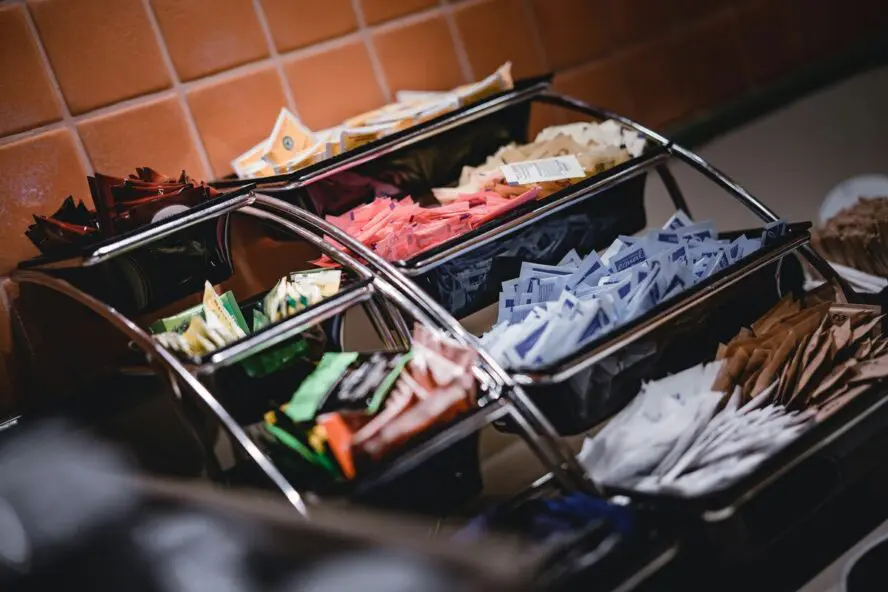
While the sucralose molecule itself is non-caloric and passes through the body unabsorbed, these commercial fillers do carry a caloric and glycemic footprint. Furthermore, emerging nutritional science suggests that while sucralose can suppress beneficial gut microbes, it is frequently the maltodextrin and dextrose fillers in tabletop packets that act as fuel for opportunistic, "bad" gut bacteria, potentially driving gastrointestinal distress.
Official Statements and Scientific Consensus
The health and regulatory landscape surrounding sucralose is defined by a dichotomy between toxicological safety (can it kill you or cause acute toxicity?) and functional metabolic health (does it alter your long-term physiology?).
Regulatory Endorsements
Global public health institutions—including the U.S. Food and Drug Administration, the European Food Safety Authority, and the Joint FAO/WHO Expert Committee on Food Additives (JECFA)—maintain that sucralose is safe for general consumption. Their conclusions are drawn from a toxicological review of more than a hundred pre-market safety studies indicating that sucralose is non-toxic, non-carcinogenic, and does not cause genetic mutations in standard evaluations.
Emerging Clinical Caveats
Conversely, independent academic institutions and clinical researchers emphasize that "safe from acute toxicity" does not equal "metabolically inert."
- The Microbiome and Glycemic Disruption: A landmark 2022 study published in Cell revealed that healthy human participants consuming non-nutritive sweeteners (including sucralose and saccharin) at a fraction of the FDA ADI experienced notable impairments in their glycemic responses, alongside shifts in both their oral and gut microbiome compositions. A follow-up 2025 clinical trial confirmed that healthy, lean individuals consuming 30% of the FDA ADI over 30 days experienced a 20.3% decrease in insulin sensitivity, accompanied by elevated systemic inflammation markers and reduced gut microbial diversity.
- The WHO Stance on Weight Control: In its sweeping 2023 guidelines, the World Health Organization formally departed from viewing non-sugar sweeteners as viable tools for long-term weight management. The WHO noted that observational data fails to demonstrate sustained reductions in body fat over the long haul, pointing instead to potential long-term risks such as an increased incidence of type 2 diabetes and cardiovascular disease associated with chronic, heavy consumption.
- The Cancer Debate Clarified: Decades-old concerns regarding sucralose and cancer stem primarily from a disputed 2016 rodent study conducted by the Ramazzini Institute. Major regulatory bodies and independent oncological reviews subsequently discredited the methodology and conclusions of that study. Contemporary scientific consensus holds that pure sucralose does not directly initiate or cause cancer in healthy humans, though ongoing research continues to explore how intense sweeteners might interact with gut flora during active cancer therapies.
Future Outlook: Navigating Sweeteners in Modern Nutrition
As the food science sector evolves, the conversation around alternative sweeteners is shifting from binary debates of "good versus evil" to personalized, nuanced nutrition.
Key Recommendations by Population Group
- Healthy Adults: Occasional, moderate consumption of sucralose within low-filler or liquid formulations poses minimal risk and can successfully assist in short-term calorie reduction. However, it should not be treated as a health-food supplement.
- Individuals with Prediabetes, Diabetes, or Insulin Resistance: Because recent clinical data indicates that a significant subset of the population experiences altered glycemic responses or insulin sensitivity spikes upon consuming non-nutritive sweeteners, these groups should exercise heightened caution and monitor their blood glucose closely.
- Pregnant and Nursing Individuals: While regulatory agencies classify sucralose as safe within the ADI, many maternal-health dietitians advise minimizing all artificial food additives during pregnancy out of an abundance of caution, given the limitations of long-term human developmental data.
- Bakers and Culinary Enthusiasts: Sucralose begins to break down when exposed to high baking temperatures (exceeding ~248°F / 120°C for extended periods), potentially yielding undesirable degradation byproducts. Furthermore, baking without sugar eliminates crucial structural properties like moisture retention, browning, and volume. Those who choose to bake with sucralose should opt for 50-50 blends with real sugar to preserve structural integrity.
Ranking Popular Sweetener Alternatives
If you decide to step away from sucralose entirely, a variety of alternatives populate the modern pantry:

- Stevia & Monk Fruit (Puna/Natural NNS): Derived from plants, these high-intensity sweeteners offer zero-calorie alternatives with fewer microbiome disruptions than artificial options, though some users note an aftertaste.
- Allulose & Erythritol (Rare Sugars & Sugar Alcohols): Allulose is a rare sugar that behaves like real sugar in baking and browns naturally without impacting blood glucose, making it a favorite among low-carb dieters. Sugar alcohols like erythritol are similarly useful, though high doses can cause gastrointestinal upset.
- Natural Whole Sweeteners (Honey, Maple Syrup, Agave): While these carry calories and impact blood sugar, they provide trace minerals and micronutrients, making them preferable for individuals prioritizing whole-food nutrition over pure caloric restriction.
- Acesulfame Potassium (Ace-K) & Aspartame: Traditional artificial sweeteners often paired with sucralose in diet sodas; these carry similar regulatory approvals but face parallel scrutiny regarding long-term metabolic impacts.
The Bottom Line
Sucralose is neither a chemical poison nor a health elixir. For the average healthy adult, enjoying sucralose in strict moderation—preferably utilizing liquid formulations or products with minimal carbohydrate fillers—remains a viable strategy for cutting down on added sugars and managing daily caloric intake.
However, the golden rule of modern nutrition remains unchanged: the ultimate goal of metabolic wellness is not finding the perfect chemical substitute for sugar, but rather recalibrating your palate to enjoy a diet rich in whole foods, natural flavors, and minimized reliance on ultra-processed additives.
Disclaimer: When making any significant lifestyle, dietary, or health changes, always consult your primary care physician or a registered dietitian. The views and investigative findings expressed in this article are those of the reporting author and do not necessarily represent the official institutional positions of all referenced scientific bodies.