Executive Overview
For the better part of a century, the majestic Klamath River—coursing through the rugged terrain of Southern Oregon and Northern California—was fractured by a series of hydroelectric dams. Constructed throughout the 20th century to generate power and regulate water, these concrete barriers severed the vital migration routes of native Chinook salmon (Oncorhynchus tshawytscha). The ecological cost was devastating: blocked from their historical spawning grounds, the river’s wild salmon populations plummeted by an estimated 90%, pushing a cornerstone species and cultural lifeline to the brink.
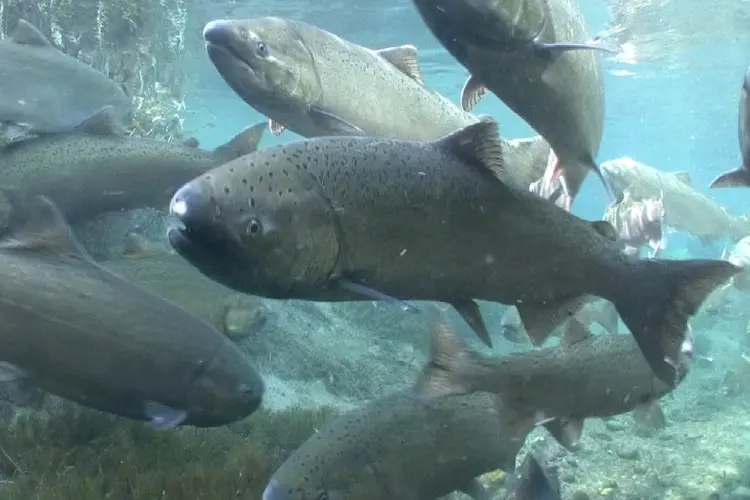
However, a monumental ecological restoration effort has changed the course of river history. Following the historic removal of four major dams in 2024, a recent peer-reviewed study published in Nature reveals a breathtaking turnaround. Chinook salmon have returned to the Klamath River with a swiftness and scale that has astonished biologists, environmentalists, and fisheries managers alike.
In the immediate wake of the dam removals, thousands of salmon surged past the former barriers, rapidly reclaiming hundreds of kilometers of pristine habitat that had been closed to them for generations. While scientists caution that full ecological recovery will require sustained multi-generational efforts, the early data offers a powerful testament to nature’s resilience and the profound healing potential of large-scale river restoration.
Detailed Chronology: From Industrial Barrier to Free-Flowing Waters
The story of the Klamath River’s decline is rooted in the mid-20th-century rush to harness the American West’s waterways for hydropower and agricultural expansion. Between 1918 and 1962, a cascade of four major dams—Copco No. 1, Copco No. 2, Iron Gate, and JC Boyle—was constructed on the mainstem of the lower Klamath. While these projects successfully generated electricity, they acted as impenetrable walls for anadromous fish, species that hatch in fresh water, migrate to the ocean to mature, and return upstream to spawn.
For decades, the consequences for the Klamath’s Chinook salmon were catastrophic. Spawning populations collapsed by roughly 90%, threatening not only biodiversity but also the indigenous tribes—such as the Yurok, Karuk, and Klamath Tribes—for whom the salmon are culturally, spiritually, and nutritionally foundational.
The turning point arrived in 2024, marking one of the largest dam removal and river restoration projects in United States history. The removal of the four Klamath River dams eliminated artificial boundaries that had stood for roughly a century, instantly reconnecting the upper and lower basins.
The biological response was nearly instantaneous. Shortly after the concrete gave way, an initial count of 7,742 Chinook salmon migrated up the Klamath River, navigating past the former dam sites into newly opened territories. The momentum accelerated dramatically the following year. By 2025, the annual migration count surged past 13,000 fish. According to the recent study, these pioneering salmon expanded into 345 kilometers (214 miles) of newly accessible river, successfully recolonizing an astonishing 88% of their known historical habitat within a remarkably brief window.
Supporting Context & Metrics: Tracking the Return Through Murky Waters
Documenting the triumphant return of the Klamath Chinook was no small feat for researchers. Following the removal of the massive concrete structures, the river remained heavily laden with sediment, resulting in extreme turbidity. Traditional underwater videography and visual aerial surveys—methods that rely on clear water and visible light—were rendered virtually useless.
To overcome this hurdle, lead author Damon Goodman and his research colleagues deployed cutting-edge technology: specialized underwater sonar cameras. Operating on sound waves rather than light, these acoustic cameras function essentially as underwater video cameras capable of piercing through muddy water and capturing high-resolution moving images even in complete pitch darkness.
The research team stationed their sonar equipment near the former Iron Gate Dam site, maintaining continuous surveillance throughout the fall migration season. By capturing precise acoustic measurements of individual fish passing through the zone, scientists were able to distinguish Chinook salmon from other resident aquatic species and formulate accurate population estimates.
The metrics gathered by the research team highlight the sheer geographic and physiological scope of the salmon’s return:
- Population Surge: From 7,742 fish immediately post-removal in 2024 to more than 13,000 fish in 2025.
- Geographic Reach: Recolonization of 345 kilometers (214 miles) of blocked riverine habitat.
- Habitat Recovery: Successful reclamation of 88% of the species’ documented historical range within the basin.
- Physical Obstacles Overcome: Migrating salmon successfully navigated turbulent rapids, newly engineered fishways, and remnants of large former reservoirs to reach distant spawning beds.
Official Statements: Perspectives from the Frontlines of Marine Science
The speed of the Klamath’s ecological rebound has reverberated across the global scientific community, challenging long-held assumptions about how quickly aquatic ecosystems can recover from a century of industrial degradation.

Damon Goodman, the lead author of the study, shared his astonishment in an interview with Mongabay. While researchers harbored hope that the salmon would eventually find their way back upstream, the sheer velocity of the migration caught everyone off guard.
"We expected the Chinook to return to the river, but we didn’t know how long it would take," Goodman noted via email. "What surprised us was the speed and scale of their response—it felt like we were running to keep up with the fish! These fish navigated challenging rapids, engineered fishways, and a large lake to reach habitats that had been inaccessible for more than a century."
Goodman also emphasized the indispensable role that acoustic sonar technology played in capturing the phenomenon.
"This technology was particularly valuable because the river remained extremely turbid following dam removal, making traditional underwater video monitoring impractical. It allowed us to document the return of thousands of salmon that otherwise would have been difficult to observe."
Independent experts watching the Klamath project unfold have expressed similar awe. Scott Hinch, a prominent salmon ecologist at the University of British Columbia who was not involved in the research, told The New York Times that the timeline of the recovery is unprecedented.
"Everything has to fall into place to make something like this possible," Hinch remarked, underscoring the delicate alignment of environmental factors required for such a successful upstream migration.
Future Outlook: Guarded Optimism for the Klamath Basin
While the initial data from the Klamath River is undeniably cause for celebration, scientists and conservationists emphasize that the journey toward a fully restored ecosystem is a marathon, not a sprint. The return of thousands of Chinook salmon proves that the species retains an innate, ancestral memory and a powerful biological drive to find and utilize accessible habitat, but significant hurdles remain.
Damon Goodman maintains a perspective of guarded optimism regarding the long-term outlook for the basin’s salmon populations.
"The speed of recolonization demonstrates that these fish retain a remarkable ability to find and use newly accessible habitat," Goodman stated. "However, returning to historical population levels will require successful reproduction over multiple generations, along with improvements in habitat conditions, water quality, and fish passage throughout the basin. Dam removal was an enormous step forward, but it doesn’t eliminate all the challenges facing salmon."
Moving forward, the health of the Klamath River will depend on continued, rigorous monitoring, watershed management, and climate resilience planning. Factors such as water temperatures, agricultural runoff, forest management, and ocean conditions will heavily influence whether the current generation of returning Chinook can successfully spawn, rear, and sustain growing populations for decades to come.
Nevertheless, the Klamath River dam removals have provided a shining, real-world blueprint for ecological restoration on a continental scale. By tearing down the concrete barriers that fractured the landscape, humanity has given nature the space to heal—and as the salmon of the Klamath have shown, when given a clear path home, life will find a way.