Executive Overview
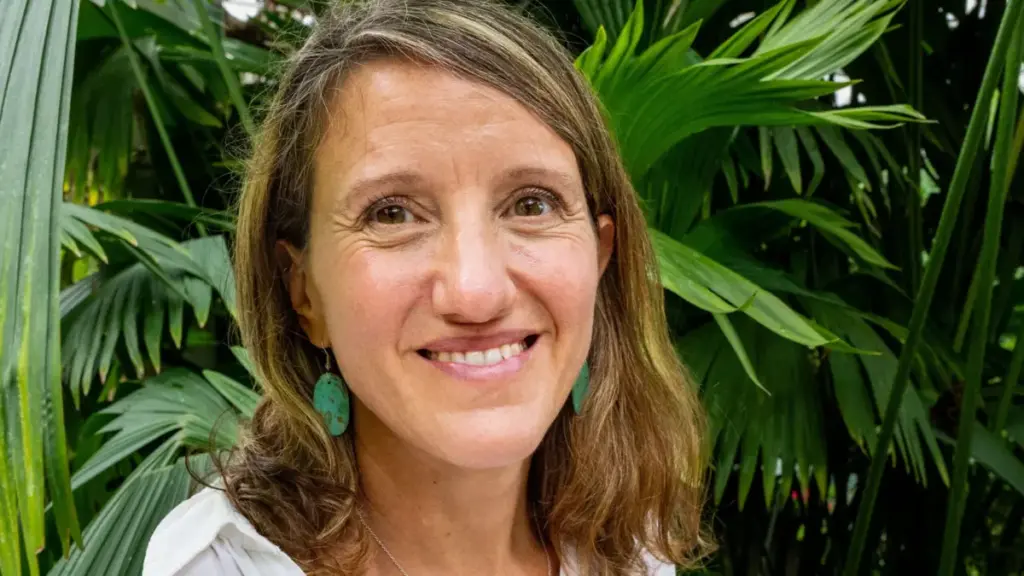
Deep within the protected rainforests of central Panama, a century of ecological time unfolds in real time. Here, scrubby plots of adolescent trees slowly give way to the cathedral-like canopies of mature growth, mapping out a visual chronicle of forest recovery. Overseeing this living laboratory is Dr. Daisy Dent, a senior forest ecologist at ETH Zurich. Stationed across the Barro Colorado Nature Monument—a sprawling reserve managed by the Smithsonian Tropical Research Institute—Dent tracks a unique landscape: not a single tree in her decades-long survey was planted by human hands. Instead, waves of tree life have risen entirely from bare earth, driven by complex, natural webs of ecological interactions.
Tropical forests represent the planet’s single largest terrestrial carbon sink, absorbing approximately 40% of all land-based carbon emissions. As the international community scrambles to fund and execute mass reforestation projects to mitigate global heating, Dent and a network of global researchers are challenging the status quo. Their decades of empirical evidence suggest that traditional carbon-crediting schemes—which typically clear land to plant massive monocultures of a single tree species—may be expensive, fragile mistakes.
Instead, Dent’s research champions a radical yet remarkably simple alternative: passive natural regeneration. By relying on the ecological web of seed-dispersing animals, fungi, and resilient secondary growth, deforested landscapes can rebound naturally in just a few decades. These naturally regenerated forests not only re-create rich, biodiverse ecosystems far superior to commercial plantations, but they also lock away vast quantities of carbon dioxide at a fraction of the cost. As the climate crisis accelerates and corporate buyers demand verifiable, high-integrity offsets, the scientific consensus is shifting. The question facing policymakers, conservationists, and carbon markets is no longer just how many trees we can plant, but when we should step back and let nature do the heavy lifting.
Detailed Chronology: From Borneo’s Logging Crisis to Panama’s Living Laboratory
To understand the mechanics of modern forest restoration, one must trace the intellectual journey of researchers like Daisy Dent, whose career spans two decades of shifting global perspectives on tropical ecology.
The Turn of the Millennium: Witnessing Loss
Around the turn of the millennium, as a PhD student studying old-growth forests in northern Borneo, Dent experienced a formative sense of ecological grief. She watched helplessly as pristine, ancient landscapes were systematically felled and burned to make way for industrial palm oil plantations. Rather than resigning herself to despair, Dent pivoted her academic focus toward ecological restoration.
The Prorena Era (2005)
In 2005, following her doctoral studies, Dent joined Prorena as a postdoctoral researcher. Prorena was a collaborative initiative between the Smithsonian Tropical Research Institute and the Yale School of Forestry and Environmental Studies, designed to determine how best to establish diverse native forests on lands that had been aggressively clear-cut. At the time, secondary forests—those that regrow naturally after primary forest loss—were considered a niche, secondary area of study. However, mounting human infrastructure and agricultural expansion meant that secondary growth was rapidly becoming the dominant canopy type across the tropics, eventually accounting for roughly 70% of all tropical forest canopies worldwide.
Initially, Prorena followed the prevailing restoration playbook: transplanting nursery-grown saplings into degraded rangelands. Yet Dent began to question the necessity and cost-effectiveness of this intensive human intervention. In 2009, she published an influential paper demonstrating that animal populations rebound remarkably fast as forests naturally regrow, laying the groundwork for a broader paradigm shift in conservation biology.
Entering Barro Colorado (2010)
By 2010, Dent shifted her research base to the Barro Colorado Nature Monument, stepping into plots originally established by pioneering American ecologist Julie Denslow. In 1994, Denslow had identified and mapped plots that had been naturally regenerating for anywhere from 20 to 100 years. Dent expanded upon this historical sequence, adding younger plots to create a continuous, unbroken timeline of forest succession spanning more than a century.
This rich demographic dataset allowed Dent to investigate why some deforested plots rebound rapidly after clear-cutting for agriculture, while others remain permanently stalled. The answer, as her data revealed, lay not in soil chemistry alone, but in zoology.
Fruit-eating animals—including spider monkeys, bats, and parrots—are responsible for planting over 70% of all trees in tropical forests. Dent’s datasets mapped which species built each patch of forest by depositing seeds in nutrient-rich droppings. For instance, a diverse, 70-year-old canopy approaching the structural complexity of an ancient jungle was built through the collaborative efforts of dozens of animal species. In stark contrast, adjacent plots of the same age characterized by thin, homogenous trunks of a single long-lived species (Gustavia superba) revealed that tropical rodents known as agoutis were the sole animal architects, resulting in a stunted, species-poor landscape.
Supporting Context & Metrics: The Science of Secondary Growth
The empirical data collected across Barro Colorado and other international sites provide an invaluable playbook for global restoration efforts. A landmark 2024 estimate published in Nature calculated that approximately 215 million hectares of forest worldwide—an area larger than Mexico—possess the environmental conditions necessary to regenerate naturally.
The Carbon-Capture Advantage
In 2015, as the global community codified the Paris Agreement, forest recovery seized center stage in climate politics. Following estimates by ecologist Thomas Crowther that regrowing a trillion trees could capture a decade’s worth of global carbon emissions, world leaders and tech startups launched massive tech-driven initiatives. Proposals ranged from drone-delivered seed-spraying to nutrient-coated "seed bombs."
Yet Dent and her international colleagues in the 2ndFor research network were asking a more fundamental ecological question. In a landmark 2016 paper published in Nature, the network utilized data from the Barro Colorado plots to demonstrate that a hectare of naturally regenerated secondary forest can capture up to 11 times as much carbon annually as an old-growth forest. Young, competitive trees aggressively absorb carbon as they race upward toward the sunlight.
The 35% Threshold and Animal Seed Dispersal
Subsequent research underscored the resilience of these systems. In a 2022 study published by the Royal Society, Dent and her colleagues proved that sites near intact forest patches are primed for rapid passive recovery. Surrounded by lush environments teeming with birds and bats, clearings can regain old-growth levels of species richness and abundance within a few decades without human planting.
A 2024 follow-up study focusing on data from Panama and Brazil revealed an astonishing metric: plots with as little as 35% remaining tree cover can successfully regenerate into dense, functioning forests if the ecological connections remain intact.
| Restoration Approach | Cost Efficiency | Carbon Capture Rate (Young Growth) | Ecosystem Resilience | Biodiversity Risk |
|---|---|---|---|---|
| Monoculture Plantings | High (Requires ongoing maintenance) | Moderate to Low | Very Low (Vulnerable to disease/drought) | High (Single species dominance) |
| Assisted Natural Regeneration | Moderate | High | High | Moderate to High (Guided recovery) |
| Passive Natural Regeneration | Very Low (Minimal intervention) | Extremely High (Fast-growing pioneers) | Maximum (Naturally selected species) | Low (Self-assembling ecosystems) |
Official Statements & Expert Perspectives
The transition from automated, human-forced planting to ecologically informed passive regeneration relies heavily on the integration of long-term field data with practical conservation policy.
Dr. Robin Chazdon, professor emeritus of ecology and evolutionary biology at the University of Connecticut, who collaborated with Julie Denslow when the original Barro Colorado plots were established, emphasizes the irreplaceable value of long-term datasets:
"It tells you more about the actual processes that are happening in the site… Having these long-term mapped forest plots provides this really nice research infrastructure where you can build projects on top of that."
Dr. Liza Comita, a professor of tropical forest ecology at Yale University who collaborates with Dent on translating scientific findings into actionable conservation policy, notes that while passive regeneration is powerful, it cannot be applied universally:
"Leaving plots alone may seem like the simpler option, but it can’t be done everywhere. Many sites are too degraded."
In heavily degraded regions—such as southern Panama, where remnant forests cling to the edges of abandoned cattle ranches—stubborn grasses planted decades ago can form a dense mat that smothers native seeds for up to 150 years, blocking the natural succession of large-trunked carbon-storing trees. To combat this, Dent, Comita, and London-based carbon-crediting startups like Ponterra are pioneering assisted natural regeneration. This hybrid approach involves mapping wildlife corridors, reintroducing missing fauna to "silent forests," and performing strategic enrichment planting only where ecosystems are too damaged to heal on their own.
Corporate giants like Microsoft—one of Ponterra’s clients—are increasingly willing to pay premium prices (exceeding $50 per metric ton) for high-integrity carbon removal credits. To justify these investments, projects must guarantee permanence, avoiding the devastating pitfalls of traditional plantations that can literally go up in smoke during severe droughts.
Future Outlook: A Reckoning for Global Reforestation
Despite overwhelming scientific backing for natural regeneration—backed by millions of hectares of naturally recovering rainforests tracked by the Brazilian Restoration and Reforestation Observatory—global policymakers and large-scale project managers remain stubbornly attached to human-engineered planting models.
Dr. Daisy Dent believes the upcoming years will serve as a crucial ecological reckoning. As intensifying droughts, extreme heatwaves, and pathogen outbreaks sweep across Latin America, cookie-cutter commercial plantations are proving dangerously fragile.
"You have much reduced resilience in the system when it comes to extreme events like droughts or floods or extreme heat or pathogens," Dent warns.
With severe climate anomalies like "mega El Niño" events becoming more frequent, the limitations of simply dumping millions of identical saplings into degraded soil are becoming glaringly apparent. The future of global carbon markets and tropical conservation hinges on a fundamental mindset shift. As Dent concludes:
"I think there’s an increasing recognition that we can’t just plant trees. We have to rebuild a system."
Ultimately, saving the planet’s terrestrial carbon sink may require humanity to step back, respect the intricate webs of animal and plant interactions, and allow the forest to heal itself.