Executive Overview
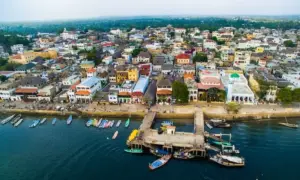
For decades, the coastal landscape of Saldanha Bay has been defined by a fine, pervasive coating of red iron ore dust—a persistent reminder of the more than one billion tonnes of minerals shipped through its deep-water harbor since the mid-1970s. Once a tranquil West Coast fishing enclave, the town was systematically re-engineered into an industrial export node.
Today, Saldanha Bay stands at the center of an even more ambitious, and deeply contentious, state-backed transformation: the bid to turn this coastal zone into the primary oil and gas logistics hub of South Africa.
Driven by "Operation Phakisa"—a fast-track economic strategy launched in 2014 to exploit South Africa’s marine resources—the national government has mapped out over 95 percent of the country’s nearly 3,000-kilometer coastline for offshore oil and gas exploration. The policy sets an aggressive target of drilling 30 exploration wells over a ten-year period, with projections claiming potential average yields of 370,000 barrels of oil and gas per day over a 20-year lifecycle.
This agenda, however, has triggered a powerful counter-movement. A coalition of coastal residents, artisanal fishers, indigenous groups, and environmental lawyers has mounted legal challenges against the state and global energy majors, including Shell and TotalEnergies. High-profile court battles are reshaping the regulatory landscape for energy extraction in Southern Africa, establishing precedents regarding community consultation, environmental protection, and climate accountability.
Detailed Chronology: From Industrial Dust to Offshore Oil
+-----------------------------------------------------------------------------------+
| CHRONOLOGY OF SALDANHA BAY & OFFSHORE HYDROCARBON EXPLOITATION                    |
+-----------------------------------------------------------------------------------+
| 1976        | Construction of Sishen-Saldanha rail line & deep-water iron ore port.|
| 2014        | Launch of Operation Phakisa: Oceans Economy strategy.             |
| 2014–2020   | Over 95% of SA's Exclusive Economic Zone mapped & leased for oil/gas|
| 2021 (Dec)  | Eastern Cape High Court issues interdict halting Shell's seismic tests.|
| 2022 (Sep)  | Makhanda High Court revokes Shell's exploration rights on Wild Coast.|
| 2023–2024   | Legal challenges expand to TotalEnergies & West Coast drilling concessions|
+-----------------------------------------------------------------------------------+
The Iron Ore Legacy (1970s–2010s)
Saldanha Bay’s shift from an artisanal fishing hub to an industrial infrastructure node began in 1976 with the completion of the Sishen-Saldanha railway line and deep-water port. Built to export rich iron ore deposits from the Northern Cape, the port facilities transformed the bay into a major bulk-cargo handling hub.
While the infrastructure brought economic investment and port activity, it also altered the local marine environment and exposed coastal residents to chronic particulate pollution. The red iron oxide dust that covers local homes, boats, and streets became a symbol of top-down development strategies that prioritized national industrial yields over local environmental health.
The Launch of Operation Phakisa (2014)
In 2014, the South African government launched Operation Phakisa ("hurry up" in Sesotho), an initiative modeled on Malaysia’s Big Fast Results methodology. Designed to accelerate the implementation of the National Development Plan, the Oceans Economy track aimed to unlock the unexploited economic potential of South Africa’s Exclusive Economic Zone (EEZ).
The strategy identified six priority sectors:
- Offshore Oil and Gas Exploration
- Marine Transport and Manufacturing
- Aquaculture
- Ocean Governance and Protection
- Marine Tourism
- Small Harbours Development
Under this policy umbrella, the Department of Mineral Resources and Energy (DMRE) moved quickly to issue exploration rights and reconnaissance permits across the country’s maritime territories.
The Rise of Coastal Resistance (2021–Present)
By the early 2020s, the quick pace of licensing met organized resistance from coastal communities and civil society organizations. The opposition culminated in historic legal victories:
- December 2021: Coastal communities from the Eastern Cape, supported by legal non-profits, secured an urgent interdict halting Shell’s 3D seismic surveys off the Wild Coast, citing potential harm to marine life and a lack of consultation with local communities.
- September 2022: The Makhanda High Court set aside Shell’s exploration rights entirely, ruling that the legal process was flawed because the energy company failed to consult local communities who hold customary rights to the ocean.
- 2023–2024: Building on these precedents, community groups along the West Coast—including Saldanha Bay—initiated legal proceedings against state authorizations granted to TotalEnergies and other consortiums operating in deep-water blocks along the Atlantic coast.
Supporting Context & Metrics: Unpacking Operation Phakisa
South Africa’s push into offshore hydrocarbons is framed by government planners as a strategic necessity to address chronic domestic energy shortages and drive economic growth. However, spatial and industrial metrics illustrate the massive scale of these ambitions relative to alternative marine economic activities.
+--------------------------------------------------------------------+
| KEY OPERATION PHAKISA OFFSHORE METRICS                             |
+--------------------------------------------------------------------+
| Coastline Mapped for Oil/Gas  | ~95% (~2,850 km of 3,000 km)       |
| Targeted Exploration Wells    | 30 wells in 10 years               |
| Projected Production Capacity | 370,000 barrels per day (oil/gas)  |
| Projected Production Timeline | 20-year operational lifecycle      |
| Saldanha Bay Primary Role     | Deep-water logistics & repair hub  |
+--------------------------------------------------------------------+
Spatial Overlap and Resource Conflicts
Mapping 95 percent of South Africa’s maritime zone for petroleum activities creates spatial overlap with established industries and ecologically sensitive areas:
                  +-----------------------------------+
                  |   SOUTH AFRICAN EEZ (~3,000 km)   |
                  +-----------------------------------+
                                    |
          +-------------------------+-------------------------+
          |                                                   |
          v                                                   v
+-----------------------+                           +-------------------+
|  Hydrocarbon Zone     |                           | Marine Protected  |
|  (~95% Mapped/Leased) |                           | Areas & Fisheries |
+-----------------------+                           +-------------------+
          |                                                   |
          +-------------------------+-------------------------+
                                    v
                  +-----------------------------------+
                  | Resource & Environmental Conflict |
                  |   - Spatial competition           |
                  |   - Acoustic pollution            |
                  |   - Spill risk vs. Eco-Tourism    |
+-----------------------------------+- Artisanal and Commercial Fishing: Saldanha Bay and the broader West Coast account for a significant portion of South Africa’s commercial fisheries, including rock lobster, pelagic fish, and whitefish. Fishers express concern that marine seismic surveys and offshore drilling rigs disrupt fish stocks, migration routes, and access to traditional fishing grounds.
- Marine Tourism and Biodiversity: The region includes biodiversity hotspots such as the West Coast National Park and the Langebaan Lagoon, a Ramsar wetland of international importance. Critics point out that large-scale oil and gas operations carry inherent risks of catastrophic oil spills and operational discharge that could damage eco-tourism and marine ecosystems.
- Aquaculture Initiatives: While Operation Phakisa officially promotes aquaculture alongside offshore oil and gas, local operators argue that heavy hydrocarbon infrastructure in Saldanha Bay threatens water quality required for farming oysters, mussels, and finfish.
Official Statements and Legal Arguments
The standoff between the South African government, energy multinationals, and local communities centers on differing views of economic development, constitutional consultation standards, and environmental stewardship.
The State and Corporate Perspective
The Department of Mineral Resources and Energy (DMRE) and participating oil majors argue that developing domestic oil and gas reserves is essential for South Africa’s energy security, industrial development, and employment creation.
In legal filings and public statements, representatives for energy majors have argued that:
- Regulatory Compliance: Environmental authorization processes adhered strictly to environmental management laws in effect at the time permits were issued.
- Economic Benefits: Offshore gas discoveries (such as TotalEnergies’ Block 11B/12B discoveries off the South Coast) could provide clean-burning gas for electricity generation, easing the nation’s power crisis and supporting industrial activity.
- Infrastructure Utilization: Infrastructure hubs like Saldanha Bay stand to gain long-term investments, dry-dock maintenance contracts, and specialized technical jobs.
Community and Civil Society Pushback
Conversely, coastal communities, small-scale fishers, and legal advocacy non-profits argue that the state’s licensing approach prioritizes industrial extraction while ignoring indigenous rights, public participation mandates, and long-term environmental sustainability.
Legal non-profit Natural Justice has played a leading role in representing community interests across these legal challenges.
"When communities win in the courts, the successes serve as inspiration for other communities to advocate [for] their rights in their own contexts," explained Melissa Groenink-Groves, Programme Manager at Natural Justice.
+-----------------------------------------------------------------------------------+
| CORE LEGAL GROUNDS ADVANCED BY PLAINTIFFS                                         |
+-----------------------------------------------------------------------------------+
| 1. Procedural Unfairness | Failure to conduct meaningful public participation with|
|                          | affected customary and artisanal fishing communities.  |
| 2. Customary Rights      | Overlooking constitutional rights of indigenous groups  |
|                          | with historical and spiritual ties to ocean resources. |
| 3. Climate Impacts       | Inadequate assessment of long-term global climate harm |
|                          | and upstream carbon footprint of hydrocarbon projects.|
| 4. Precautionary Principle| Incomplete scientific research into the acoustic harms|
|                          | of seismic testing on marine biodiversity.            |
+-----------------------------------------------------------------------------------+
Future Outlook: A Regional Precedent for Africa’s Atlantic Coast
The clash unfolding in Saldanha Bay reflects a broader dilemma facing African coastal nations navigating the transition away from fossil fuels. As Namibia to the north experiences a historic deep-water oil discovery boom in the Orange Basin, South Africa’s regulatory environment and judicial outcomes are serving as a test case for coastal rights across the continent.
                         +-----------------------------+
                         | SOUTH AFRICAN OFFSHORE HUB  |
                         |     (SALDANHA BAY FOCUS)    |
                         +-----------------------------+
                                        |
                 +----------------------+----------------------+
                 |                                             |
                 v                                             v
  +------------------------------+              +------------------------------+
  |    FOSSIL FUEL EXPANSION     |              |    JUST ENERGY TRANSITION    |
  | - 30 Wells Target            |              | - Community-Led Advocacy     |
  | - Deep-water Logistics Hub   |              | - Preserved Marine Ecology   |
  | - Energy Security Arguments  |              | - Legal Precedents (Courts)  |
  +------------------------------+              +------------------------------+
                 |                                             |
                 +----------------------+----------------------+
                                        v
                         +-----------------------------+
                         | REGIONAL AFRICAN PRECEDENT  |
                         | Environmental Governance    |
                         | & Customary Rights Standard |
                         +-----------------------------+
Stranded Asset Risks vs. Just Energy Transition
As global capital increasingly shifts toward renewable energy projects, South Africa faces the economic risk of investing in legacy fossil fuel infrastructure. Legal delays, fluctuating global energy prices, and shifting corporate priorities have already led major players to re-evaluate individual exploration blocks.
Environmental organizations argue that investing resources into converting Saldanha Bay into an oil and gas hub risks creating stranded assets. They advocate instead for a Just Energy Transition strategy that prioritizes renewable energy infrastructure—such as offshore wind development, green hydrogen production, and sustainable ocean industries—which align with South Africa’s international climate commitments under the Paris Agreement.
The Precedent of Community-Led Litigation
The legal battles led by coastal communities are redefining environmental governance in South Africa. Courts are increasingly scrutinizing executive decisions, enforcing strict standards for meaningful consultation, and affirming the legal status of customary rights held by historical coastal communities.
As legal proceedings move through higher appellate courts, the precedents set in South African courtrooms are shaping how governments and multinational energy firms approach environmental compliance, indigenous rights, and public participation across the African continent. For Saldanha Bay—a town long defined by the red dust of its industrial past—the ultimate resolution of these legal battles will decide whether its future lies in fossil fuel extraction or sustainable coastal stewardship.