Executive Overview
In a monumental logistics and engineering undertaking, the Biodiversity Heritage Library (BHL)—the world’s largest open-access digital literature repository for biodiversity archives—has officially commenced its three-week physical and digital infrastructure migration. Spearheaded by the BHL Tech Team under the leadership of Technical Coordinator Joel Richard, the operation involves transplanting the core technical architecture from its longtime home at the Smithsonian data center just outside Washington, D.C., to its new permanent institutional host, the Field Museum in Chicago, Illinois.
For nearly two decades, the Smithsonian Institution has served as the digital anchor for the BHL, housing the servers, databases, and network architecture that power access to tens of millions of pages of taxonomic literature, historical scientific expedition logs, and botanical illustrations. Now, as the library enters its next chapter of global stewardship, this critical technological infrastructure is crossing state lines.
The move is being executed with surgical precision to minimize disruptions for the international network of researchers, taxonomists, historians, and citizen scientists who rely on the platform daily. While the transition schedule spans the month of June 2026, the BHL technical framework has already been configured, tested, and quietly initiated on the Field Museum’s internal network. This preliminary phase has given project engineers immense confidence in a seamless final handoff.
Yet, treating a server migration like an agricultural transplantation—complete with comparative analyses of historical rainfall, soil profiles, and regional vegetation—offers a whimsical reminder of the repository’s core mission: documenting and preserving the natural world. Supported by the robust administrative and technical infrastructure of the Field Museum, the BHL is well-positioned to put down deep digital roots in the Midwest, ensuring that global biodiversity knowledge remains unhindered, resilient, and freely available for generations to come.

Detailed Chronology: The Two-Part Migration Schedule
Managing the digital heartbeat of a global repository while physically moving thousands of pounds of enterprise-grade hardware, production databases, and full-text-search servers is a high-stakes balancing act. To achieve zero total downtime, the BHL Tech Team has meticulously structured the relocation into a carefully timed, two-phase shipment window occurring across June 2026.
Phase One: The Warm-Up Shipment (June 11, 2026)
The migration officially kicks off on June 11, 2026, marking the initial transport of non-critical peripheral hardware and staging servers. Designed as a controlled logistical trial run, this phase allows engineers to test transit protocols, verify courier tracking methodologies, and synchronize initial data verification pipelines between the East Coast and the Midwest.
Crucially, users interacting with the BHL website will experience zero impact on regular site functions during this phase. Core catalog searches, image galleries, and standard page-turner interfaces will remain fully operational, masking the complex logistical choreography happening behind the scenes.
Phase Two: The Production Database and Search Server Shift (June 25, 2026)
The true crucible of the migration occurs on June 25, 2026. This is the designated day when the heavy-duty production databases and full-text-search servers make their journey westward to the Field Museum.

Because the specialized full-text-search server must be physically disconnected, packaged, transported, and re-integrated into the Chicago rack space, a temporary localized service interruption is unavoidable for this specific feature. According to technical projections, the full-text search function will be offline for a brief window of 5 to 6 days over a single weekend.
However, system architects have ensured that this limitation is strictly contained. While deep text-mining and full-text word searches within books and articles will be temporarily suspended while the hardware is in transit, the broader architecture remains resilient:
- Unaffected Features: Users will retain uninterrupted access to title searches, author directories, subject classifications, taxonomic name indexes, and core catalog metadata.
- Global Continuity: The vast majority of the digital library’s digitized volumes will remain accessible for reading, browsing, and downloading.
By capitalizing on weekend scheduling and optimizing redundant server pathways, the tech team expects to fully restore the full-text search index promptly, officially cementing the Field Museum as the primary server host for the BHL infrastructure moving forward.
Supporting Context & Metrics: Environmental Adaptation of Digital Infrastructure
In a delightful nod to the subject matter it archives—biodiversity, ecology, and natural history—the BHL Tech Team approached the migration not merely as an IT project, but as an ecological transplantation. To humorously assess whether BHL’s hardware would "feel at home" in its new Midwestern habitat, engineers cross-referenced historical cartographic data from the United States Department of Agriculture’s classic Atlas of American Agriculture to compare the environmental profiles of the old East Coast data center with the new Chicago facility.

1. Hydrological Dynamics: Rainfall and Freshwater Proximity
- East Coast Baseline: Historically, the Washington, D.C., region experiences annual rainfall averages ranging between 35 and 40 inches (85–100 cm) per year.
- Chicago Environment: The Windy City receives a slightly leaner annual precipitation rate of 30 to 35 inches (75–88 cm).
- The Mitigation Factor: While raw rainfall metrics show a minor decrease, this theoretical dryness is overwhelmingly compensated for by Chicago’s immediate adjacency to Lake Michigan—one of the largest and most ecologically vital freshwater bodies on the planet.
- The Climate Reality: Engineers note that while historical maps paint a picture of abundant water resources, contemporary climate realities introduce new variables. The north-central region of the United States faces periodic modern climate fluctuations, including localized moderate drought conditions, making thermal management and cooling efficiency at the Field Museum data center an essential engineering priority.
2. Edaphic Profiles: Soil Type Transitions
- Leaving the Podzols: At its former home, the technical infrastructure resided atop regions historically characterized by Gray-Brown Podzolic soils—nutrient-rich, heavily leached forest soils typical of the temperate deciduous zones of the mid-Atlantic.
- Embracing the Prairie: In Chicago, the digital asset environment aligns with the Soils of the Northern Prairie, known historically for their deep, organic-rich mollisol compositions.
- Geographic Continuity: A closer examination of historical soil cartography reveals that BHL’s familiar East Coast soil types are not entirely foreign to the broader Midwestern landscape. By maintaining proximity to analogous soil zones, project optimists jokingly suggest the servers will undergo minimal biochemical shock during the digital rooting process.
3. Floral Biomes: From Deciduous Canopies to Tallgrass Prairies
- The East Coast Canopy: The historical vegetation of the mid-Atlantic seaboard is heavily dominated by dense Oak-Pine and Chestnut-Oak-Yellow Poplar forests, representing a classic multi-layered eastern woodland ecosystem.
- The Midwestern Expanse: Relocating to Chicago introduces a dramatic ecological pivot: a transition from deep-forest canopies to the sweeping Tall Grasses of the Prairie Grasslands.
- The Familiar Anchor: To ease the psychological and digital transition for the servers, cartographers pointed out that expansive Oak-Hickory forests still fringe the greater Chicago biome. Much like the reassuring presence of familiar soil types, the metaphorical presence of sturdy oaks nearby is expected to provide a comforting backdrop as the library settles into the heart of the Midwest.
Official Statements and Institutional Collaboration
The seamless execution of this multi-million-page digital relocation is a testament to deep institutional cooperation. The transition has been years in the planning, requiring complex coordination between federal entities, academic networks, and museum administration.
In official statements released ahead of the transition, BHL leadership expressed profound gratitude to the administration and technical staff at the Field Museum.
"We are deeply grateful to the Field Museum for welcoming BHL’s technology and helping ensure that biodiversity knowledge remains available to the global community," noted the BHL steering committee in a joint operational briefing. "The support from their administration and technical team has been invaluable. By testing and configuring our network architecture directly within their facilities ahead of time, we have established a high degree of confidence that this massive physical and digital migration will occur with absolute transparency for our global user base."
The Field Museum—globally renowned for its own vast scientific research collections, extensive natural history library, and commitment to public science education—provides an ideal home for the Biodiversity Heritage Library. Both institutions share a foundational ethos: democratizing access to the scientific record and safeguarding humanity’s collective understanding of the natural world.

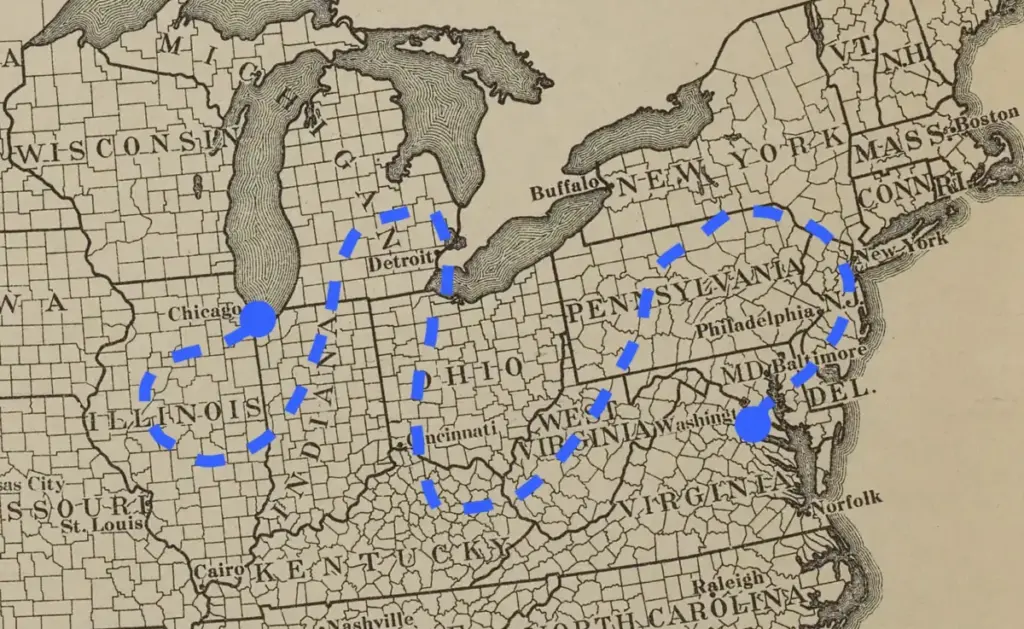
To keep the international community fully informed throughout the moving process, the BHL has deployed a dedicated Field Museum Move Informational Page. This live hub features real-time progress updates, technical documentation, and a tongue-in-cheek server transit map tracking the physical journey of the hardware across historical postal routes from the nation’s capital to the shores of Lake Michigan.
Future Outlook: A Resilient Digital Future in Chicago
As the final servers are bolted into their new racks at the Field Museum by late June 2026, the Biodiversity Heritage Library will close one of its most productive chapters at the Smithsonian and open an equally promising era in Illinois.
The successful completion of this migration is far more than a routine data center relocation; it represents a strengthening of the global digital infrastructure supporting environmental science. By diversifying its institutional partnerships and integrating with the world-class technical facilities of the Field Museum, the BHL secures enhanced long-term operational resilience.
Looking ahead, the technical team plans to leverage the Field Museum’s advanced network infrastructure to roll out subsequent enhancements to the BHL platform, including optimized API delivery, improved optical character recognition (OCR) indexing pipelines, and expanded multilingual catalog access. These upcoming improvements will ensure that taxonomists studying endangered species, historians tracking climate shifts through centuries-old field notes, and curious minds exploring the wonders of biodiversity enjoy faster, more reliable access than ever before.

With familiar oak trees standing watch along the shores of Lake Michigan, steady freshwater cooling currents flowing nearby, and a world-class team of museum curators and systems engineers at the helm, the Biodiversity Heritage Library is more than ready to plant its digital roots deep in the soil of the American Midwest.