Executive Overview
For millions of people worldwide, the morning ritual begins and ends with the comforting aroma of freshly brewed coffee. It is a grounding routine—a moment of pause before the demands of the day take over. Many conscientious consumers opt to brew at home rather than frequenting commercial cafes, believing they are making a healthier, more sustainable, and economically sound choice. Yet, an invisible, often overlooked element sits on countertops in millions of kitchens: plastic.
Even the most thoughtfully designed conventional coffee makers—machines boasting gleaming brushed stainless steel exteriors or elegant glass carafes—frequently rely on hidden plastic components. Internal water reservoirs, heating tubes, fluid transfer lines, and spray nozzles are commonly constructed from synthetic polymers. When boiling or near-boiling water repeatedly courses through these plastic pathways, thermal degradation occurs. Over time, the material softens, potentially leaching synthetic compounds, chemical additives, and microscopic plastic particles directly into the liquid.
For individuals actively working to minimize environmental toxins and reduce household plastic exposure, these hidden components represent a significant oversight. Fortunately, the home appliance market is undergoing a quiet revolution. Manufacturers are increasingly responding to consumer demand for non-toxic, highly durable alternatives.
This comprehensive review explores the best plastic-free and low-plastic coffee makers available on the market today. Evaluated through rigorous testing criteria—including material quality, thermal performance, durability, ease of use, and overall value—these four machines offer a path toward a cleaner, purer morning cup.
Detailed Chronology: The Evolution of Non-Toxic Brewing
The journey toward plastic-free home brewing did not happen overnight. It represents a broader consumer awakening regarding the lifecycle of everyday kitchen appliances and their direct impact on human health.
Phase 1: The Dominance of Convenience (Late 20th Century)
For decades, the home coffee appliance market prioritized speed, volume, and low manufacturing costs above all else. The widespread adoption of automatic drip machines introduced countless internal plastic tubes and reservoirs. Consumers embraced the convenience of programmable timers and large-batch brewing, largely unaware of the thermal stress placed on plastic components exposed to near-boiling water daily.
Phase 2: The Rising Awareness of Microplastics (2010s)
As scientific research began uncovering the pervasive presence of microplastics in water, food supplies, and human biological tissues, consumer scrutiny shifted toward kitchenware. Studies highlighting how heat accelerates the leaching of chemical plasticizers—such as BPA, BPS, and various phthalates—prompted health-conscious buyers to re-evaluate their cookware, storage containers, and eventually, their coffee makers.
Phase 3: The Artisan Revival and Minimal-Plastic Engineering (Present Day)
In response to growing health and environmental concerns, manufacturers have begun engineering appliances that either completely eliminate plastic from the brewing path or drastically reduce its presence. While manual methods like French presses and ceramic pour-overs have long provided entirely plastic-free solutions, recent innovations have successfully merged automated precision brewing with non-toxic materials like borosilicate glass and food-grade stainless steel.
Supporting Context & Metrics: The Problem with Plastic in Coffee Makers
To understand why switching to a low-plastic or plastic-free coffee maker matters, one must examine how conventional machines operate under thermal stress.
[Cold Water Reservoir]
        │ (Often plastic)
        ▼
[Heating Element & Internal Tubing]
        │ (Thermal stress / Repeated heating cycles)
        ▼
[Leaching Point: Potential release of microplastics & synthetic compounds]
        │
        ▼
[Your Morning Brew]
The Thermal Degradation Cycle
When water is heated inside a standard coffee maker, it reaches temperatures between 195°F and 205°F—just shy of boiling. When this hot liquid comes into continuous contact with plastic tubing, gaskets, and water tanks, the polymer matrix undergoes thermal fatigue. Even materials marketed as "BPA-free" can degrade over time, shedding microscopic particles or releasing trace chemical compounds into the beverage. Because coffee is acidic, this chemical interaction can be further catalyzed, altering both the purity of the taste and the safety of the beverage.
Evaluating the Contenders: Key Metrics
When testing and reviewing alternative coffee makers, experts assess each appliance across six core pillars:
- Material Quality: The absence of plastic or aluminum in direct contact with hot water or grounds.
- Brewing Performance: Temperature stability, saturation uniformity, and extraction efficiency.
- Durability: Longevity of parts, structural integrity, and warranty support.
- Ease of Use: Intuitive controls, cleaning requirements, and daily workflow integration.
- Capacity: Serving sizes ranging from single cups to full ten-cup carafes.
- Overall Value: Cost-to-longevity ratio and performance relative to price point.
Detailed Product Reviews
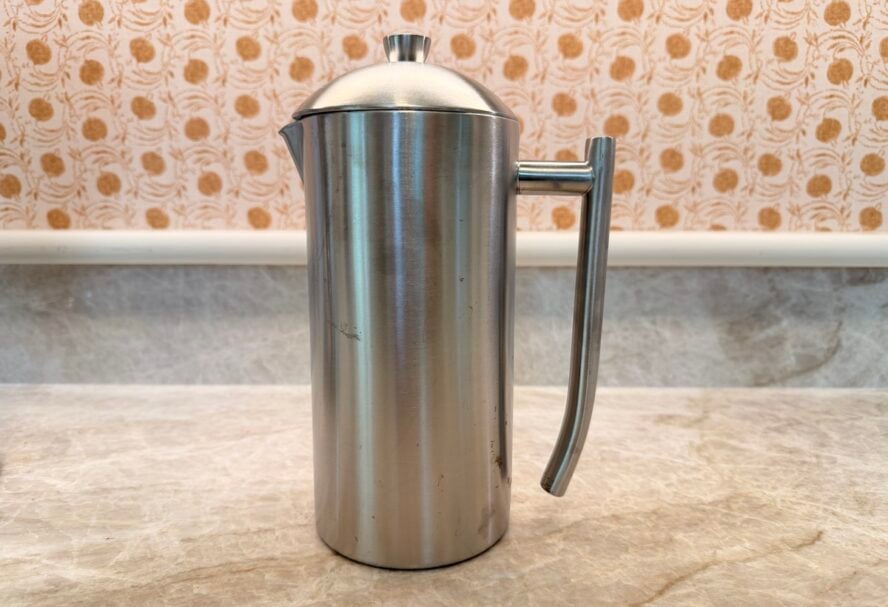
1. Frieling Brushed Stainless Steel French Press
- Brewing Style: French Press
- Plastic Contact: None (100% Stainless Steel)
- Price: $89.95
+-------------------------------------------------------------+
|               FRIELING STAINLESS STEEL FRENCH PRESS         |
+-------------------------------------------------------------+
| Pros:                                                       |
| • Exceptional double-wall heat retention                    |
| • Virtually indestructible lifetime durability              |
| • Pure, untainted flavor profile                            |
| • 100% dishwasher safe                                      |
|                                                             |
| Cons:                                                       |
| • Smaller capacity options compared to large drip machines  |
| • Heavier than glass-body presses                           |
| • No visual indicator during steeping                       |
+-------------------------------------------------------------+
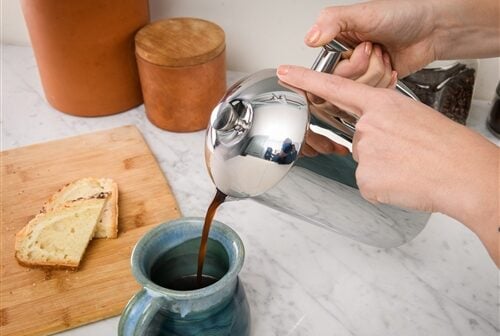
When it comes to uncompromised durability, timeless design, and absolute simplicity, the Frieling Brushed Stainless Steel French Press remains the gold standard for plastic-free brewing. Constructed entirely from heavy-duty, food-grade stainless steel, this press eliminates any concern regarding synthetic leaching.
Performance and Usability
The double-wall insulated carafe excels at heat retention, keeping coffee piping hot for up to an hour without the need for an external heat source. During warmer months, it transitions seamlessly into a cold-brew or iced-coffee maker when placed in the refrigerator overnight. Operation is entirely manual: coarse grounds are steeped in hot water and separated from the brew via a tightly woven stainless steel mesh plunger.
Because the entire unit is constructed from metal, there is zero risk of shattered glass or degraded plastic seals. It is fully dishwasher-safe and designed to withstand decades of regular use. Available in sizes ranging from 8 oz to 44 oz, it accommodates single drinkers and households alike.
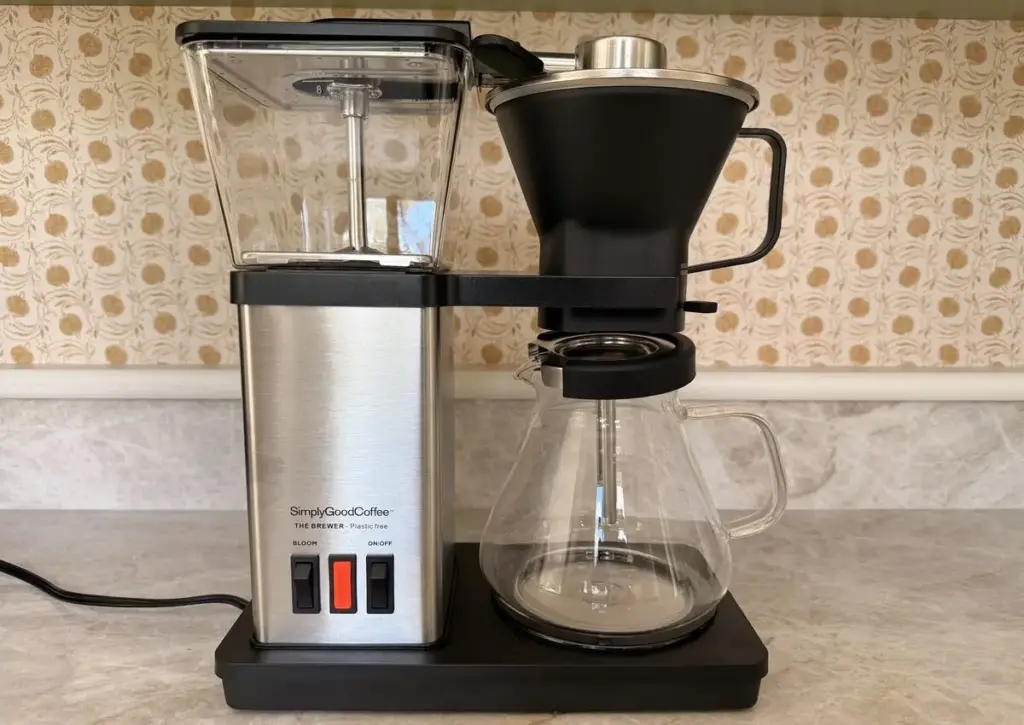
2. SimplyGoodCoffee The Brewer
- Brewing Style: Automatic Pour-Over / Drip
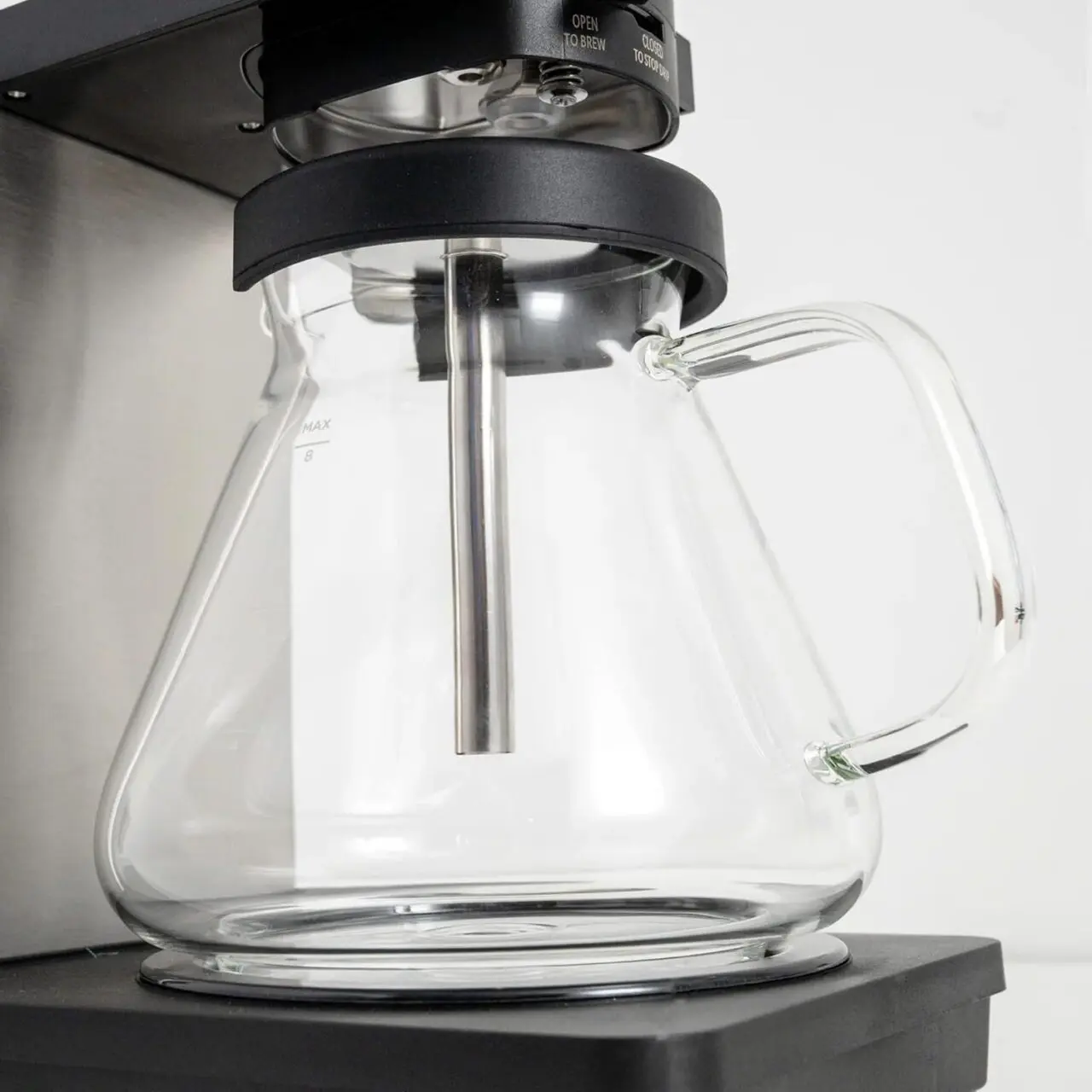
- Plastic Contact: None (Stainless Steel & Borosilicate Glass)
- Price: $479.99
+-------------------------------------------------------------+
|               SIMPLYGOODCOFFEE THE BREWER                   |
+-------------------------------------------------------------+
| Pros:                                                       |
| • Rare fully automatic, plastic-free machine                |
| • Zero plastic or aluminum touches water or coffee          |
| • Reusable metal filter eliminates paper waste              |
| • Dishwasher-safe removable parts                           |
|                                                             |
| Cons:                                                       |
| • Premium price point                                       |
| • Larger countertop footprint                               |
| • Limited advanced programming features                     |
+-------------------------------------------------------------+
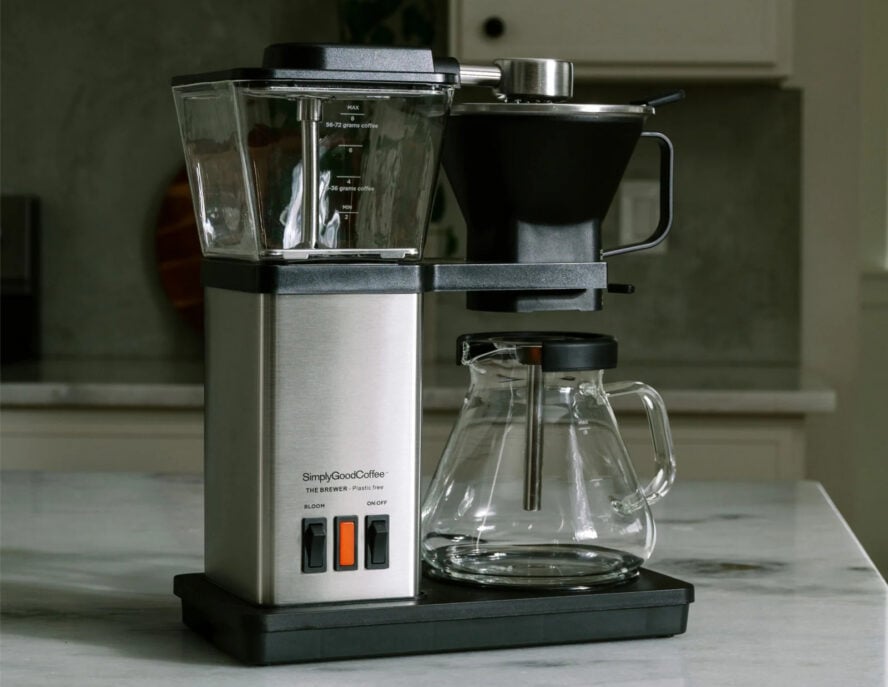
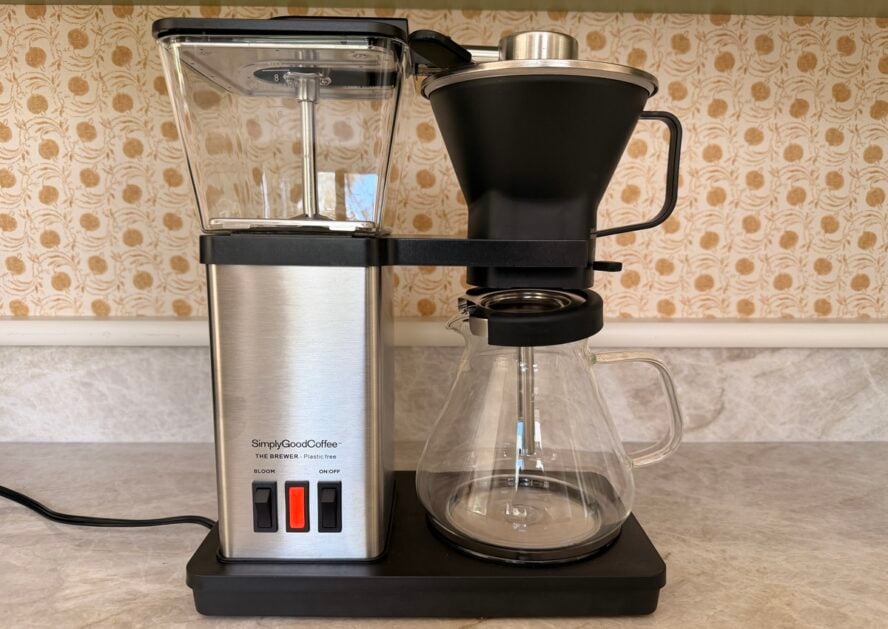
For those who crave the convenience of an automated drip machine but refuse to compromise on health standards, The Brewer by SimplyGoodCoffee bridges the gap. It is one of the very few fully automated machines on the market that features zero plastic or aluminum contact with water or coffee.
Engineering Excellence
Utilizing a simplified automatic pour-over mechanism, this machine operates via a single-button interface. Water is heated and distributed over the grounds using internal structures crafted exclusively from stainless steel and borosilicate glass. It includes a reusable metal filter, sparing the user from buying disposable paper filters while ensuring a clean, robust flavor profile.
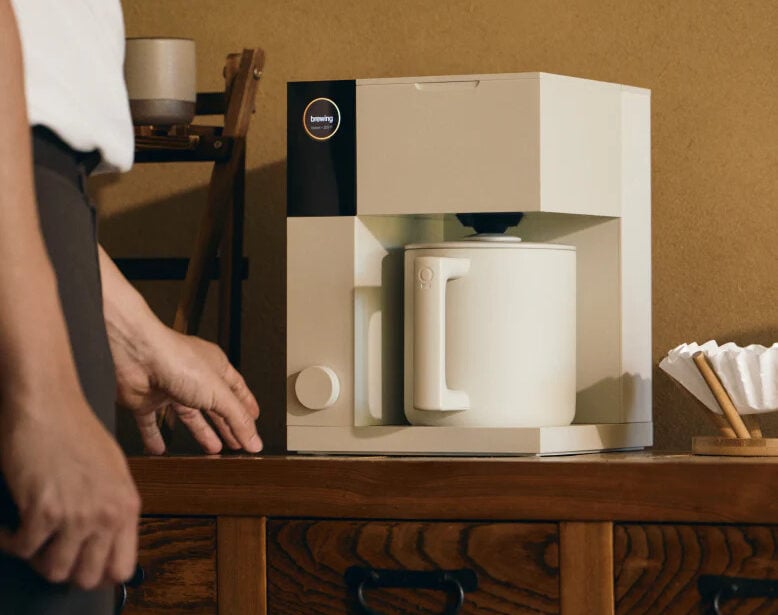
With an eight-cup capacity, it brews rapidly while maintaining precise temperature stability to optimize extraction without scorching the beans. All removable components are dishwasher-safe, making cleanup remarkably straightforward for a high-end kitchen appliance.
3. Fellow Aiden Precision Coffee Maker
- Brewing Style: Automatic Drip / Precision Pour-Over
- Plastic Contact: Minimal (BPA-free plastic water tank; stainless steel thermal carafe)
- Price: $399.95
+-------------------------------------------------------------+
|               FELLOW AIDEN PRECISION COFFEE MAKER           |
+-------------------------------------------------------------+
| Pros:                                                       |
| • Exceptional pour-over quality via automation              |
| • Precise temperature and extraction profiling              |
| • Supports both single-serve and batch brewing              |
| • Intuitive color digital interface & app integration       |
|                                                             |
| Cons:                                                       |
| • Not 100% plastic-free (features a BPA-free tank)         |
| • Premium investment cost                                   |
| • Advanced features may overwhelm casual users              |
+-------------------------------------------------------------+
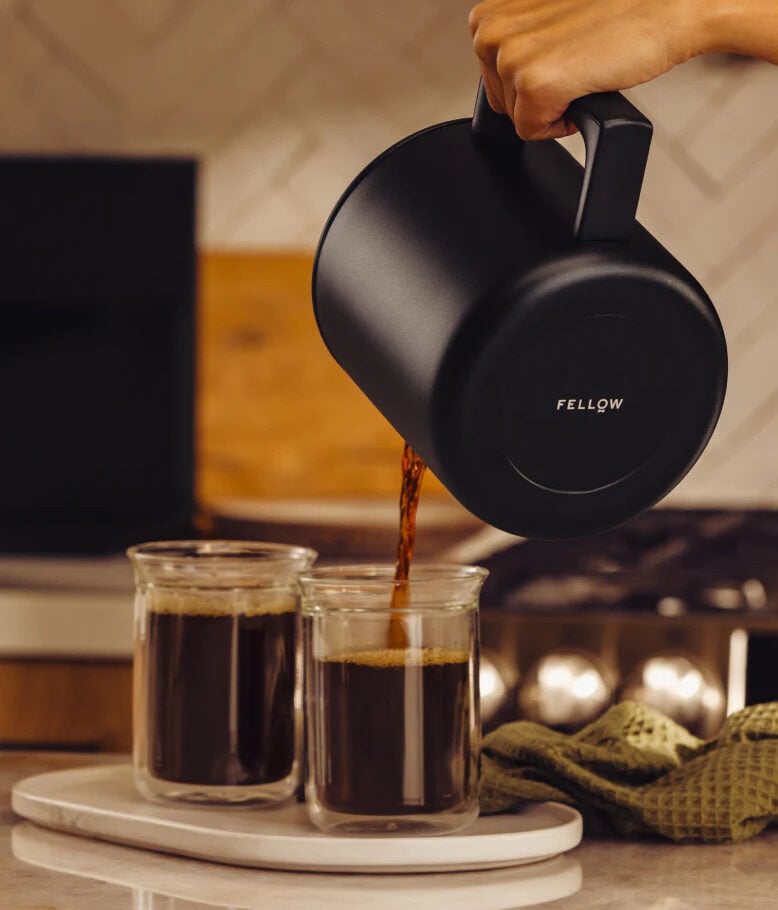
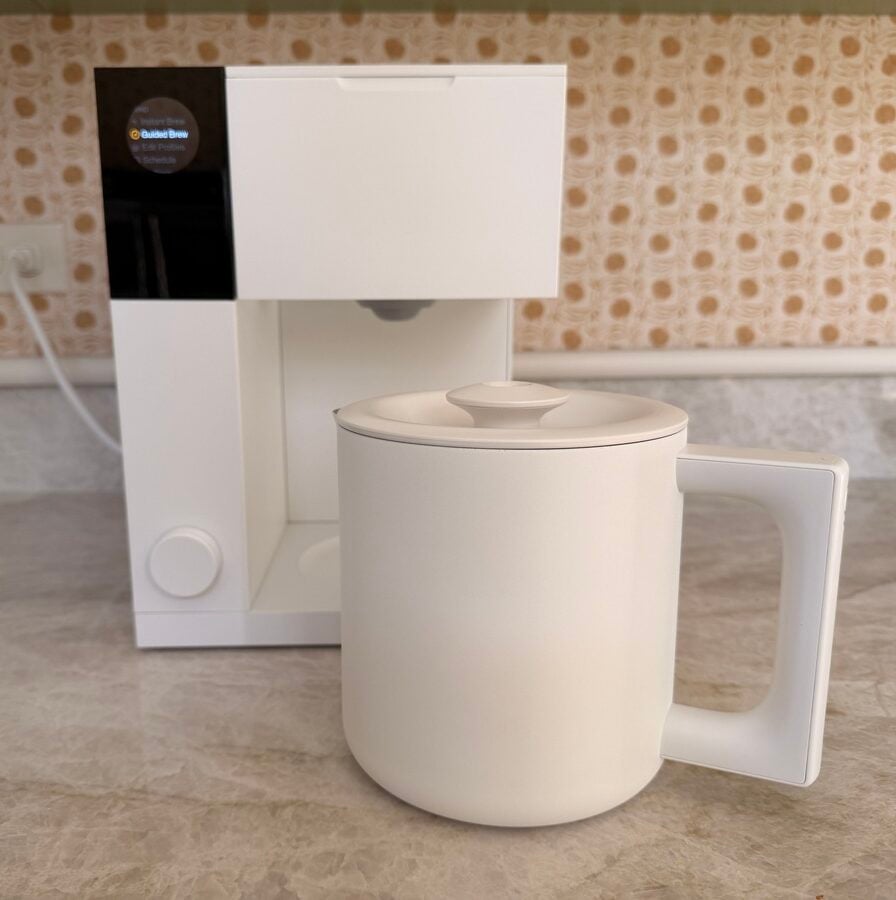
The Fellow Aiden Precision Coffee Maker is engineered for specialty coffee enthusiasts who demand artisanal-quality pour-over flavor paired with modern automated convenience. While it is not entirely plastic-free—featuring a BPA-free plastic water reservoir—it represents a massive upgrade over traditional mainstream machines by isolating the heated brew path within premium metals.
Advanced Customization
The Aiden stands out through its pulse-dispersion brewing technology, which saturates grounds in controlled waves to allow proper blooming and maximum flavor extraction. Users can dial in precise temperature and strength settings via a brilliant, full-color digital interface or through a companion smartphone app, which also allows for scheduled brewing. With a 10-cup capacity and the flexibility to brew single servings on demand, it delivers high-end café performance right to the home kitchen.
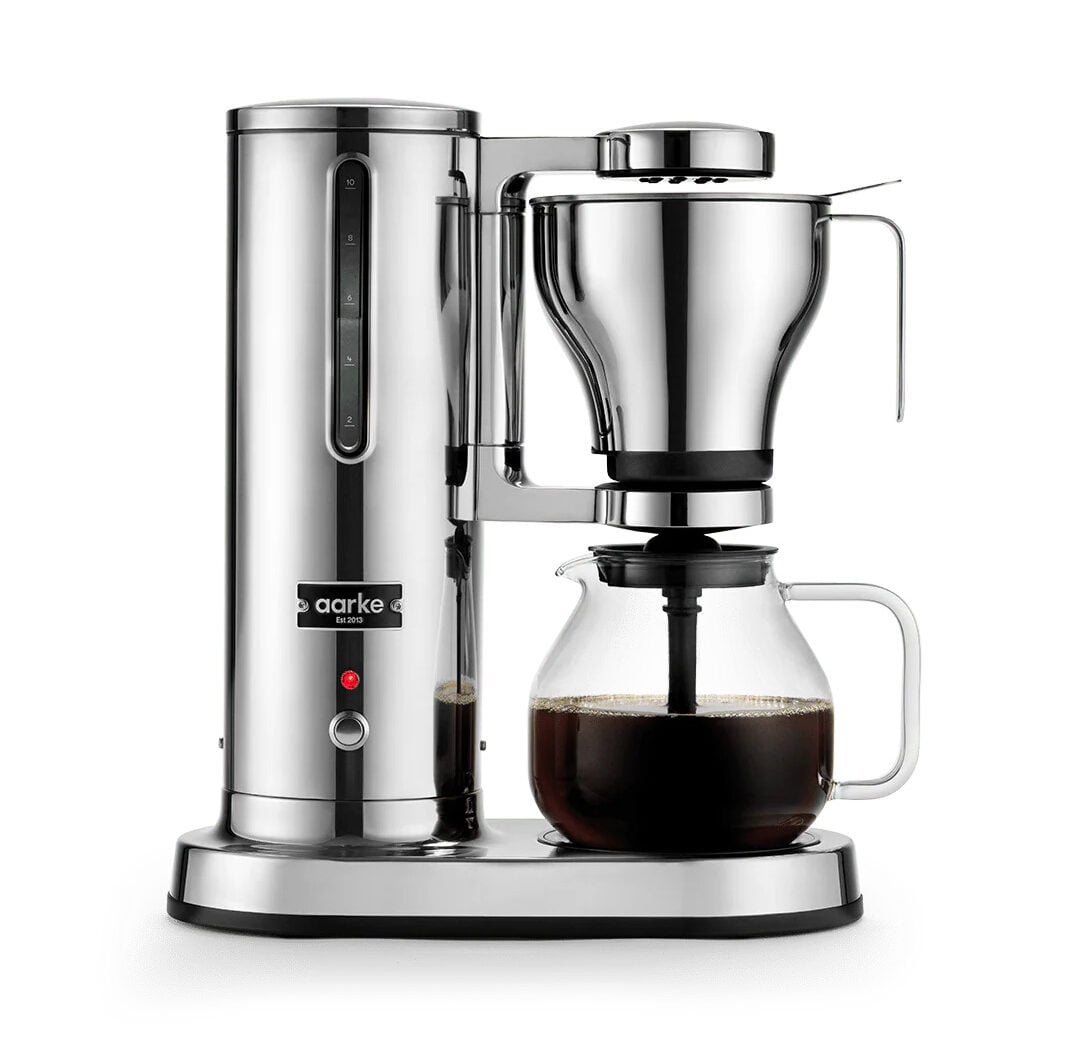
4. Aarke Stainless Steel Coffee Maker
- Brewing Style: Automatic Drip
- Plastic Contact: Minimal (Engineered with significantly reduced plastic internals)
- Price: $400.00
+-------------------------------------------------------------+
|               AARKE STAINLESS STEEL COFFEE MAKER            |
+-------------------------------------------------------------+
| Pros:                                                       |
| • Stunning Scandinavian minimalist design                   |
| • Optimal brewing temperature stability (197°F–205°F)       |
| • Built-in blooming mode and descaling program              |
| • Brews 10 cups in under six minutes                        |
|                                                             |
| Cons:                                                       |
| • Not completely plastic-free                               |
| • Glass carafe requires hot plate (thermal jug sold sep.)   |
| • Higher price tier                                         |
+-------------------------------------------------------------+
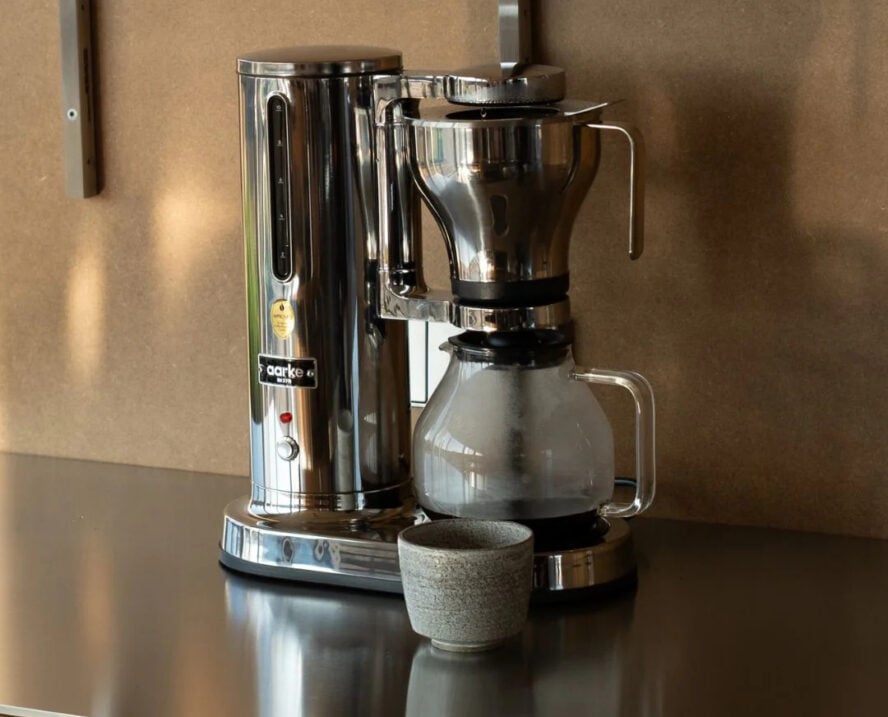
Aarke is renowned for its sleek, architectural approach to kitchen appliances, and its Stainless Steel Coffee Maker is no exception. Designed to serve as a stunning minimalist statement piece while delivering professional-grade performance, this machine significantly cuts down on plastic usage compared to standard market competitors.
Performance and Aesthetics
During operation, the Aarke machine maintains water strictly between 197°F and 205°F—the gold-standard temperature range for ideal flavor extraction without bitterness. An even shower-head design ensures uniform saturation of the coffee bed.
The machine features a built-in blooming mode, which pre-infuses the grounds before the primary extraction cycle, mimicking the nuanced profile of a manual pour-over. It also includes an automated descaling program to ensure long-term mechanical health. While it comes standard with a borosilicate glass carafe and a gentle warming plate, users can also purchase an optional insulated stainless steel thermal jug for extended heat retention without a hot plate.
Comparative Matrix
| Product Name | Brewing Style | Plastic Contact | Best Known For | Price Point |
|---|---|---|---|---|
| Frieling French Press | French Press | None (100% Steel) | Lifetime durability & superior heat retention | $89.95 |
| SimplyGoodCoffee The Brewer | Automatic Pour-Over | None (Glass & Steel) | Fully automatic plastic-free brewing | $479.99 |
| Fellow Aiden Precision | Automatic Drip | Minimal (BPA-Free Tank) | Precision extraction & digital customization | $399.95 |
| Aarke Coffee Maker | Automatic Drip | Minimal (Reduced Plastic) | Scandinavian aesthetics & SCA-certified brewing | $400.00 |
Future Outlook: The Trajectory of Non-Toxic Kitchen Appliances
As consumer awareness surrounding microplastics, endocrine disruptors, and chemical leaching deepens, the home appliance industry faces mounting pressure to innovate. The historical standard—relying on cheap, heat-vulnerable plastics for internal water lines and reservoirs—is increasingly viewed by health-conscious consumers as an unacceptable compromise.
Looking forward, industry analysts predict that material transparency will become a primary selling point for premium kitchen electronics. Manufacturers are expected to accelerate the development of closed-loop, metal-and-glass automated brewing systems. While fully plastic-free automated machines currently command a higher price tag due to specialized engineering and material costs, economies of scale will likely make non-toxic appliances more accessible in the coming years.
Ultimately, choosing a low-plastic or plastic-free coffee maker transcends aesthetic preference or trendy lifestyle choices. It represents a deliberate investment in personal health, environmental stewardship, and enduring craftsmanship. Whether one prefers the tactile simplicity of a stainless steel French press or the automated precision of a glass-and-steel drip brewer, the modern market finally offers viable pathways to a cleaner, safer, and more flavorful morning cup.