In a milestone that underscores a widening ideological and industrial chasm between state policy and federal direction, California has shattered its own clean-transportation records. Data released for the third quarter of 2025 reveals that residents purchased a staggering 124,755 zero-emission vehicles (ZEVs), capturing a landmark 29.1% market share of all new cars sold statewide. This means nearly 1 in every 3 new vehicles hitting California’s roads during the quarter was powered entirely by electricity or hydrogen.
The milestone arrives at a delicate crossroads for the American automotive sector. While federal policy shifts toward supporting traditional combustion technologies and domestic legacy industries, California—the fourth-largest economy in the world—is accelerating its transition toward electrification. State officials point to expanding infrastructure, falling vehicle prices, and an explosion of consumer choice as the primary catalysts for this historic surge.
Yet, this achievement represents more than just a localized sales triumph. It serves as a real-world stress test for mass EV adoption in a major Western economy. By crossing the critical 25% adoption threshold—frequently cited by economists and market analysts as the tipping point where a technology shifts from early-adopter novelty to mainstream dominance—California has provided a blueprint for how aggressive regulatory frameworks, coupled with robust infrastructure investments, can permanently alter consumer behavior.
Detailed Chronology: The Ascent to 29.1%
To fully appreciate the gravity of California’s Q3 2025 numbers, it is necessary to examine the rapid acceleration of the state’s ZEV market over recent years. The journey from a niche market dominated by early adopters to a nearly 30% mainstream share has been defined by targeted policy interventions, aggressive automaker commitments, and exponential charging infrastructure development.
The Foundation Years (2018–2022)
For much of the late 2010s, California’s ZEV market hovered in the low single digits, climbing steadily past the 5% and 10% thresholds. Market availability was largely constrained to a handful of pioneering models, most notably Tesla’s Model S, Model X, and later the Model 3, alongside compliance cars from legacy manufacturers. Range anxiety was a legitimate barrier, and public charging networks were frequently unreliable, plagued by broken screens, down payment terminals, and slow charging speeds.
However, the state’s Advanced Clean Cars regulations set a rigid trajectory, mandating that all new passenger car sales be zero-emission by 2035. Automakers realized that compliance was no longer optional, prompting massive capital reallocations toward battery electric vehicle (BEV) architectures.
The Post-Pandemic Surge (2023–2024)
As supply chain bottlenecks eased following the global pandemic, the market experienced a profound product diversification. By the first quarter of 2024, the number of distinct ZEV models available to California consumers had risen to 105. Prices began to stabilize as legacy automakers ramped up production lines and new entrants flooded the market with compelling electric crossovers, trucks, and sedans.
By mid-2024, the state’s ZEV market share was comfortably sitting in the low-to-mid 20s. Consumers were no longer buying EVs out of purely ecological motives; the vehicles were increasingly chosen for their performance, lower total cost of ownership, and cutting-edge technology.
The Q3 2025 Inflection Point
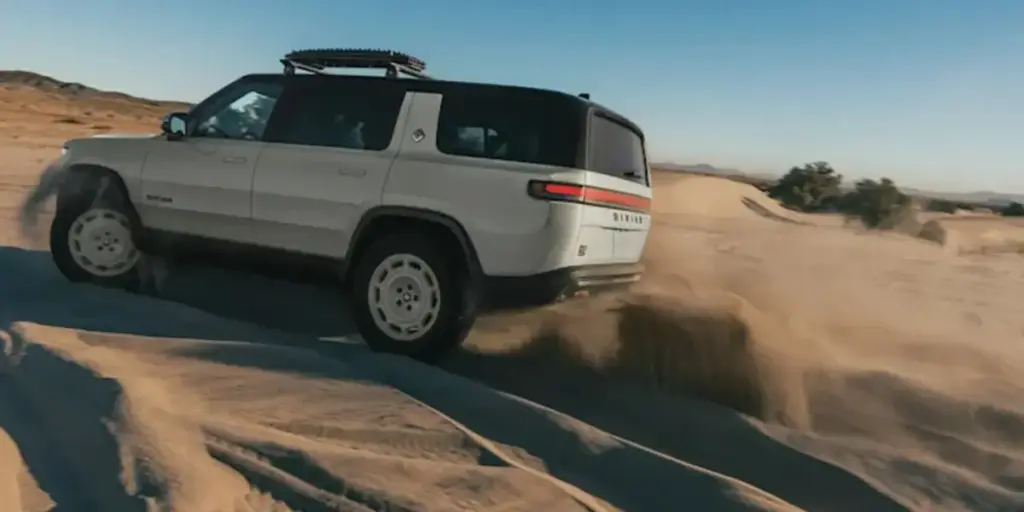
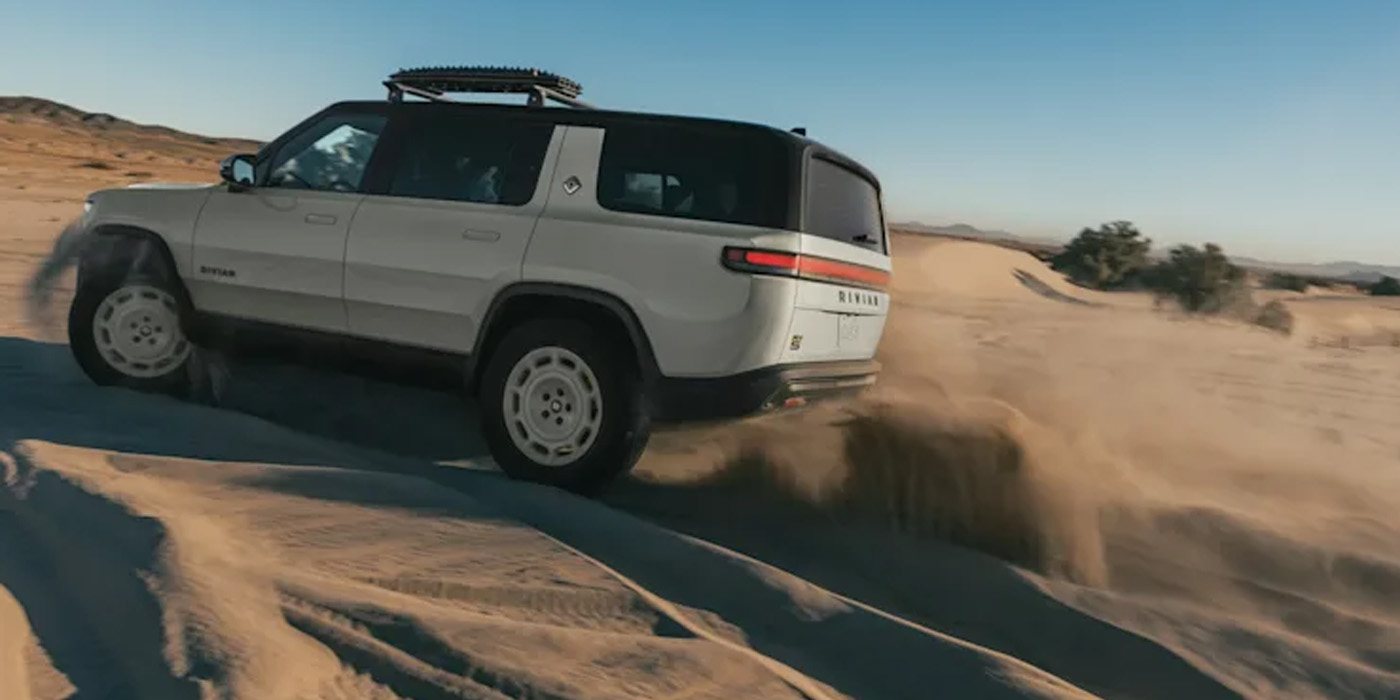
The third quarter of 2025 proved to be a watershed moment. Driven by aggressive summer sales incentives, new model launches (such as Rivian’s rugged California Dune Edition of the R1S), and a vastly matured charging network, sales erupted.
Total ZEV Sales (Q3 2025): 124,755 units
Market Share: 29.1% of all new vehicle sales
Battery Electric Vehicle (BEV) Breakdown: 108,685 units of the total ZEV sales were fully electric, representing a dramatic 30% jump compared to the previous quarter (Q2 2025).
This unprecedented quarter cements California’s position as the undisputed leader in North American vehicle electrification, widening the gap between it and secondary adoption states like Washington, Oregon, and New York.
Supporting Context & Metrics: Infrastructure, Model Diversity, and Market Dynamics
Market share growth does not happen in a vacuum. California’s Q3 2025 success is underpinned by two crucial metrics that have historically constrained EV adoption: vehicle choice and charging infrastructure availability.
Exploding Model Diversity
Consumer preference is rarely monolithic. For the electric transition to succeed, vehicles must be manufactured to suit every lifestyle—from compact urban commuters to rural families and outdoor enthusiasts.
Q1 2024: 105 ZEV models available to California buyers.
Q1 2025: 146 ZEV models available—a staggering 39% increase in model variety within a single year.
This diversification has broken down psychological barriers to adoption. Buyers seeking electric pickup trucks, three-row family SUVs, affordable hatchbacks, and luxury sedans now have multiple options from both domestic startups and global automotive giants. The introduction of regional special editions, such as Rivian’s California Dune Edition, highlights how automakers are tailoring aesthetics and marketing directly to the state’s outdoor-oriented demographic.
The Infrastructure Revolution: Defeating Range Anxiety
Perhaps the most significant development bolstering consumer confidence is the transformation of the state’s refueling landscape. For years, the narrative surrounding electric vehicles focused heavily on "range anxiety" and the scarcity of fast chargers.
Data from late 2025 paints a fundamentally different picture. Recent strategic state and private investments have pushed charging infrastructure density to historic highs. Notably, California now boasts 68% more EV charger ports than traditional gasoline dispensing nozzles.
California Energy Commissioner Nancy Skinner highlighted this milestone, noting that strategic deployment has ensured that nearly every resident in the state now lives within a 10-minute drive of an EV fast charger. This density rivals—and in some urban centers, surpasses—the legacy petroleum distribution network.
Furthermore, the economic and practical benefits are shifting consumer sentiment. Transitioning away from internal combustion engines means vehicle owners are permanently bidding farewell to volatile gasoline prices, messy and frequent oil changes, timing belt replacements, and costly engine tune-ups. The frictionless nature of plugging in at home overnight or topping up rapidly during a road trip has transformed the EV ownership experience from an exercise in planning to a seamless daily routine.
Official Statements: Political Will vs. Federal Friction
The record-breaking Q3 2025 sales data has ignited a familiar political debate, throwing the philosophical divide between California’s progressive environmental mandates and Washington’s shifting federal priorities into sharp relief.
Governor Gavin Newsom’s Defiant Stance
At a press conference addressing the Q3 numbers, California Governor Gavin Newsom did not mince words. He framed the state’s 29.1% ZEV market share as tangible proof that ordinary Californians are embracing clean energy, regardless of federal backtracking.
"We’re nearing a third of all new vehicles sold in the fourth-largest economy on the planet being clean cars," Newsom declared. "While Trump sells out American innovation to China, California will keep charging ahead on our path to a future of cleaner air."
Newsom’s remarks directly targeted federal debates surrounding vehicle emissions standards and potential rollbacks of clean-car incentives. By framing California’s market performance as a defense of domestic technological leadership against international competitors—specifically pointing to China’s dominance in battery supply chains—the Governor sought to rebrand environmental policy as a matter of economic and geopolitical survival.
Commissioner Nancy Skinner on Practical Realities
Shifting focus from high-level geopolitics to everyday consumer experiences, California Energy Commissioner Nancy Skinner emphasized the immediate, tangible perks driving everyday purchases.
Skinner pointed directly to the fruits of the state’s massive charging expansion program. By bridging the infrastructure gap, the state has neutralized the primary friction point for hesitant buyers.
"Now, new EV owners can enjoy a great driving experience, bidding goodbye to smelly gas stations, messy oil changes, and costly engine tune-ups," Skinner stated.
Her comments reflect a strategic pivot in government messaging: rather than relying solely on climate change warnings or regulatory coercion, state officials are increasingly marketing EVs as superior consumer products that offer financial savings and reduced daily hassle.
Future Outlook: The Road to 2035 and Beyond
As the dust settles on Q3 2025, industry analysts and state regulators are already looking toward the horizon. With nearly 30% of the market captured, the state is entering the second half of its journey toward the 2035 absolute mandate. However, the path forward is not entirely devoid of hurdles.
The 30% Federal Solar Tax Credit Sunset
While the transportation sector is electrifying at a record pace, complementary clean-energy sectors face impending fiscal cliffs. The federal 30% residential solar tax credit is scheduled to sunset at the end of 2025. Energy analysts warn that this expiration could temporarily cool the home solar market, which has historically shared a symbiotic relationship with EV adoption. Many California homeowners pair their electric vehicles with rooftop solar arrays and home battery storage systems to achieve true energy independence and shield themselves from utility rate hikes.
Platforms like EnergySage have reported a last-minute surge in homeowners seeking pre-vetted solar installers to lock in the 30% tax credit before it vanishes, emphasizing that integrated clean energy (solar + storage + EV) remains the gold standard for modern homeowners.
Grid Capacity and Equity Challenges
Looking ahead, the California Independent System Operator (CAISO) and utility providers face the ongoing challenge of scaling the electrical grid to handle millions of simultaneous vehicle charging sessions. While managed charging, vehicle-to-grid (V2G) technology, and home energy management systems are mitigating peak-load concerns, continued infrastructure investment will be paramount.
Furthermore, ensuring equitable access to ZEVs remains a central policy focus. While affluent suburban buyers were the primary early adopters, maintaining momentum requires expanding access to used EVs, localized charging hubs in multi-unit dwellings (apartment complexes), and continued point-of-sale rebates for low- and middle-income families.
Conclusion
California’s Q3 2025 ZEV figures represent a historic inflection point. By pushing nearly 1 in 3 new car sales into the zero-emission category, the state has proven that mass electrification is operationally and commercially viable at scale. Despite political friction at the federal level and shifting economic incentives, consumer demand, backed by world-class charging density and unyielding state policy, has turned the clean-transportation future into an irreversible present.