

Executive Overview
The global race to maximize electric vehicle (EV) efficiency is no longer confined to massive breakthroughs in battery chemistry or aerodynamic body designs. Increasingly, the frontier of innovation has shifted inward, deep into the microscopic circuitry that manages high-voltage power electronics.
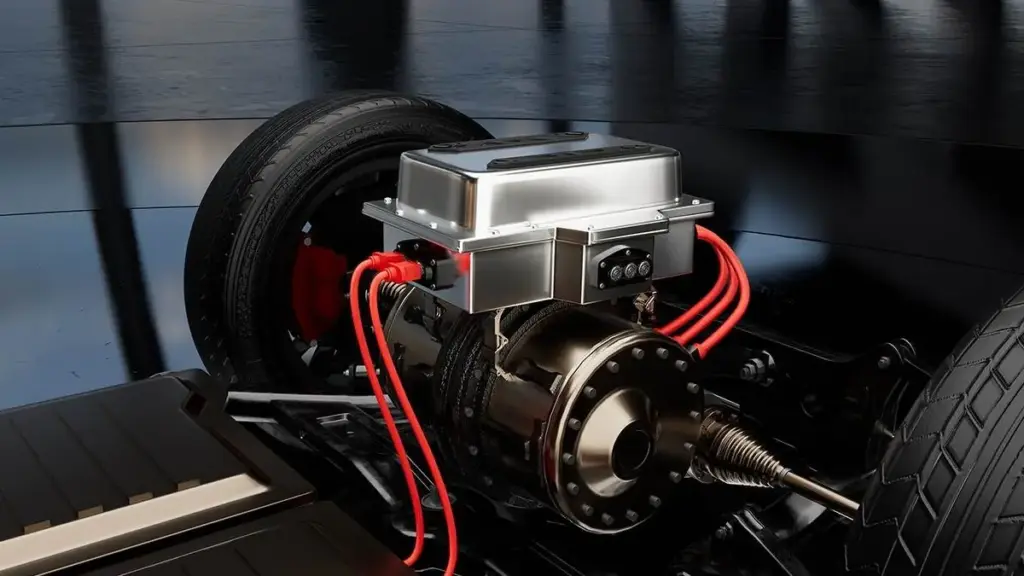
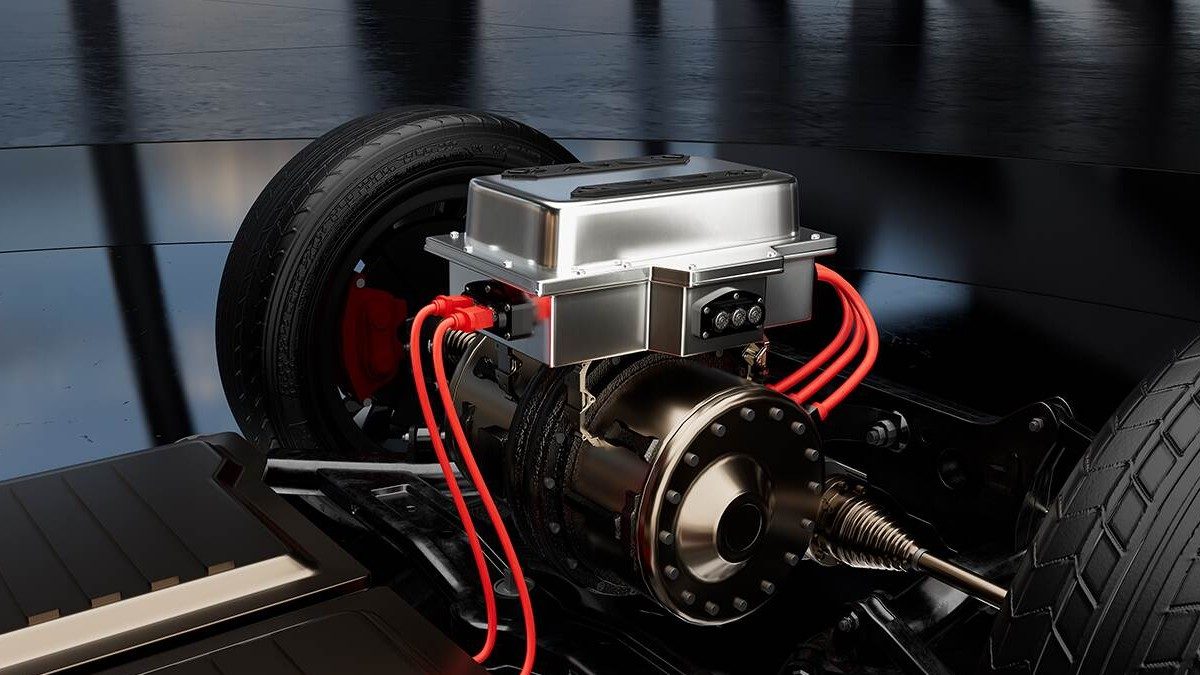
In this arena, Texas Instruments (TI) has introduced a technological leap forward: the TMCS2100-Q1, a tiny yet remarkably sophisticated multiaxial coreless Hall-effect current sensor. Designed specifically for integration into automotive traction inverters—the nerve centers regulating electricity flow from the battery pack to the electric motor—this component promises to address a persistent engineering bottleneck.
For years, automakers have faced a difficult compromise when selecting current sensors for their powertrains. Bulky, magnetic-core sensors offered high accuracy but added unwelcome weight and occupied precious physical space. Conversely, compact, coreless alternatives saved space and weight, but were chronically vulnerable to vibrational distortion, which introduced costly measurement errors.
TI’s TMCS2100-Q1 changes this calculus. By simultaneously measuring magnetic fields across both horizontal and vertical axes, the sensor reportedly achieves up to 20 times the accuracy of conventional single-axis coreless sensors. Even when physical vibrations shift the sensor out of alignment by fractions of a millimeter, error rates remain under 1%.
While a single semiconductor component will not single-handedly transform an EV’s operating range overnight, the cumulative impact of such micro-innovations is profound. By mitigating power fluctuations, reducing energy loss as heat and motor noise, and enabling lighter, more streamlined inverters, TI’s new sensor paves the way for the next generation of smoother, more efficient electric mobility.
Detailed Chronology: The Evolution of EV Power Management and the Sensor Breakthrough
To understand the significance of the TMCS2100-Q1, one must trace the rapid evolution of EV powertrain architectures over the past decade.
The Shift to High-Voltage Architectures
In the early days of modern mass-market electric vehicles, 400-volt battery systems were the undisputed industry standard. These systems handled moderate currents and pressures, allowing standard magnetic-core sensors to perform adequately without imposing severe packaging penalties. However, as consumer demand shifted toward ultra-fast charging and high-performance output, the automotive industry rapidly pivoted toward 800-volt architectures.
These high-voltage systems deliver significantly more power much more quickly. While this shortens charging times and improves vehicle dynamics, it also places extraordinary demands on power electronics. The traction inverter—which acts as the heavy-duty power manager, translating direct current (DC) from the battery into alternating current (AC) to drive the motor—must execute switching operations with blistering speed and absolute precision.
The Engineering Dilemma: Cores vs. Corelessness
Inside the traction inverter, current sensors play an indispensable role. They act as the system’s nervous receptors, measuring the exact volume and velocity of electricity surging toward the motor. Without real-time, ultra-precise data feedback, the inverter cannot orchestrate the magnetic fields within the motor efficiently.
Historically, engineers faced a stark design trade-off:
- Magnetic-Core Sensors: These devices feature a physical metal core that captures the magnetic field generated by electrical currents. They offer high reliability and accuracy, but their bulky physical footprint adds mass to the vehicle and complicates the thermal management of packed inverter housings.
- Coreless Sensors: These silicon-based alternatives eliminate the heavy magnetic core, resulting in a lightweight, compact footprint ideal for modern, space-constrained vehicle platforms. The fatal flaw, however, was vibration. As an EV navigates rough roads, potholes, and high-frequency motor oscillations, microscopic physical shifts throw off single-axis measurements, compromising powertrain efficiency.
The Multiaxial Innovation
Texas Instruments resolved this persistent vulnerability by developing a multiaxial detection method. Rather than relying on a single vector to read magnetic fields, the TMCS2100-Q1 measures magnetic flux density simultaneously across multiple planes (horizontally and vertically).
When vehicular vibration or thermal expansion shifts the sensor slightly out of its optimal position—by as little as 0.4 millimeters—the device’s internal logic processes the multidimensional data to instantly self-correct. This development bridges the gap between the compact nature of coreless sensors and the robust accuracy of traditional core-based systems, setting a new benchmark for automotive-grade semiconductor engineering.

Supporting Context & Metrics: Precision, Efficiency, and Real-World Impact
The performance metrics associated with the TMCS2100-Q1 highlight the microscopic tolerances required in modern EV design. Evaluating these figures reveals why minor hardware adjustments at the semiconductor level translate into tangible benefits for drivers on the road.
Breaking Down the Numbers
| Metric / Feature | Conventional Single-Axis Coreless Sensors | Texas Instruments TMCS2100-Q1 |
|---|---|---|
| Measurement Axes | Single-axis (Horizontal or Vertical) | Multiaxial (Simultaneous Horizontal & Vertical) |
| Relative Accuracy | Baseline standard | Up to 20x higher accuracy |
| Error Rate under Displacement | Highly susceptible to drift during vibration | Maintains <1% error with 0.4 mm physical shift |
| Target Integration Point | Various peripheral monitoring roles | High-precision Traction Inverter |
| Voltage Compatibility | Optimized for legacy 400V systems | Engineered for modern 400V and 800V architectures |
Eliminating Torque Ripple and Motor Noise
Why does a sub-1% measurement error matter so much? When an inverter miscalculates current flow—even by minute fractions—it delivers an uneven pulse of electricity to the motor stator. This phenomenon is known as torque ripple.
Torque ripple manifests physically as micro-surges or hesitation during acceleration. While casual drivers might simply perceive a less-than-silky acceleration curve, powertrain engineers view torque ripple as a double penalty:
- Energy Loss: The wasted energy caused by irregular current delivery does not vanish; it converts into excess heat within the motor windings and inverter circuits. Thermal management systems must work harder to dissipate this heat, drawing auxiliary power from the battery.
- Acoustic Signature: Inconsistent magnetic fields create audible whining and mechanical vibration, contributing to NVH (Noise, Vibration, and Harshness) levels inside the cabin.
By providing cleaner, mathematically compensated feedback loops, the TMCS2100-Q1 enables the inverter to drive the motor with near-perfect sinusoidal waveforms. The result is smoother acceleration, a quieter cabin experience, and lower thermal overhead.
Cumulative Efficiency Gains
It is important to maintain realistic expectations: no single semiconductor component will magically inject an additional 50 miles of range into an existing battery pack. Instead, modern EV efficiency is a game of marginal gains—the cumulative effect of hundreds of optimized components working in concert.
By utilizing a smaller, more reliable sensor, automakers can also redesign traction inverters to be more compact. Lighter inverters reduce overall curb weight, which incrementally boosts vehicle range. When combined with optimized software algorithms and high-efficiency wide-bandgap semiconductors like Silicon Carbide (SiC), sensors like the TMCS2100-Q1 help unlock the absolute maximum potential stored within modern lithium-ion and solid-state battery chemistries.

Official Industry Perspectives and Expert Analysis
While Texas Instruments has rolled out the technical specifications for the TMCS2100-Q1, the broader automotive technology sector is closely watching how tier-1 suppliers and original equipment manufacturers (OEMs) will adopt the component.
Industry analysts note that the transition toward software-defined vehicles and highly integrated electric powertrains places a premium on component reliability under harsh operating conditions. Automotive semiconductors must endure extreme thermal cycling, intense mechanical shock, and electromagnetic interference (EMI) over a guaranteed operational lifespan of 15 years or more.
Power electronics engineers have long sought a "holy grail" sensor that combines the mechanical resilience of solid-state microchips with immunity to positional mechanical drift. By tackling the vibration problem through multiaxial geometry rather than brute-force physical shielding, TI’s engineering team has addressed a fundamental limitation of Hall-effect sensing technology.
Furthermore, compliance with strict automotive safety integrity levels (such as ASIL certifications for functional safety) means that components like the TMCS2100-Q1 undergo rigorous validation before ever reaching production assembly lines. As automakers race to drive down manufacturing costs while simultaneously improving vehicle performance, the ability to substitute heavy, expensive magnetic-core assemblies with lightweight, highly accurate silicon sensors represents a major win for both supply chain logistics and vehicle dynamics.
Future Outlook: The Road Ahead for EV Powertrains
The introduction of the TMCS2100-Q1 points toward a broader trend in automotive engineering: the relentless miniaturization and intelligent optimization of foundational hardware.
As the EV market matures, consumer expectations are shifting from mere novelty—such as sheer acceleration figures—to holistic operational efficiency, long-term durability, and seamless everyday drivability. Innovations that quietly operate behind the scenes, ensuring that every electron drawn from the battery is translated into forward momentum with minimal waste, will define the competitive landscape for automakers in the latter half of the decade.

Looking forward, we can expect to see multiaxial coreless sensor technology migrate beyond traction inverters. Similar precision challenges exist within onboard chargers (OBCs), DC-DC converters, and even high-power industrial robotics systems. By solving the vibration-induced error problem in automotive powertrains, Texas Instruments has established a technical framework that will likely influence power electronics design across multiple heavy-duty electrification sectors for years to come.
Ultimately, the journey toward the ultimate, ultra-long-range electric vehicle will not be won by a single revolution, but by thousands of microscopic refinements—each one bringing engineers closer to absolute perfection in motion and energy management.



