Executive Overview
In an era defined by rapid global climate change and widespread ecological degradation, traditional conservation models have historically sidelined the very populations best equipped to protect fragile ecosystems: Indigenous communities. Too often, international climate policies and carbon offset mechanisms have operated as top-down, bureaucratic exercises that dispossess local inhabitants under the banner of environmental preservation. However, a groundbreaking initiative in northern Tanzania is turning this paradigm on its head.
The Yaeda-Eyasi carbon offset project—a collaborative endeavor highlighted in recent footage released by Carbon Tanzania—offers a compelling blueprint for how community-led conservation can simultaneously preserve biodiversity, defend Indigenous land rights, and generate sustainable economic development. By directly leveraging the voluntary carbon market, the indigenous Datooga and Hadza communities of the Yaeda Valley are proving that local stewardship is not only more effective than external intervention, but it is also essential for long-term ecological resilience.
At its core, the Yaeda-Eyasi initiative links the global demand for carbon offsets with localized environmental defense. Indigenous communities are financially compensated for protecting their ancestral forests from illegal encroachment, agricultural conversion, and outside exploitation. This revenue stream supports a robust network of locally appointed rangers who patrol the landscape, secures stable incomes, and funds vital social infrastructure, including schools and healthcare clinics.
As climate change accelerates and the pressure on sub-Saharan ecosystems mounts, the Yaeda-Eyasi project stands as a resilient shield against ecological collapse. Yet, as project managers and community members alike emphasize, the initiative is about much more than carbon metrics and emission reductions. It is about cultural survival. As one community member starkly warned, the withdrawal of the carbon project would spell catastrophe for a way of life that has endured for millennia. This report provides an in-depth investigation into the mechanics, impacts, challenges, and future outlook of the Yaeda-Eyasi Landscape Project, contextualizing its role within the broader framework of global climate action.
Detailed Chronology: The Evolution of the Yaeda-Eyasi Project
To fully appreciate the transformative impact of the Yaeda-Eyasi carbon offset project, it is necessary to examine the historical trajectory that brought the Datooga and Hadza communities to this critical juncture. The success of the project is not an overnight phenomenon; rather, it is the result of years of dedicated advocacy, legal empowerment, and adaptive community management.
Phase One: Historical Marginalization and Land Vulnerability (Pre-2010s)
For generations, the Hadza—one of the last remaining hunter-gatherer groups in Africa—and the Datooga, a community of traditional pastoralists, inhabited the semi-arid acacia woodlands surrounding Lake Eyasi and the Yaeda Valley. For these groups, the land is not merely a resource to be exploited, but an ancestral sanctuary inextricably linked to their cultural identity.
However, throughout the late 20th and early 21st centuries, these communities faced unprecedented threats to their survival. Rapid population growth in surrounding regions, agricultural expansion, and an influx of external livestock herders exerted immense pressure on the Yaeda Valley. Invasions by outsiders threatened to fragment the landscape, depleting wild game populations essential for the Hadza and restricting vital grazing migratory routes for the Datooga. Lacking formal land titles and recognition under national laws, the communities found themselves increasingly vulnerable to land grabbing and marginalization.
Phase Two: Grassroots Organization and Legal Empowerment (2010–2014)
Recognizing the imminent threat of displacement and habitat destruction, local leaders, alongside supportive non-governmental organizations like Carbon Tanzania, initiated a concerted effort to secure formal land tenure. A critical milestone was achieved when the communities successfully navigated Tanzania’s legal framework to attain Certificates of Customary Rights of Occupancy (CCROs).
By securing legal ownership over their ancestral lands, the Hadza and Datooga gained the authority to legally exclude outsiders and dictate how their territories were managed. This legal foundation was the indispensable prerequisite for any subsequent conservation initiative. Without secure land tenure, community-based carbon trading would have been legally and operationally impossible.
Phase Three: Integration into the Voluntary Carbon Market (Mid-2010s)
With their land rights legally affirmed, the communities partnered with Carbon Tanzania to pioneer a methodology that could monetize the ecological services their traditional land-use practices provided. Forests left intact by the Hadza and Datooga naturally sequestered significant amounts of carbon dioxide, preventing emissions that would have occurred through deforestation and land-use change.
By quantifying these avoided emissions, the project was able to generate Verified Emission Reductions (VERs). These carbon credits were then sold on the voluntary carbon market to corporate entities and conscious consumers seeking to offset their carbon footprints. Crucially, the revenue generated from these sales was funneled directly back into the community, establishing a direct financial correlation between forest preservation and local economic wellbeing.
Phase Four: Expansion, Resilience, and Institutional Maturation (Present Day)
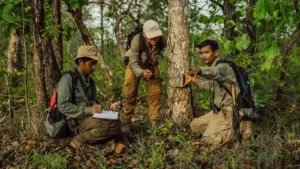
Today, the Yaeda-Eyasi project represents a mature, self-sustaining model of community conservation. Carbon revenue has stabilized, allowing for the institutionalization of local resource management. Locally appointed rangers utilize modern monitoring tools alongside traditional ecological knowledge to protect the boundaries of the Yaeda Valley. Furthermore, the tangible dividends of the project—ranging from enhanced honey production to newly built educational and medical facilities—have cemented community buy-in, transforming conservation from an external imposition into a deeply internalized cultural mandate.
Supporting Context & Metrics: Ecological and Socioeconomic Impact
The success of the Yaeda-Eyasi project cannot be understood through qualitative narratives alone; it is underscored by measurable ecological recovery and profound socioeconomic transformation.
Ecological Restoration and Deforestation Prevention
Before the implementation of the carbon offset project, the acacia-commiphora woodlands of the Yaeda Valley faced severe degradation due to charcoal production, shifting agriculture, and uncontrolled logging. Today, the narrative has shifted toward active ecological recovery.
- Deforestation Rates: The project has successfully curbed illegal land clearing, resulting in near-zero deforestation within the project boundaries compared to baseline projections and unprotected neighboring areas.
- Biodiversity Revival: As the canopy recovers and human-induced disturbances decline, populations of indigenous flora and fauna are rebounding. Wildlife species critical to the Hadza subsistence hunting lifestyle are experiencing stable habitats.
- Ecosystem Services: Beyond carbon sequestration, the restored forests regulate local microclimates, prevent soil erosion, and safeguard vital watersheds that feed into Lake Eyasi.
Socioeconomic Dividends and Community Empowerment
Carbon finance has fundamentally altered the economic reality of the Yaeda Valley. Rather than relying on sporadic, donor-dependent aid, the communities receive predictable, performance-based revenue derived from the environmental integrity of their lands.
+-----------------------------------------------------------------+
                    CARBON REVENUE ALLOCATION
+-----------------------------------------------------------------+
       |                                   |
       v                                   v
[ Ranger Salaries & ]             [ Social Infrastructure ]
[ Forest Monitoring ]             [ Schools & Health Clinics ]
       |                                   |
       +-----------------+-----------------+
                         |
                         v
         [ Enhanced Community Resilience & ]
[ Cultural Preservation (Hadza/Datooga) ] - Sustainable Livelihoods for Rangers: Locally appointed community members are employed as forest rangers. Equipped with smartphones and monitoring software, these rangers patrol the terrain, documenting illegal activities and tracking wildlife. This employment provides stable, dignified incomes that support extended families.
- Traditional Economies: The health of the forest directly correlates with traditional economic activities. For instance, enhanced forest cover and floral diversity have led to a noticeable increase in wild honey production—a critical food source and trade commodity for the Hadza. Meanwhile, preserved pastoral lands ensure that the Datooga can sustain their livestock without degrading overgrazed patches.
- Infrastructure Development: Carbon revenues have been strategically invested in community-prioritized infrastructure. Schools have been expanded to provide educational opportunities closer to home, reducing the need for children to travel vast, hazardous distances. Health clinics have brought essential medical services directly to the Yaeda Valley, drastically improving health outcomes for populations historically underserved by state health systems.
Official Statements and Perspectives
The human element remains at the heart of the Yaeda-Eyasi initiative. Insights from project leadership and community participants reveal the delicate balance between global climate mechanisms and local lived realities.
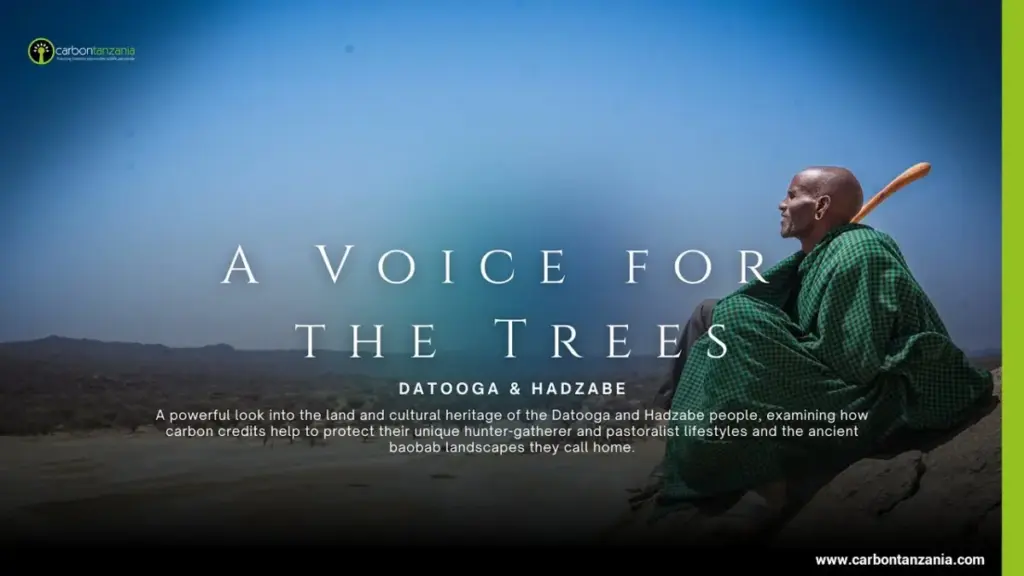
In recent video documentation provided by Carbon Tanzania, members of the Datooga and Hadza communities articulate the profound spiritual and physical connection they share with their environment. As one community elder poignantly expressed:
"This land has been our home forever. It is part of who we are."
This sentiment underscores the reality that for Indigenous peoples, conservation is not a transactional employment sector; it is an existential necessity. The survival of the forest guarantees the survival of their culture, language, and social structure.
German Sedoyeka, the Yaeda-Eyasi Project Manager, highlights the precarious nature of this fragile ecosystem and the indispensable role that carbon finance plays in maintaining it. Reflecting on conversations with local stakeholders, Sedoyeka notes:
"I once asked a community member what would happen if the carbon project were to leave. He said, ‘If the carbon project were to leave today, the situation would be very bad. Life would be very difficult.’"
This stark warning serves as a sobering reminder of the interconnectedness of global carbon markets and remote Indigenous livelihoods. Without the financial scaffolding provided by carbon offset purchasers, the economic pressures that drive land conversion would immediately resurface, threatening to undo decades of painstaking conservation work.
Future Outlook: Challenges, Opportunities, and Scalability
As the Yaeda-Eyasi Landscape Project looks toward the future, it navigates a complex landscape characterized by both immense opportunity and systemic vulnerability.
Challenges on the Horizon
- Voluntary Carbon Market Volatility: The project’s financial sustainability is directly tied to the health and pricing dynamics of the voluntary carbon market. Recent criticisms and fluctuating confidence in global carbon offsets have occasionally created market uncertainties. Ensuring continuous corporate demand for high-integrity, community-led credits is paramount.
- External Pressures and Climate Stress: Increasing temperatures and shifting rainfall patterns in East Africa pose long-term ecological risks to the acacia woodlands. Prolonged droughts could intensify resource competition between pastoralists and agriculturalists, placing new strains on local governance structures.
- Scaling Governance: As the project matures, maintaining transparent, equitable distribution of carbon revenues among growing populations requires robust internal governance and continuous democratic oversight within the Hadza and Datooga communities.
Opportunities for Replication
Despite these challenges, the Yaeda-Eyasi model offers a shining example for conservation initiatives across the globe. By embedding Indigenous rights at the center of carbon accounting, the project addresses the twin crises of biodiversity loss and climate change while championing social justice.
Organizations seeking to contribute to such high-impact initiatives can look to portfolios like the Climate Impact Portfolio managed by specialized sustainable travel and conservation entities, which vet and support projects demonstrating rigorous third-party verification, tangible community benefits, and uncompromising ecological integrity.
Conclusion
The Yaeda-Eyasi carbon offset project transcends standard environmental accounting. It is a living testament to the efficacy of Indigenous land stewardship. By honoring the rights, wisdom, and labor of the Datooga and Hadza communities, the project demonstrates that the most effective guardians of the earth are those who have called it home for millennia. Ensuring the continuity of initiatives like Yaeda-Eyasi is not merely an investment in carbon sequestration; it is a moral imperative to protect cultural diversity, uphold human rights, and secure a habitable planet for generations to come.