Executive Overview
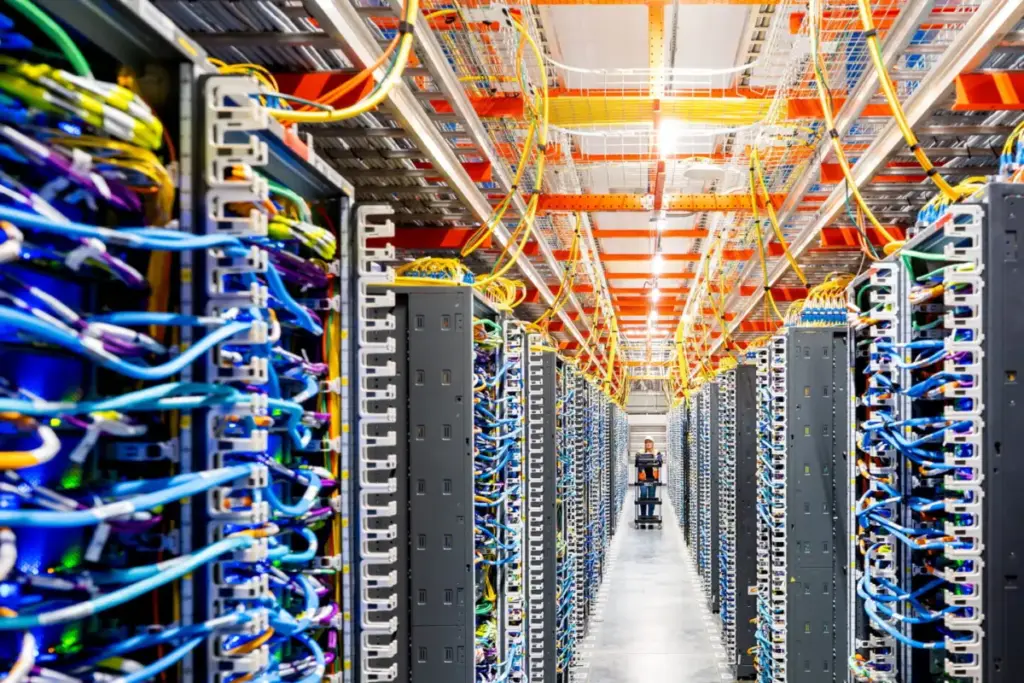
The global debate surrounding the environmental impact of artificial intelligence has largely coalesced around a single, visible metric: the staggering electricity consumption of physical data centers. As hyperscale technology conglomerates build out the vast computational infrastructure required to power large language models and advanced machine learning, grid operators and environmental advocates have sounded the alarm. The numbers are undeniable. By the end of the decade, the energy consumed by AI infrastructure is projected to expand exponentially, rivaling the power demand of entire developed nations.
However, an authoritative investigation reveals that this preoccupation with grid infrastructure masks a far more consequential climate hazard. While public discourse and institutional reports from entities like the International Energy Agency (IEA) focus on whether renewable energy can keep pace with server farms—or whether AI-driven efficiency gains might balance the ledger—a far more immediate threat operates in plain sight. Deep within the energy sector, hyperscale tech companies are licensing custom AI frameworks directly to oil and gas conglomerates. These algorithms are specifically designed to accelerate geological exploration, optimize drilling trajectories, minimize equipment downtime, and drastically lower the operational costs of extracting fossil fuels.
This systemic blind spot inspired a significant internal challenge within Big Tech. In 2024, Holly Alpine, a senior manager at Microsoft, along with her husband Will Alpine, also a Microsoft manager, resigned from their positions. Launching a targeted advocacy campaign, the couple partnered with academic researchers to quantify a metric Big Tech has long sought to obscure: the massive volume of "enabled emissions" generated when advanced artificial intelligence is harnessed to extract planet-heating hydrocarbons faster, cheaper, and more efficiently.
Detailed Chronology: The Unseen Convergence of Cloud Computing and Extraction
+-----------------------------------------------------------------------------------+
| CHRONOLOGY OF EVENTS                                                              |
+-----------------------------------------------------------------------------------+
| 2017–2021: Hyperscalers aggressive market Cloud/AI services to Oil & Gas majors.  |
| 2022–2023: GenAI boom; IEA highlights server power draw; PR pivots to Green AI.   |
| Early 2024: Holly & Will Alpine resign from Microsoft over enabled emissions.     |
| 2024–Pres:  Deep-dive audits begin quantifying AI-driven hydrocarbon optimization. |
+-----------------------------------------------------------------------------------+
The Cloud Expansion Era (2017–2021)
Long before the public emergence of generative AI platforms, major cloud providers—including Microsoft Azure, Amazon Web Services (AWS), and Google Cloud—identified the upstream oil and gas sector as a primary growth market. Cloud sales teams actively competed for lucrative contracts with supermajors such as ExxonMobil, Chevron, Shell, and BP. The core value proposition was simple: digital transformation through machine learning.
During this period, tech firms established dedicated "Energy and Resource" divisions. They deployed computer vision to process complex seismic scans, natural language processing to organize decades of subterranean well data, and predictive analytics to optimize pump performance. By late 2020, pressure from internal employee groups led Google to pledge it would no longer build custom AI tools for upstream oil and gas extraction. However, legacy enterprise cloud partnerships remained intact, and other tech giants expanded their offerings to the sector under the umbrella of "operational efficiency."
The Generative AI Boom and Narrative Pivot (2022–2023)
The launch of advanced generative AI models triggered a massive construction wave for specialized data centers equipped with graphics processing units (GPUs). Energy consumption figures spiked globally, prompting international institutions like the IEA to closely track the industry’s power draw.
To offset mounting public scrutiny, Big Tech firms and industry analysts leaned heavily into a counter-narrative: AI as a net-positive force for decarbonization. Corporate sustainability reports emphasized how machine learning could optimize renewable energy grids, advance battery chemistry research, and track global methane leaks. This framing presented data center electricity consumption as a temporary operational cost that would ultimately yield far greater macroeconomic emissions reductions.
The Insider Reckoning and Research Push (2024–Present)
By 2024, the contradiction between corporate net-zero pledges and active partnerships with fossil fuel producers led to high-profile internal friction. Holly Alpine, who had managed sustainability and tech ethics initiatives at Microsoft, concluded that internal advocacy had hit an insurmountable wall.
Recognizing that corporate carbon accounting deliberately ignored the real-world emissions enabled by their software products, Holly and Will Alpine resigned from Microsoft in 2024. Joining forces with independent climate scientists and policy researchers, the duo initiated a rigorous, multi-year empirical effort. Their goal was to move past marketing claims, audit hyperscale contracts across the energy sector, and establish a scientific baseline for the volume of extra oil and gas unlocked by artificial intelligence.
Supporting Context & Metrics: Calculating the True Environmental Cost
To understand the climate impact of artificial intelligence, analysts must separate direct infrastructure emissions from indirect, algorithmic effects.
┌─────────────────────────────────────────────────────────────────────────┐
│                      THE DUAL CLIMATE IMPACT OF AI                      │
├─────────────────────────────────────────────────────────────────────────┤
│ 1. DIRECT INFRASTRUCTURE IMPACT (Visible Grid Strain)                   │
│    • Data center power demand to triple by 2030.                        │
│    • Exceeds combined energy use of Pakistan, Bangladesh, & Nigeria.    │
│    • Drives new fossil fuel investments (gas peaker plants) in the US.  │
│                                                                         │
│ 2. INDIRECT ENABLED EMISSIONS (The Hydrocarbon Multiplier)              │
│    • Seismic Processing: Hydrocarbon mapping accelerated from mos to days│
│    • Reservoir Modeling: Maximizes output from declining wells.          │
│    • Cost Suppression: Lowers break-even costs per barrel of oil.        │
└─────────────────────────────────────────────────────────────────────────┘
Grid Strain and the Fossil Fuel Revival
The physical footprint of AI is substantial. The electricity required to train and run inference on frontier models is growing at an unprecedented rate.
- 2030 Projections: According to estimates cited by the United Nations and the IEA, the electricity consumption of global data centers is projected to nearly triple by 2030. At that stage, server farms will consume more electricity annually than the combined national grids of Pakistan, Bangladesh, and Nigeria—home to over 430 million people.
- Current Baseline: Globally, data centers currently account for slightly less than 1% of total greenhouse gas emissions. However, localized impacts are acute. In the United States, utility companies are delaying the retirement of coal-fired power plants and building new natural gas peaker facilities to meet the concentrated, non-stop power demand of AI data centers.
- Capital Allocation: In certain US energy markets, capital investment in fossil fuel power generation built specifically to support data centers now rivals or exceeds regional investments in utility-scale solar and wind storage.
The "Scope 4" Reality: Algorithmic Hydrocarbon Extraction
While grid strain poses a serious challenge for renewable energy transitions, the climate impact of software applied to oil exploration is orders of magnitude larger. In corporate accounting, emissions are categorized as Scope 1 (direct operations), Scope 2 (purchased power), and Scope 3 (value chain). Critics and researchers use the informal term "Scope 4" or "Enabled Emissions" to capture the real-world impact of AI tools applied to fossil fuel extraction.
AI algorithms provide significant efficiency gains across the upstream oil and gas lifecycle:
- Seismic Inversion and Geological Analysis: Traditional processing of subterranean 3D seismic data required months of supercomputing time to identify oil pockets. Deep learning algorithms process these datasets in days, reducing exploration risk and pinpointing deep-water and shale reserves that were previously uneconomic to drill.
- Automated Directional Drilling: Machine learning models process real-time sensor data from drill bits thousands of feet underground, automatically adjusting parameters to stay within the most productive hydrocarbon layers. This increases well yield while drastically reducing drilling time.
- Reservoir Simulation and Enhanced Recovery: AI models predict how fluid flows through porous rock over decades, enabling operators to strategically inject water, gas, or chemicals to extract maximum volume from aging fields.
By compressing exploration timelines and slashing production costs, AI directly lowers the break-even price per barrel of oil. In a global energy market driven by commodity economics, reducing production costs prolongs fossil fuel reliance, directly undercutting global carbon reduction targets.
Official Statements and Stakeholder Perspectives
The debate over Big Tech’s engagement with the energy sector features sharply contrasting views from technology executives, international oversight bodies, and climate researchers.
The Institutional and Tech Industry Narrative: Net-Positive Efficiency
Technology giants and certain international organizations maintain that AI is an indispensable tool for achieving global climate goals.
"The deployment of digital technologies and AI offers unprecedented opportunities to optimize our energy systems. From forecasting variable renewable energy generation to enhancing the structural efficiency of industrial supply chains, the net-positive applications of these systems far outweigh their operational energy footprint."
— Summarized position from recent International Energy Agency (IEA) analytical frameworks
In official statements, major technology providers argue that supplying cloud tools to traditional energy companies helps those firms transition to lower-carbon operations. They contend that AI optimizes operational workflows, lowers fugitive methane emissions, and assists energy conglomerates in managing carbon capture and storage (CCS) initiatives.
The Whistleblower Counter-Argument: Enabled Emissions
This perspective is rejected by former insiders and independent researchers, who point to a fundamental conflict between tech sustainability claims and their commercial contracts.
"There is a deep narrative misdirection happening across the tech industry. Companies publish glossy sustainability reports highlighting solar-powered data centers, while quietly selling enterprise AI to fossil fuel companies to help them extract millions of additional barrels of oil. You cannot claim to be a climate leader while engineering the tools that make fossil fuel extraction faster and cheaper."
— Holly Alpine, former Microsoft Senior Manager and Co-Founder of the Software Climate Audit Campaign
Research partners collaborating with the Alpines emphasize that optimizing an extractive industry does not make it sustainable; it simply lowers the cost of environmental damage.
"Measuring a data center’s electricity bill while ignoring the millions of metric tons of carbon unlocked by the algorithms running inside those servers is like counting the electricity used by a weapon factory’s assembly line while ignoring the weapon’s impact in the field. The math is intentionally incomplete."
— Lead Researcher, Independent Environmental Data Coalition
Future Outlook and Strategic Implications
The campaign spearheaded by Holly and Will Alpine, alongside growing academic scrutiny, is forcing a re-evaluation of how software is accounted for in corporate climate commitments. Over the coming years, several structural shifts are likely to redefine the intersection of artificial intelligence, big tech, and energy policy.
┌─────────────────────────────────────────────────────────────────────────┐
│                      FUTURE REGULATORY & ETHICAL HORIZONS               │
├─────────────────────────────────────────────────────────────────────────┤
│ • GHG Protocol Revisions: Standardizing "enabled emissions" metrics.    │
│ • Targeted EU Regulations: Mandating full-lifecycle Scope 3 disclosures. │
│ • Tech Workforce Mobilization: Ethics-driven retention challenges.     │
│ • Energy Shift: Dual pressures on data center footprint & AI contracts. │
└─────────────────────────────────────────────────────────────────────────┘
Regulatory Scrutiny and Accounting Reforms
Current carbon reporting frameworks, such as the Greenhouse Gas Protocol (GHG Protocol), do not mandate the reporting of enabled emissions. As a result, software developers are not required to disclose the carbon footprint generated by clients using their algorithms.
However, regulatory pressures are mounting. The European Union’s Corporate Sustainability Due Diligence Directive (CSDDD) and evolving reporting mandates from global financial regulators are pushing for greater transparency across software value chains. If regulatory bodies adopt standardized accounting metrics for enabled emissions, technology companies could face significant reputational and legal risks for directly assisting fossil fuel expansion.
Workforce Activism and Ethics in Engineering
The insider movement led by former employees reflects a broader shift among software engineers and data scientists. Similar to early ethics movements around military AI, tech workers are increasingly questioning the alignment of their daily work with corporate climate promises. This internal pressure could force software providers to implement strict ethical boundary policies—similar to existing restrictions on AI use in surveillance or weapons production—prohibiting the use of custom machine learning models for upstream fossil fuel exploration.
The Path Forward
As the planet faces accelerating climate impacts, the technology industry stands at a crossroads. Focus can no longer remain solely on building greener data centers powered by wind and solar power. The true test of Big Tech’s commitment to sustainability will lie in its willingness to confront the commercial applications of its software. Until algorithms designed to maximize oil and gas extraction are brought into the public balance sheet, AI’s overall impact on the global climate will remain deeply problematic.