Executive Overview
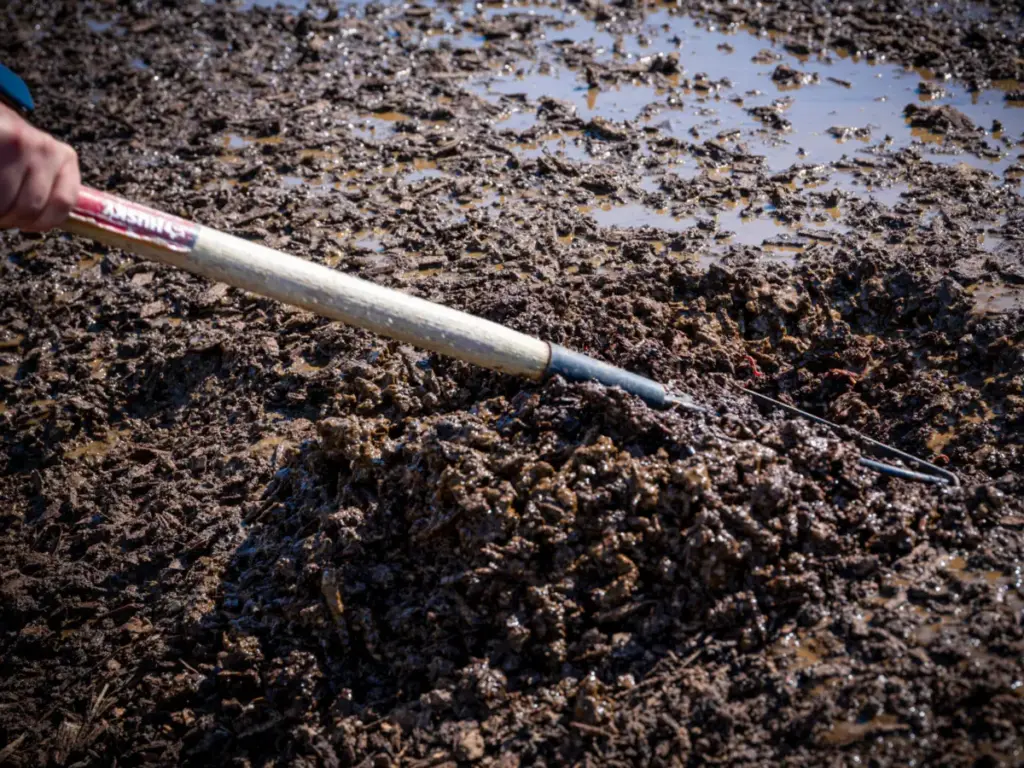
In the agricultural heartland of California’s Central Valley, beneath the baking sun of a Hickman afternoon, a quiet revolution is taking place in the management of livestock waste. Anthony Agueda, a third-generation dairy farmer, reaches into a damp, dark mound of wood chips and crushed river rock that stretches across the equivalent of six football fields. Pulling up a clump of earth, he reveals a writhing mass of red earthworms.
Beneath this superficial layer lie hundreds of thousands more invertebrates. Together with specialized microbial communities, they form a massive natural biofilter. This system—known as vermifiltration—is designed to drastically cut the methane, nitrous oxide, and water pollution generated by the hundreds of Holstein cows that inhabit the family’s Alberto Dairy.
As the livestock industry faces mounting pressure to address its massive environmental footprint, California has positioned itself as a global test lab for agricultural emissions policy. Driven by aggressive state mandates, billions of dollars in state grants, and evolving market-based mechanisms, dairy operators are rethinking how they handle the millions of tons of manure produced annually. While massive anaerobic digesters have long dominated the conversation—and captured the lion’s share of subsidies—technologies like vermifiltration are emerging as viable, lower-cost alternatives for mid-sized operations.
Yet, the path forward is far from straightforward. The industry is gripped by a complex web of scientific debates, economic incentives, regulatory ambiguities, and questions over the true integrity of voluntary carbon offset markets. As California weighs the implementation of stricter rules to meet its climate goals, the success or failure of these agricultural experiments will carry profound implications for global food systems and climate mitigation strategies alike.
Detailed Chronology & Technological Evolution
From Lagoons to Biofilters: The Operational Shift
For decades, the standard playbook for managing livestock waste on cattle and swine farms has remained largely unchanged. Operations typically flush manure from barns into open-air lagoons or holding tanks. This practice creates a foul-smelling, low-oxygen slurry that is a breeding ground for methanogens—microorganisms that consume organic compounds and release methane as a byproduct. Alongside methane, these lagoons produce nitrous oxide, both of which are potent greenhouse gases with warming potentials dozens to hundreds of times greater than carbon dioxide over a century.

Traditionally, this liquid slurry is later spread across agricultural fields as a fertilizer. When applied excessively or improperly, however, it leaches nitrates into local groundwater aquifers—posing severe human health risks—and runs off into rivers and coastal waters, triggering oxygen-depleting algae blooms and marine dead zones.
Faced with tightening environmental regulations and aging infrastructure, operations like the Alberto Dairy are pivoting toward advanced biological and mechanical interventions. Founded 45 years ago by Antonio Alberto, the family-run dairy moved to Hickman in 1989. In October 2024, the farm integrated a patented vermifiltration system developed by the Chilean firm BioFiltro.
How Vermifiltration Works
The mechanics of vermifiltration replace the oxygen-depleted environment of traditional lagoons with an aerobic biofilter. At the Alberto Dairy, manure is washed from the barns into a collection pit. Industrial pumps then funnel the wastewater through a series of V-shaped metal screens that mechanically separate most of the solid material from the liquid.
While a conveyor belt whisks away the solids to be composted for cow bedding or fertilizer, the remaining wastewater is pumped to an overhead irrigation system. This tubular structure travels on wheels along gravel tracks, systematically sprinkling the wastewater across the vast beds of wood chips and crushed rock.
According to BioFiltro, once the water is applied, it takes roughly four hours to percolate through the three-foot-deep medium. During this transit, the resident earthworms and aerobic microbes rapidly consume and digest the remaining organic contaminants. The resulting clean water is then captured and cycled back into the farm’s irrigation network, significantly reducing odors, preventing pipe-clogging sludge, and improving overall herd health.

Supporting Context & Metrics: The Scale of the Problem
The Global Manure Footprint
Livestock waste is a major driver of agricultural greenhouse gas emissions. According to estimates by the World Resources Institute (WRI), manure management on dairy and swine farms accounts for roughly 1.6% of total U.S. greenhouse gas emissions. On a global scale, manure storage and processing contribute about 10% of the entire livestock sector’s impact on climate change.
"Farms have become larger in the past two decades or so, so there’s much more manure—and that has to be stored somewhere," notes Swati Hegde, global manager of agricultural methane at WRI.
California’s Regulatory Landscape
In the United States, California has enacted the most aggressive policy framework specifically targeted at reducing livestock methane emissions. The state’s dairy sector accounts for approximately 45% of its total methane pollution, with more than half of that volume originating directly from manure.
In 2016, California passed Senate Bill 1383 (SB 1383), requiring dairies, landfills, and other industries to slash methane emissions by 40% below 2013 levels by 2030. To achieve this, the California Air Resources Board (CARB) established various incentive and grant programs, such as the Alternative Manure Management Program (AMMP) and the Dairy Plus Program.
State estimates suggest that through these initiatives and a broader contraction in livestock numbers driven by economic pressures, the dairy sector is on track to reduce annual methane emissions by the equivalent of 5 million metric tons of carbon dioxide by 2030. However, this projection still leaves the state roughly 4 million tons short of its statutory target under SB 1383.

The Domination and Discontents of Anaerobic Digesters
To date, the vast majority of California’s achieved methane reductions have come from anaerobic digesters. These systems capture biogas from covered manure lagoons, clean it, and convert it into pipeline-quality biomethane. Under California’s Low Carbon Fuel Standard (LCFS) program, participating dairies can generate lucrative credits and sell them to petroleum refineries and major polluters, generating more than $1 billion for farms since 2020.
Despite their financial success, anaerobic digesters face fierce criticism:
- High Capital Costs: Digesters are financially viable only for very large operations housing 2,000 or more cattle, leaving out the vast majority of independent dairies.
- Neglected Water Pollution: Because digested manure is still frequently spread across fields, digesters do little to mitigate groundwater nitrate contamination and can occasionally exacerbate water quality issues.
- Resource Misallocation: Energy policy experts, such as Dr. Danny Cullenward of the University of Pennsylvania’s Kleinman Center, argue that the massive subsidies flowing into digesters have diverted precious financial and institutional resources away from scalable, holistic alternatives like solid separation and vermifiltration.
Official Statements & Scientific Debate
The Science of Worms and Microbes
While companies like BioFiltro market their systems around the biological digestion power of earthworms, independent scientists offer a nuanced perspective on the underlying mechanisms.
Dr. Frank Mitloehner, a professor and chair of the Department of Animal Science at the University of California, Davis, initially approached BioFiltro’s claims with skepticism, particularly regarding nitrogen reduction. However, his independent monitoring of a similar vermifiltration setup at the Fanelli Dairy in Hilmar, California, published in 2018, concluded that the system successfully reduced ammonia emissions from wastewater by roughly 90%.
Mitloehner argues that while earthworms play a role, the primary driver of purification is the porous matrix of wood chips and rocks, which establishes an aerobic environment. This oxygen-rich setting allows specialized microbes to convert reactive nitrogen compounds into harmless nitrogen gas, which comprises 78% of Earth’s atmosphere, thereby preventing the formation of groundwater-polluting nitrates.

However, scientific consensus remains elusive regarding methane mitigation. While industry-backed and partner-supported studies have concluded that vermifiltration eliminates the vast majority of methane emissions, Mitloehner’s independent study observed that methane emissions were roughly 85% higher than those from a standard lagoon.
Researchers from both sides emphasize that methodological differences, monitoring periods, and equipment variations complicate direct comparisons. Patrick Beckett, BioFiltro’s vice president of quality and R&D, defends the company’s research as peer-reviewed and scientifically sound, welcoming additional independent evaluations as the technology expands.
The Carbon Offset Controversy
Beyond biology, vermifiltration systems have become embroiled in debates over voluntary carbon markets and corporate supply chain accounting. BioFiltro’s business model relies heavily on generating carbon credits from its installations. Companies like the Swiss food giant Nestlé have purchased over 150,000 credits generated by vermifiltration projects to offset their corporate footprints.
Yet, carbon market watchdogs raise critical questions regarding "additionality"—the principle that carbon offsets must fund emissions reductions that would not have occurred anyway. Grayson Badgley, a research scientist at CarbonPlan, argues that if state grant programs, legal pressures, or looming regulatory crackdowns are already compelling dairies to clean up their operations, carbon credits may simply reward business-as-usual compliance rather than generating net-new climate action.
"If lots of dairies are cleaning up their act ahead of pending regulation, it really does seem like the regulation, not offsets, is driving that action," Badgley notes. "Trying to collect as many offsets prior to that deadline might adhere to the rules of the market, while still raising questions about whether those rules have enabled real climate action."

Industry representatives vehemently push back against this critique. Anthony Agueda maintains that the massive capital investment required to install the system at the Alberto Dairy would have been financially unviable without projected carbon credit revenues. BioFiltro executives similarly stress that continuous sensor monitoring and strict third-party verification ensure transparency in measuring actual greenhouse gas reductions.
Future Outlook
As California contemplates transitioning its incentive-based nudge policies into mandatory regulatory sticks—such as new rules proposed by CARB to force compliance with SB 1383 targets—the agricultural sector stands at a crossroads.
For mid-sized family farms like the Alberto Dairy, vermifiltration offers a pragmatic bridge between economic survival and strict environmental stewardship. By transforming wastewater treatment facilities into functional "soil production sites" that yield valuable worm castings and clean irrigation water, these systems demonstrate that agricultural waste can be repurposed into an economic asset.
Nevertheless, experts emphasize that scaling these solutions globally will require rigorous, long-term in-field monitoring, transparent carbon accounting, and flexible policy frameworks that do not disproportionately favor capital-intensive megaprojects.
Reflecting on his family’s generational commitment to modernizing farm operations, Anthony Agueda remains optimistic about the path ahead. While his father and uncle integrated computers and data management systems into the daily routine, Agueda believes his generation’s legacy will be defined by environmental sustainability.

"We knew that in the next generation we have to invest in environmental sustainability," Agueda reflects. "We didn’t know if it was gonna work or not, but we’re very happy with how it’s turned out."