Executive Overview
The global energy transition has reached a critical inflection point. As the imperatives of decarbonization collide with an unprecedented surge in electricity demand—driven largely by the explosive growth of artificial intelligence and hyperscale data centers—the landscape of climate technology is undergoing a rapid, high-stakes evolution.
In this year’s highly anticipated release of the MIT Technology Review Climate Tech Companies to Watch list for 2026, researchers and editors have mapped out the firms, innovations, and geopolitical shifts defining the current era. This annual project cuts through the noise of green marketing to highlight breakthrough commercialization efforts, scalable engineering feats, and structural shifts in global energy markets.
The findings from the 2026 roster point to three defining realities of the modern climate tech ecosystem:
- The Undisputed Hegemony of China: China continues to pull away as the undisputed engine room of global climate and energy technology, dominating renewable deployment, wind manufacturing, and next-generation battery breakthroughs while aggressively exporting its industrial capacity.
- The Big Tech-Energy Nexus: The insatiable power demands of AI data centers are acting as a powerful accelerant for US-based clean energy and advanced nuclear startups. Tech giants are no longer just corporate buyers of offsets; they are acting as primary venture catalysts and anchor customers.
- The Storage Imperative: As renewable penetration scales toward system limits, the grid’s survival relies on radically cheaper, longer-duration energy storage (LDES)—spurring massive investments in iron-air cells, compressed carbon dioxide systems, and second-life electric vehicle (EV) battery architectures.
This report explores the driving forces behind the 2026 selection, analyzing the geopolitical and economic currents shaping the future of global energy.
Detailed Chronology: The Evolution of Climate Tech to 2026
To understand how the climate technology landscape arrived at its current state in 2026, one must examine the compounding technological and economic milestones of the preceding half-decade.
2021–2022: The Post-Pandemic Venture Boom and Supply Chain Reality Checks
In the wake of global recovery efforts, venture capital flooded climate tech. However, the subsequent years exposed deep structural vulnerabilities. Supply chain crunches for critical minerals—lithium, cobalt, nickel, and rare earths—made it painfully clear that Western decarbonization goals could not rely solely on imported components.
During this period, early-stage pioneers like Energy Dome were still moving out of stealth mode, designing novel long-duration storage architectures utilizing compressed carbon dioxide long before their first commercial-scale facilities were operational. Meanwhile, battery researchers grappled with the chasm between promising lab results and mass-manufacturable scale.
2023–2024: The Geopolitical Pivot and the Storage Awakening
As geopolitical fractures deepened, national security and industrial policy took center stage. The United States rolled out massive industrial subsidies through legislative packages, while China accelerated its domestic renewable manufacturing base at a velocity that consistently shocked Western forecasters.
Simultaneously, the grid experienced unprecedented stress tests. The rapid integration of intermittent wind and solar assets underscored that short-duration lithium-ion batteries—though ideal for 2-to-4-hour evening peaks—were wholly insufficient for multi-day dunkelflaute events. This realization catalyzed funding for alternative storage chemistry startups, such as Form Energy and its iron-air battery technology, shifting the market’s horizon toward 100-hour storage capacities.
2025–2026: Commercial Realities and the Hyperscale Power Crunch
By 2025, the rise of generative AI began putting unprecedented strain on electrical grids worldwide. Tech conglomerates realized that securing clean, firm power was no longer just a corporate social responsibility goal, but a core existential limit on computational growth.
This culminated in the dynamic observed on the 2026 MIT Technology Review list: a bifurcated ecosystem where Chinese manufacturing giants scale global exports of gigawatt-scale wind and solid-state batteries, while US startups forge deep-pocketed alliances with Big Tech to commercialize next-generation geothermal and small modular nuclear reactors.
Supporting Context & Metrics
The 2026 cohort of companies to watch cannot be understood in a vacuum. They operate against a backdrop of staggering macroeconomic metrics, shifting trade policies, and rapidly evolving industrial demands.
China’s Looming Energy Footprint
China remains the epicenter of the global energy transition, home to the world’s most extensive and technologically sophisticated electrical grid. The scale of its deployment defies historical precedent:
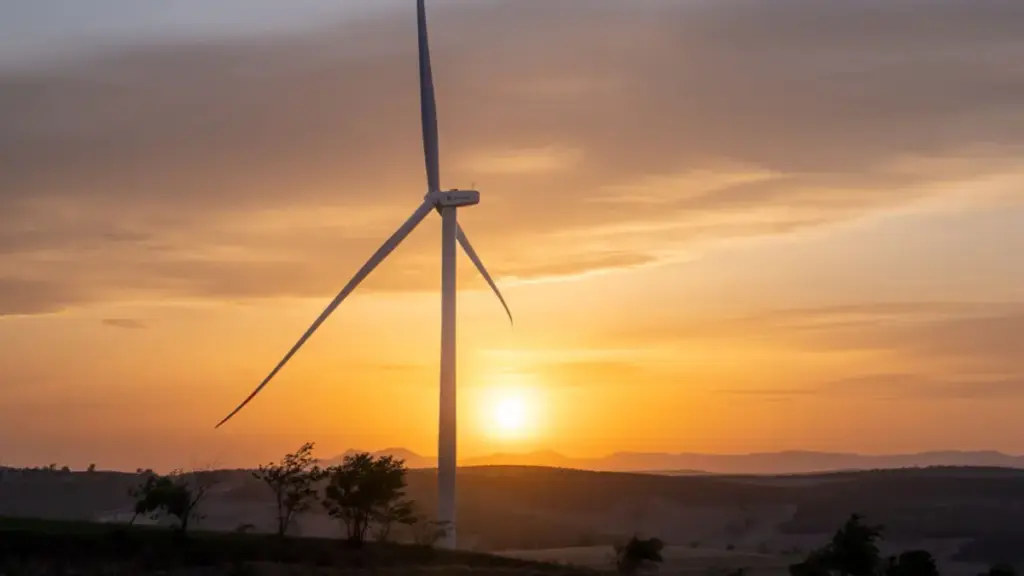
- Envision Energy, a recurring heavyweight on the Technology Review watch list, has surpassed a cumulative global deployment of 100 gigawatts (GW) of wind power alongside 50 gigawatt-hours (GWh) of battery storage.
- Confronting a hyper-competitive, crowded domestic market, Chinese firms are rapidly expanding internationally. Envision’s project pipelines now span Germany, Brazil, Australia, and Vietnam.
- In battery chemistry, innovation velocity is breathtaking. WeLion New Energy stunned the materials science community with a landmark laboratory result achieving an energy density of 824 watt-hours per kilogram (Wh/kg)—more than triple the density of standard commercial lithium-ion cells currently powering most electric vehicles. While scaling lab results remains notoriously complex, WeLion is actively deploying semi-solid-state cells designed to dramatically outperform traditional lithium-ion batteries while reaching commercial lines far faster than pure solid-state alternatives.
The US Data Center Power Crunch
In stark contrast to China’s broad-based manufacturing dominance, only three US companies made the 2026 watch list—and two of them owe their momentum directly to the capital and power procurement strategies of Big Tech.
- Fervo Energy, a pioneer in next-generation enhanced geothermal systems (EGS), completed a landmark initial public offering (IPO) in May, raising $2.2 billion. By utilizing horizontal drilling and hydraulic fracturing techniques borrowed from the oil and gas sector, Fervo is unlocking baseload geothermal resources in regions previously deemed economically unviable. The company has set an aggressive target to bring one gigawatt of geothermal plants online by the end of 2030.
- X-energy is advancing helium-cooled small modular nuclear reactors (SMRs). Their modular design introduces crucial siting flexibility. In Richland, Washington, the company is collaborating with Amazon on a 320-megawatt reactor cluster. Beyond tech data centers, X-energy has secured a partnership with chemical giant Dow to deploy its high-temperature reactors at industrial facilities in the early 2030s.
- The sole US outlier, Brimstone, bypassed the data center narrative to focus on another critical front: producing cleaner cement and extracting critical minerals, directly intersecting with industrial decarbonization and mineral security.
The Multi-Gigawatt Storage Boom
The grid requires robust support mechanisms to balance the relentless influx of solar and wind generation. Long-duration energy storage (LDES) has transitioned from conceptual R&D to massive multi-gigawatt procurement deals.
- Form Energy returns to the list for its iron-air battery technology, designed to provide days of continuous power at a fraction of the cost of lithium. The company is executing a massive 30 GWh project destined to power a Google data center—projected to become the world’s largest battery installation by capacity when it goes live in phases between 2028 and 2031.
- Energy Dome is commercializing carbon dioxide batteries, utilizing thermodynamic compression and expansion of CO2 to store energy. Now scaling globally after early-stage validation, the company boasts a pipeline exceeding 30 GWh of planned plants worldwide, including an upcoming Google-backed facility in Ireland slated for completion in 2028.
- Moment Energy is tackling the looming wave of spent electric vehicles, targeting the estimated one million EV batteries reaching end-of-life status by 2030. Operating out of a specialized repurposing facility in Vancouver, British Columbia, Moment transforms automotive pack remnants into robust, stationary backup power containers.
Official Statements and Industry Insights
Reflecting on the turbulent yet hopeful state of climate technology in 2026, industry analysts and the editors behind the MIT Technology Review offer sobering yet optimistic perspectives.
"Forgive me—I know I’ve made this point before. Feel free to call me Captain Obvious. But I think China’s dominance in energy technology is a global trend that bears repeated mentioning."
— Editorial Commentary, The Spark
This sentiment underscores a broader realization among Western policymakers: trying to out-isolate or decouple from China’s clean energy supply chain is an uphill battle against industrial realities. Instead, Western nations are increasingly forced to balance protectionist trade policies with the urgent need to import cost-effective components to meet domestic climate targets.
Regarding the dramatic convergence of Big Tech and heavy energy sectors, industry observers note a profound structural shift:
"Technologies that can provide consistent, carbon-free power 24/7 are no longer a luxury for corporate ESG reports; they are the fundamental bottleneck for the digital economy. When hyperscalers like Amazon and Google write multi-billion-dollar tickets for geothermal, nuclear, and iron-air storage, they fundamentally rewrite the commercialization timeline for deep-tech hardware."
Simultaneously, executives driving hardware startups emphasize the grueling reality of scaling physical infrastructure. As battery developers navigate the chasm from 800+ Wh/kg lab breakthroughs to mass-manufactured cells, the emphasis has shifted toward pragmatic chemistry compromises—such as semi-solid-state architectures—that offer immediate performance dividends without breaking industrial supply chains.
Future Outlook: Navigating the Road to 2030 and Beyond
As the world looks past the midpoint of the decade, the trajectory of climate technology presents a complex duality of profound breakthroughs and stubborn systemic hurdles.
The year 2026 has proven that climate tech is no longer defined merely by idealistic carbon-offsetting initiatives. It is now an integral pillar of industrial policy, national security, and digital infrastructure expansion. The companies highlighted on this year’s watch list—ranging from Envision Energy’s global wind dominance and WeLion’s battery innovations to Fervo’s geothermal scaling and Form Energy’s multi-gigawatt iron-air grid solutions—represent the front lines of this transformation.
Yet, significant challenges remain. Regulatory bottlenecks, permitting delays for transmission lines, trade tariffs, and the raw capital intensity of heavy industrial deployment continue to threaten progress.
Nevertheless, the relentless momentum of engineering innovation offers cautious optimism. As technological convergence between the digital economy and the energy sector accelerates, these pioneering firms are laying the groundwork for a more resilient, electrified global economy—nudging the world steadily in the right direction.