As Great Britain accelerates its transition toward a fully decarbonized electricity grid, energy planners face a fundamental structural challenge: how to keep the lights on when the wind refuses to blow and the sun fails to shine. Known in meteorology and energy markets by the German term Dunkelflaute ("dark doldrums"), these extended periods of low renewable output can stretch across days or even weeks. While short-duration lithium-ion batteries have expanded rapidly to handle minute-to-minute grid fluctuations, they are ill-equipped to bridge multi-day generation deficits.
To eliminate this vulnerability, the UK energy regulator, Ofgem, backed by the Department for Energy Security and Net Zero (DESNZ), has launched a landmark regulatory initiative designed to mobilize billions of pounds in private capital for Long-Duration Energy Storage (LDES).
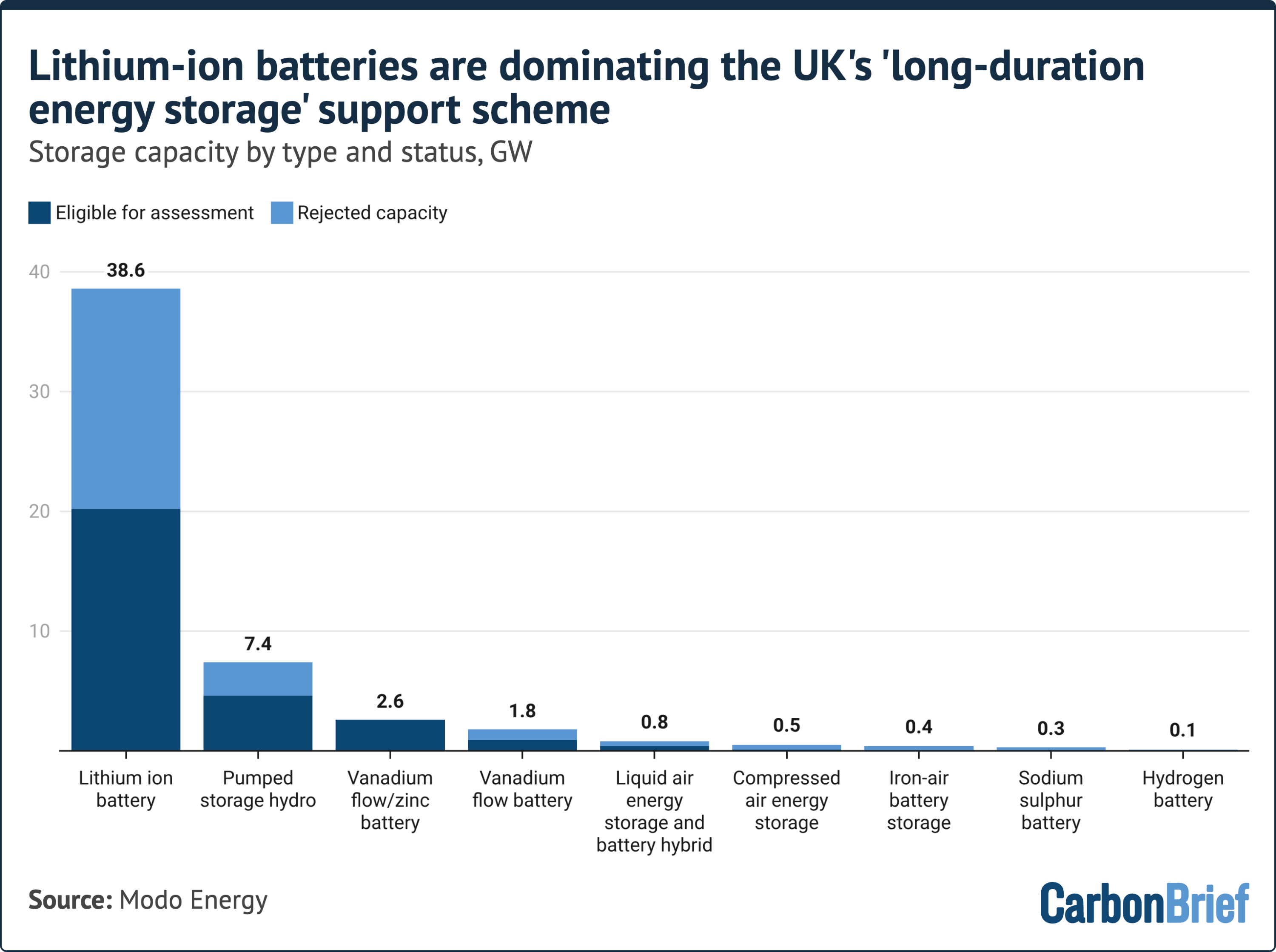
Under a newly instituted "cap-and-floor" regime, Ofgem has identified 16 candidate "super battery" projects—representing 7.6 gigawatts (GW) of combined capacity and up to 32 hours of continuous discharge duration—that it is "minded to" underwrite. Spanning pumped storage hydro, advanced lithium-ion chemistries, vanadium-zinc flow batteries, and compressed-air energy storage (CAES), these utility-scale projects are engineered to capture surplus clean energy during periods of overproduction and inject it back into the grid during shortfalls.
Independent economic modeling from analytics firm LCP Delta and thinktank Regen indicates that deploying robust LDES capacity could save British energy consumers more than £24 billion between 2030 and 2050. By drastically curtailing the need to compensate wind farms to shut down during transmission bottlenecks, and reducing reliance on expensive natural gas peaker plants, long-duration assets are emerging as the linchpin of the UK’s target for clean power by 2030 and net-zero emissions by 2050.
Detailed Chronology & Technical Mechanics
1. The Evolution of Great Britain’s Storage Paradigm
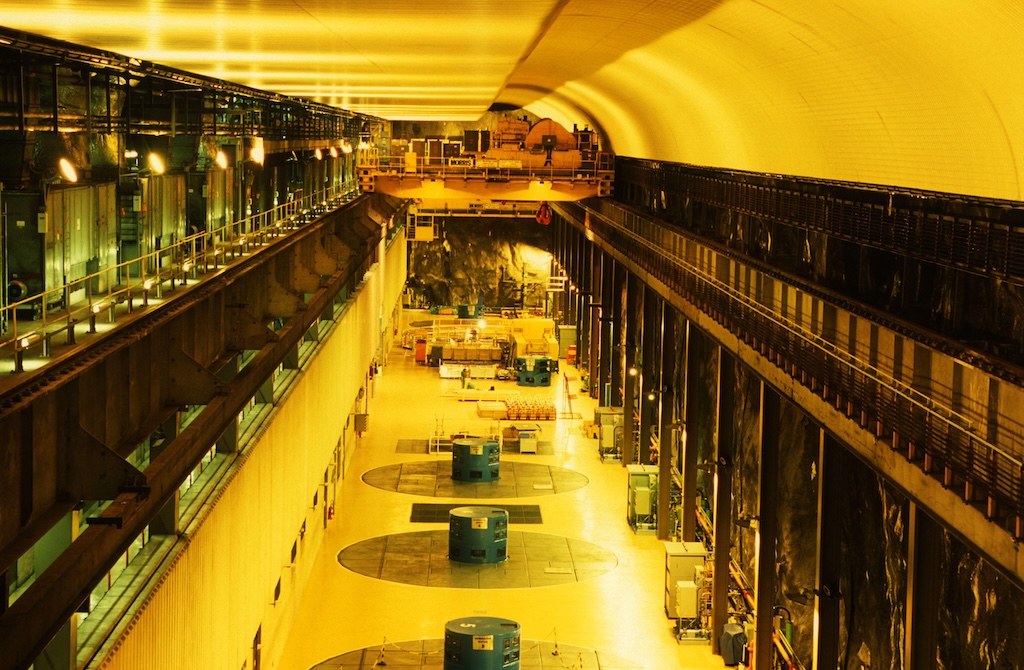
Historically, long-duration energy storage in Great Britain was synonymous with a single technology: pumped hydro storage (PHS). Built predominantly during the mid-to-late 20th century, the nation’s 2.8 GW legacy LDES fleet is anchored by four primary assets across Scotland and Wales. Chief among them is the iconic Dinorwig Power Station in Snowdonia, Wales—dubbed the "Electric Mountain"—a 1,728 megawatt (MW) facility commissioned in the 1980s to absorb baseload nuclear power overnight and release it during sudden sharp spikes in demand.
For decades, Dinorwig and its peer facilities were sufficient to manage short-term surges—such as national kettle-boiling demand spikes during major sporting broadcasts. However, as Great Britain replaced fossil fuel plants with variable offshore wind and solar capacity, grid dynamics changed drastically.
Between 2015 and 2026, the short-duration battery market expanded from nearly zero to over 6 GW. However, these assets typically offer only one to two hours—and rarely more than four hours—of storage duration. Bridging extended winter Dunkelflaute events required a new generation of storage architectures.
+-----------------------------------------------------------------------------------+
|                            THE LDES SPECTRUM OF TECHNOLOGIES                      |
+-------------------+-----------------+-----------------------+---------------------+
| CATEGORY          | TECHNOLOGY      | DISCHARGE DURATION    | OPERATIONAL STATUS  |
+-------------------+-----------------+-----------------------+---------------------+
| Mechanical        | Pumped Hydro    | Hours to Days (15-32h)| Commercial / Legacy |
| Mechanical        | Compressed Air  | Hours to Days (30h+)  | Commercial Scale    |
| Electrochemical   | Long-Dur. Li-ion| Extended (8-18h)      | Rapidly Scaling     |
| Electrochemical   | Flow Batteries  | Hours to Days (8-24h) | Commercial Pilot    |
| Chemical          | Hydrogen Storage| Weeks to Seasons      | Early Stage Dev.    |
| Thermal           | Heated Media    | Days to Seasons       | Emerging           |
+-------------------+-----------------+-----------------------+---------------------+
2. The Mechanics of Next-Generation LDES
The technologies selected under Ofgem’s scheme utilize diverse physical and chemical mechanisms to store energy across extended timelines:
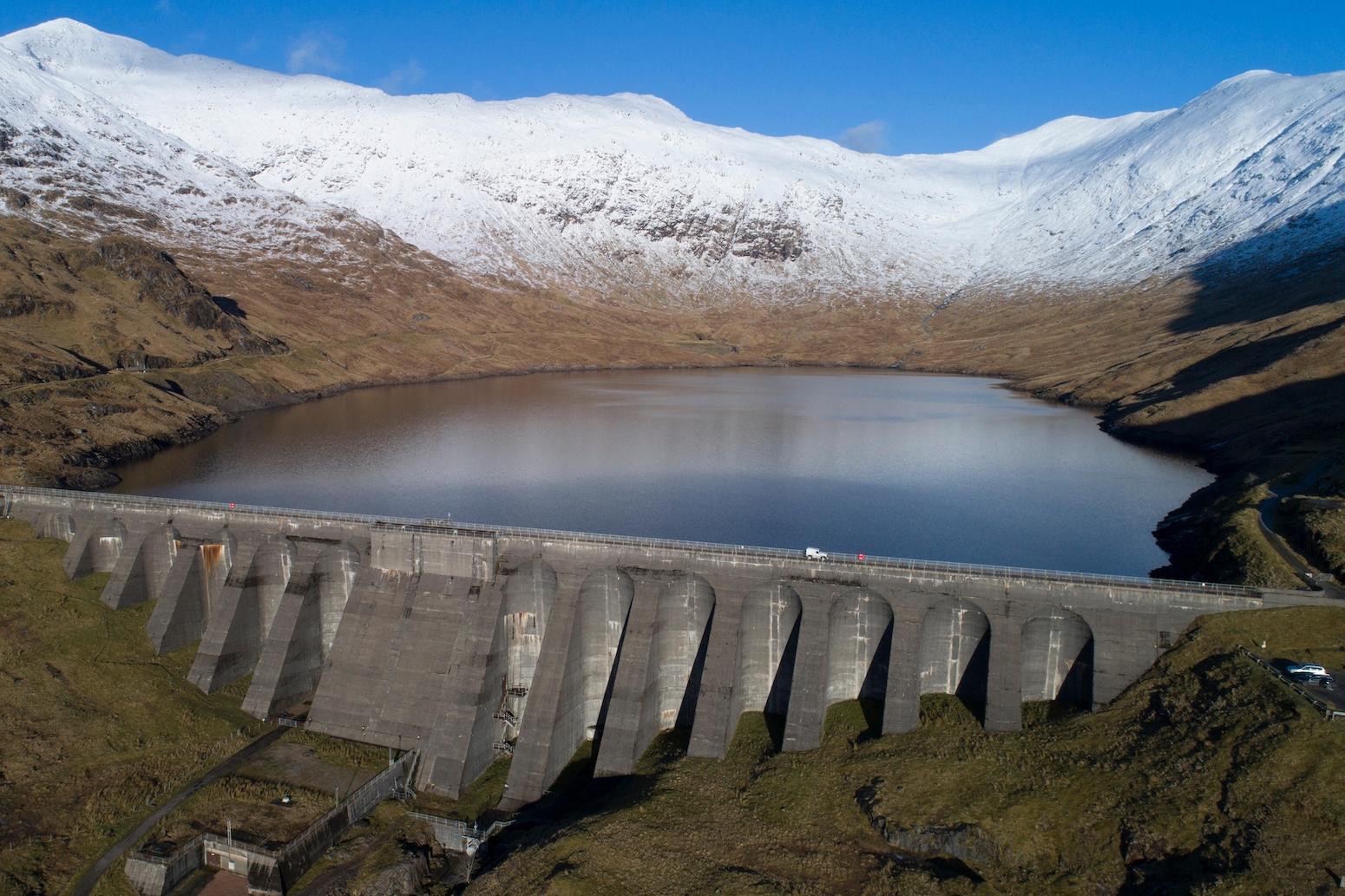
Pumped Hydro Storage (Mechanical): Water is pumped from a lower reservoir to an elevated upper reservoir using off-peak or surplus renewable power. When demand surges, water gravity-feeds back through reversible turbines, generating electricity instantly. PHS carries high upfront capital cost but boasts a operational lifespan exceeding 50 years, yielding a very low levelized capital cost per kilowatt-hour over time.
Extended-Duration Lithium-Ion (Electrochemical): Advances in cell architecture and thermal management now allow utility-scale lithium-ion facilities to deliver sustained discharge over 8 to 18 hours, moving beyond their traditional 2-hour operational profile.
Flow Batteries (Electrochemical): Unlike standard enclosed batteries, flow systems store energy in external tanks containing liquid chemical electrolytes (such as vanadium or zinc mixtures) that are pumped through an electrochemical cellstack. Energy capacity scales simply by enlarging the liquid tanks, allowing cost-effective scaling for multi-day storage without degrading cell longevity.
Compressed-Air Energy Storage (CAES) (Mechanical): Excess grid electricity powers high-pressure compressors that inject air into deep underground geological formations, such as subterranean salt caverns or disused oil reservoirs. During peak demand, the pressurized air is released, heated, and expanded through high-efficiency turbines to drive electrical generators.
3. Chronology of the Ofgem Cap-and-Floor Mechanism
To break the commercial deadlock facing capital-intensive storage projects with long build times, Ofgem adapted its successful subsea interconnector regulatory strategy into the LDES framework:
2024: The UK Government formalizes its policy intention to institute a "cap-and-floor" regime for LDES, mitigating revenue uncertainty for institutional infrastructure investors.
2025: Ofgem opens Window 1 for project applications. A wave of 171 proposals representing 52.6 GW of total capacity apply. Following initial vetting, 77 projects totaling 28.7 GW pass into the formal eligibility assessment stage.
June 2026: Ofgem publishes its "minded-to" decision, shortlisting 16 high-performing LDES projects representing 7.6 GW of capacity and over 130 Gigawatt-hours (GWh) of total energy storage capability.
August 2026: Official consultation periods close, paving the way for final regulatory determination, planning approvals under the Planning and Infrastructure Act, and targeted early-stage financial closures. Innovate UK simultaneously releases dedicated funding for 100+ hour ultra-long duration storage.
Supporting Context & Key Metrics
Detailed Project Breakdown: The 16 Minded-to-Approve LDES Assets
Ofgem’s shortlisted portfolio reflects a deliberate mix of mature, high-capacity mechanical systems and flexible, rapidly deployable electrochemical sites:
Project Name
Technology Type
Primary Region
Power Capacity (MW)
Duration (Hours)
Total Energy Capacity (MWh)
Earba PSH
Pumped Hydro
North Scotland
1,800
15
27,000
Coire Glas
Pumped Hydro
North Scotland
1,440
32
46,100
Loch Kemp Storage
Pumped Hydro
North Scotland
660
22
14,500
East Claydon Storage
Lithium-ion Battery
East England
500
12
6,000
Sundon Storage
Lithium-ion Battery
East England
500
8
4,000
Field Netherton
Lithium-ion Battery
North Scotland
400
16
6,400
Field New Deer
Lithium-ion Battery
North Scotland
400
18
7,200
Field Long Stratton
Lithium-ion Battery
East England
400
16
6,400
Springwell
Lithium-ion Battery
East Midlands
400
11
4,400
Drakelow (Innova)
Lithium-ion Battery
West Midlands
385
9
3,500
Field Rigifa
Lithium-ion Battery
North Scotland
200
18
3,600
Field Fyrish
Lithium-ion Battery
North Scotland
200
17
3,400
Ocker Hill BESS
Lithium-ion Battery
West Midlands
145
8
1,200
Thornton BESS 2
Lithium-ion Battery
East Midlands
100
11
1,100
Frontier Legacy
Vanadium-Zinc Flow
North Wales
65
8
500
TeesCAES
Compressed Air
North-East England
50
30
1,500
TOTALS
—
—
7,645 MW
—
136,800 MWh
                 GEOGRAPHIC CAPACITY DISTRIBUTION (7.6 GW TOTAL)

     North Scotland [========================================] 67% (5,100 MW)
     East England   [==========] 18% (1,400 MW)
     East Midlands  [====] 7% (500 MW)
     West Midlands  [====] 7% (530 MW)
     North-East Eng [=] 1% (50 MW)
     North Wales    [=] 1% (65 MW)
The Transmission Bottleneck & Curtailment Problem
The geographic concentration of these projects highlights a major challenge in Great Britain’s energy network. 79% of all shortlisted LDES storage capacity is sited in Northern Scotland.
This concentration is deliberate: massive offshore and onshore wind farms in Scotland frequently generate more power than local demand requires. However, narrow transmission bottlenecks across the Anglo-Scottish border restrict export south toward high-demand centers like London.
When transmission lines reach maximum capacity, the National Electricity System Operator (NESO) must pay wind generators to turn off—a process called curtailment. Simultaneously, NESO must pay expensive fossil-fuel plants in England to fire up to meet demand south of the bottleneck.
Direct Constraint Costs: Accounted for £1.9 billion of that total, directly adding roughly £28 to £40 onto the average household energy bill.
The LDES Solution: Siting massive facilities like Coire Glas (46,100 MWh) and Earba (27,000 MWh) north of grid bottlenecks allows excess Scottish wind energy to be absorbed locally rather than curtailed, saving consumers billions in balancing penalties.
Official Statements & Stakeholder Perspectives
The Regulatory & Political Mandate
The UK Government has framed long-duration storage not merely as an environmental asset, but as an essential element of national economic security and bill reduction.
Michael Shanks, UK Energy Minister, emphasized the strategic pivot during Ofgem’s announcement:
"Forty years after the country’s last pumped storage facility, this government is getting Britain building again… We are going further and faster in delivering the clean-power mission by rolling out a new generation of pumped-hydro storage and state-of-the-art batteries—making more of the clean, homegrown power we already produce, cutting waste, lowering bills and strengthening our energy security."
Industry & Market Analysts
Energy market analysts stress that while short-duration assets handled the early phases of the renewable roll-out, extended durations are essential to unlock deeper grid decarbonization.
George Martin, Principal for Power System Modelling at LCP Delta, noted:
"[LDES is] really important for the system, particularly in a wind-driven system. You get more peaks and troughs in your renewable output and, while short duration can obviously help with that, with things like ‘dunkelflaute’, long-duration storage is what is needed… It reduces emissions, it reduces the overall cost of the system, it can help reduce bills for consumers."
Addressing the market composition, Julia Souder, CEO of the global LDES Council, pointed out:
"The UK is leading the charge on technology diversity. We’re witnessing matching different LDES solutions to the real differences in market structure and country needs. But make no mistake: a handful of LDES technologies will do the heavy lifting over the next decade. We’re seeing that play out in which technologies are winning through the UK government’s new cap-and-floor mechanism."
Market intelligence experts also pointed out how traditional battery storage boundaries are blurring. Commenting on lithium-ion batteries capturing major positions in 8- to 18-hour categories, Ed Porter, Director for Europe at Modo Energy, observed:
"Lithium going far beyond 8 hours; that debate must surely be dead now."
Academic & Technical Critiques
Despite broad enthusiasm, leading academics urge caution regarding regulatory definitions and market cannibalization.
Sir Chris Llewellyn Smith, Emeritus Professor of Physics at Oxford University and lead author of a landmark Royal Society report on large-scale storage, expressed concern over how DESNZ and Ofgem define duration:
"[DESNZ] seems to describe it as including things which we would regard as some short duration or medium duration. It’s a big confusion… For us, long duration is stuff that can last not just into seasons, but into years and into decades."
Highlighting potential commercial distortions, Seamus Garvey, Professor of Dynamics at the University of Nottingham, warned that over-deploying medium-duration assets today could undermine multi-day investments tomorrow:
"Energy storage will be required over many timescales and as we decarbonise further and further, the requirements for longer durations grow and grow. One key problem in my opinion is that because we are tending to buy into lots of short-duration stores now, we are actually removing pieces of market that could be accessible by longer duration stores and that is making the (already-difficult) problem of financing these stores ever more difficult."
Future Outlook & Economic Impact
Macroeconomic Savings & Bill Impacts
The financial metrics supporting LDES deployment point to clear systemic benefits over the long term. Detailed modeling conducted by the Transition Finance Council—a body backed by the City of London Corporation and the UK Government—underlines the strong return on investment offered by long-duration infrastructure:
               FINANCIAL PROFILE OF LDES INFRASTRUCTURE

   Upfront Capital Expenditure:   £2.0bn - £2.5bn per GW
   Annual System Operational Savings: £0.5bn - £1.0bn per GW/year
   Net 25-Year Cumulative Savings: £30bn - £60bn across GB Grid
By substituting expensive gas-fired peaker plants and eliminating curtailment fees, every gigawatt of LDES capacity deployed pays for itself within three to five years of operational deployment. On a net cumulative basis through 2050, analytical consensus across DESNZ, LCP Delta, and Regen projects total wholesale system cost reductions between £16 billion and £51 billion, providing structural downward pressure on domestic energy tariffs.
Looking beyond the 8-to-32-hour projects dominant in Ofgem’s Window 1, research bodies are turning their focus toward multi-day and seasonal technologies. In August 2026, Innovate UK unveiled a targeted £10 million funding program specifically designed to scale "ultra-long duration" storage solutions—defined as systems capable of continuous discharge for 100 hours or more.
Underlining the necessity of this technology push, Dr. Jamie Speirs of the University of Strathclyde and Co-Director of the UK Energy Research Centre (UKERC), noted:
"By providing flexibility across hours, days and even seasons, LDES could enable a resilient, low-carbon electricity system—reducing curtailment, strengthening security of supply and ensuring that intermittent renewables can maximise their contribution to the grid in all conditions. Investing in innovation opportunities… is a key way to support these technologies to market."
Key Milestones on the Horizon
Late 2026: Finalization of Ofgem’s Window 1 Cap-and-Floor determination following statutory public consultation; publication of the UK Government’s updated National Hydrogen Strategy.
2027–2028: Financial close and heavy civil site excavation for flagship mega-projects including Coire Glas and Earba in the Scottish Highlands.
2030: Target online date for the initial 4 GW batch of cap-and-floor backed assets, aligning with NESO’s mandate for a Clean Power grid.
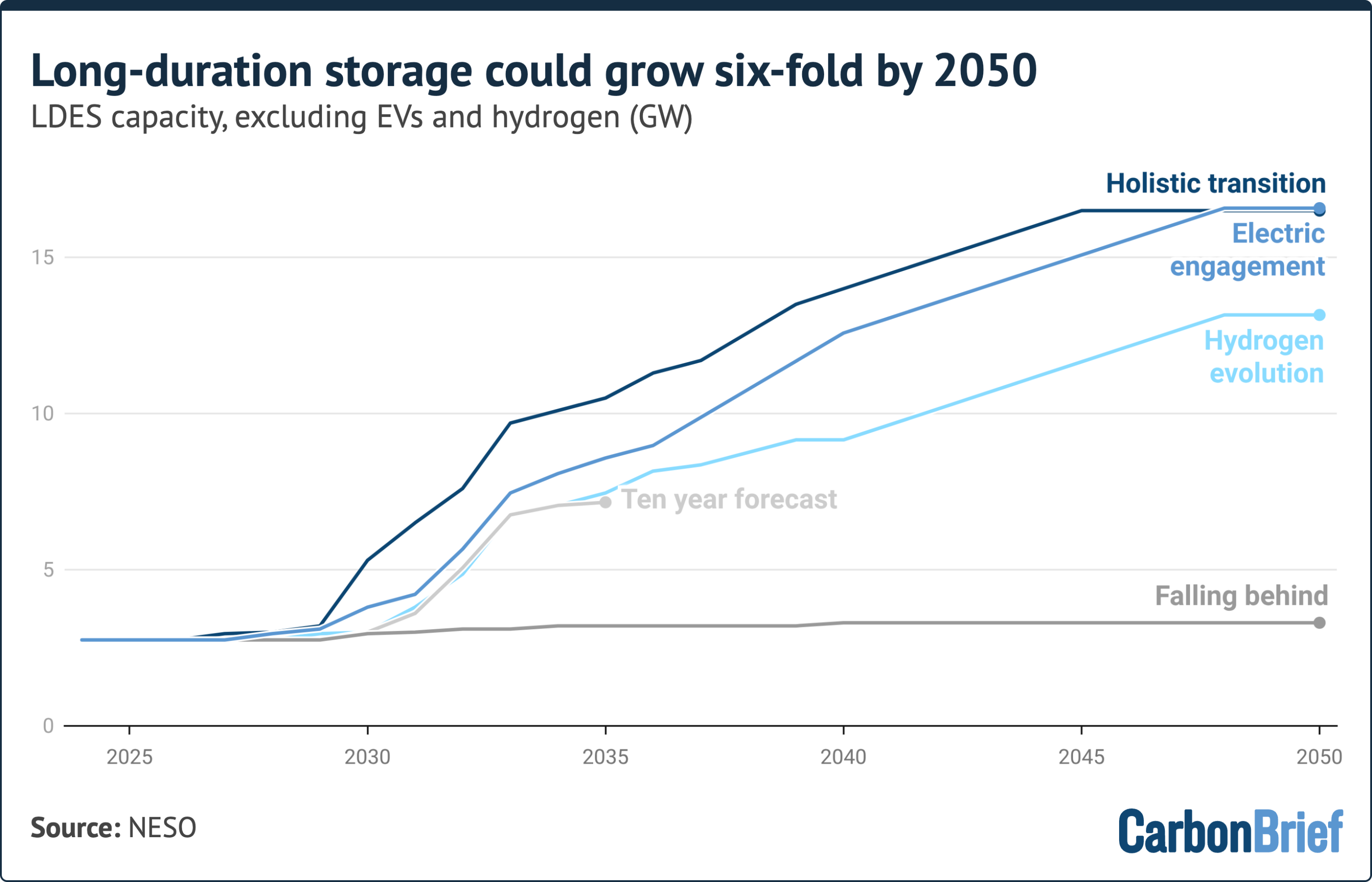
2035–2050: Scaling total LDES capacity toward 13.2 GW – 16.6 GW to fully insulate Great Britain’s net-zero economy against volatile global energy markets and atmospheric Dunkelflaute weather patterns.