By the Investigative Reporting Desk in Collaboration with Montana Free Press, Mountain Journal, and Grist
Executive Overview
In a sweeping move that threatens to reshape the American wilderness, the U.S. Department of Agriculture (USDA) announced Tuesday a formal proposal to rescind the historic Roadless Rule. Instituted a quarter-century ago, this landmark conservation policy has long barred commercial timber harvesting and heavy infrastructure development—specifically road construction—across nearly 45 million acres of national forest land.
The administration’s rationale hinges on a controversial premise: that stripping away federal protections will empower local forest management, curb catastrophic wildfire risks, and clear the way for aggressive timber harvesting. However, the proposal has immediately drawn fierce opposition from conservation groups, independent scientists, and legal advocates who argue that repealing the rule will have the opposite effect. Critics contend that opening these pristine backcountry landscapes to industrial development will accelerate habitat fragmentation, endanger recovering wildlife populations like grizzly bears and elk, and paradoxically increase the frequency of human-caused wildfires.
With the official proposal and its accompanying Draft Environmental Impact Statement slated for publication in the Federal Register, a high-stakes legislative and legal battle has officially begun. As environmental organizations ready lawsuits and local communities grapple with the ideological divide over federal land stewardship, the coming weeks will determine the future of America’s last remaining great tracts of wild public lands.
Detailed Chronology: From Clinton-Era Protection to Trump-Era Repeal
To understand the magnitude of Tuesday’s announcement, one must trace the turbulent history of the Roadless Rule, a policy born out of decades of intense debate over the commercial exploitation of public lands.
The Origin of the Rule (2001)
Promulgated in the final days of the Clinton administration in January 2001, the Roadless Rule was designed to protect the environmental integrity of undeveloped areas within the National Forest System. Recognizing that roads serve as the primary vector for human disturbance, erosion, and industrial incursions, the policy prohibited road building and timber extraction on approximately 58 million acres of national forests. The rule was immediately mired in a labyrinth of legal challenges, changing presidential administrations, and state-level exemptions—most notably in Alaska and Idaho—that saw the protected acreage fluctuate over the years down to its current baseline of roughly 45 million acres.
The Scientific Pushback (Late 2025)
The groundwork for the current administrative push was laid amid escalating rhetoric surrounding forest health and wildfire management. Last fall, the debate intensified when a coalition of more than 30 leading forest science researchers from across the nation published an open letter directly refuting claims that roadless areas are overly prone to catastrophic fires. Utilizing decades of Forest Service data, these scientists demonstrated that wildfire ignition densities were consistently lowest in wilderness and roadless tracts, while peaking in areas immediately adjacent to established roads.
Public Outcry and Surveys (Early 2026)
Public sentiment sharply favored preserving the rule long before Tuesday’s announcement. During a federal comment period held late last year, an overwhelming 99 percent of more than 625,000 public comments opposed any rescission of the policy. Subsequent polling in early 2026—including a national survey conducted by the Pew Charitable Trusts—revealed that 76 percent of likely voters strongly supported maintaining the Roadless Rule. Regional metrics mirrored this trend: a University of Montana poll released earlier this spring demonstrated broad, bipartisan support among state residents who value backcountry access, clean water, and unfragmented wildlife corridors.
The USDA Announcement (August 2026)
On Tuesday, Agriculture Secretary Brooke Rollins officially announced the administration’s intent to dismantle the 25-year-old framework. The formal publication of the proposal and the Draft Environmental Impact Statement in the Federal Register initiates a compressed public comment window, ending on September 21, 2026.
Supporting Context & Metrics: Science, Geography, and the Wildfire Debate
The debate over the Roadless Rule centers on two diametrically opposed views of forest ecology: the administration’s argument that active management and timber extraction mitigate wildfire risks, versus empirical science linking roads and human activity to ecological degradation.
Geographic Impact
The vast majority of lands governed by the Roadless Rule are located in the rugged mountains of the Western United States and the vast expanses of Alaska.
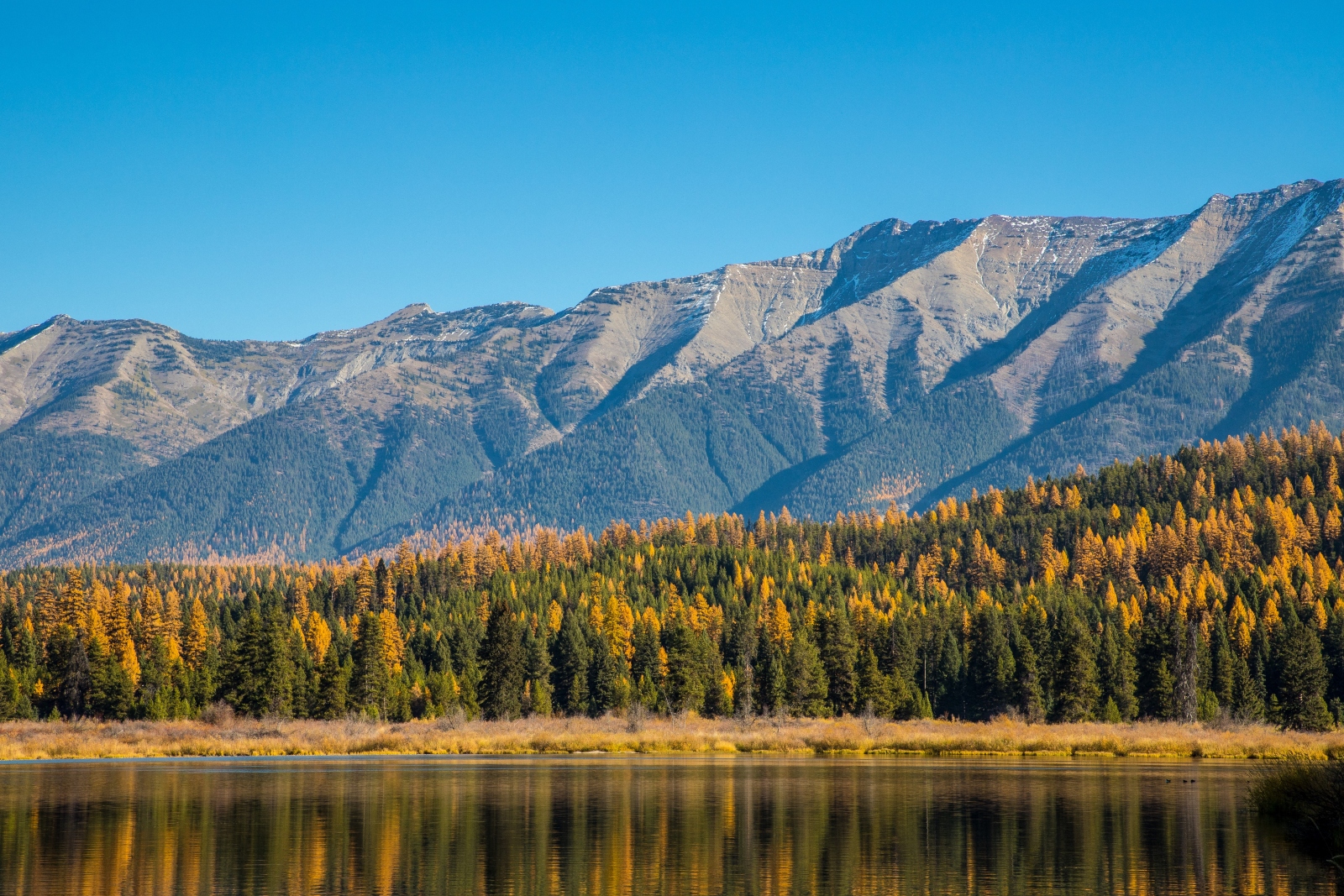
- Montana: The rule currently shields nearly 6 million acres of federal public land from industrial encroachment.
- Greater Yellowstone Ecosystem: Nearly 10 million acres of interconnected public land rely on these protections to maintain ecological continuity across state boundaries.
The Wildfire and Road Correlation
The USDA’s press release, championed by Agriculture Secretary Brooke Rollins and Montana Governor Greg Gianforte, asserts that strict conservation rules have fostered overgrown, diseased forests ripe for deadly fires. They argue that lifting restrictions will allow federal agencies and state partners to build necessary access roads for timber management and fire suppression.
Independent scientists, however, point to hard data from the National Interagency Fire Center (NIFC) to counter this narrative. According to NIFC statistics, nearly 85 percent of all wildfires are human-caused. Research cited by scientists and conservation groups indicates that introducing roads into previously inaccessible areas dramatically increases human access—and with it, the statistical probability of accidental ignitions caused by campfires, vehicles, discarded cigarettes, and power equipment.
Wildlife and Biodiversity Metrics
The ecological stakes extend far beyond timber yields and fire metrics. Roadless areas serve as irreplaceable strongholds for a wide array of native fauna.
- Grizzly Bears and Apex Predators: Research confirms that grizzly bears actively avoid high-density road networks, viewing roads as zones of high mortality risk. Scott Christensen, executive director of the Greater Yellowstone Coalition, noted the striking irony of the administration’s timing: "At the same time the federal government is proposing to shift management authority of grizzlies to the states, it’s removing the very land protections that have allowed grizzly bears to recover from near-extinction." Opening millions of acres to road development directly undermines secure habitat, which is widely recognized as a foundational pillar of grizzly recovery.
- Biodiversity and Species of Conservation Concern: Broad ecological studies highlight that 57 percent of designated species of conservation concern rely on habitat found within at least one roadless area.
- Migratory Corridors: Linear infrastructure like logging roads fragments continuous landscapes, obstructing traditional migration routes utilized by iconic big-game species such as Rocky Mountain elk, mule deer, and pronghorn.
Official Statements and Stakeholder Perspectives
The ideological battle lines over public lands management are sharply drawn, with political leaders praising the decentralization of authority while conservationists and legal watchdogs prepare for war.
Administration and State Leadership
Proponents of the repeal frame the decision as an overdue correction that restores local control and practical management to the states.
"Today’s long overdue decision will empower states like Montana to pursue proper forest management on federal lands with local communities in mind," stated Montana Governor Greg Gianforte in the USDA’s official press release.
Agriculture Secretary Brooke Rollins echoed these sentiments, emphasizing that national-scale regulations have historically hamstrung the U.S. Forest Service’s ability to aggressively clear diseased timber and construct necessary infrastructure to protect rural communities from catastrophic wildfires.
Conservation and Wildlife Advocates
Conversely, environmental organizations view the policy reversal as a giveaway to extractive industries that disregards overwhelming public consensus and peer-reviewed science.
"Roadless areas are vital habitat for elk, mule deer, trout, and, importantly, grizzly bears," said Scott Christensen of the Greater Yellowstone Coalition. He warned that eliminating secure habitat would effectively undo decades of painstaking conservation work.
Jenny Harbine, an attorney with the environmental legal nonprofit Earthjustice, framed the announcement as part of a sustained systemic assault on public lands and wildlife under the current administration.
"Repealing the rule would jeopardize water quality, wildlife, and backcountry recreational opportunities—all benefits of our public lands that Montanans value," Harbine stated. Issuing a clear warning to federal officials, she added, "If the administration finalizes this misguided proposal, we’ll see them in court."
Future Outlook: What Lies Ahead
As the policy enters the federal regulatory arena, the timeline for its implementation moves rapidly, setting the stage for an intense political and judicial showdown.
- Federal Register Publication & Public Comment: The formal proposal and the Forest Service’s Draft Environmental Impact Statement will be published in the Federal Register. The Forest Service has established a brief 30-day window, accepting public comments through September 21. Given the historic outpouring of public opposition observed last fall—where hundreds of thousands of citizens voiced support for the rule—the agency is expected to be flooded with input from conservationists, sportsmen, local stakeholders, and industry representatives.
- The Threat of Litigation: Environmental law firms like Earthjustice have already signaled that a final rule will be met with immediate legal challenges. Plaintiffs are expected to argue that the administration failed to adequately account for the cumulative environmental harms—such as increased human-caused fire risks, compromised water quality, and the degradation of endangered species habitat—violating federal environmental laws such as the National Environmental Policy Act (NEPA).
- State-Level Implementation: Should the federal rule be successfully rescinded or altered, individual states in the Intermountain West and Alaska will face mounting pressure from local governments and timber interests to adopt localized management plans. This could create a patchwork of regulations where protections vary wildly from one national forest to the next, injecting deep uncertainty into the future of backcountry recreation, conservation economics, and ecosystem health across the American West.