Executive Overview
Beneath the crashing waves off the coast of California’s Channel Islands lies a submerged landscape that defies easy description. Towering kelp forests sway in deep-ocean currents, patrolled by vibrantly striking sheephead fish—draped in striking shades of pink and black with prominent, protruding teeth—alongside massive, refrigerator-sized giant sea bass. Graceful seals and sea lions dart effortlessly through complex ecosystems teeming with colorful sponges, brittle stars, and anemones.
"We sometimes think of the Channel Islands as our Galapagos in California," observes Doug McCauley, a professor of marine science at the University of California, Santa Barbara.
Yet this biological cornucopia was not always so vibrant. Archival documentary footage from decades past reveals a starkly different reality: an era before targeted marine protections were enacted, when intensive commercial overfishing and industrial pressures had systematically degraded the kelp forests and stripped the waters of key keystone species. Violet Sage Walker, chair of California’s Northern Chumash Tribal Council, vividly recalls reviewing historic footage of the region prior to conservation efforts. "It looked like Mars," she reflects, "like a dead planet."
That stark trajectory shifted dramatically beginning in 2003, when the state designated vast marine zones around the Channel Islands as Marine Protected Areas (MPAs). Functioning much like underwater state parks, these roughly 150 square miles of protected waters created essential safe havens for marine flora and fauna. They serve as nurseries for vulnerable fish larvae and offer strict sanctuaries for dozens of iconic species, from kelp bass and rockfish to leopard sharks and abalone.
Now, for the first time in 15 years, California officials are weighing sweeping proposals to establish new protected areas and significantly expand existing ones as part of the state’s landmark, inaugural comprehensive review of its MPA network. Scheduled for crucial final votes before the California Fish and Game Commission, this multi-year evaluation represents a once-in-a-generation conservation milestone.
"This is a historic opportunity that we don’t want to miss," says McCauley, emphasizing the urgency of the moment as state-level protections counter broader federal rollbacks of environmental safeguards. Crucially, these new proposals—specifically the Point Sal and Mishopshno State Marine Conservation Area projects—are co-sponsored by California Native American Tribes in collaboration with environmental organizations like the Natural Resources Defense Council (NRDC) and the Environmental Defense Center. This integration marks a historic first for the state’s MPA network, offering a long-overdue formal recognition of indigenous stewardship in modern ocean management.
Detailed Chronology
Understanding the weight of California’s current marine conservation crossroad requires examining the deliberate, decades-long evolution of the state’s regulatory framework.
- Pre-2003 (The Era of Industrial Degradation): Unchecked commercial fishing, lax regulatory oversight, and localized industrial pollutants exact a severe toll on California’s coastal ecosystems. Prominent kelp forests across the Channel Islands and Central Coast experience massive die-offs, transforming once-abundant marine habitats into desolate, barren environments.
- 2003–2012 (Laying the Foundation): Spurred by the Marine Life Protection Act (MLPA) passed by the state legislature, California initiates the monumental task of designing a science-based network of MPAs. Initial designations are established around the Channel Islands in 2003, later expanding down the Southern California coast by 2012. These zones restrict extractive activities—such as commercial fishing, oil and gas drilling, and seafloor dredging—to give depleted habitats room to recover.
- 2021 (Scientific Validation of Benefits): Emerging peer-reviewed research upends long-held industry arguments that MPAs harm local economies. A landmark 2021 study analyzing Southern California MPAs established in 2012 reveals that commercial fishing boats operating immediately outside the protected boundaries actually increased their lobster catch by roughly 225% over a six-year period, proving the "spillover effect" where healthy reserves replenish surrounding commercial fisheries.
- Late 2023–2025 (The Comprehensive Review Process): California initiates its first decadal-plus review of the state’s entire MPA network. Environmental scientists, community groups, and coastal Tribes compile rigorous biological and cultural data to identify gaps in the current system. Two major Tribal-led conservation proposals—Point Sal and Mishopshno—are formally developed and submitted for state consideration.
- October 14–16, 2026 (The Decision Window): The California Fish and Game Commission convenes for high-stakes final votes to determine whether to adopt the proposed expansions and establish the new Central Coast MPAs. Given that comprehensive reviews occur only once every decade or more, conservationists warn that a failure to act now will shelve these vital protections for generations.
Supporting Context & Metrics: The Science of Marine Sanctuaries
To grasp why marine protected areas command such overwhelming public backing, one must understand their mechanical design and ecological mechanics. MPAs are geographically delineated ocean zones where targeted restrictions on human disturbances—including commercial extraction, recreational over-harvesting, and seafloor-altering industries—allow marine ecosystems to rebuild their natural resilience.
"Protections vary by site, but in areas where these kinds of disturbances are removed, you have larger fish, more abundant wildlife, and a healthier habitat," explains Sandy Aylesworth, director of the Pacific Initiative for Nature at the NRDC.
The Central Coast proposals currently under review highlight two distinct, highly unique marine convergence zones:
The Point Sal Proposal
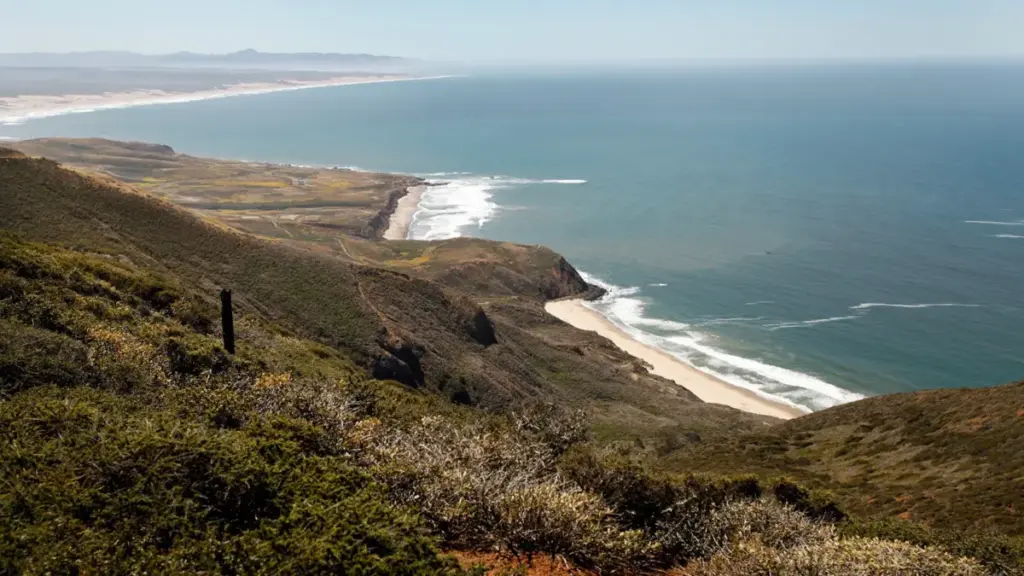
Encompassing roughly nine square miles off the rugged coast of Santa Barbara County, the proposed Point Sal State Marine Conservation Area centers on a dramatic geographic headland. This natural barrier shields southern waters from punishing winds, creating unusually calm, nutrient-rich microclimates where delicate fish larvae linger and mature safely. Adjacent Lion Rock serves as a massive staging ground for northern elephant seals, California sea lions, and thousands of roosting seabirds, while complex kelp forests and rocky reefs harbor sea otters, sharks, and finfish. Aerial and marine surveys have documented upwards of 880 sea lions gathered at the site in a single day.
The Mishopshno Proposal
Situated farther south near Carpinteria, the proposed Mishopshno State Marine Conservation Area (named after a historic Chumash village) encompasses a 1.6-mile offshore rocky reef supporting one of the Central Coast’s most remarkably resilient kelp forests. Flanked by sandy-bottom habitats, sandy beaches, and protected salt marshes, the site functions as an interconnected nursery and feeding ground for hundreds of bat rays, large pelagic fish, and juvenile white sharks.
Shark filmmaker, documentarian, and researcher Carlos Gauna, who has spent thousands of hours documenting the waters slated for Mishopshno protection, stresses the irreplaceable nature of the habitat.
"I live and breathe sharks daily, and this is one of the most amazing spots in the world to see a great white shark. There is literally nothing like it anywhere else on the California coast," Gauna notes. However, his extensive underwater filming has also exposed the persistent threats facing the region. "I’ve seen sharks get hit and injured by boats, or even deliberately killed," he says, pointing to instances of illegal fishing and reckless watercraft use. He argues that official MPA designation will establish clear legal boundaries and signal to the public that the zone is a sanctuary, curbing dangerous anthropogenic impacts.
To illustrate the stark contrast between protected and unprotected waters, Gauna points to Cabo Pulmo in Baja California. Inside that marine reserve, stringent protection has birthed a thriving, dense marine ecosystem celebrated as one of the most stable wildlife habitats on earth. Directly outside the reserve’s boundaries, where intensive, unregulated fishing continues unabated, the landscape resembles an "underwater desert."
Official Statements and Indigenous Stewardship
A defining dimension of the 2026 MPA review is its embrace of Indigenous co-management and historical recognition. While California’s existing MPA network has historically lacked formal Tribal co-management structures, Native nations have actively stewarded the lands and waters of the Central Coast for over 10,000 years.
Violet Sage Walker emphasizes that the Point Sal and Mishopshno proposals—co-sponsored by the Northern Chumash Tribal Council and the Santa Ynez Band of Chumash Indians, alongside conservation partners—represent a crucial structural evolution in state policy.
"Our people lived and thrived there for thousands of years," Walker notes, highlighting the ancient village sites and deep cultural lineages woven into the coastal cliffs and reefs. "Being able to reconnect and offer our vision and our help with dealing with climate resiliency and coastal stewardship is critical."
Walker advocates for institutionalizing formal pathways for coastal Tribes to participate directly in ocean governance, ensuring access for cultural practices and active management authority. This integration aligns state conservation goals with traditional ecological knowledge, proving that indigenous guardianship is not merely historical, but essential to modern climate adaptation.
Institutional leaders echo the urgency of backing these science-backed, community-driven proposals. Public polling underscores the profound popularity of these measures: roughly 70% of California voters express robust support for expanding marine protections at both Point Sal and Mishopshno.
Despite localized pushback from a small faction of commercial fishing interests, extensive empirical research debunks claims of economic harm. As demonstrated by peer-reviewed studies on Southern marine reserves, well-designed MPAs act as biological engines, exporting adult fish and larvae into adjacent fishing grounds and boosting target yields over time.
Future Outlook: A Decisive Moment for California’s Coast
As the California Fish and Game Commission prepares for its definitive sessions, marine scientists and conservation advocates are issuing urgent calls to action.
"We have an opportunity now to protect the areas where California has jurisdiction, at a time when the Federal government is undoing protections more broadly," warns Doug McCauley. Because the state’s administrative review cycle for its MPA network occurs only once every decade or more, these specific proposals represent a fleeting window of opportunity. If rejected or sidelined, these fragile ecosystems will remain exposed to unchecked degradation for another ten years—a timeframe scientists warn marine environments facing accelerating climate change and industrial pressures cannot afford.
The stakes extend far beyond bureaucratic boundaries or localized fishing metrics. As Violet Sage Walker reflects on the resilience of the natural world:
"The ocean, given the opportunity, will thrive. But we have to give it the space and the time to heal itself."
The decisions made by state commissioners this October will echo across generations, determining whether California will successfully safeguard its aquatic heritage, honor its foundational commitments to Indigenous stewardship, and ensure that its underwater parks remain a vibrant living legacy for the future.