Executive Overview
The landscape of American energy infrastructure is undergoing a quiet, profound transformation. As adoption rates for electric vehicles (EVs) accelerate, state utilities and grid operators are increasingly viewing these machines not merely as carbon-neutral forms of transportation, but as a vast, decentralized fleet of mobile battery storage systems.
Massachusetts is taking a decisive step toward this decentralized future. Major New England utilities Eversource and National Grid have officially expanded their popular ConnectedSolutions virtual power plant (VPP) programs to incorporate residential vehicle-to-grid (V2G) charging. This groundbreaking initiative invites qualifying local EV owners to channel stored electricity from their vehicles back into the regional grid during periods of peak demand, mitigating strain on local infrastructure and earning lucrative financial incentives in the process.
This expansion leverages smart-charging and grid-integration technology provided by industry leaders EnergyHub, Sunrun, and The Mobility House. While initial skepticism lingered regarding vehicle compatibility and payout structures, newly released details reveal a structured program boasting an initial roster of certified bidirectional-capable EVs. With over 150,000 electric vehicles currently traversing Massachusetts roadways, the commonwealth is uniquely positioned to prove whether residential V2G technology can effectively stabilize the grid, lower systemic energy costs, and redefine the relationship between the consumer and the utility company.
Detailed Chronology: The Evolution of V2G in Massachusetts
To understand the significance of this latest policy shift, one must examine the timeline of how Massachusetts integrated distributed energy resources (DERs) and arrived at the precipice of residential V2G deployment.
Phase 1: The Foundation of ConnectedSolutions
For several years, Eversource and National Grid operated ConnectedSolutions as a demand-response mechanism designed to curb peak electricity usage. Historically, the program relied on commercial and industrial equipment, stationary home energy storage batteries (such as Tesla Powerwalls), and internet-connected smart thermostats to reduce load during stifling summer heatwaves or freezing winter vortexes.

By paying consumers and businesses to curtail their energy consumption or dispatch stored power during peak hours, utilities avoided firing up expensive, dirty peaking power plants—often fossil fuel-reliant peaker units that disproportionately impact local air quality.
Phase 2: Fleet-Scale Testing and Proof of Concept
Before opening the program to individual homeowners, utilities tested bidirectional capabilities within controlled, commercial environments. National Grid began implementing V2G technology for light- and medium-duty commercial fleets, most notably pioneering electric school bus V2G integrations. Simultaneously, Eversource opened dialogues with regional school districts to trial similar vehicle-to-grid concepts via its ConnectedSolutions+ framework.
These initiatives successfully demonstrated that bidirectional chargers could reliably sync with grid demands without degrading fleet vehicle operations. However, scaling the technology to the residential sector presented a significantly more complex puzzle involving disparate vehicle architectures, proprietary charger communication protocols, and consumer trust.
Phase 3: The Residential Integration and Initial Rollout
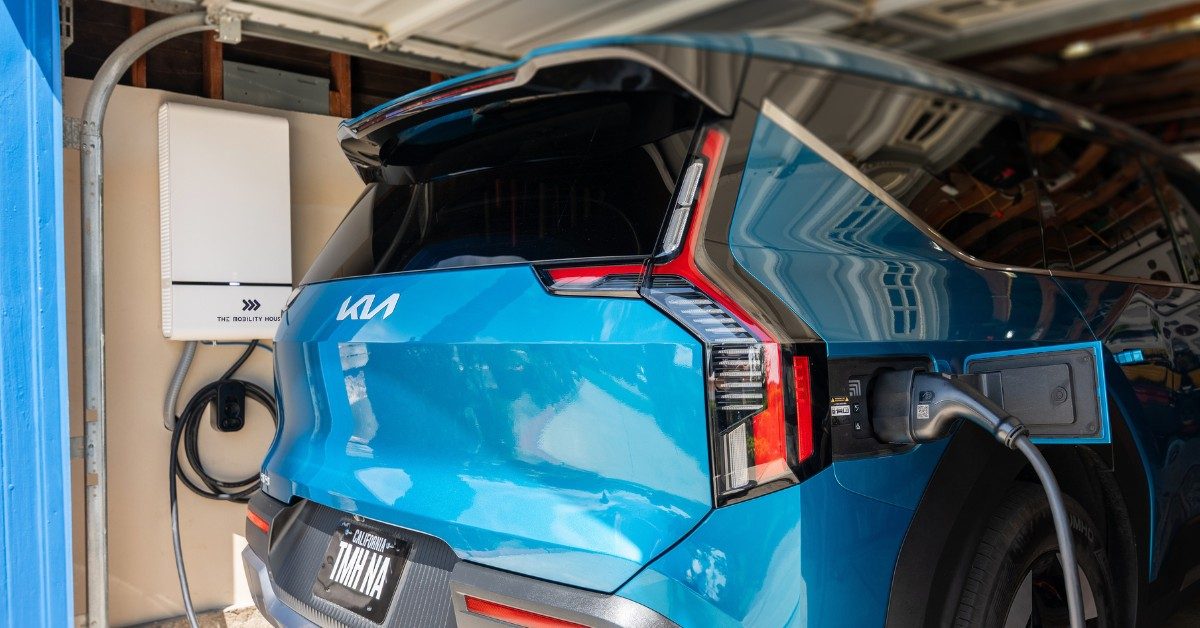
The announcement that Eversource and National Grid are officially folding residential V2G into ConnectedSolutions marks a major milestone. Supported by tech platforms from EnergyHub, Sunrun, and The Mobility House, the program bridges the gap between private vehicle ownership and grid management.
While the program’s initial announcement left consumers guessing regarding eligible vehicle models and payout structures, updates provided by utility representatives have brought much-needed clarity. An initial list of compatible vehicles has been established, and performance-based incentive models have been codified, signaling that Massachusetts is open for business when it comes to residential V2G integration.
Supporting Context & Metrics: The Mechanics and Mathematics of V2G
The viability of a virtual power plant powered by EVs rests on simple yet powerful metrics: vehicle density, battery capacity, and financial return.
The Scale of the Opportunity
Massachusetts currently boasts over 150,000 electric vehicles registered on its roads, a figure that grows exponentially month over month. Assuming an average residential EV battery capacity of roughly 70 to 100 kilowatt-hours (kWh), the commonwealth’s driveways collectively harbor upwards of 10 gigawatt-hours (GWh) of energy storage.
To put that into perspective, even if a fraction of these vehicles participate and discharge only a small percentage of their total capacity during a grid emergency, the resulting power output rivals or exceeds traditional peaking power facilities.
Understanding the Financial Incentives
The economic value proposition for consumers is anchored by performance-based payouts. According to updated program guidelines issued by National Grid under the ConnectedSolutions banner:
- Incentive Caps: Participants can earn up to $275 per average kilowatt (kW) of performance over the rigorous summer season.
- Estimated Earnings: Depending on the specific capacity of the household’s bidirectional charger and overall system performance, individual residential participants can anticipate earning between $1,375 and $2,750 seasonally.
- Variable Factors: Exact compensation rates vary based on the technology provider utilized, the total battery capacity of the participating EV, and the frequency and reliability of the vehicle’s availability during dispatch events.
Official Statements and Industry Perspectives
The transition from conceptual V2G pilot projects to formalized utility programs has drawn enthusiastic commentary from key figures across the clean energy sector.

Chip Silverman, Sunrun’s director of grid services, emphasized the vital stabilizing role that everyday consumer assets can play in modernizing the power grid:
"We are excited to bring our dispatching expertise to Massachusetts and help expand our vehicle-to-grid technology to more customers. Vehicle batteries play a critical role in stabilizing the grid, providing backup power to homes, and lowering energy costs for everyone."
Industry analysts point out that the inclusion of major automotive marques is a vital catalyst. The initial cohort of vehicles approved for the Massachusetts V2G program highlights a cross-section of automakers embracing bidirectional charging hardware:
- Ford F-150 Lightning (a trailblazer in residential backup and V2G applications)
- Nissan LEAF (a long-time pioneer utilizing CHAdeMO-based bidirectional capabilities)
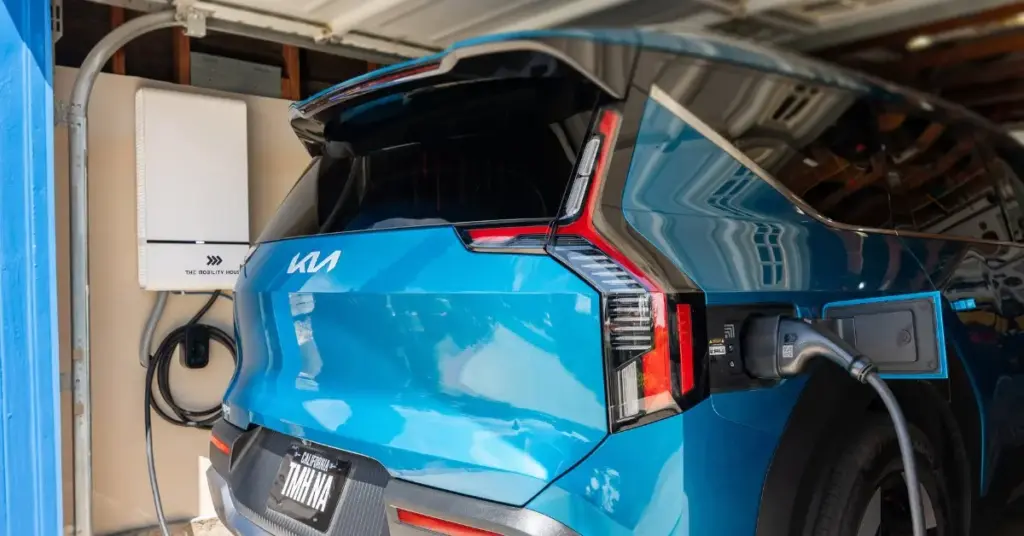
- Kia EV9
- Polestar 3
- Volvo EX90
By incorporating these specific models, utilities and tech providers like EnergyHub and The Mobility House are ensuring that early adopters driving diverse vehicle classes have a pathway to participation.
Future Outlook: Challenges and Opportunities Ahead
While the launch of residential V2G in Massachusetts represents a watershed moment for American energy policy, several hurdles remain on the horizon before bidirectional charging becomes as ubiquitous as standard Level 2 home charging.

1. Equipment Standardization and Hardware Costs
Bidirectional chargers—hardware capable of sending electricity from the car back into the home or grid—remain significantly more expensive than standard EV supply equipment (EVSE). Furthermore, automotive manufacturers have been slow to universally adopt uniform standards (such as SAE J3068 or ISO 15118-20) for bidirectional power flow. As more automakers certify their vehicles for V2G, hardware costs are expected to drop, but upfront capital expenditure remains a barrier for budget-conscious consumers.
2. Consumer Hesitation and Battery Degradation Concerns
A primary psychological barrier for EV owners is the fear of accelerated battery degradation. Consumers naturally worry that cycling energy from their vehicle’s battery back to the utility will shorten the lifespan of their most expensive asset. However, numerous studies and data from early V2G pilots indicate that smart-charging software manages depth-of-discharge and thermal parameters carefully, ensuring that battery wear remains negligible while generating substantial financial returns.
3. The Broader Impact on Energy Equity
Proponents argue that successful V2G programs do more than just reward wealthy EV owners; they benefit the broader rate-paying public. By replacing expensive, polluting peak-load power generation with clean energy discharged from parked cars, utilities can lower wholesale electricity procurement costs. This structural reduction in peak demand pressures can theoretically stabilize utility bills for all customers—including those who do not yet own an electric vehicle.
Conclusion
Massachusetts is once again positioning itself at the vanguard of the American energy transition. By formally integrating residential electric vehicles into the ConnectedSolutions virtual power plant framework, Eversource and National Grid are turning driveways into localized power stations.
The convergence of supportive regulatory policies, advanced software from platforms like EnergyHub and Sunrun, and a growing fleet of bidirectional-capable EVs proves that the future of the grid is not centralized—it is parked right in our garages. Whether utilities can streamline enrollment and ease consumer anxieties will determine how rapidly this vision scales, but one thing is certain: the era of the mobile power plant has officially arrived in the Commonwealth.