Executive Overview
In the modern corporate and environmental landscapes, the "incremental trap" has become an invisible anchor. Organizations across the globe frequently celebrate modest, incremental victories—such as a 2% reduction in emissions, a marginal increase in sustainable portfolios, or minor policy tweaks—while the broader ecological systems they aim to protect accelerate toward collapse at unprecedented speeds.
For decades, the environmental movement has relied on gradualism, patient stakeholder engagement, and polite dialogue within boardrooms. However, as the ecological clock ticks down, a growing faction of radical pragmatists is arguing that incrementalism is no longer just slow; it is functionally obsolete.
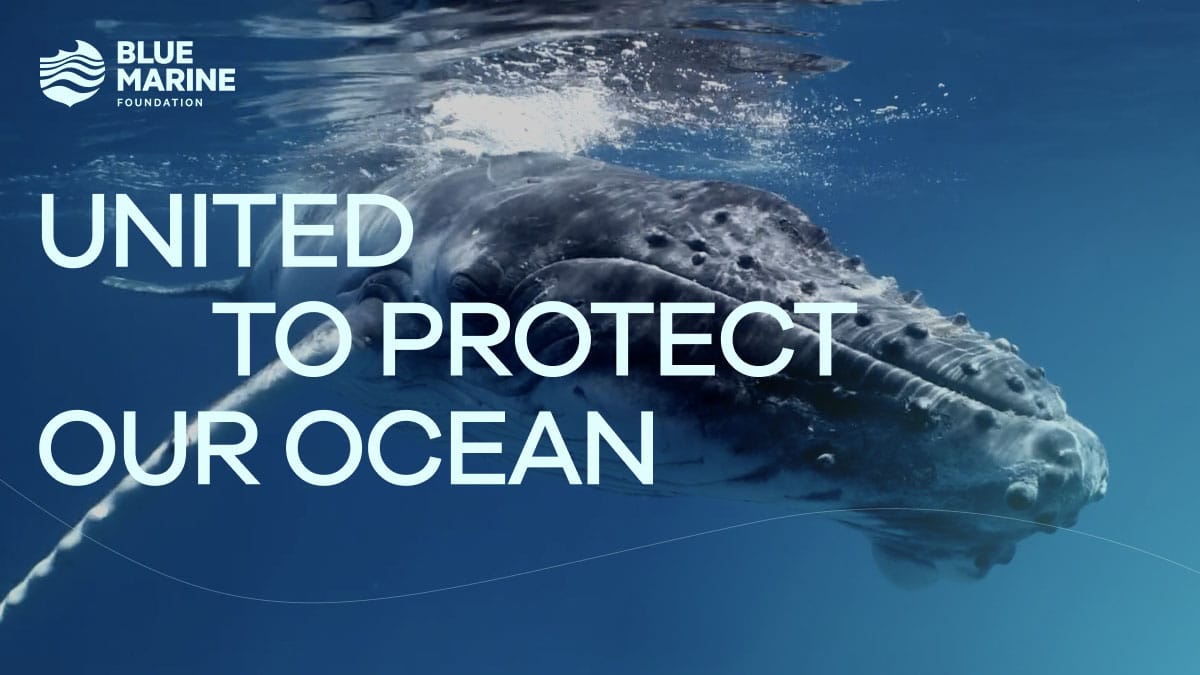
Enter Clare Brook, Chief Executive Officer of the Blue Marine Foundation. In 2014, after spending 24 pioneering years in sustainable finance—long before ESG (Environmental, Social, and Governance) became a ubiquitous corporate buzzword—Brook reached a definitive breaking point. Realizing that traditional methods of shareholder advocacy and gentle persuasion were moving the needle too slowly to match the velocity of planetary decline, she made a monumental pivot. She decided she no longer wanted to nudge the needle; she wanted to change the instrument entirely.
Today, Brook leads one of Europe’s most dynamic and ambitious marine conservation organizations. In a recent, highly anticipated episode of the Ocean Collaborations podcast, released in August 2026, Brook breaks down the gritty reality of driving transformational change rather than settling for comfortable, incremental progress in our waters. Her message is both a warning to the complacent and a rallying cry for radical, uncompromised environmental action: "We have to stay the course, fixed on the horizon and not be put off by the noise."
Detailed Chronology: From Sustainable Finance to Marine Revolution
To understand the tenacity driving the Blue Marine Foundation today, one must examine the evolutionary path of its leader. Clare Brook’s trajectory is a testament to the fact that true environmental disruptors often emerge from the very belly of the financial systems they seek to reform.
The Early Years: Pioneering ESG Before the Buzzword (1990s–2010s)
Long before Wall Street and global financial institutions adopted ESG metrics as standard operating procedure, Brook was navigating the complex intersection of capital markets and environmental stewardship. Spending nearly two and a half decades in sustainable finance, she operated in rooms where environmental concerns were routinely dismissed as peripheral to fiduciary duty.
During this era, the prevailing philosophy of sustainable finance was rooted in engagement. The theory went that if institutional investors bought shares in polluting or extractive companies, they could sit at the table, whisper in the ears of executives, and gradually steer corporations toward greener practices. While this approach occasionally yielded minor concessions, it fundamentally preserved the status quo.
The Breaking Point (2014)
By 2014, the limits of incrementalism became starkly apparent to Brook. While financial portfolios were occasionally ticking green, global ecosystems—particularly the oceans—were facing unprecedented degradation from overfishing, deep-sea mining, pollution, and climate change.
The realization crystallized: the systems governing global finance and environmental protection were playing a long, slow game while the biosphere was burning. Investor engagement was yielding a 2% gain here and a 1% concession there, while marine ecosystems were heading south at breakneck speed. Brook recognized that reforming the system from within through polite dialogue was akin to rearranging deck chairs on a sinking ship. She needed to step outside the traditional financial paradigm and tackle the physical, ecological frontlines of the crisis.
Stepping Up: Leading the Blue Marine Foundation
Taking the helm as CEO of the Blue Marine Foundation, Brook brought her sharp financial acumen and uncompromising strategic vision to the realm of marine conservation. Under her leadership, the foundation shifted away from passive charity toward aggressive, measurable, and scalable action.
Rather than merely raising awareness, the Blue Marine Foundation began actively securing marine protected areas (MPAs), restoring vital coastal habitats like seagrass meadows and oyster reefs, and legally challenging destructive industrial fishing practices across Europe and beyond. Brook’s tenure has been defined by a refusal to accept bureaucratic roadblocks, utilizing modern legal tools, high-stakes philanthropy, and direct interventions to achieve systemic disruption.
Supporting Context & Metrics: The State of Our Oceans and the Cost of Inaction
To contextualize why Brook’s departure from incrementalism is not just justified but urgent, one must look at the sobering reality of the global marine environment. The oceans cover over 70% of the Earth’s surface, generate more than half of the oxygen we breathe, and absorb a significant portion of anthropogenic carbon emissions. Yet, they remain among the most exploited and underfunded ecosystems on the planet.
The Scale of Marine Degradation
- Overfishing: According to the United Nations Food and Agriculture Organization (FAO), more than a third of global fish stocks are currently fished at biologically unsustainable levels. Industrial fishing fleets scour the seabed with bottom trawls—a practice likened to clear-cutting old-growth forests—destroying delicate benthic habitats that take centuries to form.
- The Funding Gap: Traditional conservation has historically suffered from chronic underfunding. While billions of dollars flow into terrestrial conservation projects, marine conservation historically received only a fraction of global philanthropic and governmental environmental budgets.
- The Illusion of Protection: Governments frequently tout the designation of vast Marine Protected Areas (MPAs). However, as environmental watchdogs have frequently pointed out, many of these zones are "paper parks"—areas where industrial fishing and other destructive activities are still permitted to occur with minimal oversight.
Why Incrementalism Fails in the Ocean
In finance, a 2% annual return is respectable. In marine ecology, a 2% annual recovery rate is mathematically meaningless if the rate of habitat destruction, acidification, and warming is advancing at 10% per year.
Incrementalism allows corporations and governments to greenwash their activities. It creates a false sense of security, trading real, systemic transformation for superficial PR victories. Brook’s philosophy challenges this directly: true conservation requires closing loopholes, banning destructive practices outright, and restoring marine ecosystems at a scale that outpaces industrial exploitation.
Official Statements & Insights from the Ocean Collaborations Podcast
In her appearance on the Ocean Collaborations podcast, Clare Brook offered a masterclass in modern environmental leadership. Cutting through the corporate jargon that often plagues sustainability discussions, she articulated the exact mindset required to combat global ecological collapse.
Navigating the Noise and Staying the Course
Reflecting on the immense resistance faced by conservationists attempting to disrupt powerful industrial lobbies, Brook emphasized the psychological resilience required for transformational leadership:
"We have to stay the course, fixed on the horizon and not be put off by the noise."
This sentiment speaks directly to the barrage of pushback that aggressive conservationists routinely encounter. Whether facing political lobbying, economic threats from commercial fishing industries, or institutional fatigue, leaders of transformational movements must look past short-term controversies and maintain an unwavering focus on long-term ecological survival.
Changing the Instrument, Not Just the Nudge
Expanding on her transition from sustainable finance to direct marine conservation, Brook highlighted the fundamental flaw in modern environmental strategies.
"We didn’t just want to nudge the needle; we wanted to change the instrument."
In the podcast, Brook elaborated on how institutional actors often become trapped in optimizing broken systems. By shifting from an ethos of corporate appeasement to direct ecological intervention, organizations like the Blue Marine Foundation demonstrate that true progress often requires abandoning legacy frameworks that are fundamentally incapable of delivering the scale of change required.
Future Outlook: The Next Frontier for Marine Conservation
As the Blue Marine Foundation looks toward the horizon, the challenges facing global oceans are intensifying, yet the tools available to conservationists are becoming sharper.
Leveraging Technology and Accountability
The future of marine conservation will rely heavily on transparency and technological enforcement. With the advent of satellite tracking, AI-driven vessel monitoring systems (VMS), and environmental DNA (eDNA) sampling, illegal, unreported, and unregulated (IUU) fishing has fewer places to hide. Leaders like Brook are championing the integration of these technologies into legal frameworks to ensure that Marine Protected Areas are strictly enforced, transforming paper parks into genuinely protected sanctuaries.
Scaling Up Restorative Marine Projects
Protecting what is left is no longer enough; humanity must actively restore degraded marine environments. Initiatives spearheaded by organizations like the Blue Marine Foundation—such as reintroducing native oysters to coastal estuaries, restoring vast underwater seagrass meadows that sequester carbon up to 35 times faster than tropical rainforests, and establishing community-led coastal management models—represent the vanguard of a new ecological era.
A Call to Action for the Global Community
Clare Brook’s journey from the inner sanctums of sustainable finance to the forefront of marine conservation serves as a powerful blueprint for change-makers across all sectors. It reminds us that whether in finance, policy, or grassroots activism, incremental adjustments are no longer sufficient to save systems in freefall.
To secure a habitable planet for future generations, leaders must be willing to abandon the comfort of the incremental trap, tune out the defensive noise of vested interests, and summon the courage to change the instrument entirely. The horizon is fixed, the stakes could not be higher, and the time for transformational action is now.