Executive Overview
For decades, popular narratives and speculative fiction have leaned heavily on a straightforward psychological premise: experiencing the acute, tangible ravages of global warming will serve as an existential wake-up call. The prevailing theory suggests that when individuals watch their homes flood, their neighborhoods burn, or the skies turn an apocalyptic shade of orange from wildfire smoke, they will rapidly shift their views on climate science, shed political apathy, and mobilize for urgent climate action. Cultural touchstones like Kim Stanley Robinson’s acclaimed climate novel Ministry for the Future—which opens with humanity aggressively pivoting toward global decarbonization in the wake of a catastrophic, deadly heat wave in India—exemplify this optimistic narrative arc.
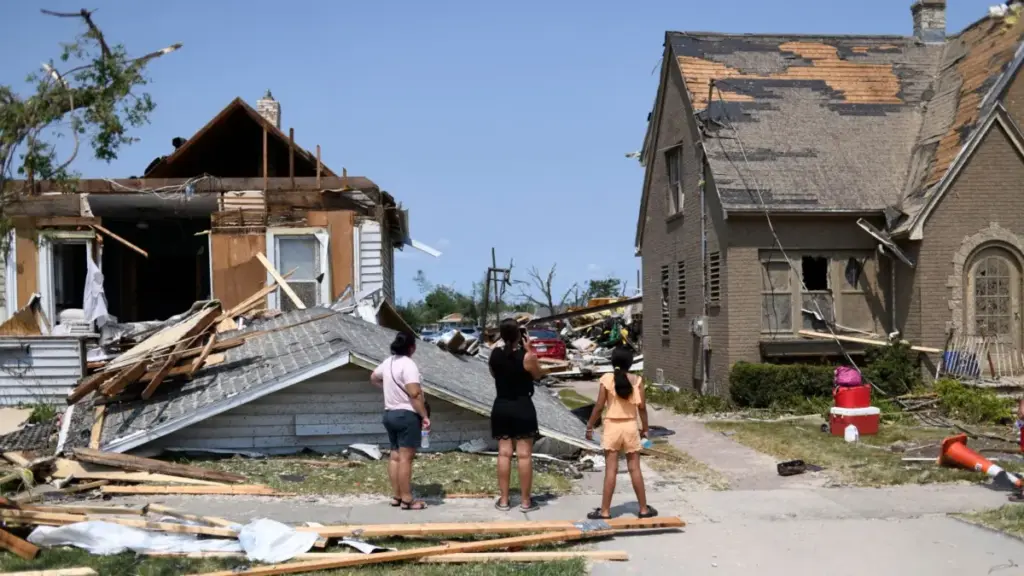
However, groundbreaking new research complicates this neat hypothesis, challenging the assumption that climate-driven disasters naturally foster political engagement or personal empowerment. A comprehensive nationwide survey conducted jointly by the polling firm Gallup and the Walton Family Foundation reveals a troubling psychological shift among disaster survivors: rather than feeling galvanized to act, nearly 4 in 10 Americans who report experiencing damage from extreme weather in recent years are significantly more likely to feel entirely at the mercy of forces outside their control.
Rather than spurring a wave of climate activism, property destruction, infrastructural collapse, and community trauma appear to induce a profound sense of helplessness. This in-depth investigative report examines the Gallup-Walton findings, explores the stark regional disparities in how Americans perceive weather damage, evaluates the volatile intersection of climate trauma and institutional trust, and questions what this psychological paralysis means for the future of collective climate action.
Detailed Chronology: The Evolution of Climate Perceptions and the Gallup-Walton Survey
To understand the weight of the latest findings, one must trace how social scientists and pollsters have historically measured the relationship between environmental catastrophes and public opinion.
Phase One: The Optimistic Correlation Era
In the early days of systematic climate polling, researchers across the United States and Europe frequently identified localized correlations between extreme weather events and spikes in public concern over global warming. Studies published in various academic journals noted that after experiencing prolonged droughts, unprecedented heat waves, or severe localized flooding, residents in affected zip codes temporarily expressed higher levels of climate anxiety and greater self-reported support for environmental policies.
These findings reinforced the intuitive idea that human beings are fundamentally reactive creatures—that direct, sensory exposure to climate change acts as a definitive antidote to climate skepticism. Policymakers and environmental organizations banked on this phenomenon, assuming that as global warming intensified and touched more lives directly, political inertia would naturally dissolve under the weight of rising temperatures and surging floodwaters.
Phase Two: The 2023–2024 Gallup-Walton Reality Check
The paradigm shifted notably with the rollout of consecutive nationwide surveys by Gallup and the Walton Family Foundation. Tracking the self-reported impact of extreme weather over time, the 2024 polling cycle registered an all-time high: roughly 38 percent of American respondents reported experiencing direct property or personal damage from extreme weather events. This figure marked a stark 5 percent increase from the previous year, underscoring the rapid expansion of climate-related disruptions across the country.
When researchers cross-referenced these responses with measures of psychological agency, a startling divergence emerged. Far from being inspired to participate in civic life or political mobilization, the respondents who reported weather-related damage were significantly more likely to articulate a profound external locus of control. Specifically, 38 percent of disaster-affected individuals stated that they “mostly feel pushed by circumstances beyond [their] control”—a full 9 percentage points higher than the baseline among those who reported no exposure to recent weather disasters. Conversely, the disaster-affected cohort displayed a marked reduction in the share of individuals who felt they were “mostly able to shape [their own path], even when things are difficult.”
Supporting Context & Metrics: Dissecting the Psychological and Regional Data
The nuances embedded within the Gallup-Walton dataset paint a complex picture of human resilience, cognitive dissonance, and regional disparities in disaster perception.
The Paradox of Mobility and Community Ties
One of the most counterintuitive elements of the survey data involves how disaster victims view their long-term economic mobility and geographic futures. Standard economic and psychological models would predict that individuals who feel fundamentally unsafe and dominated by uncontrollable external forces in a specific location would actively seek out relocation.
Yet, when asked about moving away, individuals who experienced extreme weather damage were no more likely than unaffected respondents to express a desire to relocate. Megan Brenan, a senior editor and survey designer at Gallup, highlighted this paradox:
"If I can’t control my life and it’s partly due to this extreme weather experience, then you would think I would want to move. It really comes down more to their community ties."
Strikingly, the two groups answered almost identically when probed on other foundational metrics: whether their communities were prepared for future challenges, whether they believed their personal futures were bright, or whether they maintained hopes for economic advancement. The psychological fracture was remarkably specific: the divergence isolated itself entirely around the individual’s perceived ability to control the trajectory of their day-to-day life.
Regional Divides in "Extreme Weather" Recognition
The survey also exposed deep geographic fissures regarding how Americans define and recognize extreme weather damage. When broken down by U.S. census regions, the data revealed massive discrepancies:
- The South-Central Region (Kentucky, Tennessee, Alabama, Mississippi): A commanding 58 percent of respondents reported encountering extreme weather damage, making it the sole region where a clear majority acknowledged suffering direct impacts.
- The Mountain West: By contrast, only 24 percent of respondents in the Mountain West believed they had experienced extreme weather damage.
This disparity reveals a critical methodological challenge in assessing public opinion: self-reported metrics are heavily influenced by the type of disaster. In reality, 100 percent of residents in the Mountain West suffered under severe drought conditions over the preceding year, and nearly the entire Northeast endured punishing, record-breaking heat waves. However, because slow-onset disasters like droughts and extended heat waves do not tear off roofs, shatter windshields, or collapse power grids in the dramatic fashion of hurricanes, tornadoes, or flash floods, populations frequently fail to classify them as "damaging."
Official Statements and Expert Analysis
The long-term psychological and political implications of these findings have drawn intense scrutiny from leading environmental policy researchers and polling experts.
Megan Mullin, a professor of public policy at the University of California, Los Angeles (UCLA), who has extensively studied public attitudes toward climate change and extreme weather, emphasizes the profound difficulty in tracking how disasters permanently alter human belief systems.
"It’s really hard to unravel what it means over the longer term," Mullin notes, pointing to both methodological hurdles and the hyper-local variability of disaster impacts. "And part of that is methodological, and it’s partly that the actual impact… can vary house to house."
Mullin’s own empirical research has historically shown that public concern regarding global warming tends to fluctuate seasonally, often dipping during prolonged stretches of pleasant weather. Furthermore, political party affiliation, cultural identity, and baseline emotional dispositions routinely outweigh single weather events in shaping an individual’s worldview on the climate crisis.
The Erosion of Institutional Trust
Perhaps the most alarming consensus emerging from sociological and political science literature is the corrosive effect disasters have on government trust. While some isolated studies indicate that severe wildfires or floods can temporarily spike localized support for adaptation infrastructure—particularly within politically progressive areas—the broader global and domestic literature presents a grim alternative.
Research conducted across the United States, Mexico, and Latin America demonstrates that individuals who experience major natural disasters—or whose close friends and family suffer losses—frequently experience a sharp decline in institutional trust and faith in government efficacy.
As Mullin summarizes:
"These events further degrade an already fragile trust in government at the same time that people are looking for the government to have a strong hand in protecting them."
When citizens are battered by climate-fueled catastrophes, they urgently look to civic institutions for systemic protection. When government responses prove sluggish, bureaucratic, or inadequate, the resulting disillusionment deepens the psychological wound, leaving citizens feeling abandoned, cynical, and utterly disempowered.
Future Outlook: Navigating a Paralyzed Electorate
As global temperatures continue their upward trajectory, the baseline frequency and intensity of extreme weather events are mathematically guaranteed to rise. Consequently, the percentage of the global population touched directly by climate-related property damage will continue its inevitable upward march.
For those who harbor the hope that escalating climate impacts will naturally shock the public into an era of fierce political engagement and unified climate action, the Gallup-Walton findings offer a sobering reality check. The psychological trajectory of disaster exposure is not a straight line toward revolutionary civic participation; rather, for millions of individuals, it is a descent into learned helplessness.
While high-profile counterexamples do exist—such as the grassroots activist networks formed by resilient residents in Colorado following the devastating Marshall Fire, who successfully lobbied for state-level wildfire recovery legislation—they remain the exception rather than the rule. Confounding variables, such as preexisting psychological anxiety and deep-seated political polarization, will continue to mediate how populations process trauma.
Ultimately, the new research darkens our understanding of the human dimensions of climate change. When catastrophic floods, torrential storms, and raging wildfires sweep through communities, they do not merely destroy physical infrastructure; they erode the human spirit’s sense of agency. People may not abandon their hometowns en masse, bound as they are by powerful community ties, but increasingly, they walk through the ruins with a quiet, devastating conviction: that they are no longer the authors of their own destiny, and that the future is simply something happening to them.
Editor’s note: The Walton Family Foundation is a financial supporter of independent environmental journalism outlets like Grist. However, financial contributors maintain strictly zero editorial control or influence over reporting, analysis, or publishing decisions.