Executive Overview
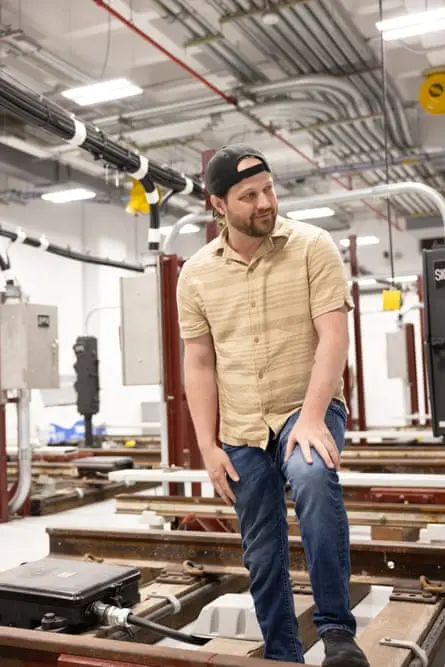
For years, Ryan McElroen’s professional reality was defined by subterranean shadows. Working as an electrical repairman deep within the intricate, soot-stained veins of the New York City subway system, his daily landscape consisted of concrete tunnels, the scurry of rodents, and artificial illumination. That subterranean existence shifted dramatically when McElroen accepted an assignment in the wide-open expanse of the Atlantic Ocean.
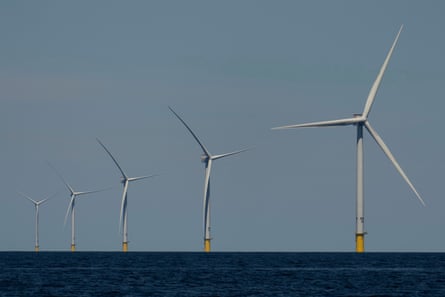
Trained through his union, the International Brotherhood of Electrical Workers (IBEW) Local 3, McElroen transitioned into the burgeoning offshore wind sector. Over the span of several months, he completed multiple one-month-long rotations on pioneering clean energy initiatives: constructing the Sunrise Wind project roughly 30 miles east of Montauk Point, and servicing the Empire Wind development in the New York Bight south of Long Island. Instead of rats and decaying infrastructure, his shifts concluded with panoramic sunsets over open water, accompanied by pods of dolphins and seals cutting through the waves.
"I would love to continue doing this for the rest of my career," McElroen reflected from his union’s Electrical Industry Training Center in Long Island City, Queens.
McElroen’s journey from subterranean transit work to utility-scale ocean engineering is emblematic of a broader, high-stakes transformation within the American labor movement. Over the past decade, organized labor—bolstered by strategic alliances with environmental organizations and turbocharged by landmark federal legislation like the Inflation Reduction Act (IRA)—has aggressively positioned workers at the center of the clean energy transition.
Yet, this nascent green workforce has become a primary target in a fierce political tug-of-war. Following the re-election of Donald Trump, the federal government has mounted an aggressive campaign to dismantle green energy incentives, stall construction through executive stop-work orders, and undo billions in offshore wind investments. Despite these formidable roadblocks, labor coalitions built from the ashes of climate disasters like Hurricane Sandy have proven remarkably resilient. Supported by union-backed lawsuits, grassroots mobilization, and binding legislative labor standards, the American labor movement is fighting to ensure that the transition away from fossil fuels does not come at the expense of family-sustaining wages, proving that environmental protection and worker power can—and must—coexist.

Detailed Chronology: From Superstorm Sandy to the Offshore Wind Frontier
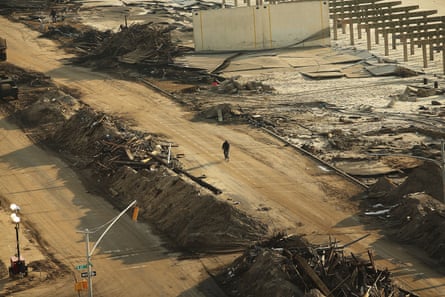
The integration of organized labor into the climate movement was born out of crisis, catalyzed by the devastation of Hurricane Sandy in October 2012. The historic superstorm left large swaths of the Northeast underwater, destroying coastal infrastructure, including iconic landmarks like the Rockaway boardwalk in Queens, and forcing working-class communities to reckon with the immediate, brutal realities of accelerating climate change.
The Genesis of a Movement (2012–2019)
In the wake of Sandy, labor leaders realized that climate change was no longer a theoretical debate—it was a clear and present danger to workers, who were consistently hit "first and worst." Mike Fishman, then secretary-treasurer of the Service Employees International Union (SEIU), noted that at the time, the mainstream environmental movement viewed climate action primarily through the narrow lens of emissions reduction, often ignoring the socioeconomic conditions of the workforce.
Recognizing this disconnect, Lara Skinner, founding executive director of Cornell University’s Climate Jobs Institute, reached out to labor leaders across building trades and transit unions. Together, they sought to build political power to ensure that future green jobs were high-quality, unionized careers rather than low-wage gigs.
This partnership laid the groundwork for Climate Jobs New York (CJNY), a coalition representing millions of workers across the state. The coalition quickly locked onto offshore wind as its core priority, pushing for a massive nine-gigawatt buildout by 2035—a target far more aggressive than what environmental groups were demanding at the time. In 2019, under intense pressure from labor leadership, then-Governor Andrew Cuomo adopted the coalition’s ambitious vision, which was subsequently enshrined into law via the landmark Climate Leadership and Community Protection Act (CLCPA).
By 2021, CJNY secured historic labor and equity provisions for renewable energy. These included prevailing wage requirements, project labor agreements (PLAs) for large-scale construction, and labor peace agreements that simplified the path to unionization for operations and maintenance personnel. The victories fundamentally altered organized labor’s perspective on the green transition. As Skinner observed, unions realized that this new frontier would be built by union hands, cementing their commitment to defending offshore wind against political headwinds.

Federal Acceleration and the IRA Boom (2020–2024)
Recognizing the power of this model, Fishman and other labor organizers established the Climate Jobs National Resource Center (CJNRC) in 2020 to replicate the New York blueprint nationwide, partnering with Cornell researchers to expand into states like Texas, Connecticut, Illinois, Rhode Island, and Maine.
The momentum reached a national crescendo with the passage of the Inflation Reduction Act in 2022 under the Biden administration. For the first time in U.S. history, rigorous labor standards—such as prevailing wage and registered apprenticeship requirements—were tied directly to private-sector clean energy tax incentives. This legislative pairing created an unprecedented alignment between environmental advocates and labor unions.
By late 2024, the CJNRC had helped establish labor-led climate coalitions across nine states. Meanwhile, the Biden administration aggressively fast-tracked the sector, approving 10 commercial-scale offshore wind projects totaling over 15 gigawatts by September 2024.
The Trump Administration’s Retaliation (2025–2026)
The return of Donald Trump to the White House in 2025 brought an abrupt halt to the federal government’s green energy acceleration. Moving swiftly to dismantle the Biden administration’s climate agenda, the new administration targeted offshore wind with executive actions, branding it an aesthetic and environmental nuisance while phasing out clean-electricity tax credits.
Throughout 2025, the administration issued a wave of stop-work orders targeting major regional projects:
- April 2025: Empire Wind (New York Bight) ordered to halt construction.
- August 2025: Revolution Wind (off Rhode Island and Connecticut) hit with stop-work directives.
- December 2025: A sweeping federal directive targeted New York’s Sunrise Wind and Empire Wind, Massachusetts’ Vineyard Wind, Rhode Island’s Revolution Wind, and Virginia’s Coastal Virginia Offshore Wind.
For workers like Ryan McElroen, who was stationed on the Sunrise Wind vessel when the December order dropped, the news brought an unsettling atmosphere of uncertainty. While most general construction crews were immediately sent home, specialized union electricians like McElroen were designated essential, remaining on-site to prevent environmental and structural degradation.
Supporting Context & Metrics: The Human and Economic Toll
The political volatility surrounding offshore wind has generated profound economic repercussions for the domestic energy market and its workforce.
The Market Chill and Job Losses
While federal courts ultimately intervened to block the Trump administration’s stop-work orders—allowing projects like Vineyard Wind to complete construction and Revolution Wind and Coastal Virginia to begin sending power to the grid—the administration’s broader strategy severely disrupted market confidence.
The administration allocated $2.7 billion in taxpayer funds to cancel 12 offshore wind leases across multiple developer agreements, creating what industry insiders termed a "complete chilling effect." Market projections by BloombergNEF illustrate the steep trajectory of this decline: immediately following the 2024 election, researchers estimated the U.S. would bring 39 gigawatts of offshore wind online by 2035. By October of the following year, that projection plummeted to just 6 gigawatts, indicating that virtually no new utility-scale projects would advance.
According to building trades estimates cited by labor leaders, this regulatory strangulation has resulted in the loss of an estimated 3 billion potential work hours across the domestic construction sector. In New Jersey, regional proposals collapsed entirely under the weight of regulatory and market uncertainty, leaving thousands of IBEW members without access to the localized maritime projects for which they had trained.
Economic Mobility for Workers
Despite these macroeconomic setbacks, individual workers who secured positions on completed or legally defended projects experienced life-altering financial gains. For McElroen, the high-wage structure of unionized offshore wind work enabled him to pursue long-term financial stability. During his interview with The Guardian, his phone buzzed with a notification confirming that he had been pre-qualified for a residential mortgage—a direct milestone of his employment in the clean energy sector.
Official Statements & Stakeholder Perspectives
The ideological battle over the future of American energy has drawn sharp commentary from key labor leaders, policymakers, and environmental advocates.
-
Mike Fishman, President and Executive Director, CJNRC:
Reflecting on the evolution of the labor-climate alliance, Fishman emphasized that the movement’s foundational philosophy has fundamentally reshaped national discourse. "The work we’ve done across the country… has set a completely different tone in the industry and in the climate world," Fishman stated. "People now incorporate thinking on wages and jobs into their thinking about building new energy and dealing with emissions… None of that is going away." -
Chris Erickson, Business Manager, IBEW Local 3:
Highlighting the immediate threat posed by political interference, Erickson pointed to the tangible human cost of canceled projects. "These weren’t theoretical jobs we were facing losing, it was people looking at actively losing paychecks," he noted. Discussing the broader regional fallout, Erickson warned that stalling domestic development makes future restarts far more difficult and expensive, given the reliance on continuous project pipelines to sustain local ports, vessels, and supply chains. -
Chrissy Lynch, President, Massachusetts AFL-CIO:
Lynch underscored the durability of the labor-environmental coalition forged prior to the political backlash. "By the time the attacks from Trump began, we were married to the environmentalists," Lynch observed. "We weren’t on the same page about everything, but we were used to working together."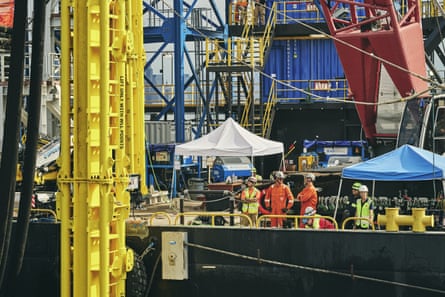
-
John Podesta, Climate and Energy Advisor and CJNRC Board Member:
Speaking at a New York City convening, Podesta highlighted the unique structural achievement of the Inflation Reduction Act. "One of the things that was fundamentally different about the IRA was, in addition to the massive commitment to investing, it was done in a way that supported good jobs," Podesta said. "That was the first time that ever happened, where labor standards were attached to private sectors."
Future Outlook: The Inevitability of Green Expansion
As the U.S. navigates the remainder of the decade, the domestic clean energy landscape remains deeply polarized. The Trump administration’s willingness to expend billions of dollars to buy out leases and suppress wind development has inflicted undeniable wounds on the burgeoning supply chain. Labor experts caution that rebuilding investor confidence and manufacturing infrastructure will require renewed policy consistency.
Nevertheless, labor leaders remain stubbornly optimistic. Even amidst federal hostility, the CJNRC expanded its footprint, launching new climate job coalitions across five additional states and the United Kingdom, while securing state-level protections in jurisdictions from Colorado to Pennsylvania.
Furthermore, energy analysts point out that the fundamental economic and geographic realities driving offshore wind have not changed. Coastal population centers require massive, reliable quantities of electricity close to demand hubs—a requirement that land-based renewables and fossil fuels struggle to meet with equal efficiency.
As Fishman asserted, the political winds are bound to shift once more. When they do, the institutional frameworks, legislative guardrails, and cross-movement alliances forged over the past decade will ensure that America’s clean energy transition is built not on exploitation, but on the enduring foundation of union power.