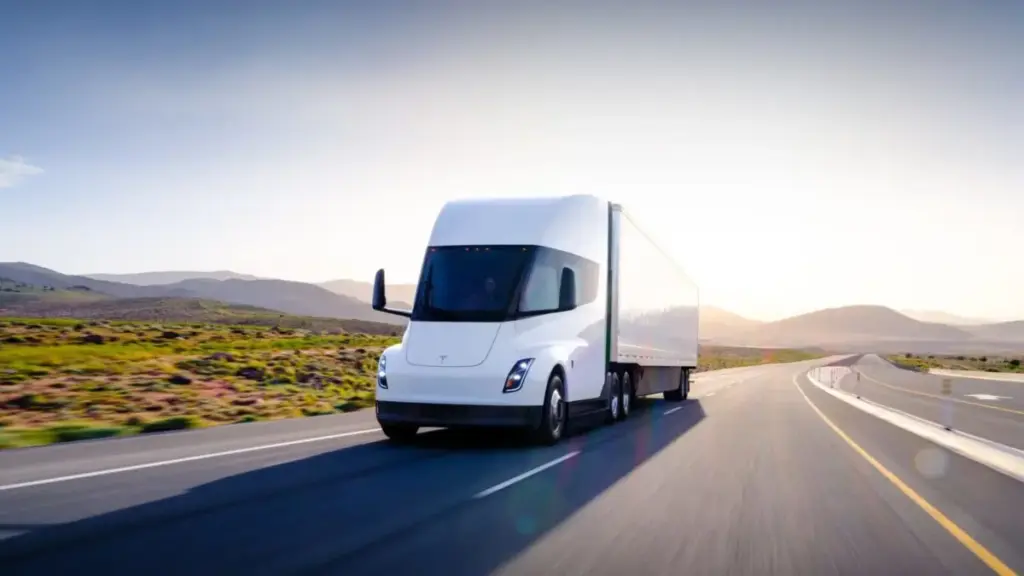
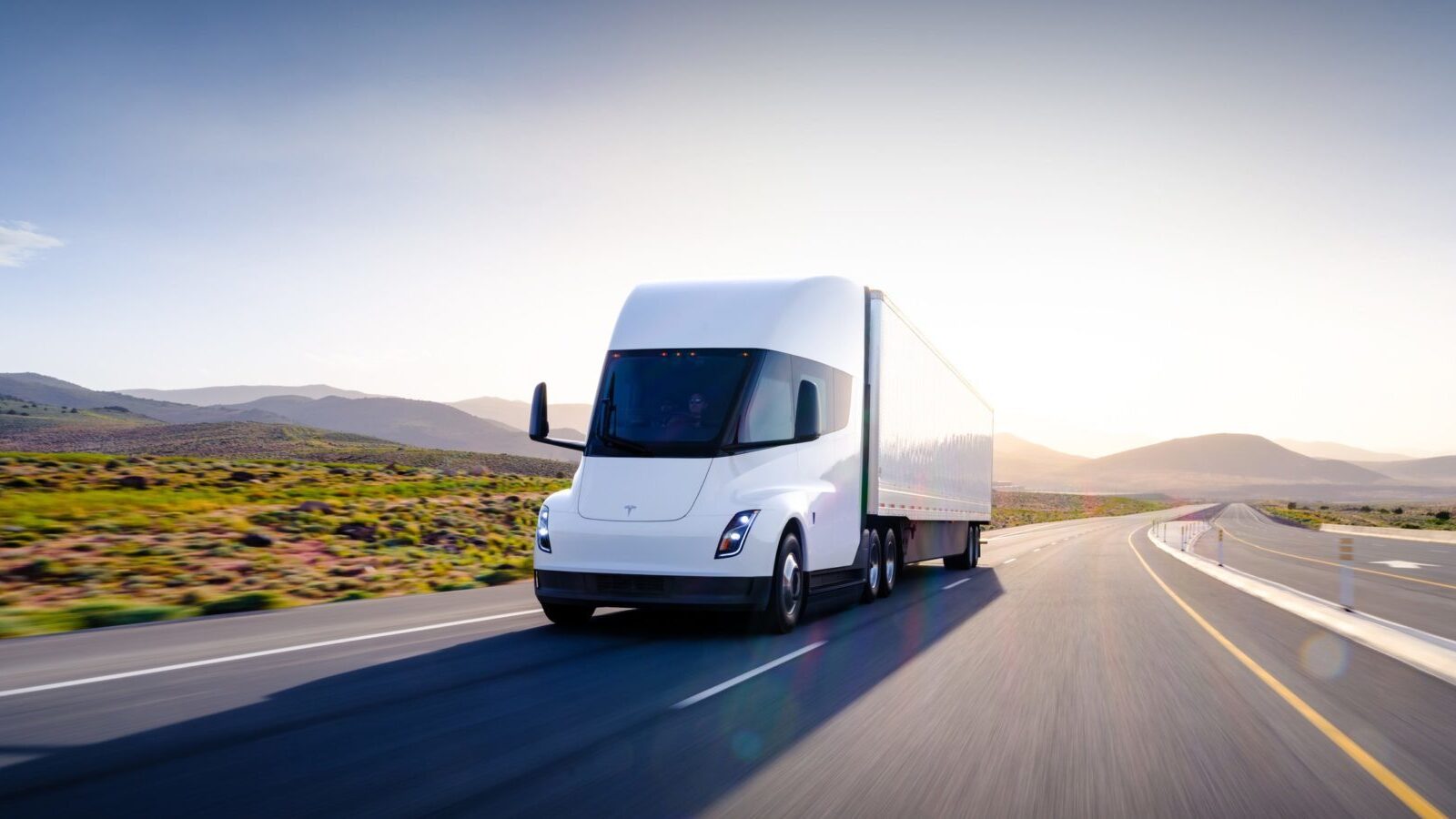
Nearly a decade after its initial high-profile unveiling in late 2017, the Tesla Semi—the company’s heavy-duty, all-electric Class 8 truck—is finally transitioning from a protracted saga of pilot projects, iterative engineering prototypes, and repeated delays into a legitimate commercial reality. Following years of limited pilot deployments with early corporate adopters, Tesla officially commenced high-volume manufacturing of the Semi at Gigafactory Nevada on April 29, 2026.
This long-awaited scaling milestone is already reshaping the logistics landscape. In a watershed moment for the program, Swedish sustainable freight leader Einride placed an order for 500 Tesla Semis, marking the largest single procurement of the electric truck to date. These vehicles will be deployed across major logistics corridors in the United States—including California, New Jersey, Texas, Illinois, and Georgia—to support high-volume operations for global enterprises such as Amazon. Deliveries are slated to begin in September 2026.
As the program scales domestically, international expansion is also on the horizon. Tesla has confirmed that the Semi is headed to Europe, with detailed pricing and European-specific specifications scheduled to be unveiled at the upcoming IAA Transportation conference in Hannover, Germany, held from September 15 to 20, 2026.
This comprehensive report examines the trajectory of the Tesla Semi from its turbulent development phase to mass production, analyzes the financial and operational metrics underpinning its commercial case, highlights key executive perspectives, and explores what the future holds for heavy-duty electric freight.
Detailed Chronology: From 2017 Unveil to 2026 Mass Production
The pathway to high-volume manufacturing for the Tesla Semi is a study in the immense engineering challenges associated with electrifying heavy-duty commercial transport. The vehicle’s lifecycle can be broken down into distinct evolutionary phases:
The 2017 Unveiling and Initial Hopes
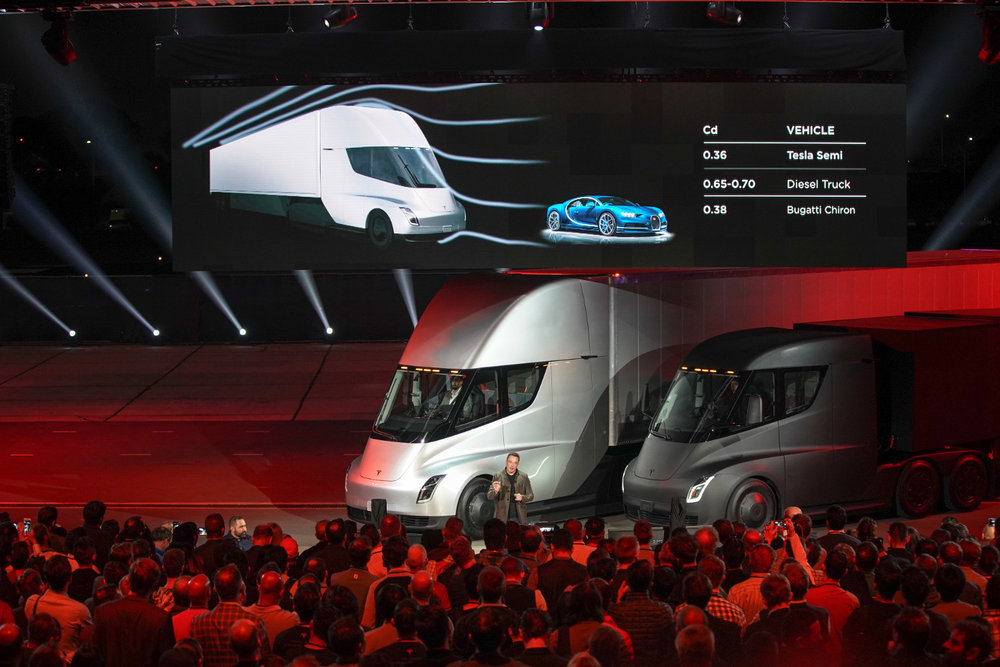
When Tesla first pulled the Semi onto a stage in Hawthorne, California, in November 2017, CEO Elon Musk promised radical performance metrics: a 0-to-60 mph time of 5 seconds without a trailer (20 seconds fully loaded), energy consumption of less than 2 kWh per mile, and variants offering 300 and 500 miles of driving range. At the time, Tesla projected that production would begin by 2019.
However, the physics of scaling up a battery-electric semi-truck—which requires massive energy storage capacities, extreme thermal management, and robust high-voltage charging infrastructure—proved significantly more complex than consumer passenger vehicles.
The Jerome Guillen Era and Pilot Phase (2019–2022)
By 2019, the program was placed under the leadership of Jerome Guillen, then Tesla’s president of automotive and a legendary super-engineer within the company. In interviews from that era, Guillen championed the unique architecture of the Semi, emphasizing its centralized driver seating position and dedicated skateboard battery platform.
Despite Guillen’s stewardship, internal pressures and shifting corporate priorities—notably the hyper-focus on ramping up Model Y production and ramping new factory builds globally—led to repeated timeline pushes. Guillen eventually departed Tesla in 2021 after growing frustrated with project delays.
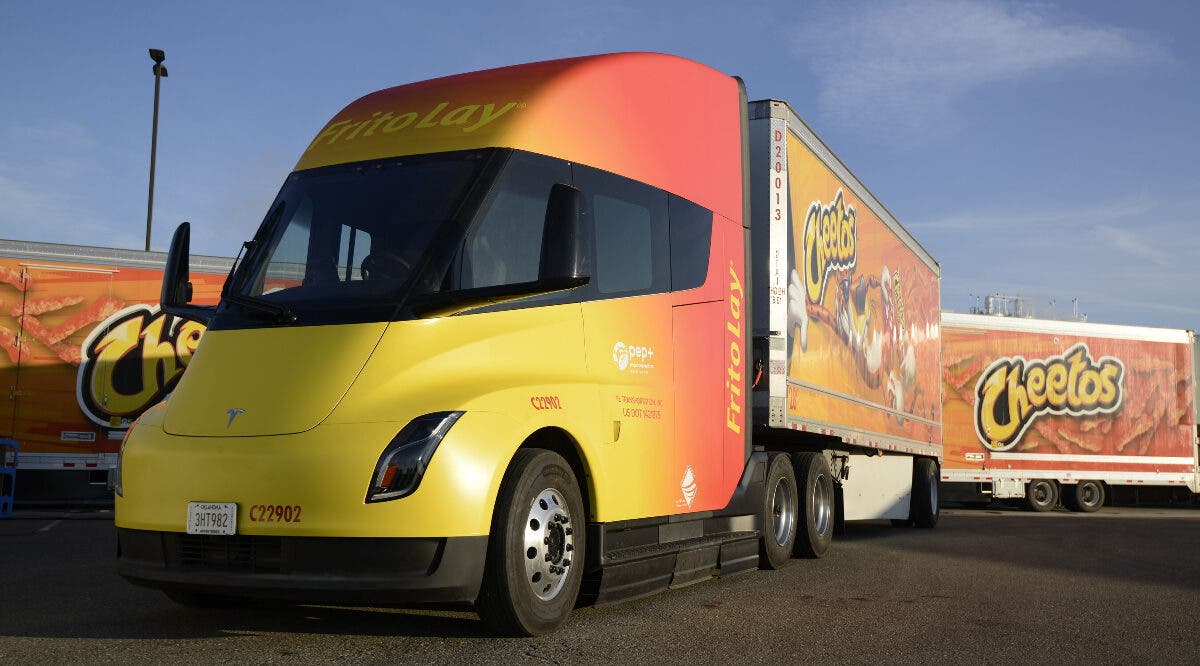
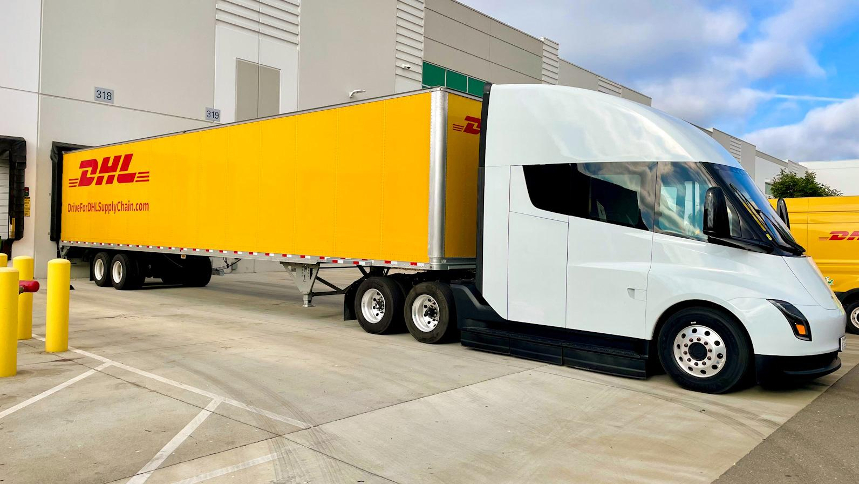
Nevertheless, the engineering foundation remained intact. By the end of 2022, nearly five years after the initial reveal, Tesla initiated low-rate pilot production. These initial trucks were handed over to pioneering launch partners, most notably PepsiCo and its subsidiary Frito-Lay, for real-world fleet testing out of facilities in Modesto, California. Subsequent pilot expansions included partnerships with logistics giants like DHL.
High-Volume Manufacturing at Gigafactory Nevada (2026)
Following roughly four years of iterative refinement and small-batch pilot manufacturing, Tesla crossed a critical Rubicon on April 29, 2026, officially kicking off high-volume production at Gigafactory Nevada. This transition shifted the vehicle from a boutique demonstration project into an industrialized asset capable of satisfying commercial-scale fleet replacements.
Supporting Context & Metrics: Economics, Specifications, and Fleet Integration
To understand why major logistics providers are finally committing capital to the Tesla Semi, one must examine the core economic and technical parameters governing Class 8 freight operations.
Pricing and Battery Configurations
Tesla’s commercial pricing model for the North American market centers on two primary variants:
Standard Range Version: Priced at approximately $260,000, this configuration utilizes an estimated 548 kWh battery pack, delivering roughly 325 miles of real-world range per charge. It is engineered for regional distribution hubs, yard-to-yard shuttles, and predictable urban freight routes.
Long Range Version: Priced at approximately $290,000, this iteration steps up to an 822 kWh battery pack, providing an estimated 500 miles of range. This version targets long-haul regional freight corridors, enabling drivers to complete full shifts within federal Hours of Service (HOS) limits before requiring a recharge.
The Total Cost of Ownership (TCO) Equation
For commercial fleets, vehicle purchase price is secondary to Total Cost of Ownership (TCO). Heavy-duty diesel trucks incur massive, ongoing operational expenses related to fuel price volatility, frequent engine maintenance, oil changes, transmission servicing, and emissions compliance systems.
Electric heavy trucks fundamentally alter this financial balance. According to industry analyses and statements from Tesla’s leadership, fleet operators benefit from:
Fuel Savings: Electricity is significantly cheaper per equivalent energy gallon than diesel, particularly when fleets utilize off-peak charging schedules or on-site solar and stationary storage arrays.
Reduced Maintenance: EV powertrains feature a fraction of the moving parts found in internal combustion engines. Brake wear is substantially minimized via regenerative braking, and complex exhaust aftertreatment systems (such as diesel particulate filters and DEF systems) are eliminated entirely.
The economic rationale was validated on a massive scale following the launch of high-volume production. Swedish sustainable freight technology company Einride committed to a landmark order of 500 Tesla Semis.
Significantly, these trucks will not remain in Europe initially; they are earmarked for deployment across the United States. Einride will integrate the vehicles into heavy-duty freight routes spanning key logistics hubs in California, New Jersey, Texas, Illinois, and Georgia. A core portion of these deployments will directly support operations for e-commerce behemoth Amazon, testing the limits of zero-emission line-haul transport at a national scale.
Official Statements and Industry Perspectives
The convergence of mass manufacturing and large-scale commercial adoption has drawn enthusiastic commentary from corporate leaders at the forefront of the electric freight movement.
Highlighting the maturation of the technology, Roozbeh Charli, CEO of Einride, remarked:
"This deployment is yet another proof point that we can execute at the scale our customers demand. Working closely with Tesla to bring next-generation Semis into active operations quickly and at scale is a testament to the strength of that partnership, and how quickly this technology is maturing from promise to daily operations."
Echoing these sentiments, Dan Priestley, Director of the Tesla Semi Program, emphasized the direct bottom-line advantages for fleet managers:
"Einride is at the forefront of sustainable freight, and we are thrilled to deepen our relationship with them through this order of 500 Semis. EV heavy trucks provide lower costs per mile from fuel savings, reduced maintenance, and better uptime over diesel trucks. These savings increase further through operational efficiency when deploying EV trucks at scale, and we are excited that Einride recognizes this and look forward to supporting their deployments."
Beyond Einride, industry observers anticipate that foundational early partners—such as PepsiCo, Frito-Lay, and DHL, all of which accumulated millions of real-world electric miles during the pilot phase—will soon follow suit with substantial, multi-unit production orders to expand their existing zero-emission fleets.
Future Outlook: The Road Ahead for Electric Freight
As Tesla transitions the Semi from a regional U.S. curiosity to a global contender, the upcoming IAA Transportation conference in Hannover, Germany (September 15–20, 2026) will serve as the definitive stage for the vehicle’s European debut.
Entering the European market presents both distinct opportunities and unique design challenges. European trucking regulations differ fundamentally from North American standards. European cabover design regulations dictate overall length limits, meaning Tesla will likely need to tailor its aerodynamic, long-nose styling to fit European dimensional envelopes, or showcase a variant optimized for European logistics regulations. Furthermore, pricing, payload capacities tailored to metric weight limits, and charging compatibility with the Megawatt Charging System (MCS) standard will be critical details scrutinized by European fleet operators.
At home, the immediate challenge for Tesla will be supply chain scaling and infrastructure enablement. Manufacturing 500 trucks for Einride—alongside fulfilling backlog commitments for PepsiCo and other early adopters—will test Gigafactory Nevada’s newly minted high-volume lines. Simultaneously, the buildout of dedicated Megacharger corridors along major U.S. freight arteries must accelerate in lockstep with vehicle deliveries to ensure that drivers can rapidly replenish those massive 500+ kWh battery packs during legally mandated rest breaks.
The Tesla Semi’s journey has been undeniably protracted, marked by broken deadlines and skeptics who doubted whether an electric class 8 truck could ever achieve commercial viability. However, with Gigafactory Nevada now churning out production units, a 500-truck deployment underway with Einride, and an imminent European showcase in Hannover, the era of the electric big rig has definitively moved past the drawing board and onto the highway.