By Global Environmental Investigative Desk
Published in partnership with environmental research monitoring initiatives
Executive Overview
For centuries, the Amazon basin has stood as the ultimate global symbol of ecological resilience and biological untouched purity. Spanning millions of square kilometers, its labyrinthine waterways, flooded forests, and dense canopies have functioned as the Earth’s primary biological heartland. Today, however, this pristine narrative is fracturing under the weight of an invisible, pervasive invader: synthetic polymer pollution.
Recent field investigations and academic studies reveal that microplastics—tiny plastic fragments measuring less than five millimeters—have infiltrated nearly every stratum of the Amazonian ecosystem. From the tannin-stained, acidic waters of the Negro River to the critical avian and marine nesting sites at the mouth of the Amazon River, plastic debris is no longer a localized urban nuisance. It is a basin-wide contaminant reshaping the foundational chemistry and biological health of the world’s largest tropical rainforest.
This investigative series follows the trail of microplastic contamination through the region’s complex hydrological network—navigating winding rivers, remote igarapés (narrow forest streams), sprawling oxbow lakes, and coastal mangrove forests. The findings are stark. Iconic aquatic apex predators, such as the massive pirarucu (Arapaima gigas), are ingesting significant quantities of synthetic fibers and particles through the food web. More alarmingly, emerging scientific evidence confirms that terrestrial wildlife—including lowland tapirs, insectivorous and frugivorous bats, canopy-dwelling monkeys, and sensitive amphibians—are also accumulating microplastics in their tissues and digestive tracts.
While pioneering toxicologists and field biologists are rapidly closing knowledge gaps, profound uncertainties remain. The true scale of this contamination, its long-term synergistic impacts on regional biodiversity, and the direct health consequences for the millions of traditional riverine communities (ribeirinhos) who rely entirely on these waters for sustenance demand urgent, coordinated international intervention.
Detailed Chronology: How the Anthropogenic Tide Reached the Jungle
To understand how synthetic polymers penetrated the remote heart of the world’s most expansive rainforest, one must trace the convergence of global consumption trends, localized waste management failures, and the unique hydrological mechanics of the Amazon basin.
Phase One: The Urbanization and Infrastructure Expansion (Late 20th Century)
For decades, environmental discourse regarding the Amazon focused primarily on deforestation, cattle ranching, hydroelectric dam construction, and illegal mining. Plastic pollution was largely overlooked, treated as an aesthetic urban problem confined to burgeoning regional hubs like Manaus, Belém, and Porto Velho.
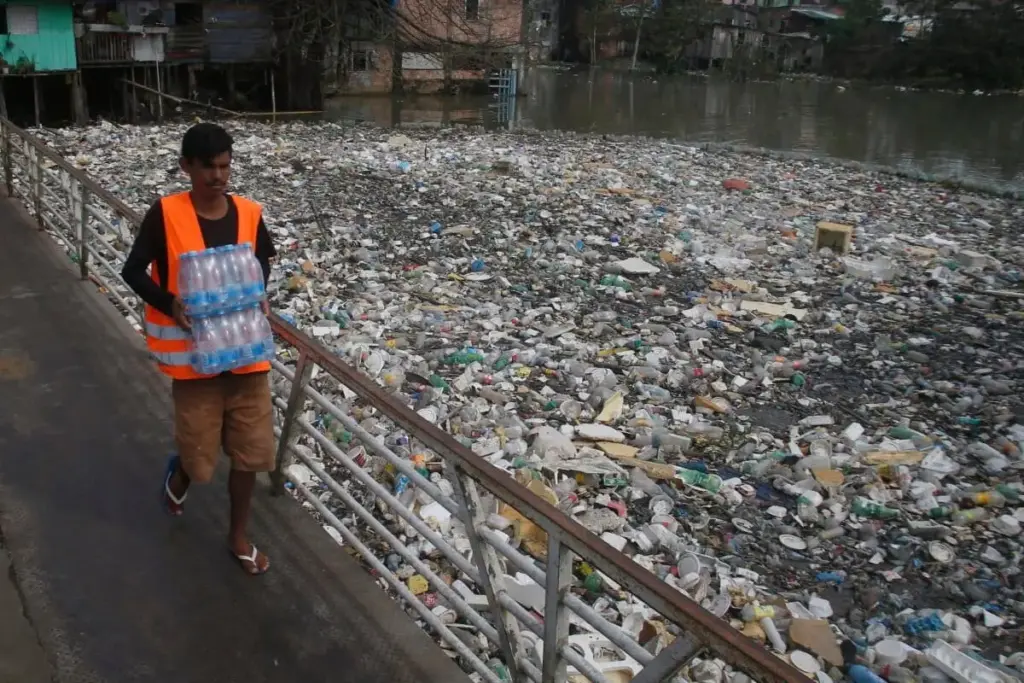
During the late 1990s and early 2000s, rapid demographic growth outpaced municipal waste management infrastructure across northern Brazil and neighboring Amazonian nations. Single-use plastics—polyethylene bags, PET beverage bottles, polystyrene containers, and synthetic clothing fibers—flooded local markets. Lacking sanitary landfills or advanced municipal recycling systems, riverside municipalities frequently relied on open dumpsites or direct disposal into local tributaries during seasonal floods.
Phase Two: The Fragmentation Process and Hydrological Transport (2010–2018)
As thousands of tons of discarded plastics entered local waterways, physical and chemical weathering processes began. Exposed to intense equatorial ultraviolet (UV) radiation, high ambient temperatures, and constant mechanical abrasion against rocks, sand, and woody debris, macroplastics fractured into secondary microplastics.
Unlike conservative pollutants that dilute over distance, the Amazonian hydrological cycle acts as a hyper-efficient distribution engine. During the wet season, rising river levels inundate vast tracts of land, known as várzea forests. This seasonal flooding sweeps terrestrial plastic debris accumulated on riverbanks directly into the main river channels. Oceanographic and fluvial studies demonstrated that microplastics do not merely sink; buoyant polymers ride surface currents, while denser particles—such as polyester and nylon fibers derived from domestic laundry greywater—become suspended in the water column and incorporated into riverbed sediments.
Phase Three: Bioaccumulation and Trophic Transfer (2019–Present)
By the close of the last decade, researchers began shifting their focus from water column concentrations to biological uptake. Field studies conducted across the Solimões, Madeira, and Negro rivers revealed that primary consumers—detritivorous fish and filter-feeding invertebrates—were mistaking microscopic fragments for phytoplankton or organic detritus.
The chronology of contamination thus shifted from a physical geography problem to a toxicological crisis. As smaller fish ingested microplastics laden with industrial plasticizers and heavy metal coatings, predatory species consumed them. This set the stage for biomagnification, culminating in contamination signatures found in apex aquatic predators like the pirarucu and river dolphins (inia geoffrensis), as well as terrestrial mammals that forage along receding shorelines during the dry season.
Supporting Context & Metrics: The Scale of the Crisis
Quantifying microplastic pollution within an environment as vast and dynamic as the Amazon basin presents unprecedented logistical and analytical challenges. However, recent data collected by multi-institutional research consortia paint a deeply concerning picture.
Hydrological Concentration Metrics
- Water Column Density: Sampling data from major tributaries indicate microplastic concentrations ranging from 0.5 to over 15 particles per cubic meter in urban-adjacent reaches, with background concentrations in remote areas averaging 0.2 to 2 particles per cubic meter. While seemingly low compared to industrialized European rivers like the Rhine or Thames, the sheer volume of Amazonian discharge means millions of particles are transported toward the Atlantic Ocean daily.
- Sediment Accumulation: Core samples extracted from floodplain lakes (lagos de várzea) reveal exponential increases in synthetic fiber deposition rates over the past twenty-five years, perfectly mirroring global plastic production curves.
- Polymer Breakdown: Laboratory analyses of collected fragments show that low-density polyethylene (LDPE) and polypropylene (PP) dominate macro-debris, whereas polyester and rayon dominate the micro-fiber spectrum, largely originating from domestic wastewater discharges lacking tertiary filtration.
Wildlife Impact Matrix
| Species Group | Representative Species | Primary Route of Exposure | Types of Plastics Recovered | Observed Biological Impact |
|---|---|---|---|---|
| Apex Aquatic Fish | Pirarucu (Arapaima gigas) | Trophic consumption of prey fish | Fragments, films, micro-fibers | Intestinal blockage, inflammatory lesions, endocrine disruption via chemical leeching. |
| Terrestrial Mammals | Lowland Tapir (Tapirus terrestris) | Ingestion of contaminated mud and vegetation along riverbanks | Polyethylene fragments, packaging remnants | Gastrointestinal irritation, potential toxin bioaccumulation. |
| Flying Mammals | Frugivorous/Insectivorous Bats | Ingestion of insects carrying microplastics / contaminated fruit surfaces | Synthetic micro-fibers | Metabolic stress, reduced foraging efficiency. |
| Avian Predators | Herons, Kingfishers | Consumption of aquatic life | Fragments and micro-fibers | Reduced reproductive success, cellular damage. |
| Amphibians | Poison Dart Frogs, Tree Frogs | Dermal absorption and ingestion through aquatic larval stages | Nanoplastics and micro-fibers | Developmental abnormalities, compromised immune response. |
The Human Dimension: Riverine Communities at Risk
Beyond the ecological implications, the crisis directly threatens human food security. Traditional riverine populations (ribeirinhos) and indigenous groups derive up to 80% of their daily protein intake from freshwater fish. Recent ethnographic and nutritional surveys indicate that populations consuming high quantities of piscivorous fish are chronically exposed not only to the plastic particles themselves but also to the hazardous chemical additives—such as phthalates and brominated flame retardants—that hitchhike on polymer surfaces.
Official Statements and Expert Perspectives
The mounting evidence of widespread contamination has drawn sharp warnings from the scientific community and catalyzed guarded responses from regional governance bodies.
Dr. Helena Vasconcelos, a senior aquatic toxicologist heading Amazonian monitoring programs, emphasized the insidious nature of the contamination during a recent scientific briefing in Manaus:
"We used to think of the Amazon as an insulated fortress buffered by its sheer size and remoteness. What our data proves is that water is a global conveyor belt. The microplastics we are finding in the stomach linings of pirarucu in remote oxbow lakes are not just pieces of trash; they are chemical sponges absorbing ambient toxins and delivering them directly into the food web. We are witnessing the chemical alteration of an entire continental ecosystem."
Field biologist Mateo Fernandez, who led expeditions tracking terrestrial mammals along the Negro River corridor, highlighted the unexpected vulnerability of land animals:
"When we initiated our study on tapirs and primates, our working hypothesis was that microplastics would be strictly an aquatic issue. Instead, we found synthetic fibers in the feces of animals living dozens of kilometers away from any permanent human settlement. The vectors are complex: flooding regimes wash plastics onto feeding grounds, insects ingest micro-particles during their aquatic larval stages, and terrestrial animals consume them through the food chain or contaminated drinking water. Nothing in the basin is truly isolated anymore."
Governmental agencies, including Brazil’s environmental enforcement body IBAMA and various state-level environmental secretariats, acknowledge the gravity of the findings while pointing to systemic enforcement deficits. A joint statement released by regional environmental authorities noted:
"The spatial scale of the Amazon basin presents unprecedented surveillance challenges. Traditional policing of illegal deforestation and mining already stretches our operational capacity. Addressing microscopic pollution requires a fundamental restructuring of municipal sanitation infrastructure across thousands of riverine towns and villages—a task that demands robust federal investment and international technological cooperation."
Future Outlook: Mitigation, Policy, and the Path Forward
Mitigating the microplastic crisis in the Amazon basin requires an urgent paradigm shift in how environmental policy, waste management, and scientific research intersect. Because microplastics are largely invisible and omnipresent, traditional command-and-control conservation measures are insufficient.
1. Upgrading Municipal Wastewater Infrastructure
The primary municipal source of micro-fibers and micro-particles is domestic effluent. Constructing modern wastewater treatment plants equipped with membrane bioreactors and advanced sand filtration units across Amazonian urban centers—such as Manaus, Belém, Macapá, and Santarém—is non-negotiable if upstream inputs are to be curbed.
2. Decentralized Waste Management in Remote Communities
Riverine settlements lack municipal garbage collection. Without alternatives, residents frequently burn or discard plastic packaging directly into rivers. Implementing community-led recycling hubs, incentivized bottle-return programs, and localized organic composting can dramatically reduce the volume of macro-plastics entering igarapés before they fragment.
3. Expanding Ecotoxicological Surveillance
Long-term monitoring networks must be institutionalized. Researchers require sustained funding to map baseline contamination levels across all nine Amazonian nations, establishing standardized protocols for tracking bioaccumulation in key indicator species like the pirarucu and river turtles (Podocnemis expansa).
4. Corporate Accountability and Extended Producer Responsibility (EPR)
Multinational beverage and consumer goods conglomerates that distribute single-use plastic packaging throughout remote Amazonian markets must be held legally and financially accountable for the end-of-life management of their products. Implementing stringent EPR frameworks will compel corporations to redesign packaging, transitioning rapidly toward biodegradable or reusable alternatives suited to tropical developing economies.
Conclusion
The detection of microplastics in the remote waters of the Negro River and the flesh of iconic Amazonian wildlife serves as a sobering wake-up call. It demonstrates definitively that no ecosystem on Earth, no matter how vast or seemingly remote, is immune to the cascading consequences of the global plastic economy.
Saving the Amazon Rainforest from the inside out now demands more than protecting its trees from the chainsaw and the match; it requires an uncompromising campaign to purify its waters, safeguard its fauna, and preserve the integrity of a hydrological circulatory system upon which millions of lives depend. The window to act before microscopic contamination becomes irreversible is rapidly closing.