Executive Overview
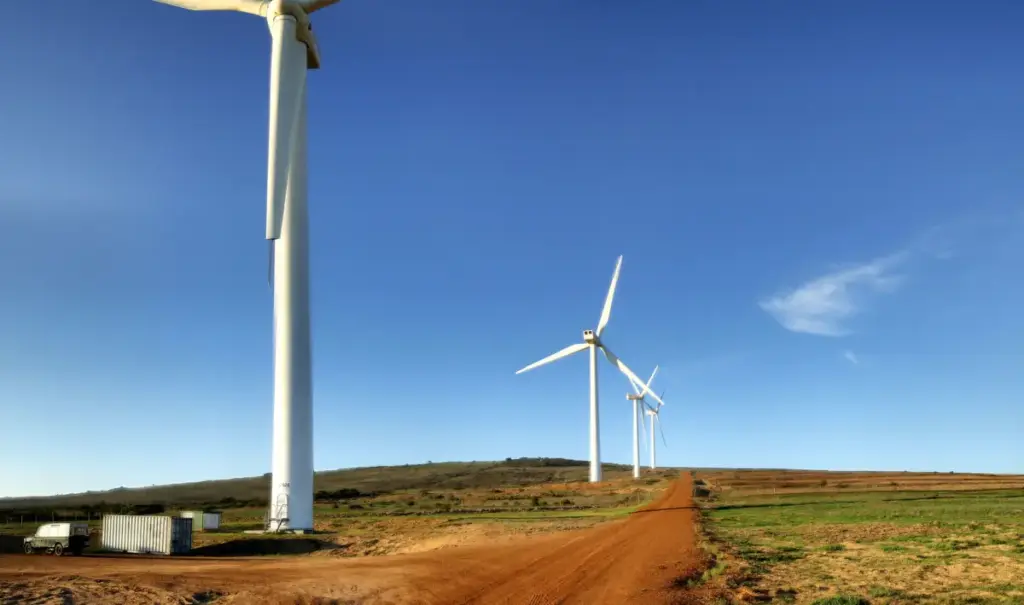
In a landmark move that mirrors a rapidly growing commercial trend across South Africa, York Timber Holdings has officially entered into a 10-year renewable electricity agreement with energy trader Discovery Green. Slated to take effect in June 2026, the strategic arrangement will supply power to the company’s flagship Jessievale sawmill, ensuring that approximately 90% of the facility’s total energy consumption is derived from clean, sustainable sources.
This corporate power purchase agreement (PPA) represents much more than a routine utility switch for a single timber enterprise. It underscores a fundamental shift in how South Africa’s heavy industries are navigating an increasingly volatile energy landscape. By decoupling operations from the coal-heavy national grid, commercial enterprises are hedging against persistent electricity tariff hikes, mitigating rising regulatory pressures, and positioning themselves for a low-carbon global economy.
However, as environmental experts point out, while powering industrial machinery with wind and solar energy is a monumental leap forward for manufacturing decarbonization, true corporate sustainability in the forestry sector must extend far beyond factory gates. Comprehensive environmental stewardship requires examining everything from plantation management and water conservation to biodiversity protection and supply chain transparency.
Detailed Chronology: The Road to the Discovery Green Agreement
The partnership between York Timber Holdings and Discovery Green is the culmination of years of mounting pressures—both economic and environmental—faced by South Africa’s commercial manufacturing sector.
- Pre-2019 (The Legacy Baseline): Like most heavy industrial operations in South Africa, York Timber’s processing facilities relied almost entirely on the national grid. This grid is heavily dominated by coal-fired power plants managed by the state utility, Eskom, making timber processing a carbon-intensive endeavor with high Scope 2 emissions.
- 2019 (Regulatory Turning Point): The South African government introduced the Carbon Tax Act, signaling a definitive policy shift toward penalizing greenhouse gas emissions. However, initial implementation featured generous allowances, allowing most industrial polluters to pay only a fraction of their calculated carbon liabilities.
- The Interim Phase (Local Solar Adoption): Recognizing the need for localized energy security and cost mitigation, York Timber established a 700-kilowatt (kW) solar farm directly at the Jessievale sawmill. While this installation provided vital auxiliary power, it fell short of meeting the heavy, continuous energy demands required for industrial timber processing.
- June 2026 (The 10-Year PPA Implementation): York Timber signs its landmark 10-year renewable electricity agreement with Discovery Green. Through a process known as "wheeling," the agreement secures long-term access to utility-scale wind and solar energy channeled through existing national grid infrastructure. This pushes the Jessievale mill’s renewable energy mix to approximately 90%.
- The Horizon (Phase-Out of Carbon Tax Allowances): Scheduled to occur concurrently with the rollout of the PPA, the lifting of historic carbon tax allowances increases the financial urgency for industrial emitters to transition away from fossil-fueled grid power.
Supporting Context & Metrics: Decoding the PPA and Industry Realities
To understand the magnitude of York Timber’s transition, one must examine the mechanics of modern corporate energy trading in South Africa, as well as the broader metrics defining the commercial forestry sector.
The Mechanics of "Wheeling"
Under the agreement with Discovery Green, York Timber’s physical connection to the electrical grid remains unchanged; the electricity flowing into the Jessievale sawmill arrives via the standard local distribution infrastructure. However, the commercial and environmental mechanics are entirely transformed. Discovery Green coordinates an equivalent amount of clean electricity—generated by a decentralized network of utility-scale wind and solar farms distributed across South Africa—to be fed into the national grid simultaneously.
This mechanism, known as energy "wheeling," enables private corporations to bypass the limitations of localized generation. It allows businesses with massive power needs to procure 100% renewable energy at scale without needing to build massive renewable energy installations on their own balance sheets.
Financial and Carbon Metrics
- 90% Clean Energy: The share of total electricity demand at the Jessievale sawmill fulfilled by renewables once the agreement goes live in June 2026.
- 700 kW: The capacity of the pre-existing on-site solar farm operated by York Timber at the mill.
- 50+ Corporate Clients: The growing roster of South African companies currently procuring electricity through Discovery Green, demonstrating that York Timber’s strategy is part of a sweeping national movement.
- 90,000 Hectares (approx. 222,000 Acres): The total expanse of timber plantations managed by York Timber under strict Forest Stewardship Council (FSC) certification standards.
- 90% FSC Certification: The proportion of South Africa’s commercial timber plantations that currently meet international FSC standards, highlighting the sector’s general proximity to global environmental benchmarks.
Official Statements and Expert Perspectives
The transition has drawn commentary from corporate leaders, energy traders, and academic specialists, all of whom emphasize the dual economic and environmental imperative driving these modern agreements.

Corporate Risk Management
For York Timber, the partnership is deeply tied to long-term financial predictability. Linmari Pelser, the company’s group risk and compliance officer, highlighted the dual benefits of scale and cost stabilization:
"The 10-year agreement gives York Timbers access to renewable electricity at scale, while improving long-term certainty regarding electricity costs."
Pelser further emphasized that the structural pivot will actively insulate the company from volatile electricity tariff hikes implemented by utilities, while simultaneously protecting the enterprise from upcoming financial liabilities tied to South Africa’s evolving carbon pricing mechanisms.
The Energy Trader’s Viewpoint
Discovery Green operates as a specialized renewable energy division under one of South Africa’s largest health insurance schemes. Dan Ginsberg, head of actuarial and research and development at Discovery Green, underscored the systemic importance of these long-term contracts for the nation’s broader grid transformation:
"Long-term power purchase agreements with large energy users provide the demand certainty required to unlock investments in new energy infrastructure and are, therefore, critical enablers of South Africa’s energy transition."
The Academic and Environmental Critique
While the PPA has been widely celebrated, academic experts urge caution against viewing industrial decarbonization in isolation. Prof. Paxie Chirwa, a forestry specialist at the University of Pretoria, welcomed the deal while contextualizing its true environmental reach:
"Renewable energy is just one element of sustainability. Responsible management of plantations, conservation of biodiversity and water stewardship are just as important."
Chirwa noted that the agreement is a massive triumph for reducing "Scope 2" emissions—the indirect greenhouse gas emissions associated with the generation of purchased electricity consumed by a company. By replacing coal-fired grid power with wind and solar, the carbon footprint of timber processing shrinks dramatically. However, he stressed that this only addresses the processing stage:

"As far as the broader issue of forestry is concerned, the agreement primarily enhances the sustainability of timber processing and not plantation management."
Chirwa also noted that timber processors could push circularity even further by utilizing mill waste—such as sawdust and bark—as direct feedstocks for internal biomass energy generation.
Regarding the wider forestry footprint, Chirwa acknowledged that South Africa performs relatively well by international standards, noting that over 90% of the nation’s commercial plantations are FSC-certified. This certification ensures that companies like York Timber maintain prescribed conservation set-asides, protect riparian buffers along watercourses, and implement sustainable harvesting cycles.
Nonetheless, he pointed out that continuous oversight remains critical:
"There is room for improvement in terms of monitoring the use of fertilizers, nutrient runoff, water quality downstream from plantations as well as improving the social side of forestry activities. The industry must also commit to disclosing independently verified data on emissions, biodiversity protection, and ecosystem restoration."
Future Outlook: The Next Phase of Industrial Sustainability
As South Africa’s energy grid undergoes a protracted, complex transition away from centralized coal dependency, agreements like the one between York Timber and Discovery Green offer a blueprint for energy-intensive manufacturing.
The impending removal of historic allowances within South Africa’s Carbon Tax framework will eliminate the financial safety net that has historically shielded heavy emitters. In this unforgiving fiscal environment, long-term PPAs will transition from being voluntary corporate social responsibility (CSR) initiatives to absolute prerequisites for operational survival and international export competitiveness. European and North American markets increasingly demand verifiable proof of low-carbon supply chains, meaning timber processors must green both their mills and their management practices.
Moving forward, the true test of sustainability in South Africa’s forestry sector will not rest solely on how sawmills source their electricity, but on how holistically the industry manages its living landscapes. Integrating off-grid renewable power procurement with rigorous water stewardship, advanced soil chemistry monitoring, and transparent biodiversity accounting will determine whether companies can achieve true, end-to-end environmental sustainability.