Executive Overview
For decades, the standard paradigm of African wildlife conservation rested on a heavy-handed, exclusionary model: draw a strict boundary around a protected area, station rangers at the perimeter, and keep local human populations out. Yet, in real-world landscapes—such as the vital migratory corridors stretching between Tanzania’s Lake Manyara and Tarangire national parks—paper boundaries are entirely meaningless to a migrating herd of elephants or a tracking pride of lions.
Animals must cross ancestral paths that intersect with expanding human settlements, burgeoning agricultural fields, and the everyday livelihoods of pastoralist communities. For wildlife to survive in these dynamic ecosystems, conservationists had to solve a much harder, deeply human puzzle: persuading the people living on the front lines that wildlife could, and should, have a place in their economic and social future.
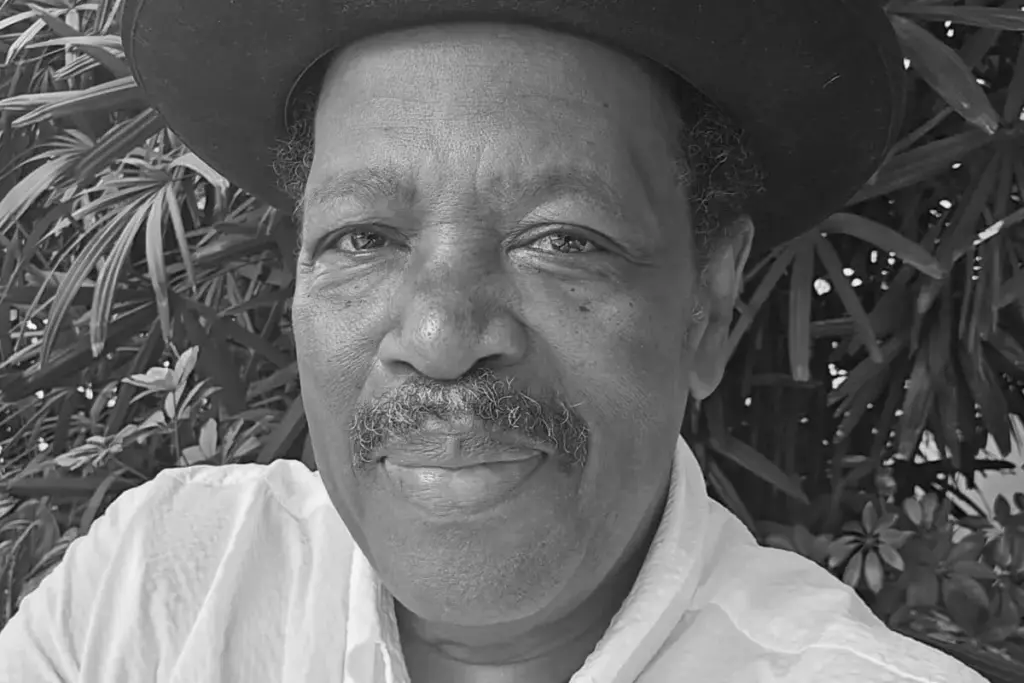
Few individuals understood this complex reality better than John Gospel Yonazi Salehe. Over a distinguished career spanning more than forty years, Salehe emerged as one of East Africa’s most pragmatic, community-centered conservationists. Working across government agencies, international bodies like the Food and Agriculture Organization (FAO) and the United Nations Development Programme (UNDP), and major conservation NGOs including the World Wide Fund for Nature (WWF) and the African Wildlife Foundation (AWF)—where he ultimately served as Tanzania Country Director—Salehe reshaped how conservation was conceptualized and practiced in the region.
Salehe passed away on June 19, at the age of 71, leaving behind a legacy defined not by pristine fences or exclusionary decrees, but by negotiated coexistence, institutional resilience, and a deep-seated belief that conservation must serve the people who live alongside nature. This article examines his monumental life, his philosophy of inclusive stewardship, the administrative complexities of his work, and the enduring impact he leaves on modern East African conservation.
Detailed Chronology: A Lifetime Dedicated to the Wilds of East Africa
To understand the trajectory of John Salehe’s career is to trace the evolution of modern East African environmentalism—from colonial-era preservationist models to contemporary community-based natural resource management (CBNRM).
The Formative Years (1954–1970s)
Born in 1954, Salehe grew up during a period of profound political and ecological transition in East Africa as Tanzania claimed its independence and began grappling with the management of its world-renowned natural heritage. Trained originally as a forester, Salehe entered the conservation sector in the 1970s. At the time, the profession was heavily skewed toward top-down forest and park management. However, Salehe quickly recognized that forests and wildlife habitats could not be artificially isolated from the socio-economic realities of rural communities.
Institutional Leadership and Expansion (1980s–1990s)
Throughout the 1980s and 1990s, Salehe’s expertise bridged the gap between state-level bureaucratic planning and grassroots realities. He lent his skills to various government departments before transitioning to multilateral and international organizations, including stints with the FAO and UNDP. In these roles, he helped design regional strategies addressing deforestation, land degradation, and rural poverty.
A major milestone arrived in 1994 when Salehe joined the Tanzania Forest Conservation Group (TFCG), an organization dedicated to safeguarding the country’s unique coastal and montane forests. His involvement with TFCG marked a deepening commitment to civil society organizations that operated at the intersection of local empowerment and ecological defense.
The AWF Years and National Leadership (2000s–2010s)
As his career progressed, Salehe took on broader leadership mandates, most notably serving as the Tanzania Country Director for the African Wildlife Foundation (AWF). In this high-profile capacity, he directed major landscape-scale conservation initiatives, focusing intensely on the Maasai Steppe. During this period, he was instrumental in operationalizing Wildlife Management Areas (WMAs)—a legal framework designed to give local communities tenure rights and economic incentives to manage wildlife on village land.
Even after stepping down from full-time corporate and NGO roles, Salehe refused to slow down. He assumed leadership positions across multiple environmental institutions. In 2012, he became the Chairman of the TFCG board, guiding the organization through critical periods of environmental policy reform. He also lent his vast experience to the Tanzania Association of Foresters and the Community Wildlife Management Area Consortium, and he played a foundational role in establishing Nature Tanzania, an organization that expanded the conservation conversation to include avian habitats and ornithological preservation.
Final Chapter (2026)
Until his passing on June 19, 2026, Salehe remained an active mentor, board chair, and advisor. His death prompted an outpouring of grief and tribute from across the global conservation community, cementing his status as a foundational pillar of modern Tanzanian environmentalism.

Supporting Context & Metrics: The Mechanics of Community-Based Conservation
Salehe’s philosophy was built on a simple yet demanding premise: conservation fails when it impoverishes local populations, and it succeeds only when it makes sound economic and institutional sense to those who share space with wildlife.
Protecting the Maasai Steppe
In the Maasai Steppe, the challenges are acute. Wildlife moving between Lake Manyara National Park and Tarangire National Park must traverse pastoralist lands cut through by roads, human settlements, and rapidly expanding smallholder agriculture. Traditional grazing grounds have fragmented, heightening human-wildlife conflict.
To keep these vital migratory corridors open, Salehe championed community-based mechanisms. He understood that telling a pastoralist family to forfeit grazing land for the sake of an elephant herd is an untenable proposition if that family is losing cattle to lions or hyenas. Consequently, his programs integrated practical mitigations:
- Predator-Proof Bomas: Reinforcing livestock enclosures with chain-link fencing and thorn scrub to drastically reduce nighttime livestock depredation by lions and leopards.
- Benefit-Sharing Schemes: Ensuring that revenue generated from photographic tourism and hunting concessions flowed directly into community development projects—such as schools, clinics, and clean water points—rather than disappearing into distant national treasuries.
- Participatory Land-Use Planning: Working directly with village councils to map out community zones, designating specific tracts for livestock, agriculture, and wildlife movement without forcibly displacing human residents.
The Forestry and REDD+ Debate
Salehe’s pragmatic approach was equally evident in his work concerning central Tanzania’s vanishing woodlands. In regions like Kondoa, rampant charcoal production and agricultural clearing were stripping the landscape bare. Mainstream conservationists often responded by calling for absolute bans and strict enforcement. Salehe, however, argued that punitive restrictions were doomed to fail unless paired with viable alternative livelihoods.
He maintained that reducing pressure on forests required holistic rural development: raising agricultural productivity on existing plots so farmers wouldn’t need to clear new woodland, securing formal land tenure, and implementing participatory land-use planning.
This philosophy intersected with international climate finance initiatives, including Reducing Emissions from Deforestation and Forest Degradation (REDD+) projects. While later independent researchers examining Kondoa’s REDD+ interventions debated the precise carbon-offset metrics and long-term socioeconomic outcomes of those projects, Salehe’s underlying thesis remained unshakable: environmental protection cannot be divorced from human survival and local economic agency.
The Unglamorous Reality of Institutional Building
The media often portrays conservation in terms of dramatic wildlife photography, anti-poaching patrols, and sweeping wilderness vistas. Salehe’s day-to-day reality, however, looked entirely different.
Building Wildlife Management Areas required navigating endless bureaucratic hurdles, mediating fierce disputes over investor revenue, untangling complex expectations between village assemblies and central government authorities, and managing fragile multi-stakeholder coalitions. It was administrative, tedious, and politically delicate work. Yet, colleagues recall that Salehe moved through these friction-heavy environments with remarkable patience, uncommon integrity, and a disarming sense of humor.
Official Statements and Tributes
The conservation community responded to Salehe’s passing with deep sorrow, highlighting his character, professional rigor, and profound humanity.
-
Nature Tanzania, an organization he helped found, issued a moving commemorative statement reflecting on his philosophy:
"John Salehe believed that conservation belonged to the people. While this phrase can sometimes sound grand, John’s working methods grounded it in reality. His conservation was built through endless meetings, meticulous land-use plans, complex budgets, hard negotiations, and years spent keeping delicate alliances together. He was our founder, chairman, and guiding light."

-
The African Wildlife Foundation (AWF) released an official tribute mourning the loss of their former Tanzania Country Director:
"AWF mourns the passing of John Salehe, a visionary leader whose dedication to East Africa’s natural landscapes spanned decades. John possessed a rare ability to bridge the gap between rural communities and international conservation partners. His legacy lives on in the secure wildlife corridors and empowered villages of the Maasai Steppe."
-
The Tanzania Forest Conservation Group (TFCG) remembered their long-serving board chairman with profound gratitude:
"John guided TFCG through periods of immense transition with steady wisdom, unwavering integrity, and a gentle humor that put everyone at ease. He was not only a titan of Tanzanian forestry and conservation, but a mentor to generations of environmental professionals who learned the true meaning of community stewardship from his example."
-
Filmmakers and Researchers who worked alongside him in the field frequently noted his distinct persona. During a 2014 documentary project, interviewers described Salehe as "incredibly accommodating" and "quite the character"—a professional who could command a room of high-ranking government officials one afternoon and sit patiently under an acacia tree drinking tea with Maasai elders the next.
Future Outlook: The Road Ahead for East African Conservation
As Tanzania and the broader East African region confront the mounting pressures of climate change, rapid population growth, and infrastructure expansion, the frameworks pioneered by practitioners like John Salehe are more critical than ever.
The traditional fortress conservation model is increasingly recognized as environmentally unsustainable and socially unjust. Modern conservation biology confirms that protected areas cannot function as ecological islands; they must be connected by permeable, well-managed landscapes where animals can disperse and adapt to shifting climatic conditions.
Yet, sustaining community-based conservation models presents persistent structural challenges. Wildlife Management Areas in Tanzania frequently encounter hurdles related to excessive bureaucratic oversight from central wildlife authorities, equitable revenue distribution, and the ongoing push-and-pull between agricultural expansion and conservation goals.
To honor John Salehe’s legacy, the next generation of East African conservationists must inherit his rare blend of ecological science, political astuteness, and deep respect for rural communities. The path forward requires:
- Strengthening Local Governance: Empowering village institutions with genuine legal authority and financial transparency to manage natural resources autonomously.
- Diversifying Rural Economies: Developing robust, nature-based enterprises—such as sustainable beekeeping, ecotourism ventures, and carbon credit initiatives—that generate tangible financial returns for households living alongside wildlife.
- Institutional Resilience: Cultivating the kind of patient, bridge-building diplomacy that Salehe modeled throughout his four-decade career, ensuring that government bodies, NGOs, investors, and local communities sit as equal partners at the negotiating table.
John Gospel Yonazi Salehe understood that saving nature is fundamentally an act of human cooperation. As East Africa navigates the turbulent environmental realities of the 21st century, the lines he helped draw across maps—and the human relationships he built along them—will continue to guide the way toward a future where both people and wildlife can endure and thrive.