Executive Overview
For the casual observer, brewing a cup of tea appears to be one of the simplest domestic rituals imaginable: boil water, drop in a bag, and wait for the color to steep. Yet, anyone who has ever tasted the bitter, astringent shock of a delicate green tea scalded by roaring 212°F water—or conversely, the flat, lifeless profile of a black tea drowned in tepid, under-heated water—understands that a profound chemical transformation hangs in the balance.
Water temperature is the secret, highly volatile variable in the tea-brewing equation. Unlocking the true aromatic and flavor compounds of fine tea leaves requires precision, a demand that has driven a quiet revolution in kitchen technology. The modern tea kettle is no longer a mere utilitarian vessel destined to whistle monotonously on a back burner. Today’s market features sophisticated appliances engineered with digital displays, variable temperature controls, and rigorous material safety standards designed to eliminate harmful microplastic leaching.
Following rigorous, hands-on testing across a variety of top-tier brands—ranging from minimalist stovetop art pieces to fully automated, high-precision electric machines—experts have evaluated the best tea kettles currently available. This guide explores the chemistry of temperature control, the hidden dangers of low-grade kettle materials, and a curated review of the top four kettles on the market.
The Science of Tea: Why Water Temperature Dictates Flavor
To understand why advanced kettles matter, one must first examine the science of extraction. Tea leaves contain a complex matrix of organic compounds, most notably catechins, tannins, amino acids, and aromatic oils. Each of these compounds extracts at different thermal thresholds.
Delicate white and green teas are exceptionally sensitive. When exposed to boiling water (212°F), their fragile amino acids and catechins degrade rapidly, releasing an excess of tannins that yield an unpleasantly bitter, mouth-puckering brew. These varieties perform best when steeped between 160°F and 185°F, preserving a clean, sweet, and grassy profile. Conversely, robust black, oolong, and herbal blends require water brought to a full or near-full boil (between 200°F and 212°F) to unlock their deep, complex structural notes.
With a traditional, single-mode boil-only kettle, achieving these precise tiers of heat is a game of frustrating guesswork. Users must either pull the kettle off the burner prematurely or boil the water and wait indefinitely for it to cool. Precision electric kettles eradicate this friction, allowing users to dial in exact temperatures down to the single degree.
Material Safety: The Hidden Dangers of Low-Grade Plastics
While kettles heat water in mere minutes, the cumulative effect of inferior materials cannot be ignored. Repeatedly exposing water to heated synthetic materials can compromise both flavor and health.
Many inexpensive electric kettles incorporate plastic components within their inner lids, internal water filters, spout linings, or structural bodies. When these components are subjected to boiling water over time, heat accelerates the leaching of chemical compounds. Research increasingly points to the presence of micro- and nanoplastics in modern drinking water sources, with high-heat environments serving as a primary accelerator for the shedding of synthetic particles into consumables.
Furthermore, interior surfaces directly impact taste. Plastics often impart a sterile, chemical aftertaste—particularly during initial use. While stainless steel and glass offer far more neutral profiles, poorly manufactured metals can sometimes leave a faint metallic tang. Investing in high-grade, non-toxic, plastic-free or low-plastic interiors ensures that nothing interferes with the purity of your brew.
Detailed Product Reviews: The Best Tea Kettles Tested
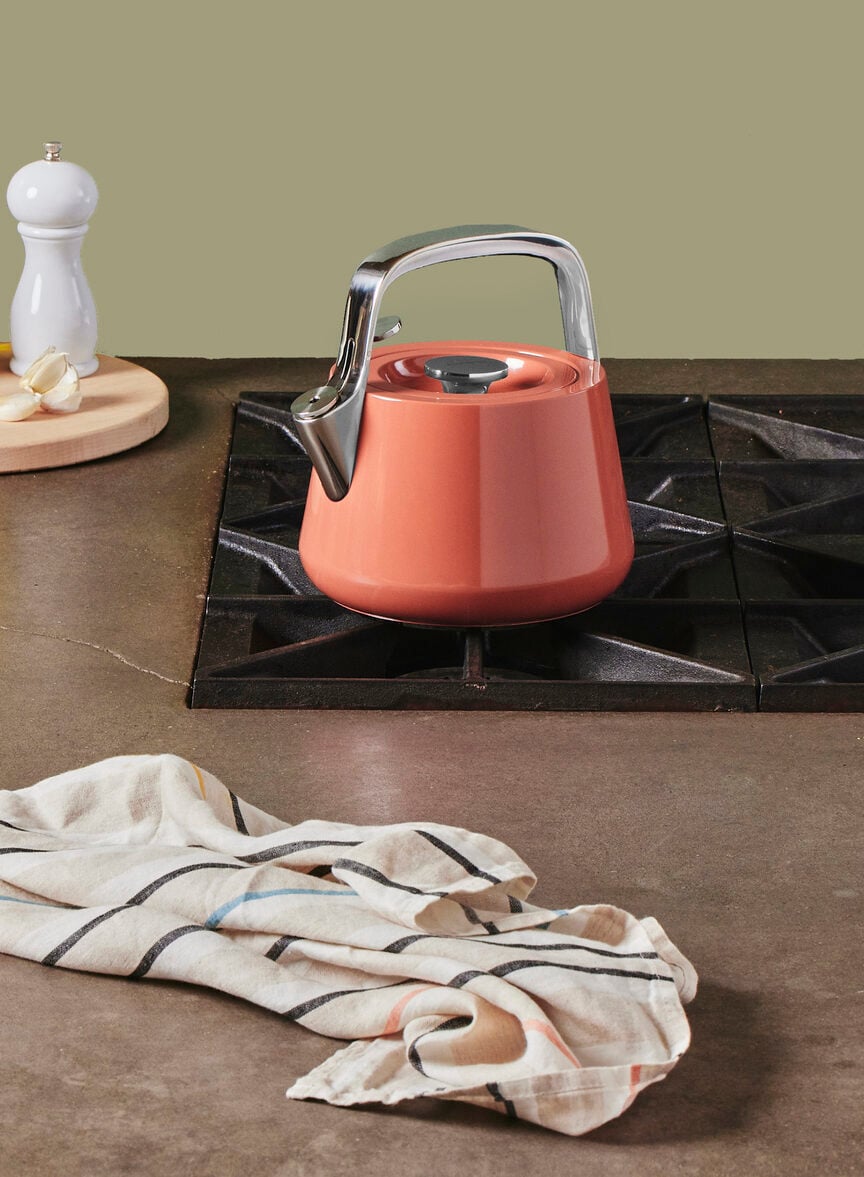
1. Caraway Tea Kettle (Best Stovetop & Non-Toxic Option)
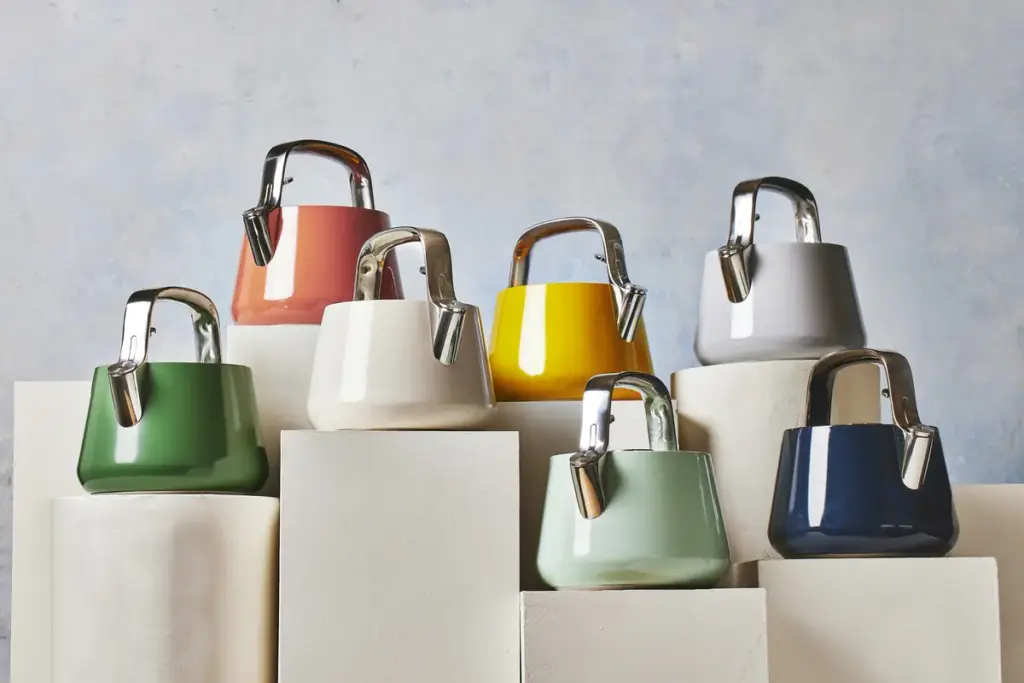
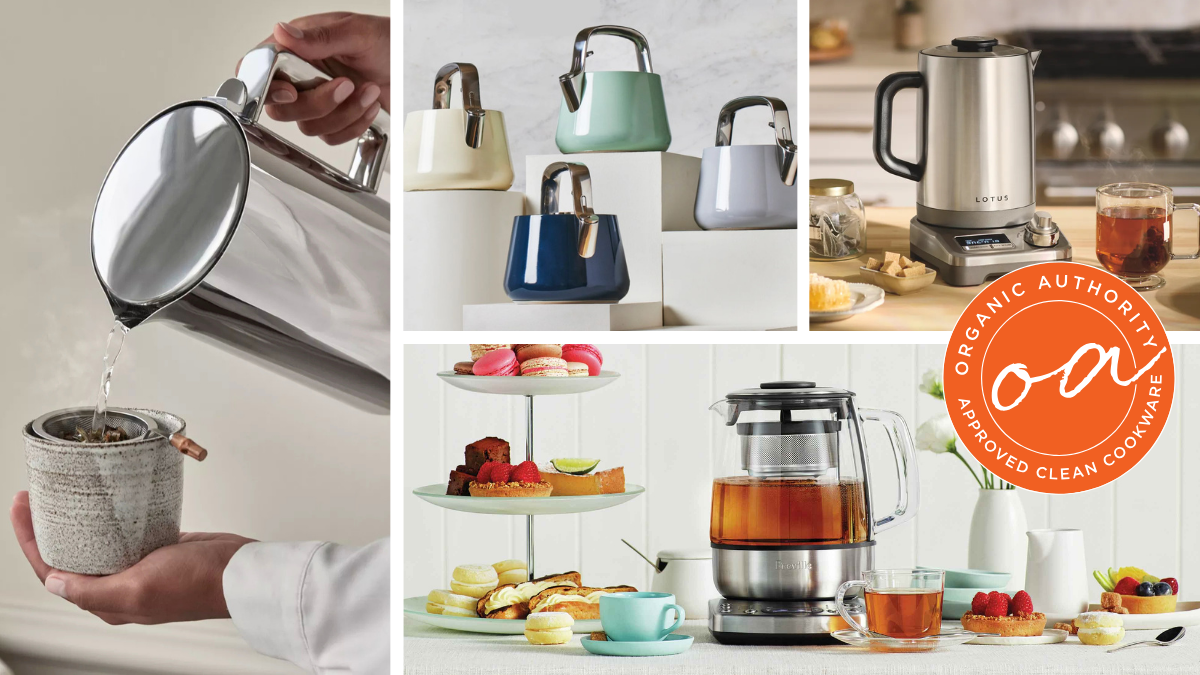
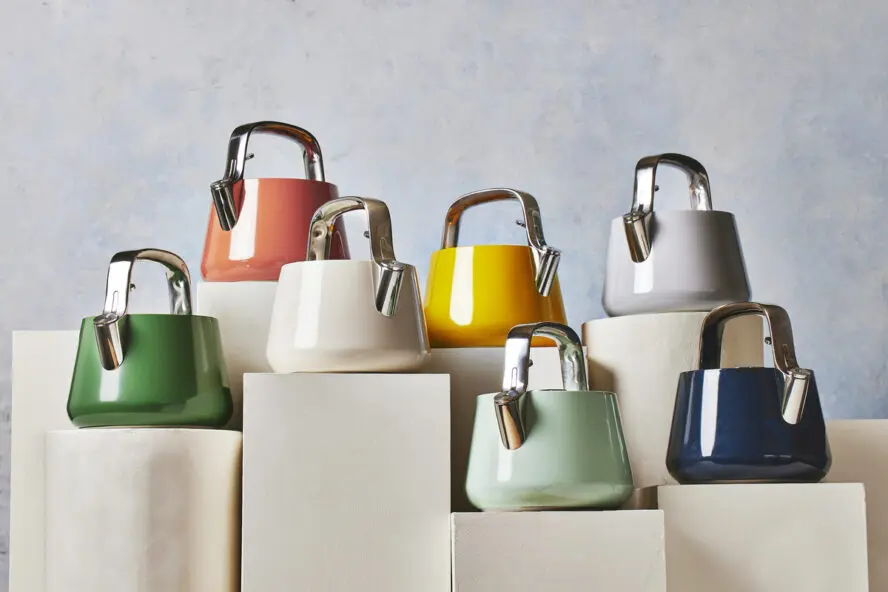
For those who prefer a classic stovetop experience without digital displays or complex micro-settings, the Caraway Tea Kettle is an undisputed standout. Designed to function as a visual statement piece, it is available in nine vibrant ceramic colorways (ranging from minimalist cream to bold marigold and sage) that demand to be left out on display.
- Material Safety: Fully stainless steel interior with a ceramic coating. Free of PTFE, PFOA, and heavy metals. Water never touches plastic.
- Performance: Compatible with all stovetops, including induction. When water hits a rolling boil, it emits a mild, single-tone whistle that is audible without being jarring.
- Capacity: Boasts a generous 2-quart capacity capable of serving up to eight cups, making it versatile enough to double as a rapid pot for boiling pasta water.
- Pros: Stunning aesthetic, durable ceramic-coated construction, pleasant whistle, high capacity.
- Cons: Lacks precise temperature control; higher price point than traditional basic kettles.
Exclusive Organic Authority Discount: Save 10% using the code 10organicauthority.
2. Lotus Purist Precision Temperature Kettle (Best for Precision & Pro Sippers)
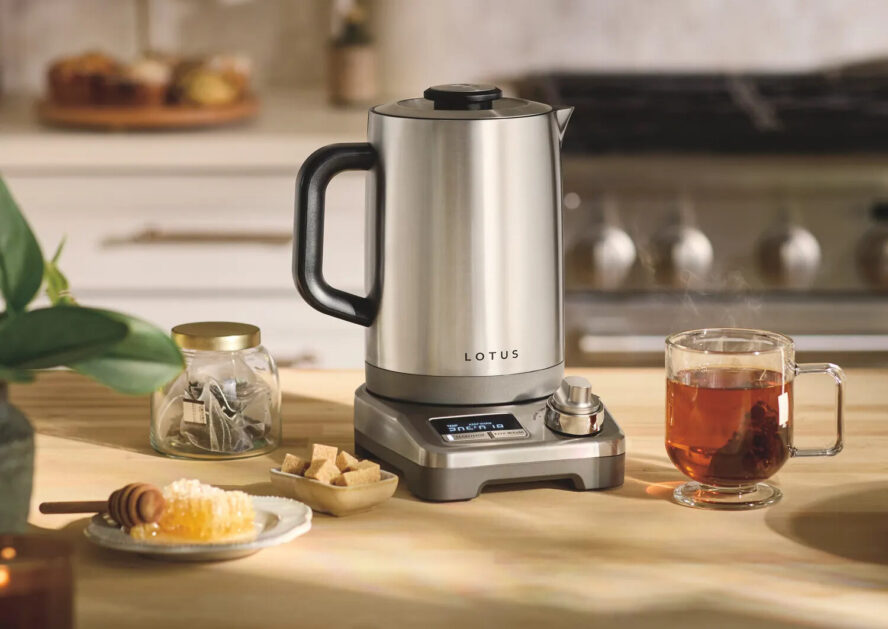
For tea aficionados and pour-over coffee enthusiasts who demand absolute control over their water temperature, the Lotus Purist Precision Temperature Kettle is a masterclass in modern engineering.
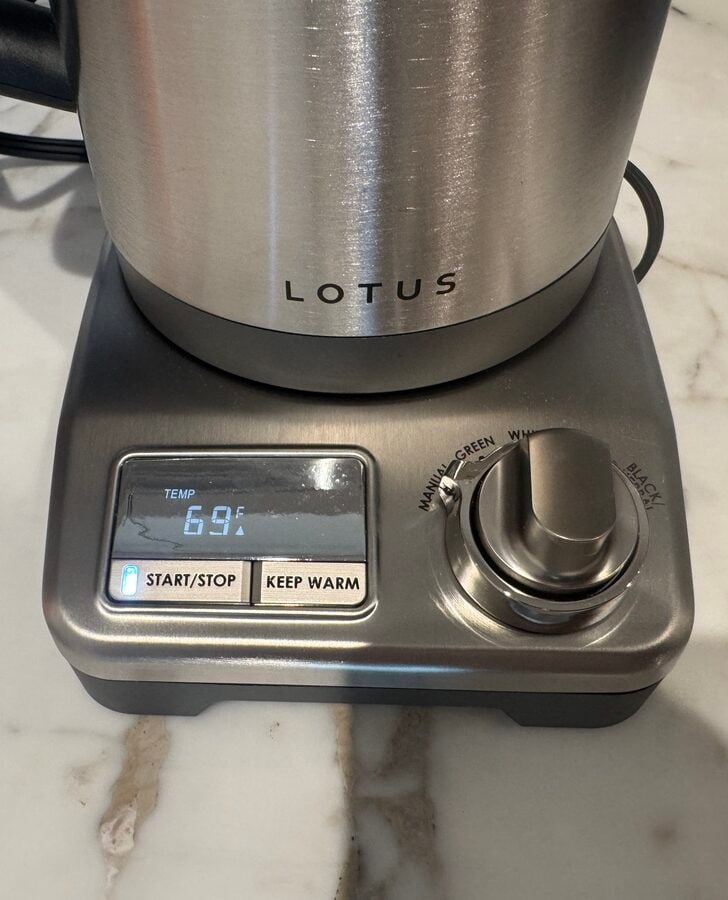
- Interface & Control: Features pre-programmed settings tailored for green, white, oolong, and black or herbal teas, alongside a manual dial supporting any temperature between 95°F and 212°F.
- Design & Safety: Built with an all-stainless steel, double-walled carafe that maintains interior heat while keeping the exterior cool to the touch. A "Keep Warm" mode maintains stability over extended periods, and an auto-shutoff mechanism triggers if the water level drops too low.
- Capacity: Holds up to 1.5 liters (roughly six cups).
- Pros: Highly accurate temperature ranges, double-wall insulation, intuitive presets, excellent safety features.
- Cons: Premium price point; industrial aesthetic may not suit every kitchen; short power cord.
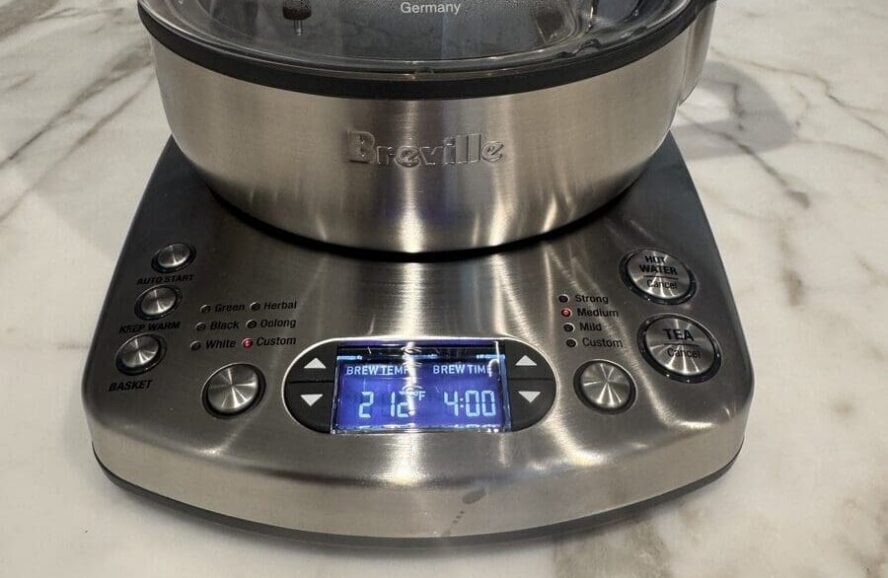
3. Breville Tea Maker (Best Full Automation)
For the ultimate convenience seeker, the Breville Tea Maker represents the pinnacle of automated beverage technology. It doesn’t just heat water—it actively brews the tea.
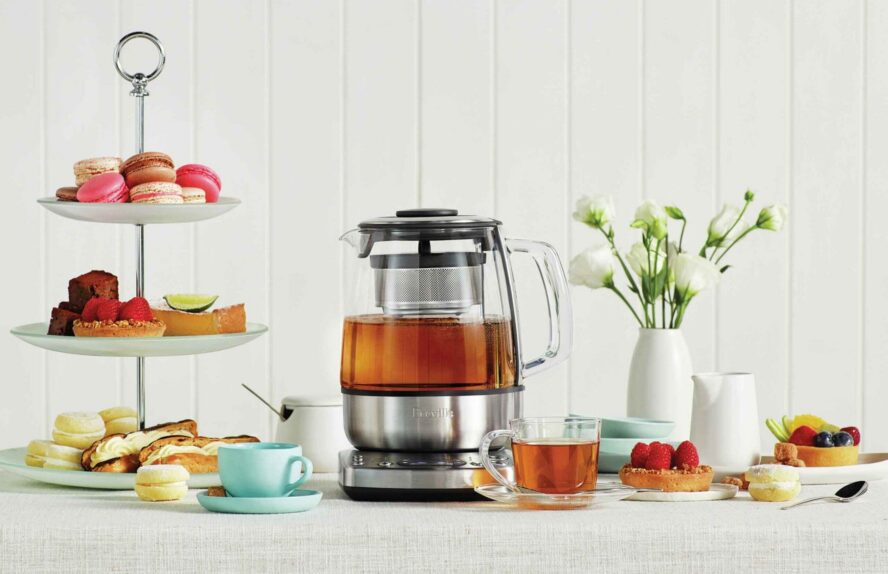
- Functionality: Equipped with a motorized, removable tea basket suspended above the glass pitcher. Users load loose-leaf tea, select their desired tea type, and let the machine do the work. Once the optimal steeping time is reached, the basket automatically lifts the leaves out of the water to completely eliminate oversteeping.
- Customization: Offers adjustable brew strength settings, a Delay Start timer, and a Keep Warm function.
- Capacity: 51 ounces without the tea insert; 41 ounces with the insert installed.
- Pros: Automated lifting prevents bitterness, precise temperature and steep-time presets, mesmerizing glass viewing chamber.
- Cons: High financial investment; includes minor plastic components within the tea basket assembly; takes up significant counter space.
4. Aarke Kettle (Best Overall Design & Scandinavian Minimalism)
Marrying high-end form with streamlined function, the Aarke Kettle bridges the gap between basic stovetop models and fully digital precision machines.
- Presets & Performance: Features five targeted temperature settings (104°F, 170°F, 185°F, 200°F, and 212°F). It brings a maximum capacity of 1.2 liters to a boil in approximately three minutes.
- Aesthetics: Constructed with a double-wall stainless steel body and available in sophisticated Scandinavian colorways including matte black, polished steel, and sand.
- Pros: Premium build quality, quiet operation, compact footprint, effective double-wall insulation.
- Cons: Limited manual temperature increments compared to advanced competitors; premium pricing.
Supporting Context & Metrics: Comparison at a Glance
| Kettle | Type | Material Safety | Capacity | Temperature Control | Key Features | Price |
|---|---|---|---|---|---|---|
| Aarke Stainless Steel Kettle | Electric | All-stainless interior (zero plastic water contact) | 1.2 Liters | Preset temperature options | Double-wall insulation, quiet boil, memory function, limescale filter | $250.00 |
| Caraway Tea Kettle | Stovetop | Ceramic-coated stainless steel (PFAS, PTFE, PFOA-free) | 2 Quarts | None (Full boil) | Single-tone whistle, induction compatible, ergonomic handle | $195.00 |
| Lotus Purist Precision | Electric | Double-wall stainless steel (zero plastic water contact) | 1.5 Liters | Adjustable (95°F – 212°F) + Presets | Keep Warm mode, thermal carafe, cool-touch exterior | $299.95 |
| Breville Tea Maker | Electric | Glass and stainless steel (minor plastic in brew basket) | 51 oz (max) | Automated & manual controls | Auto-lowering/raising basket, Delay Start, brew strength settings | $329.95 |
Electric vs. Stovetop: Which Is Right for You?
Choosing between an electric kettle and a stovetop model ultimately boils down to lifestyle habits and beverage preferences.
- The Stovetop Advocate: If your daily rotation consists exclusively of robust black teas or traditional herbal infusions taken at a rolling boil, a high-end stovetop kettle like the Caraway is an exceptionally durable, timeless investment. It requires no counter space, plugs, or digital maintenance.
- The Electric Enthusiast: If you sample delicate green and white teas, or experiment with specialty pour-over coffees, an electric kettle with variable temperature controls (such as the Lotus Purist or Aarke Kettle) is non-negotiable. The consistency and precision it provides will radically elevate the flavor profile of every single cup you pour.
Future Outlook
As consumer awareness surrounding microplastic pollution and dietary micro-contaminants deepens, the home appliance industry is undergoing a structural shift. Manufacturers are increasingly abandoning hidden plastic components in favor of all-glass, medical-grade stainless steel, and ceramic interiors. Simultaneously, smart kitchen integration—such as Wi-Fi-enabled scheduling and hyper-granular thermal calibration—will likely transition from luxury novelties to standard expectations in the premium kettle market. For now, investing in a robust, non-toxic, temperature-controlled vessel remains one of the single most impactful upgrades a home cook can make to their daily routine.