Executive Overview
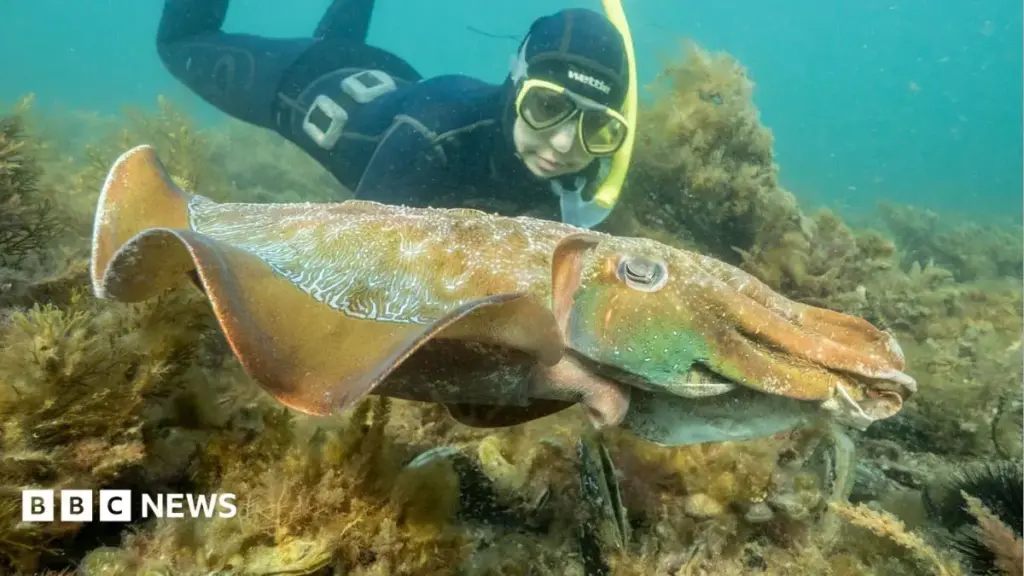
Every southern Australian winter, a localized, shallow-water stretch of the Spencer Gulf transforms into one of the most remarkable natural phenomena on planet Earth. Hundreds of thousands of giant Australian cuttlefish (Sepia apama)—endemic to the continent’s coastal waters—converge upon the rocky reefs of the upper Spencer Gulf, colloquially known as the "Cuttlefish Coast."
This annual mating event is a mesmerizing display of biological engineering. Transforming their skin in milliseconds through specialized chromatophores, male cuttlefish ripple with electric blues, neon greens, and shifting zebra stripes, locking in complex displays of courtship and territorial dominance. For marine biologists, underwater photographers, and eco-tourists alike, it is an ecological jewel of the Southern Hemisphere.
However, the winter season has yielded a chilling discovery: the lowest turnout of giant cuttlefish ever recorded in modern scientific history. Official population figures released by government and research bodies estimate that a mere 1,811 cuttlefish arrived to breed along the traditional migration routes. This represents an astronomical 97% collapse from the 63,000 individuals counted just a year prior, and a staggering nosedive from peak historical highs of nearly a quarter of a million.
Beneath the surface, the ripple effects of this collapse are profound. Adult cuttlefish undergo terminal spawning—meaning they naturally perish shortly after mating, rendering each successive generation entirely dependent on the survival of freshly laid eggs. During recent exhaustive underwater surveys, marine scientists and specialist divers combed the undersides of coastal ledges where millions of eggs should normally festoon the substrate. Instead, they found a desolate landscape, counting a paltry 440 eggs across vast kilometers of prime breeding habitat.
Conservationists have sounded the alarm, pointing to a persistent, toxic algal bloom that has choked South Australian coastal ecosystems for more than a year and a half. The crisis has triggered urgent petitions to upgrade the conservation status of the giant Australian cuttlefish to "threatened" or "endangered," forcing authorities to confront the compounding intersections of climate change, marine heatwaves, and local ecosystem degradation. As researchers and policymakers race to understand whether this is a temporary bottleneck or the prologue to local extinction, the Cuttlefish Coast stands as a stark warning light for the health of temperate marine reefs worldwide.
Detailed Chronology: Unraveling the 2024–2025 Ecological Collapse
To understand the suddenness of the catastrophe, one must trace the timeline of environmental degradation that has silently dismantled the upper Spencer Gulf’s marine food web since early 2023.
March 2023: The First Spores of Crisis
The genesis of the current ecological emergency dates back to early last year, when local fishermen, researchers, and coastal residents first noticed anomalous water discolorations along sections of the South Australian coast. A toxic algal bloom—driven by elevated ocean temperatures, prolonged marine heatwaves, and terrestrial nutrient runoff—began to proliferate.
While algal blooms are natural phenomena, their frequency, toxicity, and geographic persistence have been heavily supercharged by anthropogenic climate change. Cephalopods, including cuttlefish, octopus, and squid, possess delicate respiratory and nervous systems that render them exceptionally sensitive to marine biotoxins and shifts in water chemistry. However, during the 2023 winter mating season, the bloom had not yet completely blanketed the core habitats of the upper Spencer Gulf. Consequently, the 2023 breeding season proceeded relatively unscathed, masking the latent systemic trauma building within the ecosystem.
Late 2023 to Mid-2024: The Creeping Toxicity
As the months progressed, shifting ocean currents and persistent warm water anomalies drove small, highly concentrated pockets of the toxic algae into the shallow nurseries of the Cuttlefish Coast. Unlike open-ocean species that can easily flee localized environmental stress, the giant Australian cuttlefish rely heavily on specific rocky reef formations for shelter, navigation, and spawning.
Throughout the latter half of 2023 and the summer of 2024, marine habitats across the region began to experience systemic degradation. Kelp forests withered, invertebrate populations suffered die-offs, and water quality plummeted. Yet, because adult cuttlefish spend much of their growth phase in deeper offshore waters before migrating inshore during the austral winter, the full extent of the mortality remained hidden from public view.
July 2024: The Diver Assessments and the Shocking Reality
The true scale of the disaster became undeniable in July, in the dead of the South Australian winter. Tasked by the South Australian Department of Environment and Water (DEW) to evaluate the impending spawning output, specialist dive teams deployed to the Cuttlefish Coast to execute rigorous population and egg-density surveys.
Among them was 28-year-old Manny Katz, one of four elite divers who spent grueling hours braving cold, low-visibility waters to assess the population. Over two intensive days in July, Katz’s team performed eight one-hour dives, systematically inspecting the undersides of rocky reefs, overhangs, and crevices across an eight-kilometer (five-mile) stretch of coastline.
The results were unprecedented and harrowing. Under normal conditions, this stretch of coastline would be teeming with tens of thousands of mating adults, guarded by an abundance of dense, grape-like clusters numbering in the millions of eggs. Instead, the divers encountered an eerie silence. Across eight kilometers of prime real estate, they located a mere 440 eggs.
Furthermore, the handful of adult cuttlefish that did arrive exhibited abnormal behavioral patterns. Deprived of the protective shield of a massive schooling population, the surviving individuals were intensely skittish, hiding deep within rock crevices and fleeing at the slightest disturbance. Without strength in numbers, these foundational pillars of the marine food web were entirely exposed to predation and environmental stress.
Supporting Context & Metrics: Historical Volatility vs. Unprecedented Collapse
Skeptics and industry observers frequently point out that the giant Australian cuttlefish population is no stranger to dramatic numerical swings. A dispassionate analysis of historical monitoring data reveals a species naturally prone to wild boom-and-bust cycles.
Historical Population Estimates (Giant Australian Cuttlefish):
| Year  | Estimated Population | Notes / Context                          |
|-------|----------------------|------------------------------------------|
| 2013  | ~13,500              | Previous recorded low point              |
| 2020  | ~247,000             | Exceptional historical peak              |
| 2022  | ~100,000+            | Strong, stable recovery phase            |
| 2023  | ~63,000              | Beginning of downward trend              |
| 2024  | 1,811                | Lowest turnout on record (97% collapse)  |
As illustrated by the data compiled by the South Australian Research and Development Institute (SARDI) and state environmental agencies, the population has demonstrated an extraordinary capacity for resilience in the past. Following a severe population crash in 2013—where numbers dipped to approximately 13,500 individuals—conservative management, improved water quality interventions, and favorable environmental conditions allowed the population to rebound past 100,000 within two short years, culminating in a spectacular high of nearly 247,000 cuttlefish in 2020.
However, marine scientists emphasize that the 2024 drop to 1,811 individuals transcends historical cyclical variance. A 97% contraction in a single year pushes the demographic parameters of the species into dangerous territory, threatening an Allee effect—where a population becomes so small and fragmented that individuals struggle to find mates, leading inevitably to an extinction vortex.
Moreover, the biological mechanism of cuttlefish reproduction compounds the danger. Because Sepia apama are semelparous—meaning adults die immediately after completing their single, intense breeding cycle—the survival of the species relies entirely on uninterrupted recruitment from one generation to the next. With only 440 eggs recorded by divers, the incoming cohort for the subsequent year is projected to be virtually non-existent, leaving little to no genetic buffer against future environmental shocks.
Official Statements & Scientific Debate
As public pressure mounts, a tense dialogue has emerged between government regulators, independent marine ecologists, and conservation organizations regarding the exact drivers of the collapse and the appropriate policy responses.
The Conservationist Perspective: Demanding Endangered Status
Stefan Andrews, co-founder of the Great Southern Reef Foundation, has emerged as a leading advocate for immediate regulatory intervention. Andrews argues that the current evidence points overwhelmingly to the toxic algal bloom as the primary catalyst for the catastrophic decline, necessitating an immediate upgrade of the giant Australian cuttlefish to a nationally or state-recognized threatened species.
"The harmful algal bloom is a leading plausible explanation and appears likely to have contributed, but the available evidence does not yet allow us to say definitively that it caused the entire decline," Andrews notes, balancing scientific caution with conservation urgency. "With so few adults and so little breeding activity observed, the number of young entering the population is likely to be very low. That will make the next breeding season especially challenging."
Conservationists argue that traditional fisheries management frameworks, which view marine populations through the lens of cyclical recovery, are poorly equipped to handle the rapid, compounding catastrophes driven by modern climate change and intense marine heatwaves.
Government and Institutional Caution: Weighing Environmental Multipliers
Representatives from the South Australian Department of Primary Industries and Regions (PIRSA) maintain a measured stance, emphasizing that while the algal bloom is undeniably a major stressor, natural environmental fluctuations must be factored into any long-term management strategy.
A PIRSA spokesperson highlighted the historical rebound observed after the 2013 lows, suggesting that the species’ innate biological plasticity could facilitate recovery once favorable oceanographic conditions return.
Echoing this cautious optimism, Professor Mike Steer, Executive Director of the South Australian Research and Development Institute (SARDI)—which partners directly on underwater survey operations—described the 2024 estimates as deeply disheartening. Yet, Professor Steer remains anchored to empirical history.
"We know from the past that this population has the capacity to recover when conditions are favourable," Professor Steer stated, pointing to lingering positive signs that despite low numbers, surviving adults are continuing to lay whatever viable eggs they can, preserving a fragile thread of genetic continuity for future years.
Researchers from DEW and SARDI are currently intensifying their monitoring protocols, deploying advanced environmental DNA (eDNA) sampling alongside traditional dive surveys to map microscopic traces of the population and assess water toxicity levels across a broader spatial grid.
Future Outlook: The Canary in the Coal Mine for Temperate Reefs
The plight of the giant Australian cuttlefish serves as a microcosm for the broader existential threats facing temperate marine ecosystems around the globe. As Manny Katz poignantly observed following his exhaustive underwater audits:
"Our marine habitats have been getting wiped out for the past year and a half now… this is an indicator that our marine ecosystems are in real big trouble—the canary in the coal mine, so to speak."
The coming one to two years will serve as the ultimate crucible for the Spencer Gulf population. If ocean temperatures stabilize, if the toxic algal blooms dissipate, and if localized pollution controls can alleviate the stress on the upper gulf, the resilient biology of Sepia apama might just pull off another historic recovery.
However, if marine heatwaves intensify and toxic blooms become a permanent fixture of the South Australian summer, even the most resilient species will reach a tipping point from which biological restitution is impossible. For now, the Cuttlefish Coast waits in quiet suspense, guarding a fragile handful of eggs upon which the future of an entire evolutionary lineage depends.