Executive Overview
In March 2026, global energy markets experienced a structural watershed. Driven by compounding geopolitical tensions and escalating fossil fuel supply shocks—most notably sparked by the US-Israeli conflict with Iran—countries around the globe accelerated their pivot away from hydrocarbons at an unprecedented velocity. At the epicenter of this pivot is an extraordinary export surge from China, which shattered historical benchmarks for clean technology shipments.
Fresh data compiled and analyzed by the energy think tank Ember reveals that China exported a staggering 68 gigawatts (GW) of solar capacity in March 2026 alone. To grasp the sheer magnitude of this figure, it represents a 100% increase over February’s total and eclipses the previous all-time record set in August 2025 by a striking 49%. In geographic and infrastructural terms, China shipped enough solar equipment in a single month to match the entire cumulative installed solar capacity of Spain.
This is not merely a seasonal uptick or a localized phenomenon. Fifty countries established all-time records for Chinese solar imports in March 2026, while an additional 60 nations registered six-month highs. Simultaneously, exports of lithium-ion batteries and electric vehicles (EVs) experienced parabolic growth, surging 70% year-over-year. As fragile fossil fuel supply chains buckle under the strain of Middle Eastern trade disruptions—such as vulnerabilities exposed around the Strait of Hormuz—clean technology is decisively transitioning from a long-term climate mitigation strategy into an immediate, frontline defensive mechanism for national economic and energy security.
Detailed Chronology: The March 2026 Cleantech Surge
The trajectory leading to the record-breaking figures of March 2026 was forged by a convergence of sudden geopolitical hostilities, shifting trade policies, and an urgent global demand for localized energy autonomy.
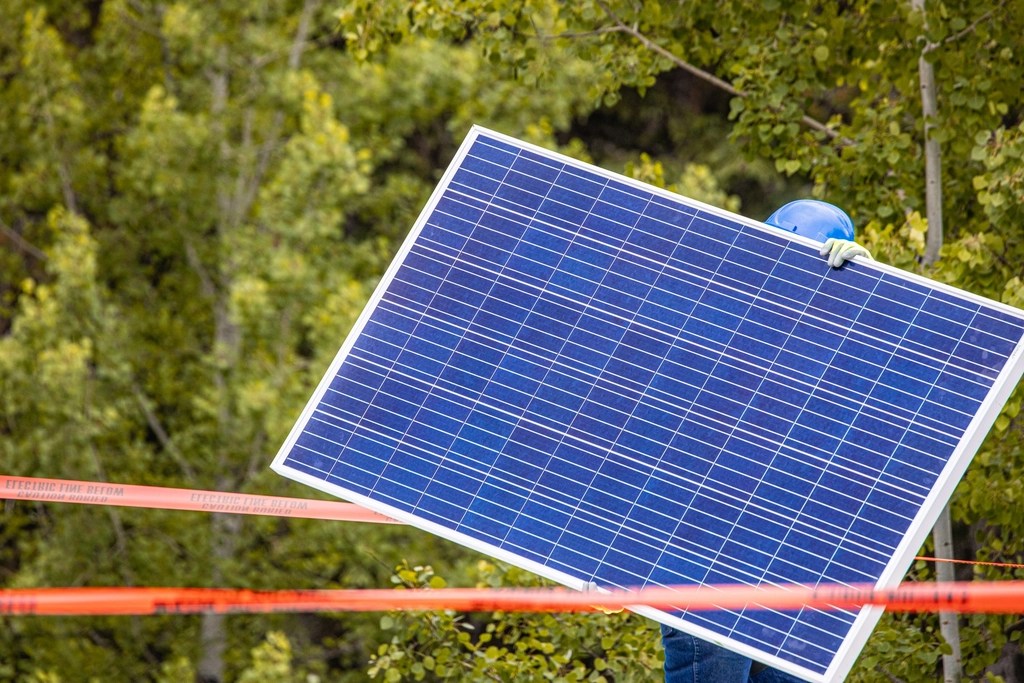
Early 2026: The Geopolitical Flashpoint
As regional hostilities escalated between the United States and Israel on one side, and Iran on the other, international crude oil and liquefied natural gas (LNG) markets were thrown into immediate turmoil. The threat and partial realization of trade disruptions across critical maritime chokepoints—particularly the Strait of Hormuz, through which a significant portion of the world’s daily oil and LNG supply flows—instantly translated into punishing price volatility.
Import-dependent economies, particularly across developing regions in Africa and Asia, found themselves acutely vulnerable to sudden spikes in petroleum and gas costs. Traditional fossil fuel baseload generation became economically volatile overnight. In response, energy ministers and policymakers launched an emergency scramble for secure, price-stable alternatives. Solar power, boasting rapid deployment cycles and falling modular costs, emerged as the ultimate panacea.
The March Explosion
By March 2026, this policy panic translated into massive commercial procurement. According to Ember’s metrics, China’s total solar export volume hit 68 GW. The breakdown of this milestone highlights a structural shift in what is being imported:
- Finished Solar Panels: Rose 91% month-over-month to reach 32 GW.
- Solar Cells and Wafers: Climbed 108% month-over-month to hit 36 GW, continuing a trend where upstream manufacturing components outpace finished module exports as foreign nations seek to capture domestic assembly value.
The Regulatory Deadline: April 1 Tax Adjustments
Adding urgency to the March buying frenzy was an impending regulatory shift within China. Beijing announced structural adjustments to its export tax rebates, effective April 1, 2026. This policy revision effectively added an estimated 9% to the baseline cost of exported solar panels. Consequently, international buyers engaged in a frantic pre-deadline rush, clearing out inventories and booking freight capacity weeks ahead of schedule to lock in pre-tax-hike pricing.

Supporting Context & Metrics: Regional Breakdowns and Industrial Shifts
The shockwaves of the March 2026 export wave were distributed globally, though emerging markets most exposed to fossil fuel volatility absorbed the lion’s share of the volume.
Regional Import Dynamics
- Africa: Total imports surged by a phenomenal 176% month-over-month, reaching 10 GW. Several individual nations experienced historic spikes: Nigeria recorded a staggering 519% increase, Ethiopia jumped 391%, and Kenya climbed 207%. For the first time in history, each of these nations imported more than 1 GW of solar components in a single calendar month, primarily focusing on solar cells to feed nascent local assembly plants.
- Asia: Asian imports doubled compared to February, touching 39 GW. Major economies heavily reliant on imported energy saw dramatic jumps. India’s imports soared by 141% (+6.6 GW), Malaysia surged 384% (+1.8 GW), and Lao PDR increased by 108% (+2.3 GW).
- Developed Markets: Traditional heavy importers—including Japan, Australia, and the European Union—also established new import records as commercial and utility-scale developers rushed to insulate themselves from grid instability and soaring gas prices.
- The Middle East Outlier: Interestingly, the Middle East stood as the primary exception to the global surge. Direct imports into the region were constrained due to severe logistical bottlenecks and maritime disruptions stemming from the closure and militarization of the Strait of Hormuz, which paralyzed standard regional trade routes.
Beyond Solar: Batteries and EVs
The flight from fossil fuels was not isolated to photovoltaic hardware. China’s broader clean technology export basket—encompassing solar modules, energy storage systems, and electric vehicles—jumped 70% year-over-year in March 2026, and 38% compared to February.
Battery exports alone crossed the $10 billion threshold in March, marking a 44% month-over-month increase. Demand was heavily concentrated in the European Union, Australia, and India, all of which are aggressively building out utility-scale and commercial energy storage pipelines to manage high penetrations of intermittent renewables.
Macroeconomic Impact on Fossil Fuels
Data from Ember’s Global Electricity Review 2026 contextualizes these trade flows within the broader energy ecosystem. Record-shattering global solar deployments throughout 2025 successfully displaced an amount of gas-fired power equivalent to all LNG shipments that traversed the Strait of Hormuz during that entire year. Simultaneously, the expanding global electric vehicle fleet reduced aggregate global oil demand by 1.8 million barrels per day in 2025—roughly equivalent to 13% of total US crude production.

Official Statements and Industry Analysis
The velocity of this transition has forced energy analysts to recalibrate their forecasts regarding how geopolitical shocks influence structural decarbonization.
Euan Graham, Senior Analyst at Ember, emphasized the reactive nature of the current market cycle:
"Fossil fuel price spikes are no longer just economic headaches; they are immediate catalysts accelerating the clean energy shift. Countries are importing solar at historic, unprecedented levels while simultaneously laying the groundwork for domestic manufacturing infrastructure to permanently insulate their economies from future commodity shocks."
Industry observers note that the rapid ascent of solar cell and wafer exports—which surpassed finished panel exports as early as October 2025 and widened that gap in March 2026—signals a permanent maturation of the global solar supply chain. Developing economies are no longer content to act merely as passive end-markets for finished Chinese goods. By importing raw cells and wafers, nations across Africa and Asia are building domestic assembly ecosystems, retaining economic value, and creating localized green-collar jobs while neutralizing supply chain vulnerabilities.

Furthermore, strategic analysts point to the Strait of Hormuz crisis as a historic turning point. When a single regional chokepoint can instantaneously destabilize global energy security and trigger a worldwide rush for localized power generation, the argument for centralized fossil fuel dependency collapses. Decentralized solar and battery storage are increasingly viewed not just as environmental assets, but as indispensable instruments of national security.
Future Outlook: The New Paradigm of Energy Security
As the global economy moves past the turbulence of early 2026, the long-term implications of this cleantech surge are becoming clear.
- Permanent Demand Baselines: While the pre-April 1 tax deadline in China created a temporary short-term spike, structural baseline demand for solar and storage has permanently shifted upward. Countries that experienced firsthand the economic devastation of a fossil fuel price shock are unlikely to unwind their newly established renewable procurement pipelines.
- Decentralization and Localization: The trend toward localized manufacturing—evidenced by the massive influx of raw cells and wafers into nations like Nigeria, India, and Malaysia—will likely accelerate. Governments will continue to implement industrial policies designed to onshore renewable supply chains, reducing single-point dependencies whether on oil tankers or finished solar panels.
- The Convergence of Electrification and Defense: Energy security and climate policy have officially merged. Future infrastructure investments across both developed and developing nations will increasingly prioritize grid resilience, localized microgrids, and aggressive fleet electrification to buffer against inevitable future geopolitical flare-ups.
Ultimately, March 2026 will be remembered as the month when the clean energy transition stopped being driven primarily by long-term carbon reduction targets and was violently accelerated by the raw, immediate imperatives of economic survival and national resilience.