Executive Overview
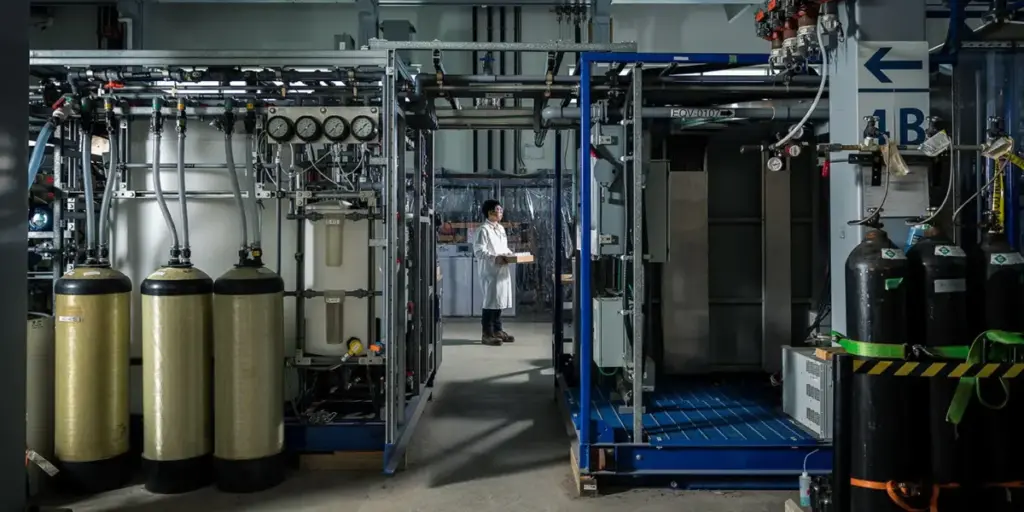
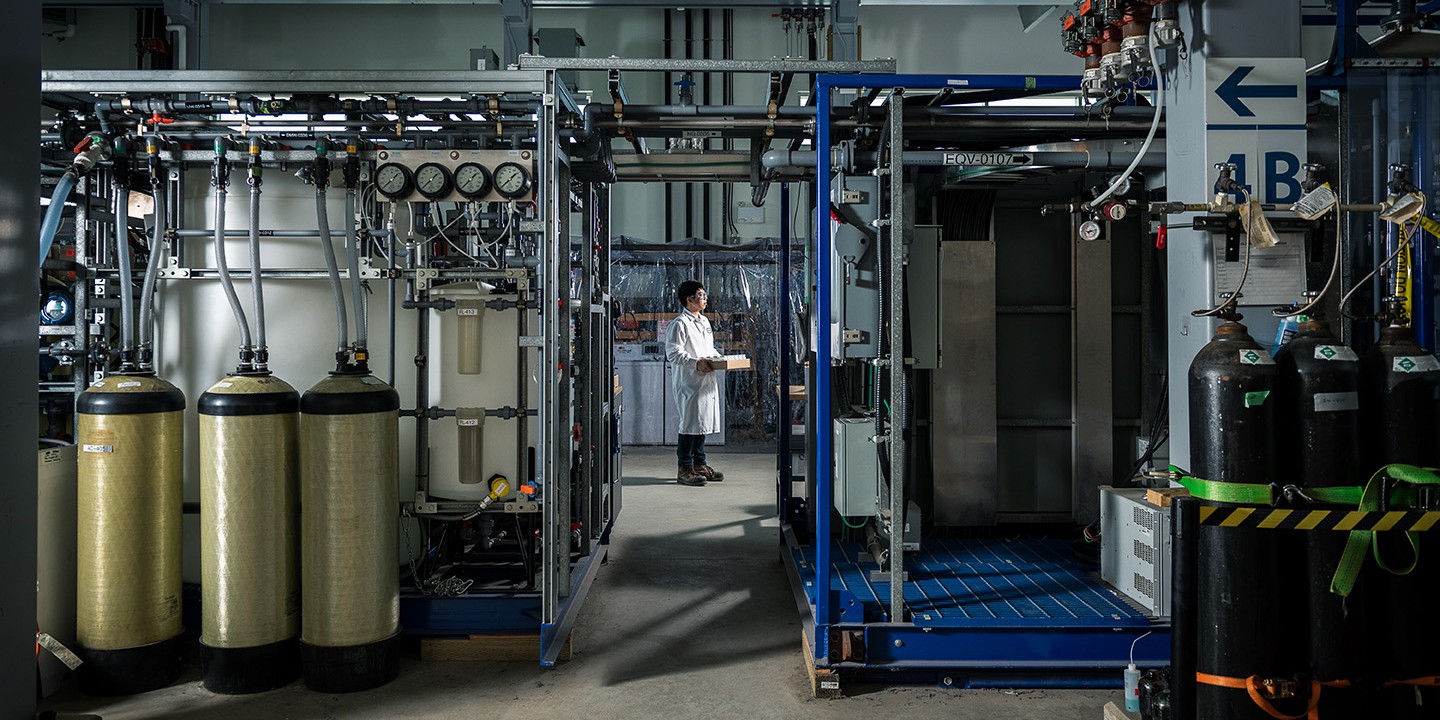
In a milestone development for the North American clean energy supply chain, clean-tech innovator Mangrove Lithium has officially inaugurated the continent’s first commercial electrochemical lithium refinery. Located in Delta, British Columbia, the state-of-the-art facility—commercially designated as the Single Stack Plant (SSP)—represents a pivotal shift in how the region processes battery-grade materials. Operating at a commercial capacity of 1,000 tonnes per year, the Delta facility marks the commercial debut of Mangrove’s proprietary electrochemical refining technology, designed to bypass the environmental baggage, high costs, and operational inflexibility of traditional chemical processing.
For decades, the global electric vehicle (EV) revolution has faced a persistent structural vulnerability: while North America boasts rich mineral deposits and burgeoning gigafactory manufacturing capacities, the mid-stream link of the supply chain—lithium refining—has remained heavily concentrated overseas, primarily in Asia. This geographical disconnect has exposed automakers and battery manufacturers to severe price volatility, geopolitical bottlenecks, and carbon-heavy logistics. Mangrove Lithium’s SSP aims to rewrite this narrative. By transforming extracted lithium into high-purity, battery-grade materials locally, efficiently, and sustainably, the company is laying the operational groundwork for a fully integrated, domestic "mine-to-cathode" supply ecosystem.
The launch of the Delta plant is merely the opening salvo in an aggressive expansion strategy. Buoyed by federal backing, strategic supply-agreement partnerships in Quebec, and an ambitious roadmap toward large-scale Eastern Canadian operations, Mangrove is positioning Canada not merely as a resource quarry, but as an advanced industrial processing powerhouse in the global transition toward sustainable mobility.
Detailed Chronology: From R&D Breakthrough to Commercial Realization
The journey from a bench-scale laboratory concept to a cutting-edge commercial facility in Delta, British Columbia, reflects a rapid scaling trajectory characteristic of the urgency defining the modern clean-tech sector.
The Laboratory Genesis and Scaling Proof
Long before the ribbon-cutting ceremony in Delta, Mangrove Lithium spent years developing and refining its core technological differentiator: a proprietary electrochemical process capable of converting raw, extracted lithium sources directly into high-purity, battery-grade materials. Traditional methods rely heavily on massive reagent consumption, extreme thermal treatments, and complex multi-stage chemical pathways that generate significant waste and scale-up limitations. Mangrove’s breakthrough focused on electrochemical selectivity, stripping away intermediaries to yield a cleaner, cheaper, and vastly more adaptable refining mechanism.
Reaching Milestones: The 2025 Catalyst
The momentum leading up to the Delta launch accelerated dramatically throughout 2025. Industry observers and clean-tech analysts closely tracked the company’s pilot-plant trials, which successfully demonstrated that electrochemical processing could be scaled without incurring the cost overruns or operational instabilities typical of first-of-a-kind chemical facilities. These trials proved that Mangrove’s technology could seamlessly handle varying feedstocks—a critical requirement for a refinery intended to process diverse raw inputs from across the continent.
The Delta Facility Launch and Headquarters Shift
Culminating months of construction, regulatory approvals, and rigorous commissioning protocols, Mangrove officially opened the Single Stack Plant (SSP) in Delta, BC. Beyond serving as a 1,000-tonne-per-year commercial production asset, the Delta site has been established as the company’s new corporate headquarters. This consolidation of R&D, executive leadership, and commercial-scale production under one roof underscores Mangrove’s commitment to anchoring its intellectual property and operational heartbeat firmly within British Columbia.
Supporting Context & Metrics: Overcoming the Overseas Bottleneck
To fully understand the significance of Mangrove’s electrochemical facility, one must examine the macro-economic and geographical imbalances plaguing the contemporary global EV supply chain.
The Geography of the Lithium Bottleneck
Historically, raw lithium extraction (whether from hard-rock spodumene mines or brine evaporation ponds) has occurred in regions distinct from where refining and battery cell manufacturing take place. A disproportionate majority of the world’s raw lithium has historically been shipped overseas—predominantly to processing hubs in China—to be refined into lithium carbonate or lithium hydroxide before returning to North American automotive assembly lines.
This multi-continental ping-pong of materials is not only carbon-intensive, adding thousands of unnecessary shipping miles, but it leaves North American original equipment manufacturers (OEMs) dangerously vulnerable to geopolitical friction, export restrictions, and sudden market price spikes.
Decoding the Technology: Electrochemical vs. Conventional Refining
Traditional hydrometallurgical and pyrometallurgical refining processes are notoriously resource-intensive. They require vast quantities of fresh water, harsh acids, and basic chemicals, resulting in high carbon footprints and toxic byproduct streams that require costly remediation and tailing management.
In contrast, Mangrove’s electrochemical process operates with a radically reduced environmental footprint:
- Higher Resource Efficiency: Direct conversion pathways minimize material loss and extract maximum value from the raw feed.
- Chemical Reductions: By leveraging electrochemistry, the process drastically cuts down on the consumption of auxiliary chemical reagents.
- Feedstock Flexibility: The technology can process a wide variety of upstream inputs, insulating the refinery from supply shocks tied to a single mining region or extraction method.
Production Metrics and Economic Scalability
At its current design capacity, the 1,000-tonne-per-year Single Stack Plant in Delta is capable of producing enough battery-grade lithium to support approximately 25,000 electric vehicles annually. While this output represents an important initial foothold, it serves primarily as the commercial proof-of-concept for Mangrove’s broader industrial vision.
Looking ahead, the company’s planned Eastern Canadian facility aims to scale operations dramatically. Designed to process hard-rock spodumene, the proposed facility targets an output large enough to supply batteries for roughly 500,000 EVs annually—a scale that begins to meaningfully displace overseas imports and secure domestic automotive supply lines.
Official Statements & Industry Perspectives
The inauguration of North America’s first commercial electrochemical lithium refinery drew high-profile commentary from industry leaders and government stakeholders alike, emphasizing the intersection of national security, economic prosperity, and environmental stewardship.
Leadership Vision: CEO Saad Dara
At the ribbon-cutting ceremony in Delta, Mangrove Lithium CEO and founder Saad Dara framed the launch as a foundational moment for Canadian industrial sovereignty:

"This is a landmark moment not just for Mangrove, but for Canada," stated Dara. "By commissioning the first commercial electrochemical lithium refinery in North America, we are proving that lithium can be refined domestically, sustainably, and competitively. This facility is an important step toward a fully Canadian lithium supply chain, one that strengthens our energy security, accelerates the transition to EVs, and positions Canada as a global leader in critical mineral processing."
Dara’s remarks underscore a growing consensus among technology developers that the energy transition cannot rely on green energy powered by dirty, centralized supply chains. True sustainability must encompass the entire lifecycle of a battery, starting with clean, localized mineral extraction and refining.
Government Backing and Public-Private Synergy
The federal government has recognized the strategic necessity of domestic critical mineral infrastructure. To accelerate Mangrove’s expansion plans into Eastern Canada, Natural Resources Canada has stepped in with substantial financial backing through its Critical Minerals Research, Development, and Demonstration (CMRDD) program.
The conditional funding support of up to $21.88 million CAD is earmarked specifically to de-risk advanced engineering work and pilot studies for spodumene processing. This public-private partnership highlights Ottawa’s aggressive strategy to leverage Canada’s natural endowment of critical minerals—including lithium, nickel, cobalt, and graphite—into high-value manufacturing jobs and technological leadership.
Strategic Alliances: The "Mine-to-Cathode" Vision
Building a domestic supply chain requires deep cooperation across every tier of the mining and manufacturing ecosystem. To this end, Mangrove has signed a crucial Memorandum of Understanding (MOU) with prominent lithium producer Élévra.
Under the framework of this agreement, Mangrove will source raw spodumene directly from Élévra’s operations in Quebec. By bridging the gap between Quebecois mining assets and advanced refining capabilities, the partnership forms the backbone of a true "mine-to-cathode" supply chain. This vertical integration ensures that raw materials extracted from Canadian soil remain within domestic borders as they are upgraded, refined, and eventually manufactured into high-value battery components.
Future Outlook: Scaling the Canadian Battery Corridor
As the Delta Single Stack Plant transitions from commissioning to continuous commercial production, Mangrove Lithium’s strategic horizon is already fixed on the next phase of its national rollout.
The Eastern Canadian Expansion
The blueprint for Mangrove’s second, significantly larger facility in Eastern Canada is designed to tackle the continent’s mid-stream bottleneck at an industrial scale. By integrating the insights gained from the Delta SSP and leveraging the multimillion-dollar injection from Natural Resources Canada, the company plans to establish a processing titan capable of supporting half a million electric vehicles per year.

This facility will be strategically positioned to serve the expanding cluster of EV gigafactories springing up across Ontario, Quebec, and the broader U.S. Midwest, effectively creating a unified cross-border battery corridor.
Strengthening North American Geopolitical Resilience
The geopolitical landscape surrounding critical minerals has shifted dramatically in recent years. Trade legislation, domestic content requirements under industrial policy frameworks like the United States’ Inflation Reduction Act (IRA), and tightening supply security mandates have made localized sourcing an absolute imperative for automakers.
By offering a clean, domestically refined alternative to overseas supply chains, Mangrove Lithium is positioning itself as an indispensable partner for OEMs seeking to comply with strict regional trade rules while simultaneously meeting ambitious corporate sustainability targets.
The Broader Implications for Global Clean Tech
Mangrove’s success in British Columbia offers a replicable template for other resource-rich nations seeking to move up the economic value chain. Rather than exporting raw commodities for foreign processing—a historical pattern that often deprives local economies of long-term wealth creation and skilled job growth—innovative processing technologies enable nations to capture the full economic and environmental value of their natural resources.
As the Delta facility hums to life, it stands as tangible proof that the technical, economic, and environmental hurdles of domestic lithium refining can be successfully overcome. For Canada, and for North America’s broader clean energy transition, Mangrove Lithium has ignited a spark that promises to reshape the future of mobility from the ground up.