

Executive Overview
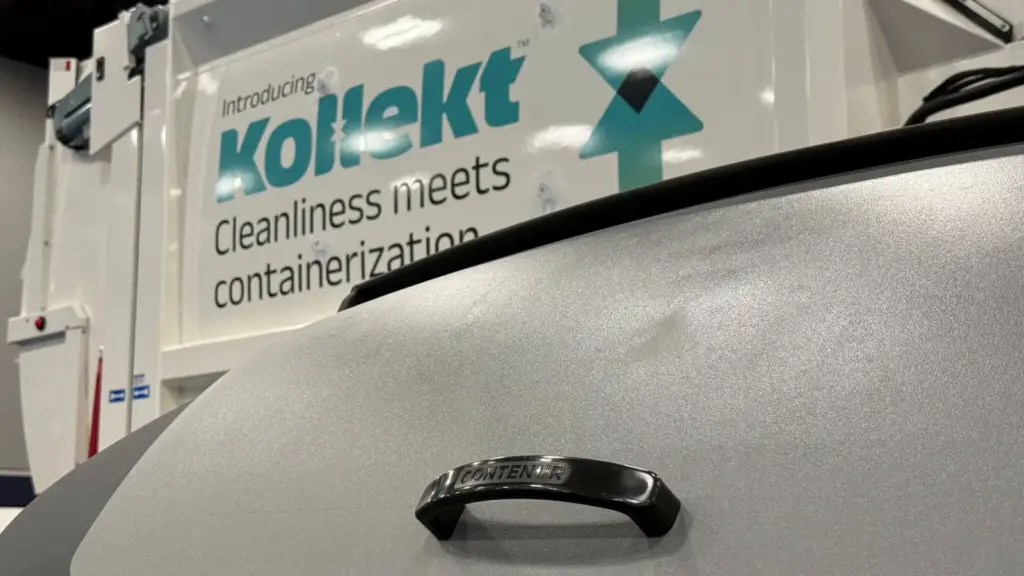
The landscape of North American municipal waste management is undergoing a profound structural evolution, driven by mounting urban density, tightening labor markets, and aggressive municipal mandates to modernize old-school collection methods. At the center of this transformation is Kollekt, an emerging heavy-duty truck manufacturer establishing a fresh U.S. operational footprint under the leadership of industry veteran Don Ross.
Backed by the powerful Kirchhoff family of companies and utilizing advanced technological architectures from a leading Italian vehicle manufacturer, Kollekt is positioning itself to capture a lucrative and rapidly expanding niche: automated, large-scale waste containerization for multifamily residential buildings.
This market entry coincides perfectly with New York City’s sweeping sanitation reforms. Under a mandate championed by local leadership, New York City has committed to fully containerizing all residential trash by the end of 2031. This initiative aims to reclaim sidewalks from the ubiquitous, pest-attracting mountains of black trash bags that have long defined the urban landscape. However, transitioning millions of residents to rigid, standardized waste containers presents a monumental logistical hurdle. The New York City Department of Sanitation (DSNY) estimates that the rollout could add up to 1.2 million additional vehicle miles annually just to service the new infrastructure.
Enter Kollekt’s specialized automated side-loading collection vehicle. Designed specifically to interface with large-scale Empire Bins—manufactured by Contenur and currently being piloted across several of New York City’s high-density residential districts—Kollekt’s trucks offer a mechanical solution to a problem that has historically relied on heavy manual labor.
For Don Ross, who serves as the chairman of the National Waste & Recycling Association’s board of trustees and previously held executive roles at Waste Management (WM) and New Way Trucks, Kollekt represents more than just a business venture. It is a vehicle for sweeping technological change. By introducing a mature European automation model to North American streets, Ross and his team aim to alleviate chronic labor shortages, enhance driver ergonomics, and provide municipalities with a scalable blueprint for modern urban sanitation.
Detailed Chronology
To understand Kollekt’s rapid emergence in the North American market, it is necessary to examine the convergence of European engineering, American industrial logistics, and municipal policy shifts that have brought the company to this pivotal juncture.
The European Foundation and the Kirchhoff Backing
The underlying technology powering Kollekt’s specialized fleet is far from experimental. The core automated side-loading collection vehicle model first debuted in European markets in 1997, where urban containerization has long been the standard due to tighter street layouts and stricter public health regulations. For decades, however, this specific configuration remained largely absent from the North American waste ecosystem, where traditional rear-loaders and manual or semi-automated split-cart systems dominated.
The catalyst for bringing this proven technology across the Atlantic came through the backing of the Kirchhoff family of companies. Known globally for their diverse industrial holdings—spanning automotive components, municipal vehicles, and tool manufacturing—the Kirchhoff group recognized an impending shift in the global waste management paradigm. By partnering with established Italian truck-body manufacturers, Kirchhoff laid the groundwork for a dedicated U.S. entry.
The New York City Piloting Phase
The strategic timeline accelerated dramatically as New York City intensified its legislative and operational war on sidewalk trash. For generations, the default method for multifamily residential buildings—which house a vast majority of the city’s population—involved stacking loose bags directly on the curb. Recognizing the environmental, aesthetic, and sanitary failures of this system, city officials laid out aggressive containerization timelines.
In recent budget negotiations and operational rollouts, DSNY committed to rolling out thousands of specialized bins. Most notably, the city launched pilots utilizing the large Empire Bins supplied by Contenur. These high-capacity containers are designed to store large volumes of waste securely, keeping streets clean and pests at bay.
However, a critical engineering bottleneck quickly emerged: standard American garbage trucks were fundamentally unequipped to lift and empty these massive European-style containers efficiently. The geometry, weight capacity, and locking mechanisms of the Empire Bins required a specialized automated side-loader capable of precision handling in tight urban corridors.
Recognizing this market vacuum, Kollekt positioned its U.S. base of operations to fill the gap. While Kollekt does not currently hold a direct, exclusive procurement contract with DSNY, the company has established strategic partnerships with regional truck dealers to market its vehicles directly to municipal contractors and private fleets servicing the New York metropolitan area.
Leadership Transition and RCon Debut
The appointment of Don Ross as the head of Kollekt’s U.S. operations represents a crucial strategic move for the brand. Ross brings decades of institutional knowledge to the table, having most recently served as the chief sales officer at New Way Trucks before that company was acquired by Federal Signal. His prior tenure at Waste Management gave him an intimate understanding of fleet operations, capital expenditure cycles, and the day-to-day operational realities facing waste haulers.
Speaking publicly at the waste industry’s premier RCon gathering, Ross formally introduced Kollekt’s value proposition to industry stakeholders. He outlined a roadmap that begins with proving the vehicle’s efficacy in New York City’s demanding urban environment before scaling the operational footprint to other major metropolitan areas across the United States and Canada that are actively wrestling with their own containerization strategies.
Supporting Context & Metrics
The introduction of Kollekt’s automated side-loaders occurs against a backdrop of deep structural challenges within the North American transportation and waste management sectors. Chief among these are an aging workforce, tightening labor pools, and complex regulatory demands regarding municipal carbon footprints and operational safety.
The Demographic Crisis in Waste Collection
The waste and recycling industry has historically struggled with high turnover rates and grueling physical labor. Tossing heavy, irregularly shaped bags into the hopper of a rear-loading truck day in and day out takes a severe toll on the human body, leading to high rates of musculoskeletal injuries, workers’ compensation claims, and early retirement among drivers and loaders.
Compounding this physical toll is a severe demographic crunch. According to data from the Federal Motor Carrier Safety Administration (FMCSA), Commercial Driver’s License (CDL) holders are, on average, significantly older than the broader national workforce. The pipeline of younger workers entering the commercial driving sector has failed to keep pace with retirements, leaving municipalities and private haulers chronically understaffed.
Automated side-loading technology directly addresses this crisis on two fronts:
- Ergonomic Preservation: By automating the lifting and dumping process via hydraulic arms controlled from the climate-controlled cab, the physical labor of trash handling is virtually eliminated. This keeps older, experienced CDL drivers operating vehicles safely for longer periods without physical burnout.
- Lowering Barriers to Entry: The reduction in physical strain opens up the workforce to a more diverse pool of candidates who might otherwise be deterred by the heavy lifting historically required by waste collection jobs.
The Scale of New York City’s Containerization Challenge
The quantitative metrics behind New York City’s sanitation overhaul underscore why specialized hardware is desperately needed. Mayor Zohran Mamdani and municipal leadership have set a firm deadline: all residential trash must be fully containerized by the end of 2031.
To achieve this, DSNY has mapped out a series of aggressive expansions. Recent deployment phases have targeted rolling out 6,500 specialized bins across newly designated collection districts.
However, physics and logistics dictate that containerization comes with a trade-off. Because rigid containers take up more physical space on trucks than compressed loose bags, and because servicing them requires distinct mechanical maneuvers, DSNY estimates project that the full transition will add up to 1.2 million more vehicle miles annually for collection fleets.
Operating 1.2 million additional miles in one of the most congested urban environments in the world demands maximum vehicle reliability, tight turning radiuses, and rapid-cycle automated lifting arms. Kollekt’s vehicles—engineered to handle heavy-duty, repetitive commercial cycles—are specifically designed to mitigate the wear and tear associated with high-frequency urban routes.
Manufacturing and Supply Chain Architecture
To ensure long-term viability in the North American market, Kollekt is utilizing a hybrid manufacturing and assembly model. Currently, the structural body of the collection vehicle is manufactured in Italy, leveraging decades of European expertise in urban waste automation. Once shipped to the United States, these bodies are mounted onto heavy-duty truck chassis sourced domestically.
Looking ahead, Ross has indicated that Kollekt is evaluating plans to establish a dedicated North American manufacturing and assembly base as demand scales. Furthermore, the company is actively constructing a comprehensive parts and support infrastructure across the U.S. to ensure that fleet operators have immediate access to replacement components, minimizing vehicle downtime—a critical metric for municipal contractors operating under strict service level agreements.
Official Statements and Industry Insights
The strategic vision guiding Kollekt’s entry into the North American market is rooted in a desire to modernize an industry that has been slow to adopt radical technological shifts in dense urban cores.
Reflecting on the unique market opening during his interview at RCon, Don Ross emphasized the novelty and necessity of the technology:
"This is a great opportunity for us to showcase a different kind of collection. This is another type of automated product addressing a part of the waste stream we’ve never been able to get to."
Historically, automated side-loaders have enjoyed widespread adoption on single-family suburban and exurban residential routes, where standardized rollout carts sit neatly at the curb. However, high-density multifamily residential buildings—particularly those found in major metropolitan epicenters like Manhattan, Brooklyn, and Queens—have remained stubborn holdouts, relying primarily on massive communal dumpsters or sidewalk bag piles.
Ross highlighted that Kollekt’s hardware bridges this historical gap, allowing urban cores to finally reap the efficiency and cleanliness benefits of full automation without sacrificing route productivity.
Addressing the competitive landscape and the company’s growth trajectory alongside New York City’s municipal rollout, Ross expressed absolute confidence in the demand curve:
"As they scale, we’ll scale. Currently, I’m not aware of any other trucks in the U.S. that could handle the system."
By aligning closely with the deployment schedule of Contenur’s Empire Bins, Kollekt has effectively engineered a proprietary synergy. Because no other domestic truck model is currently optimized to interface natively with these specific high-capacity European containers, Kollekt enjoys a crucial first-mover advantage in the emerging multifamily containerization sector.
Finally, Ross reflected on the personal and professional mission driving his leadership at this stage in his distinguished career. Having navigated executive suites at major industry giants like Waste Management and manufacturing leaders like New Way Trucks, Ross views his work with Kollekt as his crowning professional chapter:
"I think this is a technology with meaningful purpose. That’s how I’d want to go out and be remembered, as someone who made a difference."
Future Outlook
As the 2031 municipal deadline for New York City’s complete residential trash containerization draws closer, the pressure on private haulers and municipal agencies to adopt advanced collection infrastructure will only intensify. Kollekt’s calculated entry into the market positions the company at the vanguard of this operational revolution.
Beyond the Five Boroughs
While New York City serves as the ultimate high-profile proving ground, the broader outlook for Kollekt extends far beyond the Hudson River. Urban centers across the United States and Canada are facing identical crises: aging infrastructure, public pushback against sidewalk waste pollution, escalating labor shortages, and stringent municipal zero-waste or cleanliness targets.
Metropolitan areas such as Boston, Chicago, Philadelphia, Toronto, and Montreal are closely monitoring New York City’s containerization experiment. If DSNY successfully transitions its multifamily housing stock to rigid container systems using automated side-loaders, these neighboring cities are expected to follow suit, unlocking a massive secondary market for Kollekt’s vehicle lineup.
Scalability and Technological Evolution
In the coming years, Kollekt’s trajectory will hinge on its ability to transition from an import-reliant assembly model to a robust, vertically integrated North American manufacturing enterprise. Establishing localized parts distribution networks and technician training programs will be paramount to earning the trust of risk-averse municipal fleet managers who cannot afford vehicle downtime.
Furthermore, as smart-city initiatives evolve, the integration of telematics, computer vision, and IoT-enabled waste sensors into Kollekt’s vehicle fleet could provide municipalities with real-time data on waste generation rates, optimizing routing efficiencies and further driving down urban carbon emissions.
Conclusion
Don Ross and the team at Kollekt have identified a critical inflection point in the history of North American waste management. By marrying proven European automation technology with the aggressive containerization demands of modern American cities, Kollekt is doing more than selling trucks—it is rewriting the operational playbook for urban sanitation. As streets are systematically cleared of black garbage bags and replaced with sleek, sanitary container systems, the quiet mechanical hum of Kollekt’s side-loaders may well become the defining sound of a cleaner, more efficient urban future.



