Executive Overview
In a stunning development for tropical botany and conservation science, an international team of researchers has announced the rediscovery of Indianthus virgatus, a monotypic plant species that was officially presumed to be extinct in the wild in Sri Lanka. The last verified specimen of the plant on the island nation had been collected way back in 1855.
For 170 years, this elusive member of the Marantaceae (arrowroot) family—characterized by delicate, small white flowers and an affinity for the damp, shadowy understory of lowland tropical rainforests—existed in Sri Lanka only as historical pressed sheets in dusty herbariums. While the species is known to maintain approximately 150 fragmented populations across parts of India, its status in Sri Lanka had long been relegated to the realm of botanical ghost stories.
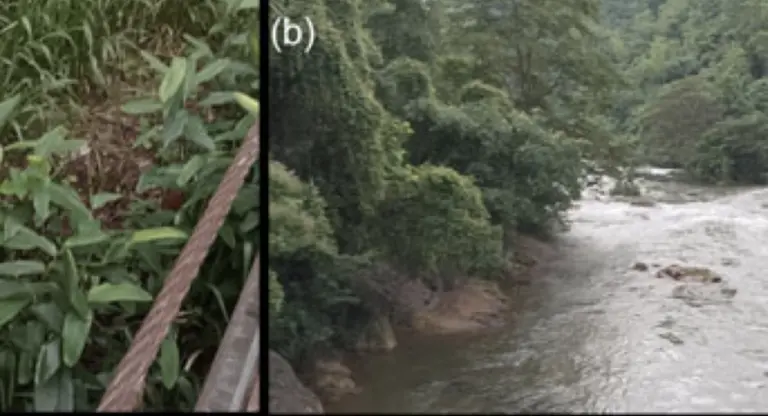
That narrative changed in January 2025. Armed with archival records, predictive habitat-modeling algorithms, and a profound respect for the resilience of nature, researchers tracked down a thriving, albeit highly vulnerable, population of 70 to 100 individual I. virgatus plants. Tucked away in a threatened lowland forest fragment along the Sitawaka Ganga River in Sabaragamuwa Province, southwestern Sri Lanka, the plants had managed to survive undetected for nearly two centuries.
Published recently in the journal Oryx, the discovery is much more than a nostalgic tick on a naturalist’s checklist. It opens critical lines of inquiry regarding evolutionary biogeography, highlights the outsized ecological value of overlooked forest micro-refugia, and sounds an urgent alarm regarding the immediate conservation needs of South Asia’s rapidly diminishing tropical ecosystems.
Detailed Chronology: From 1855 to the January 2025 Breakthrough
The history of Indianthus virgatus in Sri Lanka is a classic tale of historical collection followed by prolonged absence.
The Mid-19th Century Baseline
During the colonial era of the mid-19th century, European naturalists and botanists heavily cataloged the rich floral diversity of the Indian subcontinent and Ceylon (now Sri Lanka). It was during this period that the single historical Sri Lankan specimen of I. virgatus was gathered, pressed, and cataloged. For generations, this lone physical artifact served as the sole proof that the species once inhabited the island. As decades rolled into centuries, subsequent botanical surveys across Sri Lanka’s expanding agricultural and urban landscapes repeatedly failed to turn up any living specimens.
By the late 20th and early 21st centuries, conservation authorities officially listed I. virgatus as critically endangered within Sri Lanka. Over time, the absence of observations morphed from "critically endangered" into an unofficial institutional presumption of local extinction. Botanists feared that the sweeping conversion of native lowland forests into cash-crop plantations had permanently wiped the species from the island’s ecological canvas.
The Modern Quest
The turning point came when a dedicated research team decided to combine 19th-century historical records with 21st-century technology. Recognizing that traditional random searches across dense terrain are akin to looking for a needle in a haystack, the team turned to predictive habitat modeling.
By analyzing the environmental variables, soil types, elevation, and climatic conditions associated with known populations of I. virgatus in India, the researchers generated high-resolution probability maps for Sri Lanka. These models pointed toward the southwestern wet zone of the country—specifically within Sabaragamuwa Province—as the most likely sanctuary for any surviving lineage.
The January 2025 Field Discovery
In January 2025, translating computational predictions into boots-on-the-ground reality, the research team ventured into a lowland forest fragment along the Sitawaka Ganga River. Methodically surveying the shaded banks of local streams and sheltered riverine corridors, the team located what they were searching for.
Nestled in the dense, humid understory was a discrete population of I. virgatus, numbering between 70 and 100 mature individuals. The plants, displaying their characteristic vegetative structure and understated white blossoms, were thriving precisely where the predictive models had anticipated. After 170 years of silence, the Sri Lankan lineage of Indianthus virgatus was officially brought back into the light.
Supporting Context & Metrics: Ecology, Evolution, and Geography
To fully grasp the significance of the I. virgatus rediscovery, one must examine its unique standing in the plant kingdom and the ecological dynamics that allowed it to persist against the odds.
A Monotypic Oddity
Indianthus virgatus holds a distinct taxonomic rank. It is a monotypic species, meaning it is the sole representative of its entire genus (Indianthus). In evolutionary terms, losing a monotypic species does not merely mean losing one species among many; it represents the pruning of an entire distinct branch off the tree of life, erasing millions of years of unique evolutionary history and genetic information.
The Disjunct Distribution Mystery
One of the most fascinating aspects of I. virgatus is its geographic distribution. The species exhibits a disjunct occurrence, meaning its populations are split between the Western Ghats of India (where it is known from roughly 150 locations) and now a single, isolated pocket in southwestern Sri Lanka.
This biogeographical puzzle has sparked intense debate among evolutionary biologists and ecologists. There are two primary hypotheses explaining how this gap came to be:
- The Ancient Vicariance Hypothesis: An ancient geological or climatic event millions of years ago fractured a once-continuous, unified population of the plant into two separate geographic groups as landmasses or climates shifted.
- The Long-Distance Dispersal Hypothesis: The species originally evolved in one region and subsequently reached the other much later through long-distance seed dispersal—perhaps mediated by migratory birds, wind, or water currents.
Resolving this mystery requires further genetic sequencing and molecular clock dating comparing the newly found Sri Lankan individuals with their Indian counterparts.
Micro-Refugia: Nature’s Hidden Strongholds
How did a population of 70 to 100 plants manage to evade detection for 170 years in a relatively well-studied country like Sri Lanka? According to the researchers, the answer lies in the concept of micro-refugia.

Even as large-scale human activities radically transformed the surrounding landscapes, small, sheltered pockets of moist, shaded forest endured. These pockets typically occur around meandering streams, steep ravines, and protected valley slopes. Because of their unique topography, these micro-habitats retain stable, humid microclimates that insulate sensitive understory plants from the broader environmental degradation occurring outside their boundaries.
The rediscovery of I. virgatus serves as a powerful reminder that these seemingly small, isolated, and easily overlooked forest remnants can act as vital arks for biodiversity, safeguarding endemic or rare species that would otherwise succumb to regional extinction.
Official Statements and Expert Insights
The implications of this botanical breakthrough have resonated across the global scientific community. In communications with researchers and study co-authors, the profound nature of the discovery and its associated threats have been brought into sharp focus.
Highlighting the evolutionary weight of the find, Vivek Pandi, co-author of the study and assistant professor of ecology and evolutionary biology at the Manipal Academy of Higher Education in India, emphasized the unique heritage encapsulated within the plant.
"I. virgatus has a unique evolutionary and biogeographical context," Pandi explained via email. He noted that the species’ disjunct occurrence across the Indian subcontinent and Sri Lanka raises profound questions regarding historical earth history. "Whether an ancient geological event split the once-continuous population of the plant into two separate groups, or whether the species reached Sri Lanka later through long-distance dispersal, is a fascinating avenue for ongoing research."
Addressing the mystery of the plant’s long absence, Pandi pointed directly to the power of sheltered topography.
"Though I. virgatus went unrecorded in the wild in Sri Lanka for 170 years, we believe the species survived undetected in sheltered pockets of forest over the decades. These areas include small remnants of moist, shaded forest—typically around streams and sheltered slopes—that can retain stable microclimatic conditions despite severe disturbance in the surrounding landscape."
Pandi underscored that this recovery carries a broader lesson for global conservation strategies:
"The rediscovery of I. virgatus highlights why these seemingly small and isolated forest remnants can be important for conserving poorly known species."
However, this optimism is tempered by a stark warning regarding the threats facing these delicate ecosystems. The study highlights that the vast majority of historical and potentially suitable habitats for I. virgatus in Sri Lanka have been systematically cleared and converted over the past two centuries to make way for expansive tea and rubber plantations. Furthermore, populations of the plant residing in India’s Western Ghats face escalating anthropogenic pressures, habitat fragmentation, and climate-induced stresses.
Future Outlook: Conservation Priorities and Action Plans
Finding Indianthus virgatus after 170 years is a monumental scientific achievement, but it also sounds the starting gun for an urgent race to protect it. Given the tiny size of the newly discovered population (70 to 100 individuals) and the fragility of its riverine micro-habitat, the species remains highly vulnerable to stochastic events—such as flash floods, localized land-clearing, or disease outbreaks.
The study’s authors have outlined a comprehensive, multi-tiered action plan to ensure the long-term survival of the species in Sri Lanka:
1. Immediate Local Habitat Protection
The highest priority is securing the immediate perimeter of the rediscovery site along the Sitawaka Ganga River. Conservationists are calling for localized protective measures, working in tandem with local landowners, regional government bodies, and environmental authorities to halt any agricultural encroachment, logging, or industrial development near the riverine corridor.
2. Ex-Situ Conservation and Botanical Gardens
To hedge against the risk of extinction in the wild, the research team recommends establishing living ex-situ collections. By carefully harvesting seeds or vegetative cuttings under strict scientific protocols, botanical experts can cultivate assurance populations within national botanical gardens across Sri Lanka. These controlled environments will serve as a genetic safety net and a source for future educational and research initiatives.
3. IUCN Red List Assessment and Policy Integration
Currently, while the species is recognized locally as critically endangered in Sri Lanka, its global and regional assessments require urgent formal updates. The authors emphasize that the conservation status of I. virgatus must be rigorously re-evaluated for the IUCN Red List of Threatened Species. Securing an updated, accurate IUCN status is essential for leveraging international conservation funding, attracting institutional support, and embedding the protection of I. virgatus directly into national and regional biodiversity action plans.
4. Collaborative Cross-Border Research
Because I. virgatus bridges two nations, future conservation frameworks will likely require binational collaboration between Sri Lankan and Indian botanists. Comparative genetic studies, habitat corridor monitoring, and shared conservation strategies between the Western Ghats and Sabaragamuwa Province will offer the best defense for a plant that has already defied the odds for nearly two centuries.
Ultimately, the story of Indianthus virgatus is a testament to the resilience of nature and the persistent curiosity of scientists. It proves that even in landscapes heavily altered by human hands, hidden worlds still await discovery—provided we have the tools, the technology, and the dedication to look closely enough.