Executive Overview
Despite overwhelming scientific consensus, the rapid development of low-cost renewable energy technologies, and an escalating barrage of extreme weather events, the global climate movement is faltering on its most critical front: public persuasion. Decades of sophisticated scientific reporting and policy advocacy have failed to mobilize the broad public majority required to enact permanent, systemic change. Instead, federal environmental policies remain volatile, subject to the whims of razor-thin legislative majorities and immediate rollbacks upon shifts in political power.
According to data from the Yale Program on Climate Change Communication, an estimated 80 million Americans are deeply alarmed by climate change. Among them, roughly 40 million express a desire to become politically active on the issue. Yet, a mere 3 million are engaged in actual advocacy. When the remaining 37 million "alarmed but inactive" citizens are asked why they remain on the sidelines, their most common response is as damning as it is simple: nobody has asked them.
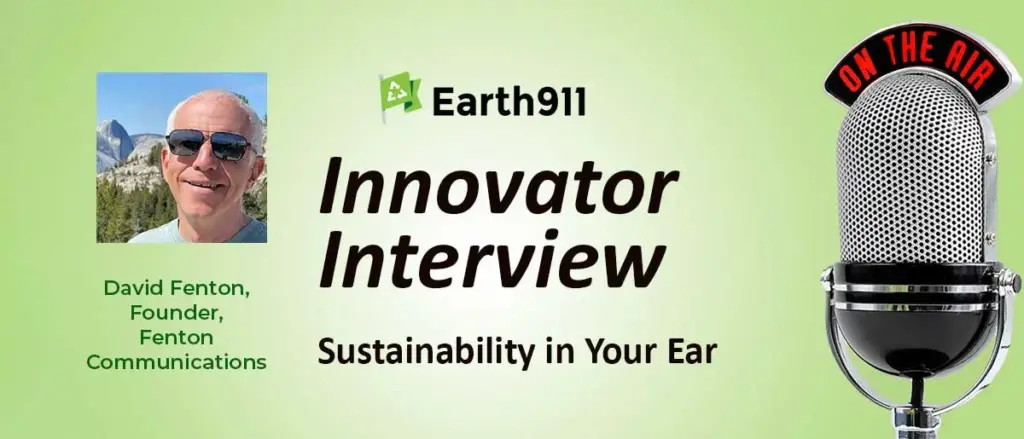
This structural communications deficit is not accidental; it is the logical outcome of a strategic misalignment within the climate philanthropy and non-governmental organization (NGO) sectors. While fossil fuel interests treat public persuasion as a core, highly coordinated business operation, the climate advocacy ecosystem has largely retreated from mass communication. This dynamic has been described by veteran public relations strategist David Fenton as a state of "unilateral disarmament" in the midst of an asymmetric information war.
To bridge this gap, communications experts argue that the climate movement must abandon its reliance on abstract, academic jargon—such as "Net Zero," "decarbonization," and "carbon capture"—and return to simple, cognitively resonant language that connects with the everyday values of ordinary citizens. Without a massive, coordinated investment in public communication infrastructure and trusted messengers, the clean energy transition risks stalling before it can achieve the speed dictated by physics.
Detailed Chronology: The Evolution of Progressive Public Relations
To understand the current impasse in climate communications, it is necessary to examine the historical evolution of progressive media strategy and the shifting landscape of public relations over the past half-century.
[1960s-1970s] ------------------> [1982] -------------------------> [2010s-Present]
Grassroots Media & Activism       Founding of Fenton Communications   The Digital Fracture &
(Anti-War, Black Panthers,        (Anti-Apartheid, Fracking Bans,     Asymmetric Information War
No Nukes Concerts)                Fossil Fuel Divestment)             (Algorithmic Silos, Bot Networks)
The Era of Mass Mobilization (1960s–1970s)
During the social upheavals of the late 1960s and 1970s, progressive movements relied heavily on grassroots, high-visibility counter-cultural media. Activists utilized underground newspapers, independent photography, and large-scale cultural events to challenge institutional narratives.
David Fenton, who began his career as a teenage high school dropout photographing the anti-war movement and the Black Panther Party, was a key participant in this era. In 1979, Fenton co-produced the "No Nukes" concerts at Madison Square Garden, demonstrating that cultural icons could be leveraged to translate complex technological and ecological hazards into mainstream public concern.
The Institutionalization of Progressive PR (1982–2010s)
In 1982, Fenton founded Fenton Communications, the first public relations firm in the United States dedicated exclusively to progressive causes. Over the next four decades, the firm pioneered techniques to bypass traditional media gatekeepers and shape public policy through targeted campaigns:
- The Anti-Apartheid Campaign: Fenton Communications designed public-facing campaigns that helped isolate the South African apartheid regime, ultimately contributing to the release of Nelson Mandela.
- The New York Fracking Ban: To influence New York Governor Andrew Cuomo’s daily commute, Fenton collaborated with artists Yoko Ono and Sean Lennon to erect a highly visible billboard reading "Imagine There’s No Fracking" along the governor’s route. This localized, high-impact visual campaign helped secure a statewide ban on hydraulic fracturing.
- Fossil Fuel Divestment: Recognizing that the messenger is often more important than the message, Fenton helped launch the fossil fuel divestment movement by employing the heirs to the Rockefeller Standard Oil fortune as the primary spokespeople, turning the industry’s historical legacy against itself.
The Digital Fracture and the Rise of Asymmetric Information Warfare (2010s–Present)
The transition from centralized broadcast media to decentralized digital platforms fundamentally disrupted progressive organizing. While social media theoretically democratized access to information, it also created algorithmic echo chambers.
During this period, fossil fuel interests and conservative foundations built a highly coordinated, well-funded digital apparatus designed to manufacture doubt and attack renewable energy. By utilizing network-scale repetition, automated bot accounts, and paid online influencers, the opposition successfully insulated large segments of the public from climate realities. Meanwhile, the climate movement, bound by institutional silos, failed to construct a comparable counter-apparatus, leading to the current communications crisis.
Supporting Context & Metrics: The Anatomy of a Communications Deficit
The failure of the climate movement to mobilize the public is reflected in stark metrics detailing public awareness, media exposure, and philanthropic spending.
The Mobilization Gap
Data from the Yale Program on Climate Change Communication reveals a massive drop-off between public concern and civic action:
| Metric | Estimated Population | Percentage of Alarmed Group |
|---|---|---|
| "Alarmed" Americans | 80,000,000 | 100% |
| Express a Desire for Political Action | 40,000,000 | 50% |
| Currently Politically Active | 3,000,000 | 3.75% |
This 37-million-person deficit represents a failure of basic organizing infrastructure. Rather than activating this pre-existing base, environmental organizations have historically treated their mailing lists primarily as ATMs for direct-mail fundraising, rather than conduits for coordinated political mobilization.
The Information Deficit
Despite the ubiquity of climate-related disasters, the average American remains largely isolated from the topic in their daily life:
- Social Media Invisibility: Only 12% of Americans report ever seeing content related to climate change on their social media feeds. This is largely due to platform algorithms that categorize "climate" as political or controversial, systematically suppressing its reach to non-aligned audiences.
- Social and Media Silence: Two-thirds (66%) of Americans state that they rarely or never hear about climate change from their friends, family, or in mainstream media reports.
- Systemic Illiteracy: When asked how to solve climate change, the most common response among Americans (selected by 40%) is "reduce, reuse, and recycle." While recycling is a valid materials-management strategy, it has virtually no impact on decarbonizing the electrical grid or heavy transportation sectors. This confusion underscores a profound lack of basic climate literacy.
American Solutions to Climate Change (Public Perception vs. Actual Impact):
[40%] Believe "Reduce, Reuse, Recycle" is the Primary Solution
------> Actual Impact: Minimal for Grid/Fleet Decarbonization
[<10%] Correctly Identify Systemic Grid Decarbonization and Electrification
------> Actual Impact: Maximum for Global Temperature Mitigation
The Philanthropic Spending Disparity
The NGO and philanthropic sectors spend billions of dollars annually on climate-related initiatives. However, this funding is heavily weighted toward technical, legal, and policy solutions:
Total Climate Philanthropy Allocation (Illustrative Estimate):
=====================================================================
[#################################################] Policy, Law, & Science (95%)
[##] Mass Public Persuasion & Media (5%)
=====================================================================
By starving public-facing communications of resources, philanthropists operate under the assumption that policy victories can survive without public consent—an assumption repeatedly disproven by legislative rollbacks.

Official Statements & Critical Perspectives
The "Enlightenment Fallacy" and Cognitive Framing
A central critique of the climate movement’s strategy relies on the work of cognitive linguist George Lakoff, who wrote the foreword to Fenton’s The Activist’s Media Handbook. Lakoff argues that progressives are routinely undermined by the "Enlightenment fallacy"—the mistaken belief that human beings are entirely rational actors who make decisions based solely on facts and data.
"People who study the humanities, the sciences, and the law believe that a strong idea reproduces itself because it is correct," Fenton observed during an interview on the Sustainability In Your Ear podcast. "They believe that selling ideas is dirty, manipulative work beneath serious people. Meanwhile, the people who go to business school study cognitive and marketing science. They understand that public persuasion is essential to success."
Lakoff’s cognitive research also highlights how political worldviews are structured around deeply rooted moral metaphors. While conservative communication successfully appeals to a "strict father" model—emphasizing individual discipline, hierarchy, and market-based authority—progressive communication often relies on a "nurturing parent" model that struggles to project authority on systemic issues.
For swing voters, or "biconceptuals" who hold both neural networks simultaneously, the language used by advocates can inadvertently trigger conservative frames. For instance, cognitive testing reveals that the term "climate justice" often evokes mental images of police, courts, and punitive measures rather than fairness or shared prosperity, alienating moderate audiences.
The Vocabulary Gap
Experts argue that the climate movement’s self-selected vocabulary acts as a barrier to public understanding:
"Net Zero means almost nothing to most people. Carbon sounds like an abstraction. We need to pivot to simpler language, like ‘pollution,’ when describing the source of global warming. Pollution is a word nobody defends, and a blanket of pollution trapping heat is a picture people can easily grasp and act on."
— David Fenton, Founder, Fenton Communications
Future Outlook: Arming for the Information Battlefield
As the physical impacts of climate change accelerate, the strategic focus of the climate movement must shift from insular policy drafting to aggressive, mass-market public persuasion. Several emerging trends and initiatives point toward a potential realignment of progressive media strategy.
Rebuilding the Messenger Infrastructure
To counter the fossil fuel industry’s network of online influencers, climate funders must invest in cultivating and supporting trusted, high-impact messengers. This includes supporting figures who can cross ideological divides, such as TV meteorologists, business leaders, and conservative-aligned advocates.
A key example of an underutilized messenger is Dr. Katharine Hayhoe, an evangelical Christian climate scientist at Texas Tech University. Despite her unique ability to communicate climate science to conservative and religious audiences, Hayhoe operates with minimal professional media support.
"She has no video team, no social media team, no PR firm, and no strategist," Fenton noted. "Because she’s exceptionally talented, she has built a million followers on her own. But she could have 20 million if she had the institutional support she deserves. We are leaving our best communicators to fend for themselves."
Industry-Led Communications: The Launch of Amped
Recognizing the limitations of traditional NGO advocacy, the clean energy industry has begun taking public persuasion into its own hands. In May 2024, a new clean energy advocacy platform called Amped (amped.org) was launched. Led by communications strategist Steve McBee, Amped aims to coordinate the renewable energy industry’s political and public-facing messaging, shifting from a defensive posture to an offensive, market-oriented campaign that highlights the economic, security, and pocketbook benefits of clean power.
Algorithmic Regulation and the Battle Against AI Disinformation
The future of climate communication will be deeply contested on digital platforms increasingly dominated by generative Artificial Intelligence (AI). The proliferation of AI-generated content allows bad actors to produce and distribute hyper-targeted climate disinformation at an unprecedented scale.
Addressing this threat will require aggressive policy interventions, including:
- Mandatory Labeling: Legislative mandates requiring social media platforms and search engines to clearly label AI-generated images, videos, and articles.
- Identity Verification: Policies requiring social platforms to verify human users, thereby reducing the influence of automated bot networks.
- Platform Accountability: Increased pressure on tech companies to reform algorithms that systematically suppress climate science while amplifying controversial or false narratives for engagement.
The $300 Million Speculation
Within the philanthropic community, rumors have circulated regarding a potential major pivot in funding strategy. A coalition of major climate donors is reportedly exploring the launch of a coordinated, $300 million multi-year public communication campaign. If realized, this campaign would represent the first time the climate movement has deployed a mass-marketing budget comparable to corporate advertising campaigns, potentially shifting the balance of power in the ongoing information war.
Ultimately, the physical transition to a sustainable economy cannot occur without a parallel cognitive transition in the minds of the public. As Fenton concludes, the solutions to the climate crisis are already technically viable and economically superior. The remaining challenge is not scientific, but communicative: "We don’t lack solutions; we lack demand." Reclaiming the public conversation by organizing the inactive millions is the only path to securing a livable future.