

By the Investigative Desk
Published by Oceanographic | September 22, 2026
Executive Overview
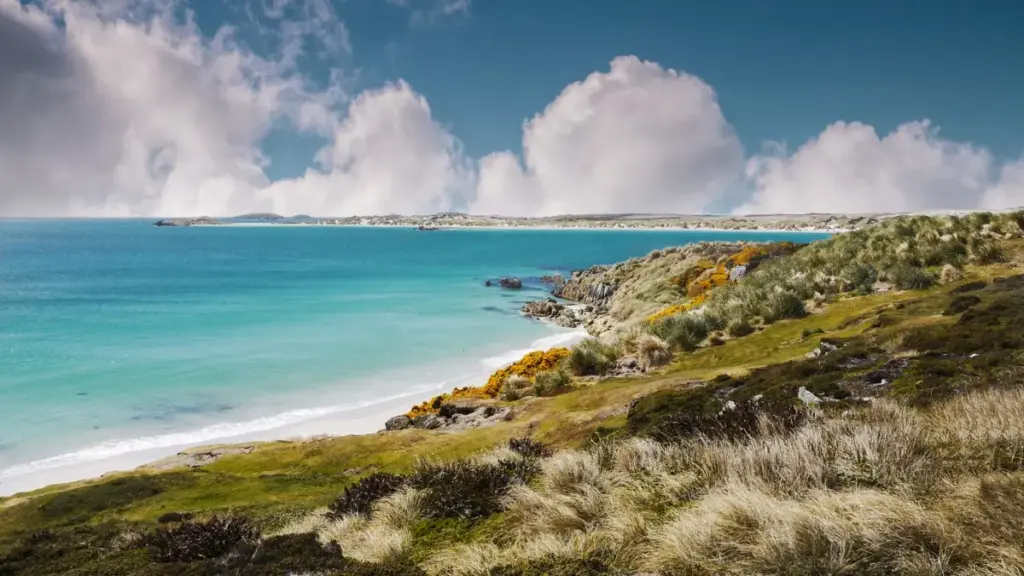
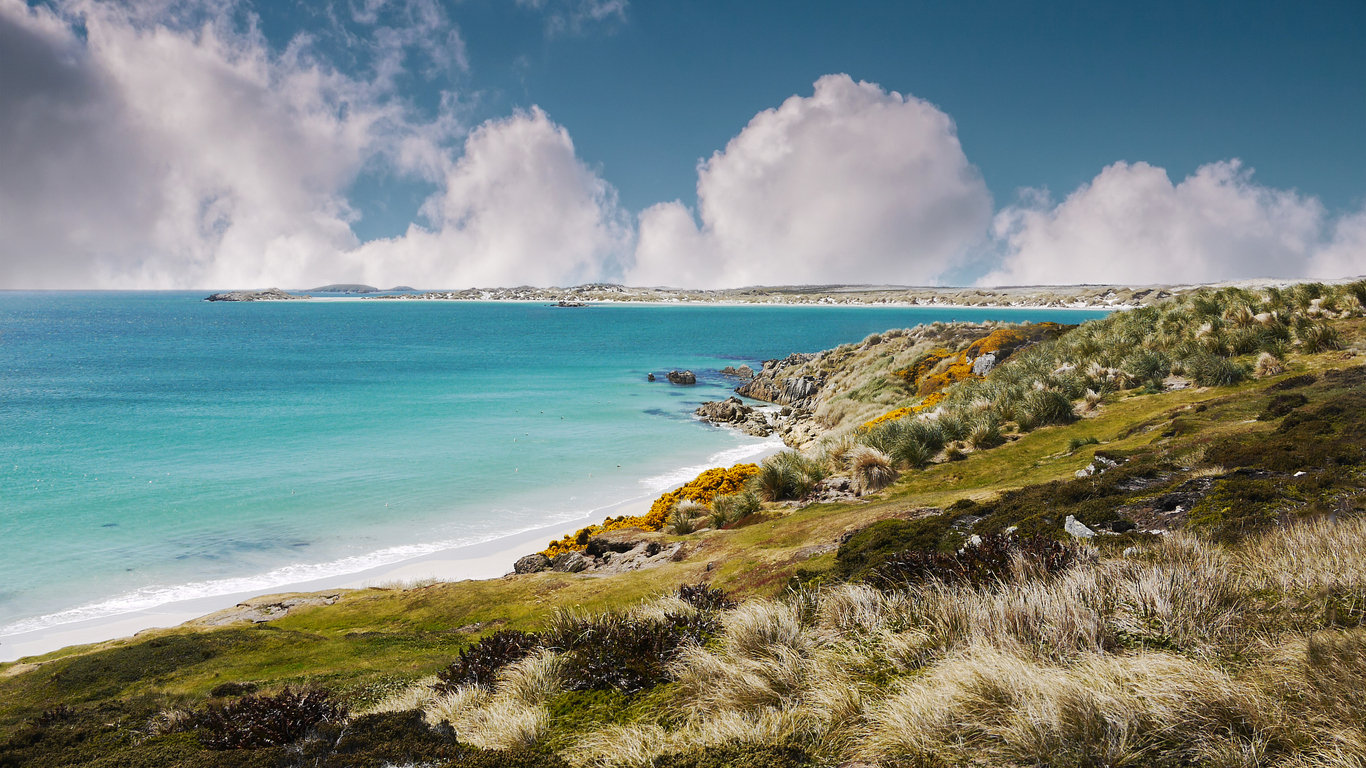
Just one minute outside of Stanley—the remote, wind-scoured capital and sole town of the Falkland Islands—the modern world fades into a landscape of raw, untamed wilderness. Home to a tight-knit population of just 3,000 residents, the islands offer a rare glimpse into a planet largely undisturbed by heavy industrialization. Sit quietly atop the coastal sand dunes for a mere five minutes, and the reward is often a breathtaking encounter with wild dolphins surfing the surf, seals basking on the shingle, and majestic albatross gliding effortlessly on the roaring southern winds.
Yet, this picturesque facade masks a high-stakes ecological battleground. Beneath the surface, the waters surrounding the Falkland Islands sustain far more than one of the Southern Ocean’s most lucrative and critical squid fisheries. They support an astonishing tier of marine biodiversity, serving as a sanctuary for five distinct species of penguins, southern right whales, and a myriad of other pelagic species. Most importantly, this marine ecosystem remains so remarkably intact that leading marine biologists and oceanographers utilize it globally as a pristine baseline—a living laboratory demonstrating precisely what a healthy, functioning cold-water sea is supposed to look like.
Today, however, this ecological blueprint faces an unprecedented modern threat. As corporate aquaculture looks southward for new expansion frontiers, local Falklanders find themselves locked in a David-versus-Goliath struggle. They are fighting back against the encroachment of big commercial salmon farming, determined to safeguard their pristine waters from the ecological devastation that has plagued open-pen aquaculture elsewhere across the globe.
Detailed Chronology: The Escalating Conflict Over South Atlantic Waters
The Quiet Frontier and the Rising Tide of Industrial Interest
For decades, the Falkland Islands operated under a sustainable, fisheries-managed model that prioritized local stewardship and strict catch limits. The local economy thrived primarily on eco-tourism, sustainable agriculture, and, crucially, well-regulated squid and finfish fisheries. However, as traditional salmon-farming regions in places like Norway, Chile, and parts of Canada grapple with mounting environmental pressures, disease outbreaks, sea lice infestations, and stringent regulatory crackdowns, multinational aquaculture conglomerates have increasingly cast their eyes toward the nutrient-rich, unpolluted waters of the sub-Antarctic.
The initial probes by commercial aquaculture entities began quietly, disguised as exploratory ventures and economic diversification proposals. To the casual observer, the introduction of salmon farming was pitched as a golden opportunity to bolster the islands’ GDP and create new jobs. However, seasoned local conservationists, fishermen, and community leaders immediately recognized the ominous handwriting on the wall.
Mobilizing the Community: One Voice for the Ocean
As whispers of corporate interest solidified into concrete proposals for industrial open-net salmon pens, a powerful grassroots resistance began to form. Drawing on a deep-rooted cultural affinity for the sea, Falkland Islanders galvanized under a unified banner. Town halls in Stanley overflowed with citizens—ranging from veteran commercial fishers to young scientists and tourism operators—all voicing a singular, resolute message: the islands’ pristine marine environment is non-negotiable.
Throughout the unfolding timeline, local groups have coordinated with international marine conservation bodies, such as the Blue Marine Foundation, to bring global attention to the remote archipelago’s plight. Press releases, scientific briefings, and investigative reports have systematically dismantled the sanitized marketing narratives put forth by corporate aquaculture lobbyists, exposing the grim realities of intensive fish farming to policymakers and the international public.
The Legislative Pushback and Current Standstill
By late 2026, the controversy reached a legislative boiling point. Local lawmakers, caught between the allure of foreign investment and the fierce protectionism of their constituents, have been forced to re-evaluate the legal frameworks governing territorial waters. Environmental impact assessments have become the frontline of the conflict, with citizens demanding transparent, independent oversight rather than rubber-stamped approvals for corporate ventures.
As the battle lines solidify, the Falkland Islands stand at a definitive historical crossroads. The choices made in the coming months will dictate whether this vital sanctuary remains an untouched oceanic baseline or succumbs to the industrial pressures transforming the rest of the global ocean.
Supporting Context & Metrics: Understanding the Ecological Stakes
To comprehend why the Falkland Islands are fiercely defending their waters, one must look closely at the fragile, highly specialized marine environment that hangs in the balance.
A Biodiversity Hotspot of Global Significance
The geographic isolation of the Falklands, combined with the confluence of nutrient-rich currents sweeping up from the Antarctic, creates an extraordinarily productive marine ecosystem. The region hosts roughly 70% of the global population of black-browed albatrosses, alongside thriving colonies of gentoo, macaroni, king, rockhopper, and Magellanic penguins.
Marine mammals—including killer whales, Peale’s dolphins, and southern elephant seals—rely heavily on the rich benthic and pelagic food webs sustained by the islands’ clear, cold waters. Unlike many northern hemisphere seas, which have been heavily degraded by centuries of industrial overexploitation and pollution, the Falklands remain one of the few remaining marine environments operating near its natural ecological capacity.
The Economic and Ecological Value of the Squid Fishery
At the heart of the Falklands’ maritime economy is its world-renowned squid fishery, primarily targeting Illex argentinus and Loligo (Doryteuthis gahi) squid. This fishery is not only the economic lifeblood of the local government—funding public services, infrastructure, and healthcare—but it also operates under some of the most rigorous fisheries management regimes in the world.
Scientists warn that introducing intensive finfish aquaculture into this delicate matrix could introduce catastrophic variables:
- Nutrient Overload and Eutrophication: Massive feed inputs and fish waste from open-net salmon pens release high concentrations of nitrogen and phosphorus, triggering toxic algal blooms that can suffocate native marine life and disrupt local food chains.
- Disease and Parasite Transmission: Wild populations of fish and migrating marine species risk contracting pathogens, viruses, and rampant sea lice infestations bred in high-density enclosures.
- Chemical Pollution: The widespread use of antibiotics, antifoulants, and pesticides necessary to maintain open-pen operations inevitably leaches into the surrounding water column, poisoning non-target species ranging from benthic invertebrates to filter-feeding whales.
The Scientific Imperative: A Cold-Water Baseline
From a global scientific perspective, the stakes extend far beyond local economics. As climate change rapidly warms ocean temperatures and human activities degrade coastal zones worldwide, researchers desperately need intact ecosystems to serve as comparative baselines. The Falkland Islands offer a rare window into how healthy cold-water marine biomes function in the absence of heavy industrial pollution. Altering this chemistry with intensive aquaculture would effectively erase one of the last remaining control groups available to marine science.
Official Statements and Stakeholder Perspectives
The resistance movement in the Falkland Islands is characterized by a stark dichotomy between corporate ambition and community-led preservation.
Local fishers and environmental advocates have been unequivocal in their messaging. "We are not anti-business; we are pro-survival," noted a prominent local conservation voice during a recent community forum in Stanley. "Our economy, our culture, and our identity are inextricably linked to the health of the sea. Once you introduce industrial salmon farming into an ecosystem like this, you cross a Rubicon. There is no turning back once the baseline is broken."
International conservation allies have echoed these sentiments, framing the Falklands’ struggle as a microcosm of a broader global conflict. Representatives from marine protection organizations emphasize that open-net pen aquaculture has repeatedly proven unsustainable in other jurisdictions. They argue that allowing these practices to take root in one of the world’s most pristine sub-Antarctic environments would be an ecological tragedy of international proportions.
Conversely, proponents of the aquaculture initiatives have historically argued that modern farming techniques can be tightly regulated and monitored to minimize environmental footprints. Industry representatives point to potential job creation, export diversification, and technological innovations in containment as benefits that could coexist with the island’s existing natural assets.
However, these assurances have largely fallen on deaf ears among a populace that has witnessed the environmental degradation left in the wake of similar operations in regions like Patagonia and British Columbia. For Falklanders, the theoretical economic gains are heavily outweighed by the proven, irreversible risks to their natural heritage.
Future Outlook: What Lies Ahead for the Falkland Islands?
As the calendar turns toward the close of 2026, the immediate future of the Falkland Islands’ marine protection efforts hangs in a delicate balance. The coming year will likely witness several pivotal developments:
- Policy and Regulatory Reinforcement: Local government officials face mounting pressure to draft comprehensive, legally binding frameworks that either explicitly ban open-pen finfish aquaculture or impose standards so stringent that commercial viability becomes unattainable.
- Global Solidarity and Scientific Advocacy: International scientific bodies are mobilizing to publish further baseline assessments of the Falklands’ marine environment, weaponizing peer-reviewed data to bolster the local population’s legal and political arguments.
- The Broader Precedent: The outcome of this localized battle will reverberate globally. If a community of 3,000 people can successfully fend off massive multinational aquaculture interests to preserve their ecosystem, it could serve as an inspiring blueprint for other remote island nations and coastal communities facing similar corporate pressures.
Ultimately, the fight to protect the Falkland Islands is a poignant reminder of what is at stake in the modern conservation movement. It is a testament to the fact that even in an increasingly globalized world, local voices armed with scientific truth and fierce determination can still stand as an impenetrable bulwark against the relentless march of industrial exploitation. As the wild dolphins surf the cold South Atlantic breakers and the penguins return year after year to undisturbed shores, the world watches and waits, hoping that this irreplaceable sanctuary remains wild, free, and fiercely protected.



