

Executive Overview
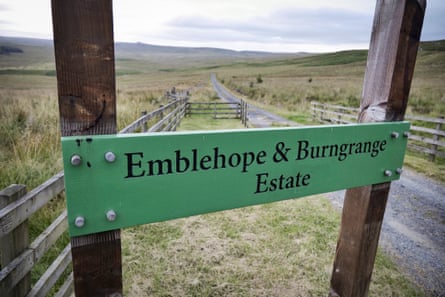
Deep in the rugged, wind-scoured expanses of northern Northumberland lies a landscape so isolated that digital mapping tools still flounder, directing unsuspecting motorists up dead-end grassy tracks where public transport and human habitation vanish entirely. Here, miles along gravel forestry roads, sits Emblehope Moor—a sprawling 7,500-acre glacial bowl that has just been acquired for £8.5 million by Restore, a pioneering nature restoration company operating across Britain.
This monumental purchase represents the largest contiguous rewilding site under single ownership in England. Funded in part by an initial £4.5 million loan from Triodos Bank and currently seeking an additional £4 million to fully capitalize its 20-year ecological restoration scheme, Emblehope is more than just a massive conservation play. It introduces a radical new economic and social paradigm to British land management: a blended capital model that delivers financial returns to investors, pays off its commercial debt, and ultimately transfers outright ownership of the estate to a local community trust or charitable foundation.
By stripping away the speculative greed traditionally associated with vast upland land-holding models, Restore aims to prove that private investment and public stewardship can coexist. Once a traditional grouse-shooting and sheep-farming estate—and more recently a dog-training ground managed by the Royal Kennel Club—Emblehope is poised to become a cornerstone of what environmentalists have dubbed “Britain’s Yellowstone.” As a mosaic of rewilding projects takes root across Northumberland, this ambitious undertaking offers a blueprint for how England’s uplands can heal ecologically while returning wealth and power to the people who live alongside them.
Detailed Chronology: From Sporting Estate to Rewilding Vanguard
To understand the scale of the transformation underway at Emblehope Moor, one must examine its historical trajectory and the careful sequence of steps Restore has planned for the next two decades. For generations, the estate’s identity was defined by intensive human use. It served as a traditional upland sheep farm, a managed grouse-shooting estate, and a specialized training ground for working dogs under the stewardship of the Royal Kennel Club. While the Kennel Club maintained parts of the land for biodiversity, the overarching ecological health of the glacial bowl was severely compromised by decades of drainage, overgrazing, and commercial forestry.

The turning point arrived in 2026, when Restore finalized its £8.5 million acquisition of the estate, backed by Triodos Bank UK. The immediate phase of the project, currently underway, focuses on immediate triage: arresting ecological degradation and re-engineering the hydrology of the landscape.
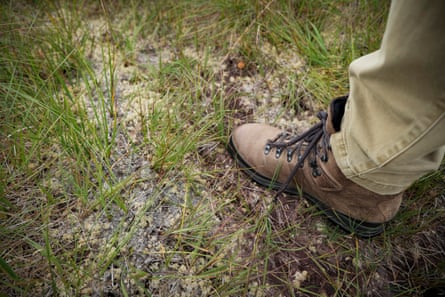
The first major hurdle is the restoration of Emblehope’s desiccated peat moorland. Over the past century, a hidden network of subterranean land drains was cut across the estate to dry out the soil for agriculture and shooting, leaving what should be a naturally water-logged sponge completely parched. Even during the height of summer, vital patches of sphagnum moss—which ought to be saturated—are dry to the touch. Restore’s hydrological models indicate that blocking these drains and rewetting the peat will allow the landscape to store an additional 100,000 cubic metres of water, roughly equivalent to 40 Olympic-sized swimming pools. This water retention not only revitalizes local wetland habitats but acts as a crucial buffer against downstream flooding and wildfire risks.
Simultaneously, the estate is tackling its non-native forestry. Large swaths of sitka spruce plantations, planted decades ago for commercial timber, are slated for selective felling. While these dense monocultures provided a quick timber yield, they harbor minimal native biodiversity and artificially inflated predator populations—such as goshawks—which pose a severe threat to ground-nesting wading birds.
The next chronological milestone in the 20-year plan involves the phased introduction of specialized grazing animals. To combat the dangerous accumulations of dry "thatch" lurking beneath thick tussocks of moorland grass—a severe fire hazard—Restore is introducing Exmoor ponies. Unlike sheep and cattle, which were heavily reduced by previous owners, these hardy ponies will graze aggressively on coarse grasses, opening up the sward and reducing wildfire risks while creating the structural diversity required for vulnerable species like curlew chicks to safely navigate and forage.
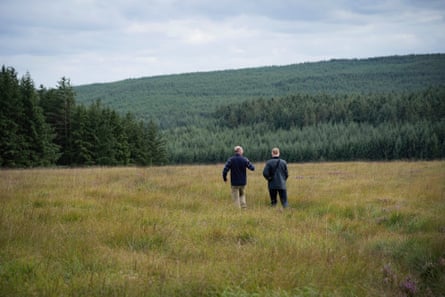
As the decade progresses, the project will look to reintroduce keystone species such as beavers. While nascent patches of birch and willow are already taking root along estate streams to provide a natural food source, project leaders are confident that beavers will naturally accelerate the retention of water across the landscape, engineering a dynamic, self-sustaining wetland mosaic by the mid-2030s.
Supporting Context & Metrics: The Northumberland Rewilding Matrix
Emblehope Moor does not exist in an ecological vacuum. It is the crown jewel in an exploding matrix of wilding initiatives in northern England that conservationist Ben Goldsmith has enthusiastically termed "Britain’s Yellowstone." While the estate may not match the sheer geographical scale of its American counterpart, it represents England’s largest contiguous wild landscape by a significant margin.
Consider the surrounding landscape metrics:
- Rothbury Estate: Located close to Emblehope, this represents the largest private estate to come on the open market in three decades. The Wildlife Trusts are currently working to acquire it via an unprecedented £30 million fundraising campaign that is rapidly nearing its target.
- College Valley & Hepple Wilds: Private estates spanning 12,000 and 4,000 acres respectively, both of which are aggressively accelerating their own internal nature restoration programs.
- Kielder Forest: Looming as a massive neighbor to the west, this 148,000-acre commercial forest is increasingly managed by Forestry England with an explicit focus on enhancing biodiversity.
Despite its history of intensive management, Emblehope already boasts remarkable ecological baseline assets. Designated as a Site of Special Scientific Interest (SSSI), the estate hosts healthy numbers of raptors, including resident merlin and prospecting golden eagles. The local river systems still support populations of wild trout and salmon, while red squirrels and pine martens inhabit the surrounding woodlands.
However, managing this vast acreage requires confronting complex biological realities—not least of which is the management of invasive flora. The removal of sitka spruce plantations brings a distinct challenge: the proliferation of "little shitkas," or baby trees sprouting from wind-blown seeds across the open moors. Restore’s tactical response involves establishing wide, protective buffers of broadleaved woodland around the perimeter of the estate to act as natural seed traps, halting the advance of non-native conifers from neighboring commercial forests like Kielder.
Official Statements & Stakeholder Perspectives
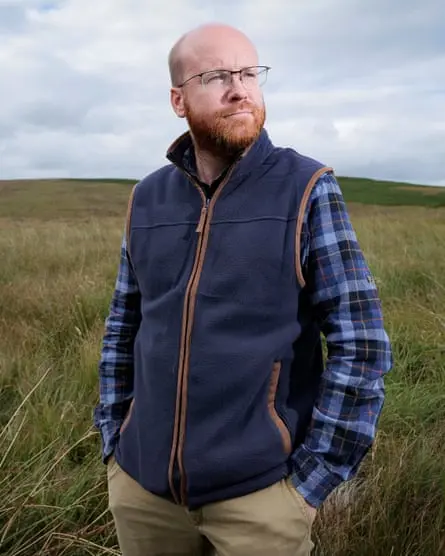
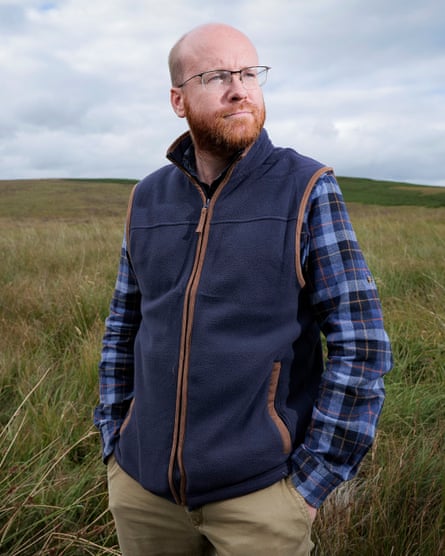
The philosophical underpinning of Emblehope Moor’s restoration is rooted in a desire to dismantle traditional, extractive models of land ownership in the British uplands. Benedict Macdonald, an environmental writer and the founder and director of Restore, has been vocal about the unique economic architecture of the project.
"We want to prove that the bank is paid back, investors get their two-times return, but we don’t need to become the next forever laird," Macdonald stated. "We’re keen to leave a well-funded community project for the future. It’s not an aggressive land-holding model; it’s both a capitalist and community model, and I want it to become the national model for the uplands—we’ve got to take the greed out of it for it to work."
This hybrid philosophy extends to the estate’s human workforce. In a move that surprised many observers accustomed to ideological clashes between traditional estate workers and modern rewilders, Restore has opted to retain Emblehope’s existing farmer and gamekeeper.
"What surprises me is how surprised people are that we’ve retained staff who know so much about the land," Macdonald noted. "The farmer is a real student of the history of grazing here and he’s very open-minded. The gamekeeper has been looking after some of Britain’s highest densities of birds of prey. These guys work 18-hour days; they live and breathe the area."
While promotional media campaigns for modern rewilding projects often tease audiences with the charismatic prospect of apex predators like the Eurasian lynx, Restore has adopted a pragmatic, cautious stance regarding reintroductions. Although recent public polling indicates that 72% of local residents in northern England and the Scottish Borders support bringing back the lynx to help control surging wild deer populations, strong opposition remains among regional sheep farmers.
"We have no funded plans for lynx, and we have no wish to be in the reintroduction party," Macdonald conceded, while acknowledging that economic projections—such as a forthcoming study quantifying the regional tourism boost—present a compelling financial case. With regulatory hurdles having stalled previous lynx proposals in England via Natural England, and ongoing consultations being managed by initiatives like the Wildlife Trusts-backed Missing Lynx Project, Emblehope itself is not currently designated as a primary habitat for the forest-dwelling predator.
Future Outlook & Economic Sustainability
The long-term viability of Emblehope Moor relies on a sophisticated financial framework designed to decouple nature conservation from perpetual reliance on philanthropic donations or state subsidies. Restore’s income streams are diversified across traditional, educational, and avant-garde natural capital markets.
- Conventional & Diversified Income: The project will initially generate revenue through timber harvesting (via the systematic removal of sitka spruce), sustainable livestock production utilizing cattle and sheep, and eventual income generated from educational programs and carefully managed, low-impact eco-tourism.
- Government Environmental Schemes: The estate will draw upon post-Brexit Environmental Land Management (ELM) payments designed to reward landowners for public goods, such as carbon sequestration and flood mitigation.
- Natural Capital Markets: The cornerstone of the financial model rests on emerging corporate natural capital frameworks. This includes selling certified carbon credits generated by the restoration of blanket bog, alongside innovative "30×30 Restore units."
Under this latter mechanism, major corporations purchase standardized 30-metre by 30-metre blocks of habitat restoration. Rather than paying purely for abstract biodiversity metrics, corporate sponsors fund tangible, on-the-ground conservation actions that naturally result in ecological abundance.
Drawing a parallel to traditional corporate sponsorship, Macdonald summarized the vision: "It’s perfectly natural for large corporates to sponsor big sporting events across the world. In nature, in England, this is a big event."
As Emblehope Moor embarks on its 20-year journey, its ultimate destination is perhaps its most revolutionary feature. Once the commercial loans from Triodos Bank are fully retired and investors achieve their targeted returns, the deeds to this 7,500-acre wilderness will be handed over entirely to local community ownership or a dedicated charitable trust. By fusing rigorous commercial capitalization with a guaranteed exit strategy into public hands, Emblehope may well establish the definitive template for how England heals its fractured landscapes in the 21st century.



