

Executive Overview
California’s relentless pursuit of clean transportation has reached a historic inflection point. Data released for the third quarter of 2025 reveals that residents across the Golden State purchased an unprecedented 124,755 zero-emission vehicles (ZEVs), capturing a landmark 29.1% of the state’s total new car market. This means nearly one out of every three new vehicles sold in the fourth-largest economy on the planet is now powered by electricity or hydrogen rather than internal combustion.
This milestone arrives amidst a deeply polarized national landscape. While federal policies face shifting tides and criticisms from state leaders regarding support for domestic green innovation, California continues to accelerate its regulatory and infrastructural push toward complete electrification. Driven by aggressive state mandates, rapidly expanding charging networks, and an increasingly diverse array of available models, the state is not merely meeting its climate goals—it is consistently outperforming its own historic benchmarks.
The implications of this Q3 surge extend far beyond local environmental metrics. As the largest automotive market in the United States, California’s transition serves as both a bellwether for the broader North American auto industry and a vital testing ground for mass-market EV adoption. With consumer acceptance rising, charging infrastructure maturing, and legacy automakers racing to diversify their lineups, the data suggests that zero-emission vehicles are rapidly transitioning from an alternative niche to the undisputed mainstream of American driving.
Detailed Chronology of California’s ZEV Surge
To understand the magnitude of California’s Q3 2025 achievement, it is necessary to examine the rapid acceleration trajectory that preceded it. The state’s journey toward a 29.1% ZEV market share is the culmination of years of targeted policy implementation, infrastructure investments, and shifting consumer preferences.
The Foundation: Early Adoption and Regulatory Push
For decades, California has utilized its unique waiver under the federal Clean Air Act to set stricter vehicle emissions standards than the rest of the nation. Through agencies like the California Air Resources Board (CARB), the state mandated rising quotas of ZEV sales for major automakers. These policies forced manufacturers to prioritize the development and deployment of electric vehicles, laying the groundwork for a robust retail market.
However, regulatory mandates alone do not compel consumers to buy. The true acceleration began when vehicle technology matured—yielding longer driving ranges, faster charging speeds, and comparable performance to traditional gas-powered cars—and when public charging infrastructure began to catch up with demand.
The Model Year Expansion: 2024 to 2025
A critical bottleneck for EV adoption has historically been consumer choice. Buyers accustomed to dozens of distinct crossover, SUV, and sedan options within the internal combustion engine (ICE) market found themselves constrained by a limited selection of electric alternatives.
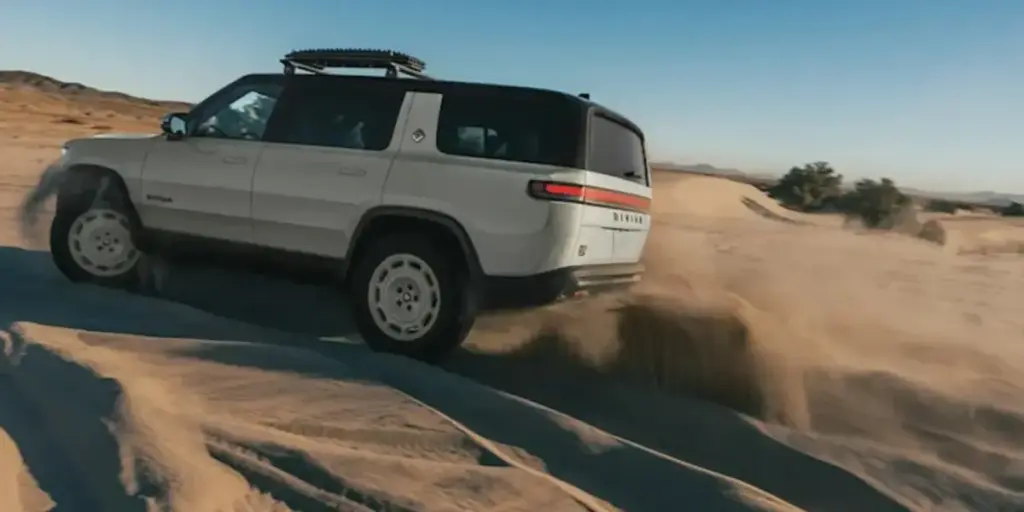
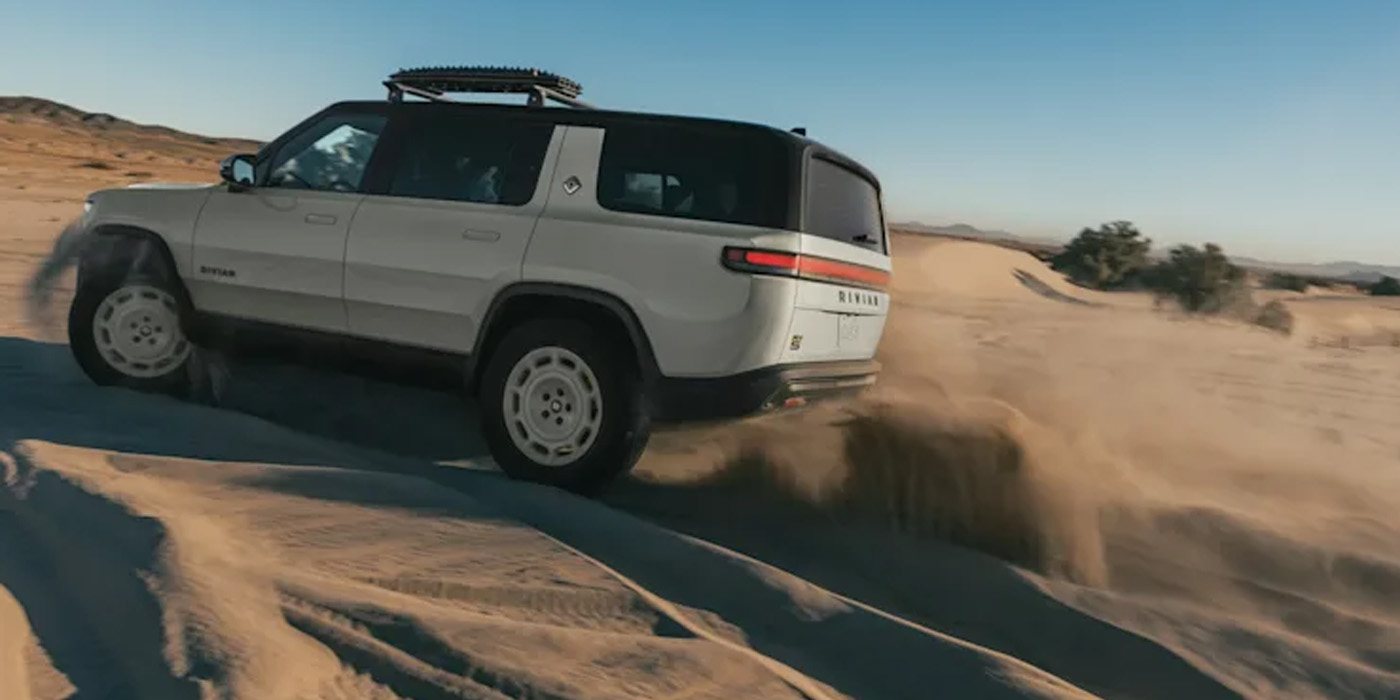
This landscape shifted dramatically over the past year. In the first quarter of 2024, the California market offered 105 distinct ZEV models across various vehicle classes. By the first quarter of 2025, that figure had expanded to 146 models—a massive surge in consumer choice that brought electric variants to nearly every automotive segment, from compact commuters to rugged adventure SUVs like the Rivian R1S.
This diversification directly fueled retail numbers. Of the 124,755 ZEVs sold during the third quarter of 2025, a staggering 108,685 units were fully battery-electric vehicles (BEVs). This specific sub-segment experienced a remarkable growth trajectory, jumping nearly 30% compared to Q2 2025 sales volumes, indicating that consumer preference is hardening around purely electric powertrains rather than transitional hybrids.
Supporting Context & Metrics: Infrastructure and Market Dynamics
A high market share cannot be sustained without robust supporting infrastructure. Range anxiety—the fear of running out of battery power far from a charging station—has long been cited as the primary psychological barrier for prospective EV buyers. California’s strategy has centered on dismantling this barrier through aggressive public and private investments in charging architecture.
The Infrastructure Milestone: Chargers Outnumbering Gas Nozzles
A pivotal recent development underscores this infrastructural shift: data indicates that California now boasts 68% more electric vehicle charger ports than traditional gasoline dispensing nozzles. This tipping point represents a fundamental transformation in how the state fuels its transportation sector.
State initiatives, bolstered by funding from the California Energy Commission (CEC), have prioritized equitable charger deployment across urban centers, rural highways, and multi-unit dwellings. According to recent state assessments, nearly every resident in California now lives within a 10-minute drive of a high-speed DC fast charger. This dense network has fundamentally altered the daily ownership experience, replacing the routine of visiting a gas station with convenient destination and home charging solutions.

The Economics of Electrification
Beyond environmental benefits, the financial calculus for California drivers has shifted heavily in favor of ZEVs. High and volatile gasoline prices in the state have traditionally burdened working families and commuters. By transitioning to electricity—which remains more cost-stable and can often be replenished overnight at home using standard or Level 2 residential chargers—drivers are realizing substantial operational savings.
Furthermore, the lifecycle maintenance costs of electric vehicles are drastically lower than those of combustion vehicles. Without internal combustion engines, ZEVs eliminate the need for regular oil changes, transmission servicing, spark plug replacements, and exhaust system repairs. As more Californians experience these operational cost reductions firsthand, word-of-mouth advocacy has emerged as a powerful catalyst for secondary market adoption.
Official Statements and Political Reactions
The Q3 2025 milestone drew immediate reactions from state leadership, highlighting the profound political and philosophical divide between California’s clean-energy agenda and federal policy shifts.
Governor Gavin Newsom’s Address
California Governor Gavin Newsom seized upon the data to reaffirm the state’s uncompromising commitment to environmental leadership. In a public statement addressing the Q3 figures, Newsom positioned California as a global beacon for sustainable innovation:
"We’re nearing a third of all new vehicles sold in the fourth-largest economy on the planet being clean cars. While the federal government under Trump sells out American innovation to China, California will keep charging ahead on our path to a future of cleaner air."
Newsom’s remarks underscore a broader geopolitical narrative: state leaders view the transition to zero-emission vehicles not merely as an environmental imperative, but as a critical economic race for global technological supremacy. By anchoring early demand and fostering a domestic ecosystem of manufacturing, software development, and charging infrastructure, California aims to secure its position as a primary hub for twenty-first-century automotive engineering.

California Energy Commission Insights
Adding technical depth to the administration’s celebration, California Energy Commissioner Nancy Skinner emphasized the tangible, day-to-day improvements experienced by everyday motorists. Skinner pointed directly to the state’s expansive infrastructure buildout as the engine driving consumer confidence:
"Thanks to new investments, nearly every Californian now lives within 10 minutes of an EV fast charger. Now, new EV owners can enjoy a great driving experience, bidding goodbye to smelly gas stations, messy oil changes, and costly engine tune-ups."
Skinner’s focus on the consumer experience highlights a crucial marketing pivot: the mainstream adoption of electric vehicles is no longer driven solely by climate consciousness, but by the superior comfort, performance, and convenience of the vehicles themselves.
Future Outlook: The Road to 2035 and Beyond
As California closes out 2025 with a 29.1% quarterly ZEV market share, attention naturally turns to the horizon. The state’s landmark Advanced Clean Cars II rule mandates that 100% of new car sales in California must be zero-emission vehicles by 2035. Achieving a nearly 30% market share a full decade ahead of that final deadline proves that the transition is not only feasible, but occurring at an exponential rather than linear rate.
Anticipated Challenges
Despite the celebratory tone of the Q3 data, significant hurdles remain on the path to full electrification:
- Grid Capacity and Resilience: As millions of additional vehicles plug into the grid, utilities must continue to invest heavily in transmission upgrades, renewable energy integration, and smart-charging infrastructure to prevent grid strain during peak hours.
- Equitable Access: Ensuring that lower-income residents and multi-unit renters have reliable, affordable access to charging remains a critical policy objective. Programs offering targeted rebates, used-EV incentives, and community charging installations will be vital.
- Supply Chain Pressures: The global sourcing of critical minerals—such as lithium, cobalt, and nickel—continues to present geopolitical and economic challenges for automakers striving to scale production while keeping vehicle price points accessible.
Conclusion
California’s Q3 2025 ZEV adoption record is more than just a statistical triumph; it is a preview of the automotive future. By combining regulatory ambition with aggressive infrastructure spending and a flourishing market of diverse vehicle models, the state has proven that mass electrification is achievable on a compressed timeline. As the rest of the nation and world observe California’s progress, the message from the Golden State is unequivocal: the era of zero-emission transportation has arrived, and it is accelerating faster than anticipated.



