

Executive Overview
In what marks one of the most dramatic strategic pivots in modern automotive history, Volkswagen’s supervisory board has unanimously approved its sweeping Future Plan 2030. Faced with relentless margin compression, shifting global EV adoption curves, and an existential threat from agile, software-forward Chinese competitors, the automotive giant is preparing for a radical contraction.
The scope of the restructuring is staggering. Volkswagen is weighing the cessation of vehicle production at four major German plants—Emden, Zwickau, Hanover, and Audi’s Neckarsulm facility—as their current vehicle allocations expire between 2031 and 2034. Concurrently, the automaker plans to slash an additional 50,000 jobs worldwide, building upon an existing 50,000-position reduction target across Volkswagen, Audi, Porsche, and its beleaguered software division, Cariad. This brings the cumulative planned workforce reduction to a jaw-dropping 100,000 employees, or roughly 15% of its global 650,000-person headcount.
Beyond personnel and brick-and-mortar retrenchment, Future Plan 2030 mandates a ruthless pruning of complexity. VW intends to cut its global model lineup by 50% by 2035 and slash equipment options and variants by 75%. Streamlining platforms, shrinking non-core business portfolios by a third, and realigning capital expenditures toward essential electrification and software architecture are the cornerstones of this survival strategy. With a targeted capital allocation of €135 billion ($157 billion) between 2027 and 2031, Volkswagen is betting its future on operational discipline, targeting annual sales of 9 million vehicles and a robust 9% operating margin by the decade’s close.
Detailed Chronology: The Road to Radical Restructuring
The genesis of Volkswagen’s current crisis did not happen overnight; rather, it represents the collision of legacy European manufacturing overhead with the hyper-efficient, digital-first velocity of the Asian EV market.
The Pressure Cooker of Global Competition
For decades, Volkswagen operated as a titan of scale, dominating European roads and expanding aggressively into the Americas and China. However, the rapid acceleration of the New Energy Vehicle (NEV) market in China caught legacy Western automakers flat-footed. Domestic Chinese brands—backed by vertically integrated supply chains, advanced software ecosystems, and lower labor costs—began undercutting traditional European pricing while delivering superior in-car infotainment and driver-assistance capabilities.
Compounding these external market pressures were internal missteps. Volkswagen’s proprietary software arm, Cariad, plagued by repeated delays and architectural overhauls, hindered the rollout of crucial next-generation EV platforms. This software bottleneck delayed vital product launches, forcing executives to recognize that the company’s traditional operating model was no longer financially viable in a transitioning global market.
Unanimous Approval of Future Plan 2030
The pressure finally culminated on a Thursday when Volkswagen’s supervisory board convened to review the existential diagnostic data. Recognizing that incremental cost-cutting measures would no longer suffice, the board unanimously approved Future Plan 2030.
Unlike previous strategic shifts that sought growth through volume expansion and endless model proliferation, this plan embraces contraction as a prerequisite for survival. By systematically dismantling excess capacity, streamlining management hierarchies, and drastically reducing structural complexity, the board signaled an institutional awakening: Volkswagen must become smaller to remain strong.
Supporting Context & Metrics: Anatomy of the Overhaul
To understand the sheer magnitude of Volkswagen’s realignment, one must examine the hard metrics driving the board’s decisions. The modern automotive landscape demands capital efficiency, software agility, and streamlined manufacturing footprints—areas where Volkswagen has historically lagged behind newer market entrants.
The Four German Plants in the Firing Line
The most emotionally and politically charged aspect of Future Plan 2030 is the uncertain future of four critical German manufacturing hubs. Volkswagen has explicitly stated that it cannot currently secure "competitive future production" for these sites once their current vehicle allocations conclude between 2031 and 2034:

- Zwickau: Historically significant as Volkswagen’s first large-scale facility to convert entirely from internal combustion engine (ICE) production to a pure electric vehicle manufacturing plant.
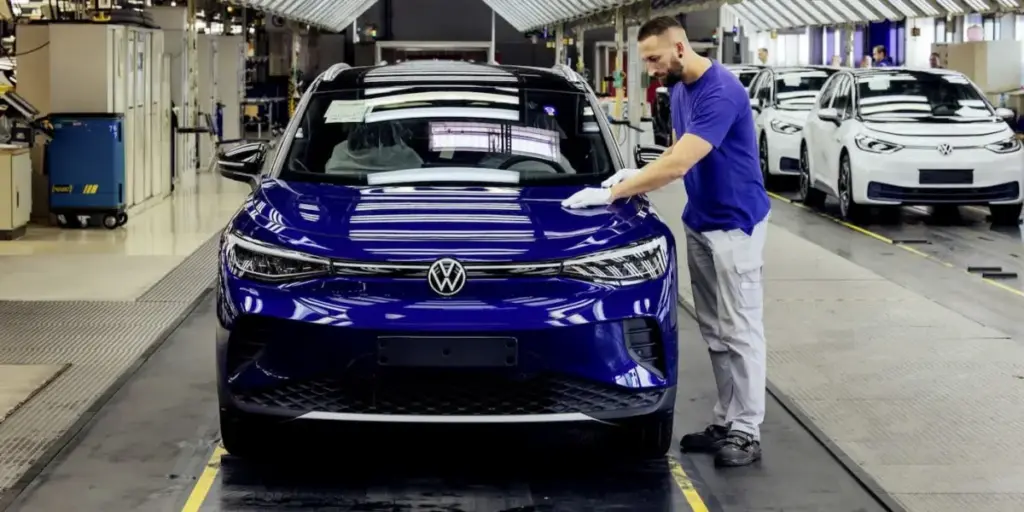
- Emden: A crucial pillar of the brand’s current EV strategy, responsible for rolling out the ID.4 crossover and the ID.7 sedan.
- Hanover: The spiritual and modern home of the iconic ID. Buzz and ID. Buzz Cargo, bridging nostalgic heritage with electric utility.
- Neckarsulm (Audi): A high-performance stronghold tasked with building the Audi e-tron GT alongside traditional combustion and plug-in hybrid models.
Volkswagen’s European factories currently possess an estimated excess capacity of over 500,000 vehicles annually beyond actual consumer demand. While the company has stopped short of issuing immediate, unilateral closure notices—pledging instead to explore alternative industrial uses for these facilities—the threat to vehicle assembly lines at all four plants remains real. A comprehensive production strategy for the broader European footprint is slated for delivery by the end of June 2027.
Workforce Reductions: A 15% Headcount Shrinkage
With a global workforce numbering approximately 650,000, Volkswagen’s personnel architecture has long been criticized as bloated and bureaucratic. The newly announced 50,000 job cuts—affecting management and administrative tiers alike—come on top of an already painful restructuring initiative targeting 50,000 positions across Volkswagen, Audi, Porsche, and Cariad.
Combined, these reductions will strip roughly 100,000 jobs from the corporate ecosystem, amounting to a staggering 15% reduction in total global headcount. While the exact geographic distribution and timeline for the latest wave of cuts remain unconfirmed, management has made it clear that corporate streamlining is non-negotiable.
Halving the Model Lineup and Taming Complexity
For years, the Volkswagen Group (encompassing VW, Audi, Porsche, Skoda, SEAT, and Lamborghini) offered an encyclopedic array of models, trims, and bespoke option packages. While this tailored approach delighted traditional car buyers, it introduced nightmarish complexity into factory logistics, software integration, and supply chain management.
Future Plan 2030 mandates a radical simplification:

- Model Reduction: The global model portfolio will be cut by approximately 50% by 2035.
- Variant Trimming: Equipment choices, optional extras, and powertrain variants will be slashed by roughly 75%.
- Platform Standardization: Vehicle platforms, electronic architectures, electrical systems, and advanced driver-assistance systems (ADAS) will be unified and simplified.
- Portfolio Rationalization: Non-core business operations and fringe investments will be shrunk by roughly one-third through strategic sales or corporate reorganizations.
To fund this monumental transition, Volkswagen has earmarked €135 billion ($157 billion) in capital investments and R&D expenditures between 2027 and 2031. The ultimate financial target is clear: achieve annual sales of 9 million vehicles paired with a resilient 9% operating margin by 2030, translating to an operating profit of approximately €31 billion ($36 billion).
Official Statements and Stakeholder Reactions
Transformations of this magnitude invariably ignite fierce friction between corporate leadership, financial markets, and labor unions. In Germany, where worker representation holds immense statutory power via works councils and supervisory board seats, navigating such radical restructuring requires delicate diplomacy.
Labor Leadership Speaks Out
Daniela Cavallo, Volkswagen’s chief employee representative and a formidable voice for the workforce, initially put up fierce resistance against rumored factory closures. However, recognizing the existential realities facing the automotive sector, Cavallo ultimately backed Future Plan 2030—though not without establishing strict protective boundaries.
"The Future Plan is a necessity to lead our Group successfully into the next decade—without placing the burden of that transformation solely on employees," Cavallo stated following the board’s approval. "In doing so, Volkswagen once again affirms that job security and economic viability carry equal weight as shared corporate goals."
Cavallo’s endorsement is conditional. Labor representatives have made it clear that while they accept the economic imperatives driving the restructuring, the human cost must be mitigated through early retirement programs, retraining initiatives, and structural safeguards that prevent rank-and-file workers from bearing the brunt of past management miscalculations.

Future Outlook: Can the Giant Pivot in Time?
As Volkswagen embarks on this high-stakes metamorphosis, the automotive industry watches with bated breath. The challenges ahead are formidable. Transitioning away from legacy manufacturing mindsets while simultaneously defending market share against predatory pricing from Chinese competitors and technological dominance from Tesla requires surgical execution.
The timeline leading up to the June 2027 European production strategy reveal will serve as a critical litmus test. If Volkswagen can successfully streamline its platform architectures, eliminate structural redundancies, and protect its core brand equity without triggering catastrophic labor unrest, it may well emerge as a leaner, meaner, and more profitable powerhouse equipped for the 2030s.
Conversely, mismanaging the transition of iconic facilities like Zwickau and Emden risks alienating the very consumer base that built the brand’s electric vehicle momentum. For Volkswagen, Future Plan 2030 is not merely an exercise in financial accounting; it is a high-wire act determining whether a 20th-century automotive leviathan can successfully reinvent itself for a digital, highly competitive 21st-century world.



