

Executive Overview
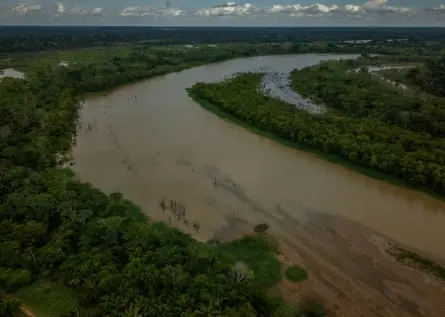
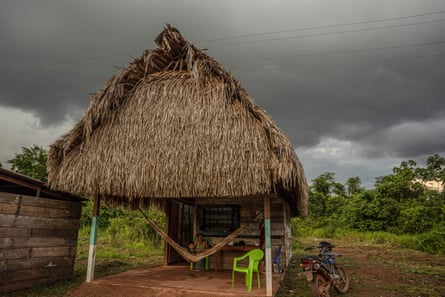
In the rustic village plazas of Pando, a remote northern Amazonian region of Bolivia, the conversational landscape has undergone a radical transformation. No longer is local discourse strictly tethered to the rhythms of the harvest, the unpredictable behavior of local waterways, or the seasonal bounty of the forest. Today, the most pressing, anxiety-ridden topic of conversation is the "invisible air" being traded by foreign entities, corporate brokers, and domestic policymakers who frequently visit these isolated Indigenous communities.
For generations, the Indigenous nations inhabiting Bolivia’s pristine northern rainforests—specifically the Tacana, Ese Ejja, and Cavineño peoples—have viewed their environment not as a financial asset or a ledger entry, but as a living pharmacy, a guarantor of absolute food security, and a sacred ancestral relative. However, a seismic shift in Bolivia’s legal and political architecture has brought the global carbon market directly to their doorsteps.
Following a pivotal June 2024 ruling by Bolivia’s constitutional court that struck down a longstanding ban on carbon market financing mechanisms, the country has pivoted away from its status as Latin America’s staunchest opponent of nature commodification. Spearheaded by a pro-business legislative agenda under the center-right government of President Rodrigo Paz Pereira, Bolivia is now projecting itself as a premier global frontier for carbon offsets, aiming to monetize billions of dollars worth of forest canopy in the coming years.
Yet, this sudden rush toward green capitalism has generated deep friction on the ground. In territories like the Multi-ethnic Indigenous Territory II (TIM II)—a massive 440,000-hectare (approximately one million-acre) collective land title shared by the Cavineño, Tacana, and Ese Ejja—community leaders argue they were rushed, manipulated, or deliberately misinformed into signing multi-decade carbon contracts. Adding to the controversy are striking conflicts of interest, including the prominent role of a freshman lawmaker whose own family foundation secured massive administrative control over local carbon credits just as he helped draft the very legislation designed to regulate them. As international actors, European donors, and corporate foundations converge on the Bolivian Amazon, local communities are bracing themselves for what they fear will be the most insidious extraction yet: the privatization of their very atmosphere.

Detailed Chronology: From ‘Rights of Mother Earth’ to the Carbon Rush
To understand the profound disruption currently rippling through the Bolivian Amazon, one must trace the legal and historical trajectory that brought the country from staunch anti-capitalist environmentalism to aggressive market integration.
1. The Era of Earth Jurisprudence (2010–2023)
For over a decade, Bolivia stood out globally as a unique ideological fortress against carbon offsets and environmental financialization. In 2010, the Plurinational Legislative Assembly passed the groundbreaking Ley de Derechos de la Madre Tierra (Law of the Rights of Mother Earth). This legislation granted nature legal personhood, effectively banning the "commodification of nature" and positioning Bolivia as a global leader in Indigenous-led, anti-neoliberal climate policy. Backed by an ILO Convention 169 framework that legally mandates prior consultation and consent from Indigenous populations regarding any development on their ancestral lands, the state fiercely resisted international carbon offset schemes, denouncing them as greenwashing tools for the Global North.
2. The Groundwork of the Hecker Contracts (Early 2024)
Despite the formal national prohibitions, the administrative walls were already beginning to crack behind the scenes. Months before the country’s high court officially dismantled the legislative ban in mid-2024, disputed private contracts were quietly negotiated in the remote northern corridors of Pando.
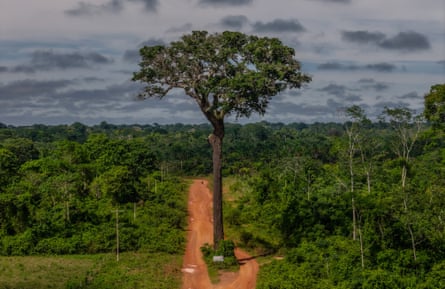
On March 12, 2024, a small contingent of Indigenous leaders in TIM II executed a sweeping 30-year agreement with the Federico Hecker Foundation. This contract handed the foundation sweeping administrative and commercial authority over carbon credits, independent audits, and sales across nearly half a million hectares of pristine tropical rainforest. Lucio Ayala, president of TIM II, later admitted the fundamental lack of transparency surrounding the deal: "We heard about this [carbon] business and nobody understood what it was. Even today, I don’t think people understand. We’re still in doubt."
3. The Judicial Pivot (June 2024)
The legal floodgates officially opened in June 2024, when Bolivia’s constitutional court struck down the statutory barriers against carbon market funding mechanisms (specifically through ruling Sentencia Constitucional Plurinacional 0040-2024). This judicial intervention cleared the path for private brokers, international nongovernmental organizations (NGOs), and domestic foundations to aggressively pursue bilateral agreements with vulnerable forest communities.
4. Expansion, Resistance, and Rejection (Late 2024–2025)
Following the initial signing of the TIM II agreement, neighboring groups were systematically approached. In September 2024, representatives of the Ese Ejja nation signed on, while Tacana leaders notably refused, recognizing the historical implications of the foundation’s lineage.
By March 2025, the mounting grass-roots backlash boiled over. The board of TIM II and the Ese Ejja nation formally rescinded the agreement, issuing an explosive public declaration stating that their representatives had been "surprised, pressured, and manipulated" into validating a legal instrument that "should never have existed."
This resistance crystallized nationally in October 2025 at the National Forum on Land, Territory and Environment in Santa Cruz de la Sierra. Indigenous coalitions from every corner of Bolivia issued a joint 27-point manifesto declaring: "We reject carbon bonds for promoting the commodification of nature and undermining territorial sovereignty and Indigenous rights."
Supporting Context & Metrics: History, Power, and Modern Discontent
The Specter of the Barraquera Past
The deep-seated mistrust harbored by local communities toward corporate foundations is not born of abstract ideological opposition; it is deeply rooted in the traumatic historical legacy of the Amazonian barraquera (rubber estate) economy.
The Federico Hecker Foundation derives its name from a Swiss immigrant family whose patriarch, Federico Hecker, arrived in the northern Bolivian Amazon during the late 19th-century rubber boom, rapidly ascending within the regional extractive oligarchy. His descendants subsequently entrenched themselves in local political and commercial networks as Brazil nut traders and regional powerbrokers.
For many Indigenous families belonging to the Tacana and Cavineño nations, the Hecker name is synonymous with pongueaje—a brutal system of debt peonage and quasi-feudal forced labor that dominated northern Bolivia until the agrarian reforms of 1953. Although these forms of bonded labor were formally outlawed decades ago, Indigenous communities only secured secure, collective legal title to TIM II in 2001 after protracted struggles. Consequently, many community elders view the modern carbon contracts as an insidious attempt by historical elite families to regain legal hegemony and economic control over ancestral lands.
Regulatory Vacuum and Executive Centralization
The legislative and administrative framework governing Bolivia’s new carbon economy has done little to alleviate these fears. In October 2024, the administration enacted Supreme Decree 5264, which establishes the national guidelines for climate finance management. However, legal analysts and Indigenous rights advocates have heavily criticized the decree for centralizing bureaucratic control within the executive branch while completely excluding Indigenous governing structures from its core framework. The decree sets no binding mandates regarding prior consultation, carbon ownership rights, or equitable benefit-sharing on collectively titled Indigenous lands.
The Legislative Conflict of Interest
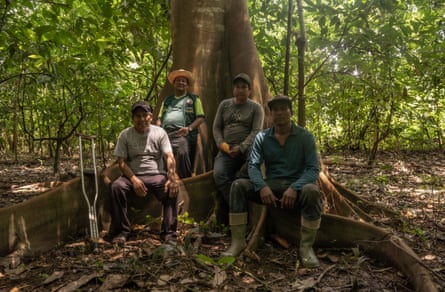
The controversy deepened significantly following the 2025 national elections, which brought the center-right administration of President Rodrigo Paz Pereira to power alongside a newly constituted parliament. Among the newly elected national deputies is Aimé Hecker Urresti, chairman of the Federico Hecker Foundation.
Records indicate that Hecker Urresti played a central role in the political maneuvering that opened Bolivia to carbon markets. Furthermore, he emerged as one of the principal co-sponsors of a newly drafted congressional bill aimed at establishing a permanent regulatory framework for the very carbon market in which his own family foundation holds a direct commercial stake.
Miguel Vargas, a prominent Indigenous rights attorney and former director of the Centre for Legal and Social Studies (CEJIS), condemned the arrangement: "It cannot be that a lawmaker is now promoting a law that will regulate an initiative in which his own family is involved."
Official Statements and Institutional Positions
The multi-sided nature of the dispute has generated distinct, highly contradictory narratives from the various stakeholders involved:
- The Federico Hecker Foundation: The foundation has "categorically" denied accusations of offering monetary bribes, personal kickbacks, or fraudulent promises to secure community signatures. In an official statement, the organization asserted that it put forward "from the outset a comprehensive proposal for conservation and community development" intended to transcend the mere generation of carbon offsets. The foundation maintained that food security, housing improvements, and basic infrastructure upgrades were integrated components of a "multidimensional development proposal" aligned with the United Nations Sustainable Development Goals (SDGs). Regarding historical grievances, the foundation acknowledged that the regional barraquera economy involved asymmetrical labor relations throughout the 20th century, but argued that "this context does not lend credence to allegations against the Hecker family regarding members of TIM II."
- Aimé Hecker Urresti (Lawmaker and Foundation Chairman): Defending both his legislative work and the foundation’s agreements, Hecker Urresti stated that all participating communities were thoroughly briefed on contract stipulations and that the foundation explicitly respects their legal right to annul agreements. Regarding the draft regulatory bill, he insisted that the legislation "is not intended to establish privileges but to define general, transparent, verifiable rules that apply equally to all participants in the carbon-credit market," adding that extensive consultations were conducted with sub-national governments, civil society groups, and technical specialists.
- Indigenous Leadership (Lucio Ayala & Regional Councils): Community leaders remain deeply skeptical and alarmed by the speed of federal legislation. Lucio Ayala pointed out the profound information asymmetry between rural inhabitants and urban policymakers: "Now the worry is with the current government. I’ve just heard about it; they’re drafting a law so carbon can be sold. If it passes, what are we supposed to do? We no longer have a voice or a vote."
- International Donors and the European Union: The role of international development funding has also drawn scrutiny. While internal planning documents for a joint €24 million (£21 million) EU-Swedish climate assistance program explicitly note that Bolivia’s policy shift toward carbon markets occurred "with significant support from the EU-Sweden initiative," the European Union delegation in Bolivia has strongly pushed back against direct involvement. The delegation maintains that it "did not influence or participate directly" in the adoption of Supreme Decree 5264, even as the EU continues to channel over €100 million into broader environmental and conservation portfolios across the Andean nation.
Future Outlook: Navigating the ‘Carbon Fever’
As Bolivia navigates a severe macroeconomic crisis coupled with intense ecological degradation—including historically unprecedented droughts, shrinking rivers, and rampant industrial expansion—the central government views the monetization of forest carbon as an essential economic lifeline. Pro-business factions within the administration project that selling billions of dollars in carbon credits over the coming years will stabilize public finances and fund state-led developmental programs.
However, for the human inhabitants of Pando’s remote riverbanks and dense jungle tracks, the arrival of this new financial instrument threatens to disrupt an already delicate ecological and social equilibrium. Having successfully weathered successive historical waves of ruthless resource extraction—the rubber fever of the 19th century, the relentless timber extraction of the 20th, and the destructive gold mining rushes of the modern era—Indigenous communities now face the intangible, highly legalistic pressures of "carbon fever."
With a contested national legislative bill pending, a centralized regulatory framework that largely sidelines customary land titles, and powerful private foundations embedded within the highest tiers of parliamentary power, the battle for Bolivia’s green frontier has only just begun. For the Tacana, Ese Ejja, and Cavineño nations, the core struggle remains unchanged: ensuring that their ancestral home is recognized as a living ecosystem of sacred ancestors and essential subsistence, rather than merely a carbon sink priced for global corporate ledgers.



