


Executive Overview
The global transition toward a decarbonized energy economy is hurtling toward a critical bottleneck. According to the latest Energy Transition Outlook for Lithium published by energy intelligence firm Wood Mackenzie, worldwide lithium demand could skyrocket to a staggering 13.2 million tonnes annually by 2050, provided the international community accelerates its clean energy policies. However, this promising trajectory hides a stark and immediate warning: without an unprecedented infusion of capital and a massive acceleration in mining, extraction, and refining infrastructure, severe global lithium shortages could emerge as early as 2028.
Far from being a distant problem for future generations to solve, the looming "white gold" deficit threatens to upend automakers’ production timelines, stall grid-scale renewable energy storage buildouts, and trigger extreme price volatility across the clean technology sector. While recycling programs and alternative extraction technologies—such as recovering lithium from oilfield wastewater—offer glimmers of hope, they will not arrive quickly enough to avert the mid-decade crunch.
Closing the impending supply gap will require a historic capital expenditure cycle, estimated between $104 billion and $276 billion, depending on how aggressively governments pursue net-zero targets. The central question facing the global energy sector is no longer whether the world will need more lithium, but whether the mining and refining industries can scale fast enough to meet an insatiable demand.
Detailed Chronology and the Path to 2028
To understand the severity of the upcoming supply crunch, it is necessary to examine the rapid evolution of the lithium market over the past decade and map its trajectory toward the critical 2028 threshold.
The Past Decade: From Niche Mineral to Strategic Commodity
For decades, lithium was a relatively specialized industrial mineral used primarily in ceramics, glass, lubricants, and basic consumer electronics. Prior to the electric vehicle (EV) revolution, market fluctuations were mild, and production was dominated by a handful of major operations in South America and Australia.
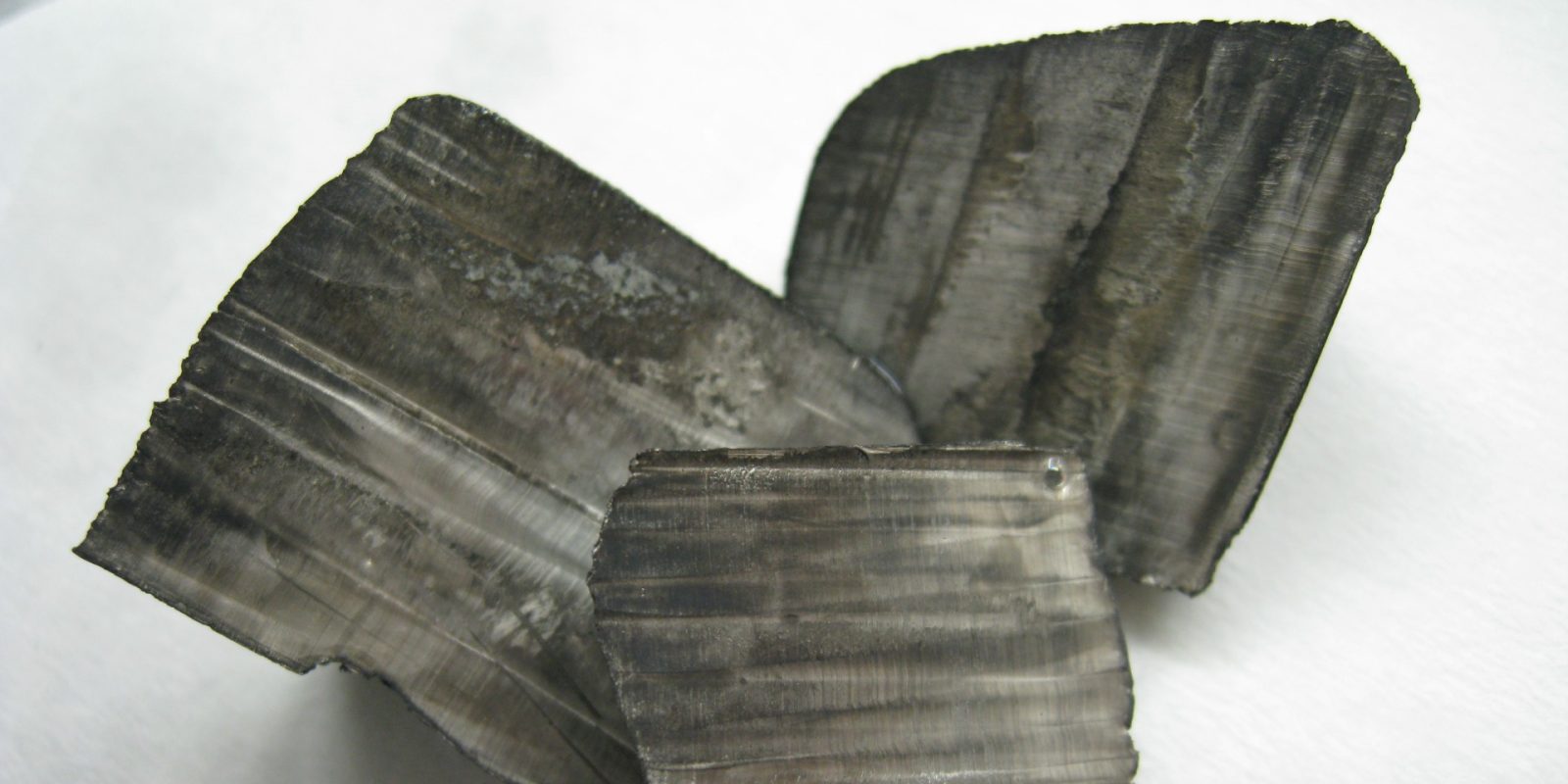
However, the late 2010s marked a structural inflection point. As major economies signaled a shift away from internal combustion engines (ICE) and battery chemistries solidified around lithium-ion technology, demand surged past historical extraction capacities. This triggered wild price swings, peaking during the 2022–2023 commodity boom before undergoing a cyclical correction as short-term supply caught up with current manufacturing volumes.
The 2028 Threshold: Where Momentum Meets the Wall
Wood Mackenzie’s models indicate that this period of relative market equilibrium is temporary. As global climate policies tighten and major automotive markets implement stricter emissions standards, baseline demand will outstrip operational output.
- 2026–2027 (The Interregnum): During this phase, new projects greenlit during the previous price boom will come online, temporarily stabilizing the market. However, the pipeline of advanced-stage projects thins out significantly beyond 2027.
- 2028 (The Deficit Inflection Point): Under ambitious climate scenarios, market deficits are projected to materialize precisely here. Demand curves will definitively cross above the threshold of operational production capacity.
- 2030–2034 (The Peak Investment Window): Industry analysts project that capital deployment must peak during these four years to construct the mega-refineries, hard-rock mines, and direct lithium extraction (DLE) facilities necessary to stave off multi-million-tonne deficits by mid-century.
Supporting Context and Metrics: The Drivers of Demand
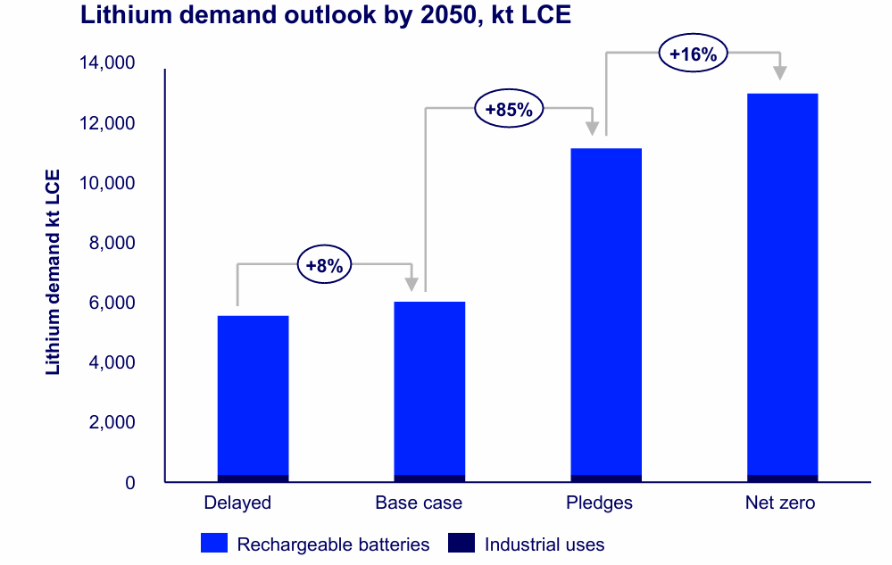
Wood Mackenzie’s comprehensive modeling evaluates four distinct energy transition pathways, revealing a vast divergence in future requirements depending on the speed of global decarbonization. By 2050, total lithium demand ranges from a conservative 5.6 million tonnes of lithium carbonate equivalent (LCE) under a delayed transition scenario, up to a monumental 13.2 million tonnes in a true net-zero emissions scenario.
The Electric Vehicle Juggernaut
The primary engine driving this insatiable demand is the transportation sector. Electric vehicles account for between 72% and 80% of total lithium demand across all projected pathways.
- Country Pledges Scenario: If governments meet their current nationally determined contributions, EV adoption will capture roughly 75% of global vehicle sales by 2040.
- Net Zero Pathway: Under an accelerated climate framework, EV market penetration must climb to an astonishing 95% of all new vehicle sales by 2040.
By mid-century, rechargeable batteries across all applications—spanning mobility, consumer electronics, and industrial uses—will command an overwhelming 96% to 98% of total global lithium consumption.
The Grid Storage Revolution
While passenger and commercial EVs capture the lion’s share of headlines, stationary energy storage systems (ESS) represent a rapidly expanding secondary pillar of demand. As wind and solar generation scale to dominate the global power grid, intermittent renewable energy generation requires massive multi-hour and multi-day storage buffers to balance supply and demand dynamically.
Wood Mackenzie projects that energy storage lithium demand will compound at an annual growth rate of 6% to 7% in forward-looking scenarios. Without steady lithium supplies, utility-scale deployments of grid batteries will face severe procurement bottlenecks, threatening the reliability of transitioning power grids.
The Recycling Horizon: Too Little, Too Late for the 2020s
Industry stakeholders frequently point to battery recycling as the ultimate long-term panacea for raw material shortages. While recycling will undoubtedly transform the circular economy of critical minerals, its impact in the immediate and medium term is severely constrained by the physics and lifespan of existing batteries.
- Growth Trajectory: Recycled lithium supply is projected to grow at an impressive 13% to 16% annually.
- The Timing Lag: Meaningful, high-volume recycling streams will not materialize until the 2040s, when today’s newly manufactured EV batteries finally reach their end-of-life cycle and are decommissioned.
- Mid-Century Volumes: By 2050, recycling is expected to supply between 2.3 million and 2.7 million tonnes of LCE under ambitious transition scenarios.
Despite this impressive growth, the math remains unforgiving. Even with robust recycling programs operating at peak efficiency, massive supply shortfalls persist. Under the Country Pledges scenario, the cumulative supply deficit reaches 6.7 million tonnes of LCE by 2050, widening to a staggering 8.5 million tonnes under the Net Zero pathway.
Official Statements and Industry Insights
The urgency of the situation has prompted leading energy analysts to sound the alarm on traditional industry complacency.

“The lithium market is heading into a supply crunch much sooner than many industry players expect,” stated Allan Pedersen, research director at Wood Mackenzie. “Under ambitious climate scenarios, we see deficits emerging from 2028. The industry needs to act now, as governments progress policies toward Net Zero.”
Pedersen’s remarks underscore a fundamental disconnect in the commodities sector. Mining projects—from initial geological survey and environmental permitting to capital allocation, construction, and commercial commissioning—frequently require a decade or longer to reach full production. Conversely, policy mandates and consumer adoption curves for electric vehicles can shift dramatically within a matter of years, creating a structural temporal mismatch between mineral extraction and clean energy deployment.
To bridge this chasm, innovative extraction methodologies are being rushed to market. Notably, industry pioneers are exploring unconventional reserves, such as extracting lithium directly from oilfield wastewater. This approach—slated to see its first major U.S. commercial deployments—could unlock vast domestic supply chains in regions with pre-existing fossil fuel infrastructure, drastically reducing the environmental footprint and surface land use traditionally associated with evaporation ponds and hard-rock open-pit mines.
Future Outlook: The $276 Billion Buildout
Overcoming the 2028 deficit and provisioning the global economy for a net-zero future is fundamentally an exercise in massive capital mobilization. Wood Mackenzie’s financial modeling estimates that total industry investment needs vary significantly by scenario:
- Delayed Transition Scenario: ~$104 billion
- Base Case Scenario: ~$114 billion
- Country Pledges Scenario: ~$236 billion
- Net Zero Scenario: ~$276 billion
This capital expenditure will not merely fund new mines. It must support a holistic overhaul of the global supply chain, encompassing advanced chemical refining plants, regional processing hubs, direct lithium extraction (DLE) technology deployment, and secondary recycling infrastructure.

The Bottom Line
The global energy transition has reached a decisive crossroads. The debate is no longer centered on whether the world requires more lithium; the empirical data proves that demand is locked in by consumer trends and legislative mandates alike. The defining challenge of the late 2020s and early 2030s will be execution: whether international mining conglomerates, financial institutions, and sovereign governments can collaborate to fund, permit, and construct the required extraction capacity before the 2028 supply crunch fully manifests. Without immediate, aggressive capital deployment, the path to a net-zero future may hit a hard, lithium-paved wall.



