Executive Overview
For decades, the holy grail of the clean energy transition has been zero-carbon fuel that does not carry crippling environmental or energetic baggage. While green hydrogen—produced via the electrolysis of water—shows immense promise as a versatile power source, it has long been hampered by a harsh thermodynamic reality: generating it typically demands more energy than the gas ultimately contains, while also leaving a heavy carbon footprint if powered by fossil fuels.
Enter a revolutionary paradigm shift: geologic hydrogen.
Deep within the Earth’s crust, continuous geochemical and radiological processes are naturally cooking up vast, untapped reservoirs of pure hydrogen gas ($H_2$). If humanity could successfully harness even a fraction of this pristine fuel, it could satisfy global energy demands for centuries, completely rewriting the global energy equation.
What began in the 1990s as a pure academic curiosity—when scientists discovered billion-year-old water sustaining strange, hydrogen-eating microbes miles beneath the Canadian Shield—has now exploded into a high-stakes global treasure hunt. Backed by venture capital heavyweights, pioneering startups, and government-funded research initiatives, prospectors are scouring ancient continental rifts, abandoned mines, and rugged mountain ranges from the US Midwest to Albania and Oman.
Yet, significant hurdles remain. While researchers estimate trillions of tons of natural hydrogen are locked away beneath our feet, no one has yet proven a commercially viable, large-scale reservoir. As scientists race to measure venting gases in active mines and test high-tech stimulation techniques in remote mountain ranges, the ultimate question is no longer whether natural hydrogen exists, but whether we can extract it cleanly, economically, and at scale.
Detailed Chronology: From Subterranean Microbes to a Global Energy Gold Rush
1. The Discovery in the Depths: The 1990s at Kidd Creek
The story of modern geologic hydrogen research begins deep underground in the late 1990s, far from the gleaming laboratories of Silicon Valley or energy trading floors. University of Toronto geochemist Barbara Sherwood Lollar descended more than three kilometers into the Kidd Creek mine, located in the ancient, mineral-rich rock of northern Ontario, Canada.
Cutting deep into the continental root of North America, the mine exposed a hidden underworld. There, Sherwood Lollar and her team made a startling discovery: pockets of water that had been completely isolated and confined underground for more than a billion years.
Far from being sterile, lifeless brine, this ancient water teemed with life. The resident microbes survived in total darkness, feeding entirely on hydrogen gas produced by ongoing chemical reactions between the surrounding iron-rich rock and the trapped water. At the time, the find was celebrated as a milestone in astrobiology and extreme microbial ecology, offering a terrestrial analog for how life might survive on Mars or Europa. Little did the researchers know, they were standing atop an immense, untapped subterranean gas field.
2. Re-evaluating the Data: The Pivot to Clean Energy
Decades after her initial descents into Kidd Creek, Sherwood Lollar returned to the historical data, viewing it through the lens of a rapidly changing global climate. With the clean energy transition demanding immediate, scalable alternatives to fossil fuels, she asked a provocative question: Was the hydrogen bleeding out of the Kidd Creek rock formations merely a biological curiosity, or was it a viable source of zero-carbon fuel?
Teaming up with colleague Oliver Warr, Sherwood Lollar began a meticulous reassessment of gas samples and flow rates collected from 35 boreholes at the mine over more than a decade. Their subsequent findings, published in the journal PNAS, revealed that each borehole consistently released an average of eight kilograms of hydrogen annually.
Extrapolating that figure across the more than 14,000 boreholes honeycombing the Kidd Creek mine yielded a stunning realization: approximately 140 metric tons of pristine hydrogen were passively venting out of the mine and into the atmosphere every year, entirely unused.
While 140 tons is not enough to power a nation, Sherwood Lollar realized it could serve a crucial purpose: providing enough energy to run a substantial portion of the mine’s own daily operations. More importantly, it offered a tangible, real-world proof of concept that natural hydrogen could be captured and put to work.
3. The Global Exploration Boom of the 2020s
Kidd Creek is no longer an isolated anomaly. Bolstered by shifting energy policies and technological advances, a massive wave of global exploration has taken shape. Dozens of startups and exploration firms are scouring the globe for natural hydrogen seeps, known colloquially as "white hydrogen."
Prominent players in this space include Australian firm HyTerra and Koloma, a startup famously backed by Bill Gates’s Breakthrough Energy Ventures. These companies have zeroed in on regions like the US Midwest, systematically probing ancient oceanic rifts and geological fault lines where deep-seated mantle rocks interact with groundwater to produce continuous streams of $H_2$.
Simultaneously, international researchers are uncovering massive seeps in unexpected places. In 2024, a team led by University of Grenoble Alpes geochemist Laurent Truche made headlines when they reported that at least 200 metric tons of pure hydrogen flow annually from the abandoned Bulqizë chromium mine in Albania.
4. Stimulating the Earth: The Oman Borehole Experiment
Recognizing that waiting to stumble upon a natural reservoir is a slow strategy, scientists and engineers are now pushing to accelerate nature. Funded heavily by organizations like the U.S. Advanced Research Projects Agency-Energy (ARPA-E), researchers are experimenting with artificial stimulation techniques—injecting water, heat, or chemical catalysts into reactive, iron-rich peridotite rocks to speed up the natural water-rock reactions that generate $H_2$. The explicit goal of ARPA-E is to accelerate these reactions by a factor of 10,000 to reach commercial viability.
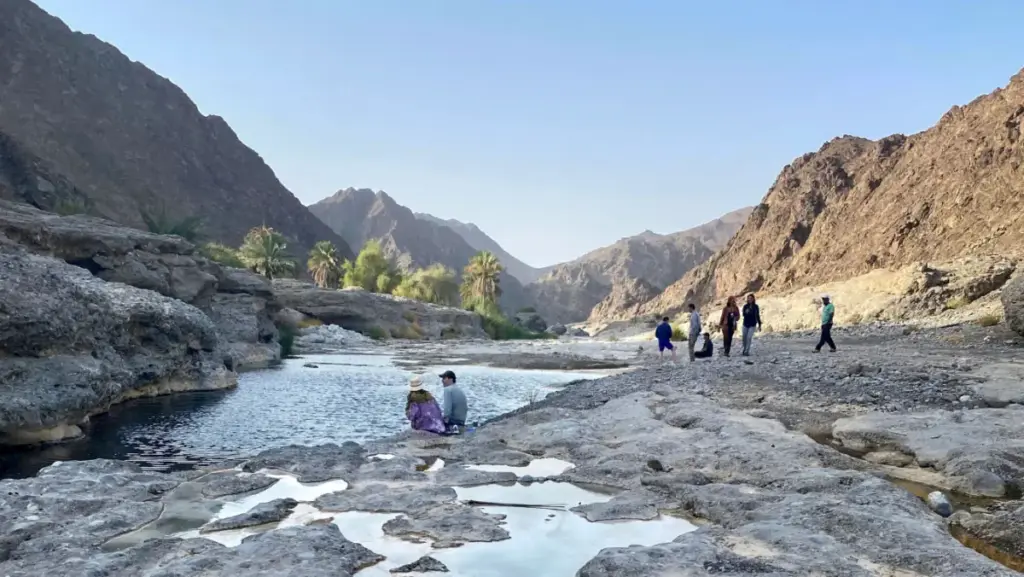
A major milestone for this technique occurred in the mountains of Oman. A research team drilled a one-kilometer-deep borehole into the Earth’s crust and injected 50,000 cubic meters of water. When they unsealed the well several months later, a pressurized column of gas violently spewed out. Laboratory analysis revealed that the escaping gas was an astonishing 90% pure hydrogen.
Supporting Context & Metrics: The Numbers Behind the Gas
To understand why investors and geologists are so captivated by natural hydrogen, one must examine the fundamental science and scale of the resource.
- The Generation Mechanisms: Underground hydrogen is primarily born through two pathways:
- Serpentinization: Water molecules interact with iron-rich, mantle-derived rocks (such as olivine) at high temperatures and pressures, oxidizing the iron and splitting the water molecules to release free $H_2$.
- Radiolysis: In places like the Kidd Creek mine, the radioactive decay of heavy elements like uranium and thorium in the surrounding rock breaks apart ambient water molecules over millions of years.
- Crustal Reserves: According to landmark estimates published by researchers at the U.S. Geological Survey (USGS), Earth’s crust continuously generates trillions of tons of hydrogen.
- The Scale of the Prize: Meeting total current global human demand for hydrogen requires roughly 100 million metric tons annually. If researchers could economically recover even a tiny fraction of the crust’s estimated natural $H_2$ production, it would satisfy global energy markets for centuries.
- The Kidd Creek Metrics:
- Boreholes analyzed: 35 over a 10-year span.
- Average output per borehole: ~8 kilograms of $H_2$ per year.
- Total mine-wide venting estimate: ~140 metric tons annually across 14,000 boreholes.
- The Oman Field Test:
- Borehole depth: 1 kilometer.
- Water injected: 50,000 cubic meters.
- Resulting gas purity: 90% hydrogen.
Official Statements and Expert Perspectives
As the geologic hydrogen sector transitions from academic theory to commercial reality, leading voices in the scientific community are offering both optimism and cautionary realism.
"If we can set some smart minds into figuring out how to hook it up and use it, then we’ve got a win for this nascent economy."
— Dr. Barbara Sherwood Lollar, Geochemist, University of Toronto
Sherwood Lollar emphasizes that while capturing venting gas from a single mine will not single-handedly solve the global climate crisis, localized utilization projects are essential stepping stones. They serve as vital testbeds to demonstrate that natural hydrogen extraction is safe, reliable, and practically deployable.
"The remaining challenge is not proving that natural hydrogen exists, but proving that it can be produced economically and reliably at commercial scale."
— Dr. Laurent Truche, Geochemist, University of Grenoble Alpes, France
Truche highlights the core commercial bottleneck facing the industry. While discoveries like the Bulqizë mine in Albania and Kidd Creek in Canada confirm that subsurface hydrogen migration is a widespread geological reality, turning those seeps into profitable, steady-state commercial assets remains unproven.
"It’s bubbling with gas… though a slew of unknowns remain. The most crucial question is a basic one: Is the hydrogen rising up out of the well made through stimulation, or had it been there all along?"
— Dr. Jo Shannon, Geoscientist, University of Southampton, UK
Speaking at the European Geosciences Union conference, Shannon struck a balanced tone regarding the groundbreaking Oman borehole experiment. While the roaring, hydrogen-rich geyser was an undeniable success, she cautioned that distinguishing between newly stimulated hydrogen production and the release of pre-existing, trapped pocket gas is the paramount scientific puzzle that must be solved before industrial-scale stimulation can be deployed worldwide.
Future Outlook: Navigating the Unknowns of White Hydrogen
The emergence of geologic hydrogen represents one of the most exciting frontiers in modern Earth science and energy economics. Yet, the path from a bubbling borehole in Oman or a venting mine shaft in Ontario to a fully realized global energy commodity is fraught with challenges.
1. Regulatory and Data Transparency Bottlenecks
Currently, public data regarding private exploration efforts remains sparse. As a fierce race for mineral rights and land leases plays out across the American Midwest and international frontiers, startups and energy giants are keeping their exploration data close to the chest to attract investment and outmaneuver competitors. Establishing standardized regulatory frameworks and reporting protocols will be essential for the industry’s maturation.
2. Solving the Extraction Puzzle
Even where massive reservoirs of hydrogen are known to exist, extracting them without leakage is technically demanding. Hydrogen is the smallest molecule in the universe; it notoriously leaks through standard pipeline seals and embrittles conventional steel infrastructure. Transporting and storing white hydrogen will require entirely new materials engineering paradigms.
3. The Promise of Induced Generation
If artificial stimulation—such as the water-injection techniques pioneered in Oman—proves successful and repeatable, it could fundamentally decouple geologic hydrogen exploration from geographical luck. Instead of searching blindly for rare, naturally occurring deposits, energy companies could theoretically "farm" hydrogen by engineering reactions in deep, reactive rock formations anywhere in the world.
Conclusion
We are standing on the precipice of a subterranean energy revolution. What started as the observation of strange, hardy microbes living in billion-year-old Canadian water has catalyzed a worldwide pursuit of white hydrogen. If researchers, startups, and governments can successfully bridge the gap between scientific discovery and commercial-scale engineering, the deep interior of our planet may well provide the clean, inexhaustible fuel supply that defines the next chapter of human civilization.