

Executive Overview
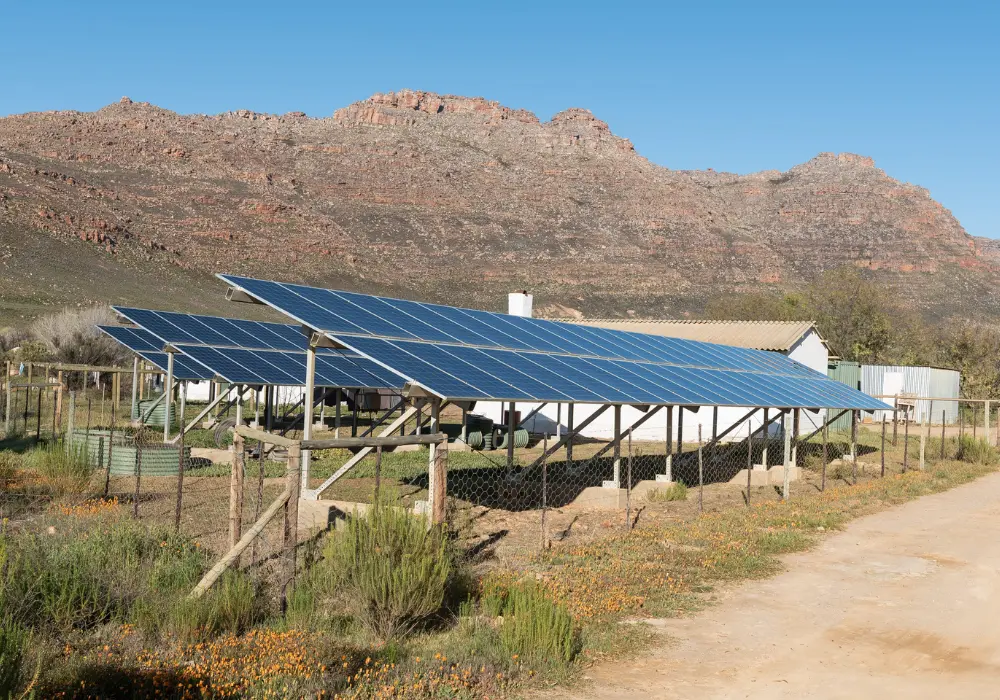
In a remote agricultural village nestled within the Syrian countryside, 24 households pay a mere US$0.20 per month for round-the-clock electricity. This seemingly minor financial transaction represents a micro-miracle of modern infrastructural survival. Powered by solar panels bolted to the community center, the tiny settlement of Khirais has resurrected its agrarian economy, keeping food refrigerated, water pumps running, and children studying after sunset.
However, Khirais is far from an isolated feel-good outlier. It serves as a microscopic lens on a much larger macro-level transformation. Across Syria—and in fragile, conflict-affected settings worldwide—communities are turning to decentralized solar energy not out of environmental idealism, but out of sheer, unadulterated necessity. When public grids collapse, state budgets evaporate, and conventional international energy finance looks the other way, people take matters into their own hands.
Yet, this organic, bottom-up solar revolution carries complex economic and social risks. While off-grid installations have surged from a few hundred megawatts to gigawatt-scale capacities, they have also birthed an unequal energy landscape. Access to reliable, clean power often hinges on whether a household receives foreign remittances or holds US dollars. Without strategic government planning, international intervention, and deliberate structural reforms, the decentralized boom risks solidifying a rigid two-tier energy caste system—leaving those without capital stranded with expensive diesel generators or total darkness.
Detailed Chronology: From Total Collapse to the Off-Grid Boom
The Destruction of a National Grid (Pre-2021)
Before the protracted armed conflict tore through Syria, the nation boasted a reasonably robust centralized power grid with roughly 9.5 gigawatts of installed generation capacity. It was capable of meeting the bulk of industrial, commercial, and residential demand.
Years of unrelenting conflict shattered this infrastructure. By the close of 2023, available state generation capacity had plummeted to approximately 1.6 gigawatts. For millions of citizens, public electricity availability dwindled to less than two hours a day. The human and economic toll was catastrophic: refrigerated food spoiled before it could reach markets, irrigation systems failed, water treatment plants idled, and local producers found themselves completely disconnected from basic electrical equipment.
The Grassroots Rebuilding Phase (2021–2023)
As displaced citizens began returning to their homes to rebuild local communities—such as Khirais in 2021—they faced a paralyzing energy shortage. Traditional state-led grid reconstruction was logistically impossible given the widespread physical destruction, economic sanctions, and fractured governance.
Into this suffocating vacuum stepped regional non-profits, international aid organizations, and enterprising local residents. Recognizing that traditional utility repairs would take decades, communities began bypassing the state entirely. Small-scale, off-grid solar panels and rudimentary battery storage systems started appearing on rooftops and community centers. Studies tracking this period reveal a stark correlation: a 1% increase in local conflict intensity was associated with a staggering 9.71% short-term increase in decentralized renewable energy production as populations scrambled to substitute failing public power.
The Exponential Off-Grid Explosion (2024–2026)
What began as desperate survival mechanisms snowballed into a sweeping national phenomenon. The scale of Syria’s off-grid solar economy remains difficult to quantify with absolute precision because the vast majority of systems are privately financed, decentralized, and unregistered. Nevertheless, industry estimates indicate that nominal capacity skyrocketed from roughly 250 megawatts in 2022 to over two gigawatts by 2025.
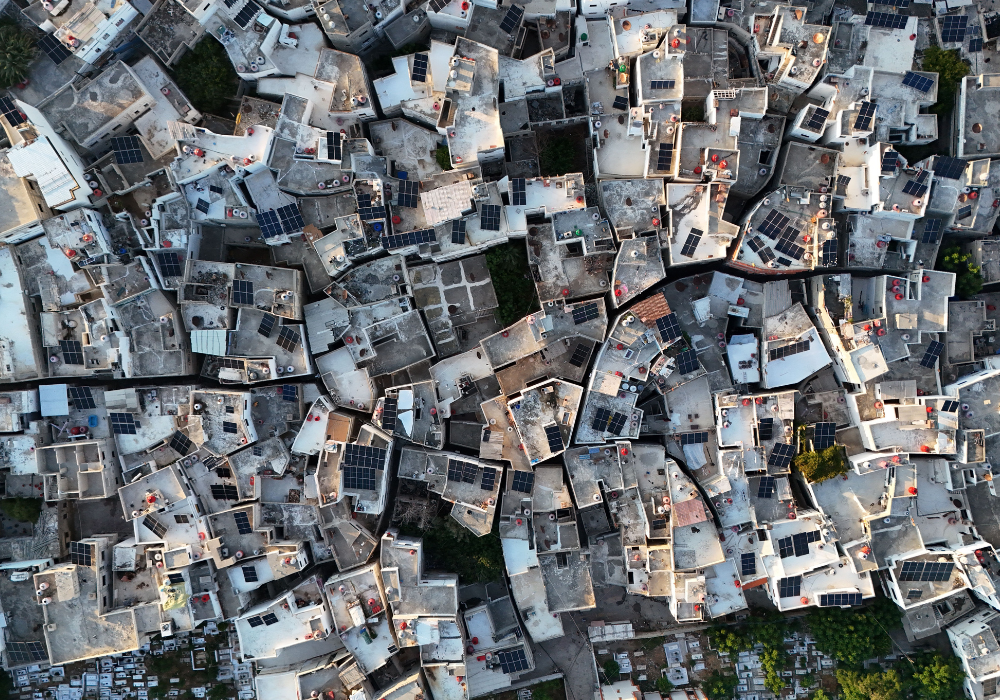
Today, estimates suggest that roughly one-quarter of all Syrian households utilize some form of solar equipment to manage persistent public outages. From electric vehicles deployed for medical aid at a fraction of fossil-fuel operational costs to continuous agricultural cold chains, decentralized solar has quietly become the backbone of Syria’s localized economic recovery.
Supporting Context & Metrics: Fragility, Finance, and the Data Behind the Boom
To understand the Syrian solar phenomenon, one must examine the broader landscape of global energy finance in fragile and conflict-affected states (FCAS).
The Global Fragility Deficit
According to data compiled by the Council on State Fragility, more than 80% of the estimated 800 million people worldwide who currently live without access to electricity reside in "fragile" environments. Ironically, these very same regions are projected to account for a massive share of future global electricity-demand growth.
Yet, international climate and energy financing flows remain profoundly skewed against them. In 2025, despite the Green Climate Fund (GCF) approving a record $3.26 billion in new project financing, fragile and conflict-affected states received only about $500 million—roughly 15% of the total allocation.
Distributed Renewable Energy as Risk Dispersion
Financial scarcity in war-torn regions necessitates a complete reimagining of grid architecture. Traditional centralized systems—dependent on singular large power plants, vulnerable fuel supply lines, and expansive transmission corridors—are exceptionally fragile.
Distributed renewable-energy (DRE) systems—including rooftop solar, small wind turbines, and localized mini-grids—offer a distinct structural advantage: they "disperse risk." By generating power directly at or near the point of consumption, DRE systems can operate independently when national grids fail, offering an indispensable lifeline during geopolitical and climate shocks.
Case Studies in Fragile Contexts: Myanmar and Bangladesh
Evidence from other conflict-hit regions mirrors the Syrian experience. A recent empirical study examining a solar-and-battery system in Yangon, Myanmar, demonstrated that decentralized solar photovoltaic (PV) storage could successfully supply 47.1% of annual electricity demand, with solar-plus-storage covering roughly 77% of the area’s peak-demand hours.
Meanwhile, successful precedents in nations like Bangladesh offer valuable lessons on how to scale these solutions equitably. Through institutions like the Infrastructure Development Company Limited (IDCL), Bangladesh combined capital subsidies with trusted local delivery channels rather than relying exclusively on traditional commercial lending. This prevented the marginalization of low-income populations who lack formal credit histories or collateral.
Official Statements and Expert Perspectives
Energy economists, humanitarian researchers, and institutional analysts agree that while decentralized solar is a powerful palliative, it cannot completely replace a modernized national grid. However, its strategic value during periods of reconstruction is immeasurable.
The Power of Self-Reliance
"If energy becomes unaffordable, people can take it in their own hands," explains Shafiqul Alam, lead analyst for Bangladesh energy at the Institute for Energy Economics and Financial Analysis (IEEFA). Alam emphasizes that decentralized systems possess a unique velocity that centralized infrastructure lacks: "Distributed systems can be built fast, very fast. Rebuilding grid connectivity, by contrast, will take time, a lot of time."
The Risk of a Two-Tier Energy Market
Despite its undeniable utility, the Syrian solar boom has introduced deep socioeconomic fissures. Hayley Schuler-McCoin, a senior research fellow at the Carboun Institute who specializes in the geopolitical and economic dynamics of ecological transitions in Southwest Asia and North Africa, warns of an emerging class divide rooted in energy access.
"The households best placed to buy panels were often those being paid in wages priced to the dollar, primarily, because this stuff was all imported," Schuler-McCoin notes. Households with access to strong international remittance networks or foreign currency were able to absorb thousand-dollar upfront installation costs.
Conversely, marginalized communities lacking these financial lifelines are "still largely… limited to diesel generators and fuel or going without." Schuler-McCoin stresses that without deliberate policy interventions—such as mandating that publicly funded agricultural or commercial solar arrays share power with adjacent neighborhoods—market disparities will become starker.
The Indispensable Role of the Central Grid
Crucially, international bodies caution against abandoning the central grid altogether. The International Energy Agency (IEA) maintains that conventional grids are "essential for bringing power to industry, citizens and services" and remain the primary source of system flexibility as nations integrate renewables.
"Microgrids and storage will complement, but not replace, grid development," the IEA asserts. Schuler-McCoin echoes this sentiment, warning that international reconstruction finance must not prioritize decentralized patches at the expense of transmission line repairs, substations, metering infrastructure, and institutional capacity building.
Future Outlook: Bridging Grassroots Innovation with Macro-Policy
As Syria and other post-conflict nations look toward long-term stabilization, the core policy challenge is no longer whether decentralized solar has a place in the energy mix, but how public policy and international finance can integrate these improvised assets into a sustainable, equitable, and modernized recovery.
+---------------------------------------------------------------------------------+
|                       THE DUAL-TRACK RECOVERY FRAMEWORK                         |
+------------------------------------+--------------------------------------------+
|        DECENTRALIZED TRACK         |             CENTRALIZED TRACK              |
|        (Immediate Relief)          |           (Long-Term Stability)            |
+------------------------------------+--------------------------------------------+
| • Rooftop solar & mini-grids       | • High-voltage interconnector repairs      |
| • Immediate agricultural irrigation| • Substation modernization                 |
| • Localized medical & school power | • Net-metering regulatory frameworks       |
| • Micro-loans & capital subsidies  | • Institutional capacity building          |
+------------------------------------+--------------------------------------------+
1. Designing Inclusive Financial Mechanisms
To prevent a permanent two-tier energy divide, future financing models must move beyond simple commercial lending. As Shafiqul Alam notes, conventional banking systems in fragile states often fail small-scale borrowers due to strict collateral requirements and processing delays.
Instead, governments and international donors must deploy targeted capital subsidies, credit guarantees, and pre-financing structures through trusted local intermediaries. Furthermore, any credit or refinancing scheme must be customized to local income realities and actual household repayment capacities.
2. Implementing Net-Metering and Grid Integration
Looking forward, decentralized solar assets must not remain isolated islands. By introducing progressive net-metering regulations, governments can allow households and small businesses with surplus generation to feed power back into the national grid.
"If there is a net-metering provision," Alam explains, "households and businesses with surplus generation can send back part of it to the grid… they can also earn money." This creates a predictable revenue stream for ordinary citizens, reduces localized energy waste, and decreases the infrastructural burden on utility providers as the central grid gradually comes back online.
3. Comprehensive Energy Planning
Ultimately, unlocking the full multiplier effect of decentralized and centralized energy assets requires rigorous, localized data collection. Policymakers must conduct detailed country-specific analyses encompassing current electricity tariffs, household demand profiles, network capacities, diesel generator dependencies, and rooftop solar potentials.
The success of tiny villages like Khirais demonstrates the extraordinary ingenuity of local populations under duress. However, turning these disparate grassroots sparks into a blazing, equitable national recovery will require visionary public policy, inclusive green finance, and a harmonious synthesis between decentralized resilience and central grid modernization.



