
Executive Overview
As the global imperative to accelerate the deployment of low-carbon infrastructure intensifies, policymakers, financiers, and environmentalists frequently confront a monumental hurdle: capital acquisition. While billions of dollars are earmarked globally for large-scale energy transitions, the friction of traditional centralized financing often delays critical localized projects. However, a growing body of evidence suggests that the most effective and resilient path forward may not reside within distant corporate boardrooms, but rather closer to home.
Across Canada, a quiet revolution in grassroots financing is taking shape. Through community bonds, renewable-energy cooperatives, and localized collective ownership models, everyday citizens are stepping into the breach. No longer passive consumers of electricity and heat, Canadians are becoming co-owners of solar arrays, wind turbines, electric vehicle (EV) charging networks, net-zero housing developments, and green sacred spaces.
This localized approach to the energy transition democratizes clean-tech investment, offering a blueprint for how communities can bypass bureaucratic red tape and secure their own sustainable futures. Yet, as this movement scales, it navigates complex financial realities—balancing civic enthusiasm with market volatility, structural challenges, and the hard lessons of cooperative governance. This comprehensive review examines eight pioneering Canadian initiatives that are redefining green financing, illuminating the mechanisms, triumphs, and cautionary tales of community-powered sustainability.
Detailed Chronology and Evolution of Canadian Grassroots Green Financing
The phenomenon of community-driven green infrastructure in Canada is not an overnight sensation; it represents a decades-long evolution in regulatory frameworks, technological accessibility, and public consciousness.
The Dawn of Urban Wind: WindShare (2000s)
The trajectory of citizen-owned clean energy in Canada was radically altered by the advent of WindShare. Operating in Toronto, WindShare established a groundbreaking precedent by enabling 825 local residents to co-own a commercial wind turbine in partnership with Toronto Hydro. As the first Canadian example of everyday citizens holding a direct equity stake in a utility-scale clean energy project, WindShare proved that urban environments could actively participate in renewable power generation. It shattered the misconception that wind energy was exclusively the domain of multinational energy corporations or massive state utilities, paving the way for regulatory frameworks that would eventually accommodate broader cooperative energy models.
Expanding the Cooperative Playbook: SolarShare and Wintergreen (2010s)
Building upon early wind initiatives, the 2010s saw a surge in solar energy cooperatives. SolarShare emerged during this period to become Canada’s leading renewable-energy cooperative. Among its flagship accomplishments is Wintergreen, a strategic solar array situated outside Kingston, Ontario. Capable of generating sufficient electricity to power 100 homes, Wintergreen demonstrated how pooled capital from everyday investors could manifest as high-impact, distributed renewable assets.

Concurrently, the cooperative model expanded into biomass and waste diversion with the establishment of ZooShare. Designed to convert organic animal waste and food waste into clean electricity for Ontario’s grid, ZooShare relied on the financial backing of roughly 800 cooperative members who purchased community bonds.
Diversification into Mobility and Real Estate (Late 2010s–Present)
As renewable generation matured, the community finance model adapted to address other pillars of the low-carbon transition: transportation and housing.
In Quebec and New Brunswick, EcoCharge launched the first EV-charging community bond campaign of its kind. By mobilizing local investors, EcoCharge members collectively secured ownership over a network of approximately 100 charging stations, tackling the critical infrastructure deficit facing electric vehicle adoption outside major metropolitan hubs.

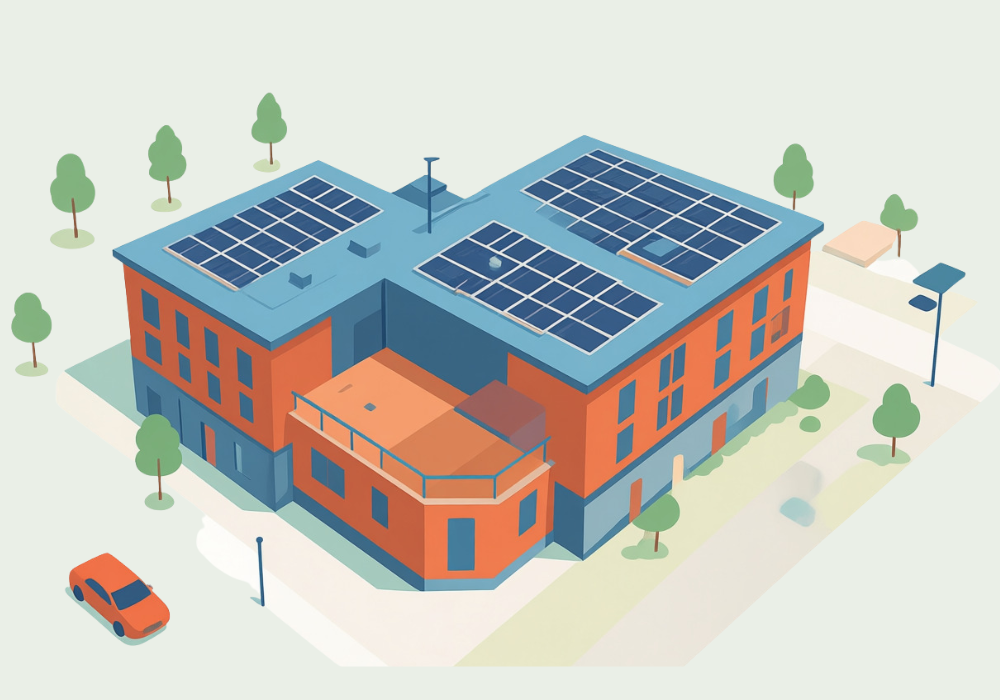
Simultaneously, the western provinces began leveraging community bonds for sustainable real estate. In Kamloops, British Columbia, the Propolis initiative successfully raised $1 million in community bonds from roughly 100 investors. This capital injection was instrumental in constructing a 53-unit affordable, net-zero apartment building—proving that community finance could successfully address both the housing crisis and carbon reduction targets simultaneously.
Innovations in Niche Sectors and Urban Density
Addressing the unique geographical and demographic challenges of clean energy adoption, newer initiatives have focused on urban renters and specialized institutions.
In Regina, Saskatchewan, the Wascana cooperative recognized that apartment-dwellers and urban renters—who represent a significant portion of the population—are frequently locked out of the residential solar market due to a lack of roof access. By installing 400 solar panels collectively owned by roughly 100 members, Wascana engineered a viable workaround, enabling non-homeowners to reap the financial and environmental dividends of solar energy.

In the institutional and spiritual realm, the Faithfully Green Fund carved out a unique niche. By issuing community bonds, the fund generates capital to finance green energy retrofits for temples, churches, and mosques. Operating on a revolving loan basis, it ensures that capital is continually recycled to assist various faith communities in shrinking their carbon footprints.
Finally, utility-scale ambitions continued to thrive in rural corridors. Founded in 2010, the Ontario Rural-Urban Renewable Energy Cooperative (OREC) secured partial ownership in two massive Lake Huron wind turbines. Generating an astounding 3.3 million kWh annually, OREC’s installations produce enough electricity to power more than 400 homes each year, illustrating that community-owned assets can operate effectively at scale.
Supporting Context & Metrics: The Mechanics of Community Bonds
To appreciate the scale and significance of these initiatives, one must understand the financial instrument driving them: the community bond.

Unlike municipal bonds, which are backed by the taxing power of local governments, or corporate bonds, which are tied to the balance sheets of public companies, community bonds are debt instruments issued by non-profit organizations, charities, or co-operatives. They allow everyday citizens—often local residents—to lend money directly to a project that benefits their community, usually offering a modest financial return alongside measurable environmental and social dividends.
| Initiative | Region | Technology / Sector | Financing Mechanism | Key Impact Metric |
|---|---|---|---|---|
| Wintergreen | Ontario | Solar Power | Renewable-Energy Cooperative | Powers approximately 100 homes |
| ZooShare | Ontario | Bioenergy (Waste-to-Energy) | Community Bonds (800 members) | Converts organic/animal waste to grid electricity |
| EcoCharge | QC & NB | EV Charging Infrastructure | Community Bond Campaign | Ownership of ~100 charging stations |
| Propolis | British Columbia | Net-Zero Affordable Housing | Community Bonds ($1M raised) | 53-unit affordable net-zero building |
| Faithfully Green | National / Regional | Green Building Retrofits | Revolving Community Bond Fund | Finances retrofits for churches, temples, mosques |
| Wascana | Saskatchewan | Urban Solar | Cooperative (Apartment-dwellers) | 400 solar panels owned by ~100 members |
| WindShare | Ontario | Urban Wind Power | Co-owned with Toronto Hydro (825 members) | Pioneer commercial urban wind turbine |
| OREC | Ontario | Large-Scale Wind Power | Cooperative (Founded 2010) | Generates ~3.3 million kWh annually (400+ homes) |
The math underpinning these projects highlights an untapped reservoir of retail capital. When pooled together by hundreds of everyday investors—contributing anywhere from a few hundred to several thousand dollars each—these funds cross the threshold required to secure commercial loans and government grants.
However, community finance is not immune to macroeconomic headwinds. A poignant reminder of these risks is evidenced by ZooShare. Following a member vote in 2023, the cooperative was forced to temporarily suspend interest payments on its community bonds, with plans to repay the principal as cash flow permits. This development underscores the inherent financial vulnerabilities of renewable energy startups operating within fluctuating regulatory and energy market conditions. It serves as a vital pedagogical moment for the sector: while community bonds democratize investment, they also transfer market risk directly to everyday citizens, necessitating rigorous financial oversight, transparent governance, and realistic revenue projections.

Official Statements and Stakeholder Perspectives
The expansion of grassroots green financing has elicited robust commentary from urban planners, financial analysts, and community organizers across the nation.
Industry advocates frequently champion cooperatives as the antidote to "not in my back yard" (NIMBY) opposition. When local residents hold a direct financial stake in a nearby wind turbine, solar farm, or high-density net-zero building, opposition routinely transforms into advocacy. As urban writers and financial analysts note, ownership fosters a profound sense of stewardship.
“When we look at the immense capital requirements of the net-zero transition, looking exclusively to federal treasuries or multinational conglomerates is a recipe for delay,” notes Yashvi Shah, a Toronto-based researcher and editor specializing in urban transition models. “The true engine of decarbonization is regional resilience. By enabling citizens to invest directly in the infrastructure powering their own streets, we bridge the gap between abstract climate targets and tangible local benefits.”

Conversely, institutional economists urge caution, emphasizing that community bonds require robust consumer protection frameworks. The regulatory landscape governing exempt market distributions can be complex, and unsophisticated retail investors may underestimate the liquidity risks associated with long-term infrastructure debt. Stakeholders across the board agree that as community bonds gain mainstream traction, regulatory clarity and standardized risk disclosures will be paramount to safeguarding public participation.
Future Outlook: Scaling the Local Energy Revolution
Looking ahead, the convergence of decentralized energy technologies and community financing models points toward a decentralized, highly resilient energy grid. As artificial intelligence and electrification drive exponential increases in electricity demand, centralized grids will face unprecedented strain. Distributed energy resources (DERs)—backed and owned by local communities through models akin to Wascana, SolarShare, and OREC—will not merely supplement major utilities; they will form the shock-absorbers of the modern grid.
Several key trends will shape the next decade of grassroots green financing:

- Digital Platforms and Fractional Investing: The digitization of financial services is lowering the barriers to entry for community bonds. Fintech innovations are making it easier for smaller cooperatives to issue, manage, and service community bonds digitally, reducing administrative overhead.
- Policy and Municipal Integration: Forward-thinking municipalities are beginning to partner directly with community energy groups, utilizing city-owned land and municipal buildings as host sites for cooperative solar arrays and EV charging networks.
- Equitable Transition Models: Future projects are increasingly prioritizing equity, ensuring that low-income neighborhoods and marginalized communities are not left behind in the green transition. Initiatives like Propolis and Wascana demonstrate that affordable housing and renter-accessible clean energy are viable vectors for inclusive climate action.
In conclusion, while the path of community-led green financing features undeniable hurdles—ranging from regulatory complexities to cash-flow fluctuations witnessed in projects like ZooShare—its overarching value proposition remains unmatched. By turning passive energy consumers into active, empowered stakeholders, Canada’s renewable cooperatives and community bond campaigns are proving that the energy transition is not just an engineering challenge, but a deeply human one.