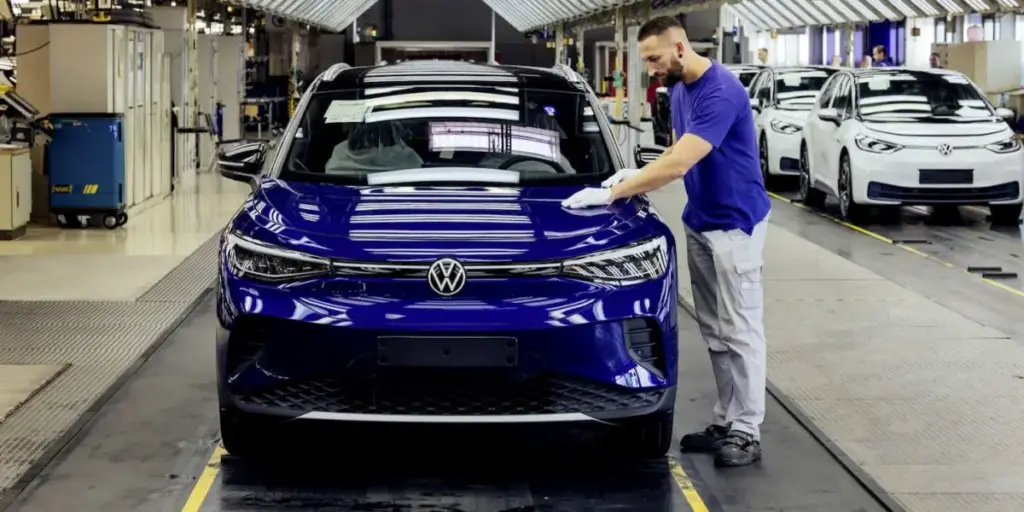
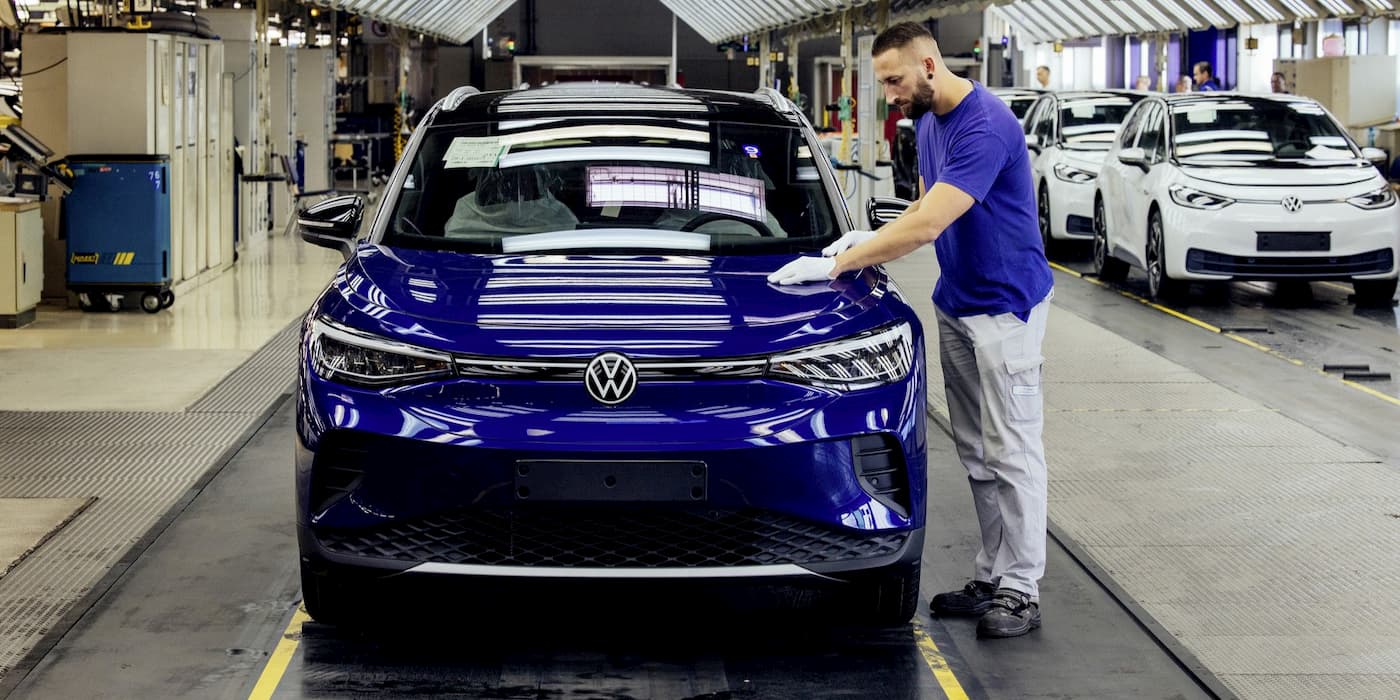
In what marks one of the most drastic corporate restructuring maneuvers in the history of the global automotive industry, Volkswagen’s supervisory board has unanimously approved its sweeping Future Plan 2030. Faced with relentless margin erosion, sluggish European EV adoption, and an existential threat from hyper-competitive, fast-moving Chinese manufacturers, the German automotive titan is preparing to slash up to 100,000 jobs worldwide—amounting to roughly 15% of its total global workforce of 650,000.
Compounding the human and economic cost of this turnaround strategy, Volkswagen has signaled that vehicle production at four major German plants—Emden, Zwickau, Hanover, and Audi’s Neckarsulm facility—faces an intensely uncertain future. As current vehicle allocations wind down between 2031 and 2034, the company admits it cannot currently secure "competitive future production" for these sites without alternative operational adaptations or repurposing.
Beyond headcount and factory footprints, the Future Plan 2030 outlines a brutal pruning of the automaker’s portfolio. Volkswagen plans to cut its global model lineup by 50% by 2035 and slash equipment options and variants by an eye-watering 75%. At the same time, the company is streamlining its software architectures, vehicle platforms, and non-core investments by a third, reserving a massive capital expenditure allocation of €135 billion ($157 billion) between 2027 and 2031.
The goal of this radical surgery is singular: to stabilize operations, defend profitability, and target a 9% operating margin on sales of 9 million vehicles annually by the end of the decade—yielding an estimated annual operating profit of €31 billion ($36 billion). Yet, as management and labor representatives negotiate the terms of this massive transformation, the human and industrial fallout threatens to redraw the map of European manufacturing.
Detailed Chronology and the Path to Crisis
The road to Volkswagen’s current existential crisis has been paved over several years, characterized by software development delays, shifting regulatory landscapes, and an unprecedented pivot toward electrification that hit severe consumer friction in Western markets.
The EV Transition Stalls
For years, Volkswagen positioned itself as the traditional legacy automaker most aggressive in its pivot to battery-electric vehicles (BEVs). Under former leadership, the company bet heavily on dedicated EV architectures, transforming historic facilities like the Zwickau plant into massive, EV-only manufacturing hubs. The Emden plant was retooled to roll out high-volume electric models like the ID.4 and ID.7, while the Hanover facility became the spiritual and commercial home of the retro-styled ID. Buzz and ID. Buzz Cargo. Audi’s Neckarsulm factory took on high-end luxury electric performance with the e-tron GT.
However, the anticipated wave of mass-market EV adoption across Europe fell short of internal projections. High interest rates, the premature phase-out of consumer purchase incentives in key European markets, and lingering consumer anxieties regarding public charging infrastructure created a plateau in demand.
Compounding these regional headwinds, Volkswagen found itself caught flat-footed on cost efficiency. Chinese EV manufacturers—bolstered by vertically integrated supply chains, advanced software ecosystems, and aggressive state backing—began expanding aggressively into international markets. These rivals proved capable of delivering technologically sophisticated electric vehicles at price points that legacy European automakers struggled to match.
The Anatomy of the Supervisory Board Decision
Recognizing that incremental cost-cutting measures would no longer suffice, Volkswagen executive leadership drew up the Future Plan 2030 behind closed doors over recent months. On Thursday, the supervisory board gave its unanimous approval to the strategy.
Rather than waiting for market forces to slowly bleed the company’s balance sheet, the board opted for proactive, albeit painful, structural shrinkage. The plan immediately targets redundant management structures, bloated production capacities, and inefficient product proliferation. Volkswagen officially acknowledged that its European assembly plants currently possess an overcapacity threshold capable of producing more than 500,000 vehicles annually beyond what consumers are actively purchasing.
To address this structural imbalance, the company has established a hard deadline: it will formulate and execute a completely revamped production strategy for its remaining European manufacturing footprint by the end of June 2027.
Supporting Context, Operational Metrics, and Factory Fallout
The sheer scale of the Future Plan 2030 can be fully appreciated only through its granular metrics and the specific vulnerabilities of its manufacturing sites.
The Four German Plants in the Firing Line
The revelation that Emden, Zwickau, Hanover, and Neckarsulm face potential shutdowns of vehicle assembly lines sends shockwaves through the German industrial heartland. Volkswagen has candidly stated that it lacks replacement vehicle allocations for these factories once their current model lifecycles expire between 2031 and 2034:
Zwickau: Once celebrated globally as the blueprint for legacy auto’s transition, having converted 100% of its lines from internal combustion engines (ICE) to EVs, Zwickau now faces a brutal reality check as EV demand plateaus.
Emden: As the primary production hub for core volume electric models like the ID.4 crossover and ID.7 sedan, Emden’s long-term viability is directly tied to the volatile trajectory of the mid-size EV segment.
Hanover: Famous for producing the iconic ID. Buzz and ID. Buzz Cargo, Hanover’s specialized commercial and lifestyle EV lines must prove long-term economic sustainability in a cost-sensitive market.
Neckarsulm (Audi): Home to the low-volume, high-margin Audi e-tron GT alongside hybrid and combustion models, Neckarsulm must navigate Audi’s broader transition timeline while managing high structural overhead.
While Volkswagen has avoided using the official term "plant closures"—instead emphasizing that it will explore alternative industrial uses for these locations—the cessation of vehicle manufacturing at all four sites remains a distinct possibility if production figures cannot be justified.
The 100,000 Job Reduction Strategy
Labor restructuring under the Future Plan 2030 is staggering in scope. The initiative layers an additional 50,000 job cuts on top of approximately 50,000 redundancies already slated across the Volkswagen Group, including operations at Volkswagen passenger cars, Audi, Porsche, and the troubled software subsidiary Cariad.
Global Workforce Impact: With a total global workforce of roughly 650,000 employees, removing 100,000 positions equates to a 15% contraction of the entire enterprise.
Management Reductions: A significant portion of the newly announced cuts will target middle and upper management roles, addressing long-standing criticisms that Volkswagen’s corporate bureaucracy is too sluggish to compete with agile tech-first competitors.
Targeting Efficiency: The company has not yet published a definitive timeline or geographic breakdown for where the final tranche of layoffs will occur, but labor negotiations are expected to be tense and protracted.
Pruning the Product Portfolio
To combat complexity costs, Volkswagen is executing a radical simplification of its catalog:
Model Lineup: Global vehicle models will be slashed by 50% by 2035.
Configurations and Options: Equipment choices, optional extras, and powertrain variants will be reduced by 75%, shifting the company away from highly customized build-to-order models toward simplified, standardized trim packages that lower manufacturing and supply chain overhead.
Technological Consolidation: The overhaul unifies underlying vehicle platforms, software stacks, electronic architectures, and advanced driver-assistance systems (ADAS) across brands. Non-core business units, ancillary investments, and portfolio holdings will be systematically pruned by roughly one-third through sales, spin-offs, or closures.
Despite these aggressive cuts, Volkswagen is not starving its future of capital. The company plans to inject €135 billion ($157 billion) into strategic research, development, and capital investments between 2027 and 2031 to secure its technological footing.
Official Statements and Stakeholder Perspectives
Navigating a restructuring of this magnitude requires a delicate balance between fiscal survival and labor relations, particularly in Germany, where powerful employee representation unions hold significant institutional sway.
Daniela Cavallo and Labor’s Stance
Daniela Cavallo, Volkswagen’s chief employee representative and a powerful voice on the supervisory board, initially mounted fierce resistance against any prospective plant closures. However, recognizing the severe financial headwinds facing the automaker, labor leadership ultimately backed the Future Plan 2030—albeit with strict stipulations ensuring workers are not disproportionately burdened by management’s historical missteps.
"The Future Plan is a necessity to lead our Group successfully into the next decade — without placing the burden of that transformation solely on employees," Cavallo stated following the board’s approval. "In doing so, Volkswagen once again affirms that job security and economic viability carry equal weight as shared corporate goals."
Labor leaders have extracted commitments that management will explore alternative industrial concepts, retraining programs, and site repurposing to mitigate the human cost of the transition away from vehicle assembly at the affected plants.
Management’s Strategic Rationale
From the perspective of Volkswagen’s executive suite, the Future Plan 2030 is an unavoidable course correction. Facing tighter global emissions regulations, shifting macroeconomic conditions, and aggressive pricing pressure from Chinese automotive export surges, leadership maintains that structural downsizing is the only path to preserving the company’s long-term independence and financial health.
By streamlining operations, Volkswagen hopes to shed the bureaucratic inertia that has historically hampered its software development cycles and delayed responses to market shifts.
Future Outlook: The Road to 2030
As Volkswagen turns the page on its twentieth-century manufacturing model, the stakes for the next half-decade could not be higher. The success or failure of the Future Plan 2030 will determine whether Europe’s largest automaker can successfully pivot into a leaner, software-defined mobility provider or whether it will be permanently marginalized by nimble global competitors.
Key Milestones to Watch
June 2027 Strategy Deadline: Volkswagen is mandated to present its comprehensive, finalized production strategy for its European manufacturing network, which will clarify the definitive fate of the Emden, Zwickau, Hanover, and Neckarsulm plants.
Capital Deployment (2027–2031): The efficient deployment of the €135 billion ($157 billion) R&D and capital expenditure budget will test whether the streamlined platforms and software architectures can successfully reach market on time.
Margin and Volume Targets: Markets will closely monitor quarterly financial reports to track progress toward the company’s 2030 targets: an annual sales volume of 9 million vehicles, a robust 9% operating margin, and an annual operating profit of approximately €31 billion ($36 billion).
Ultimately, Volkswagen’s transformation serves as a bellwether for the entire legacy automotive sector. As the industry grapples with the painful friction points of the electric transition, Volkswagen’s radical bet offers a sobering glimpse into the price of industrial survival in the 21st century.