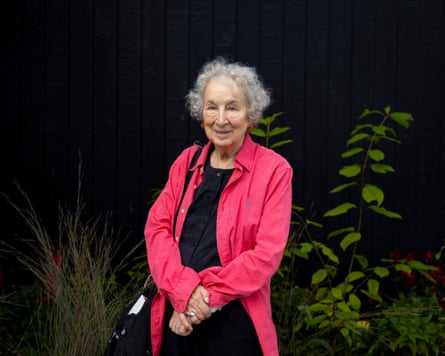
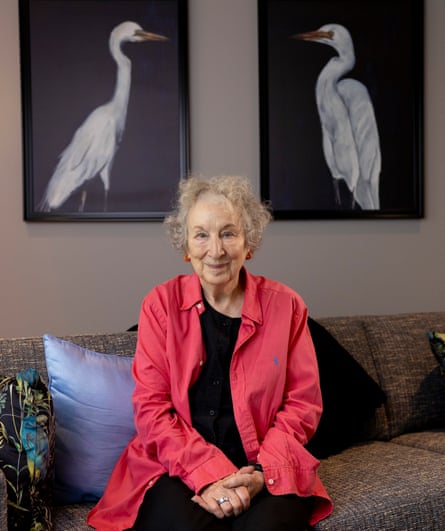
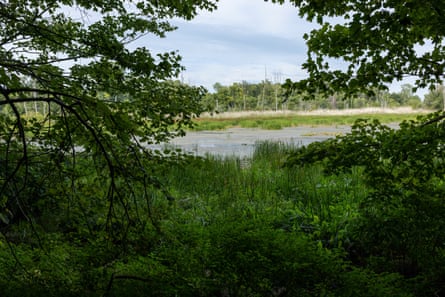
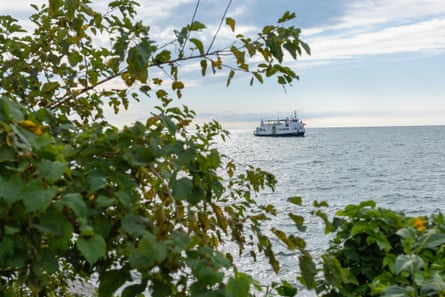
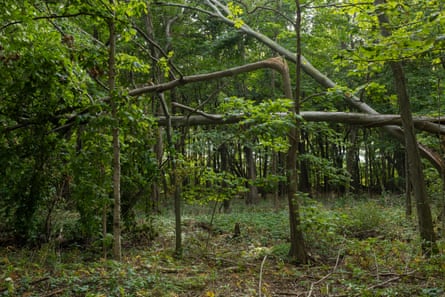
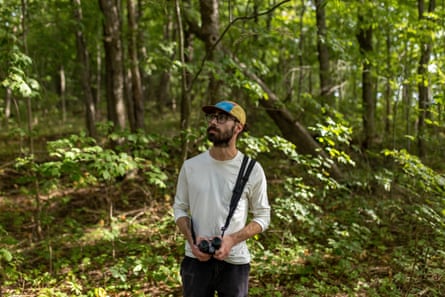
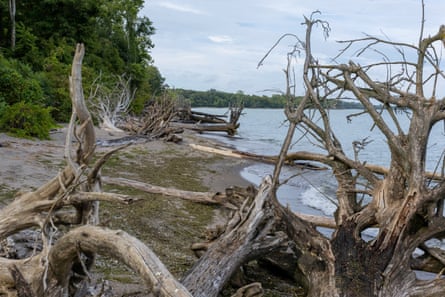
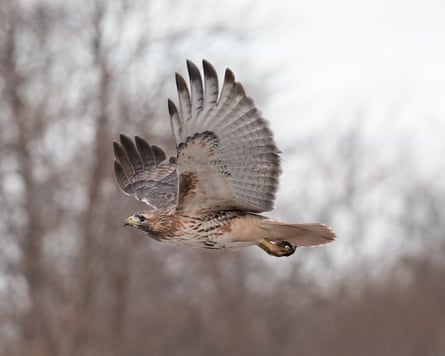
In the quiet, windswept marshes of Pelee Island—Canada’s southernmost inhabited community, sitting at the nexus of the Atlantic and Mississippi migration flyways—the legendary author Margaret Atwood reflects on a lifetime spent chronicling the fragile intersections of human society and the natural world. Known globally for prophetic works of speculative fiction such as The Handmaid’s Tale, Atwood has long blurred the boundary between human and avian existence, both on the page and in her personal life.
This lifelong devotion recently culminated in a landmark philanthropic commitment. Western University in London, Ontario, announced that Atwood has donated C$1 million (£540,000) to establish the Graeme Gibson Chair in Avian Biology. Named in honor of her late partner, novelist and passionate conservationist Graeme Gibson—who passed away in 2019 following a battle with vascular dementia—the endowment aims to decode the fundamental biological processes that govern how birds navigate, adapt, and survive amidst profound environmental transformation.
Against a backdrop of staggering ecological loss across North America, where nearly three billion birds have vanished since 1970, Atwood’s generous gift serves as both a monument to a deeply personal love story and a rallying cry for empirical science. This article examines the genesis of Atwood’s avian advocacy, the scientific frontiers unlocked by her donation, the harrowing realities facing migratory species, and her enduring, pragmatic philosophy on hope, dystopia, and the natural world.
Detailed Chronology: From Hinterland Childhood to Pelee Island Conservation
To understand Margaret Atwood’s profound connection to the avian world, one must trace a trajectory that spans nearly a century of observation, intellectual partnership, and hands-on conservation.
Early Roots in the Canadian Wilderness
Atwood’s immersion in ecology began long before international literary acclaim. Growing up in the rugged backwoods of the Canadian hinterlands, she was heavily influenced by her father, a forest entomologist. Surrounded by dense forests, wetlands, and shifting wildlife populations, Atwood developed an innate, sensory familiarity with the rhythms of the natural world—and its minor nuisances, such as the persistent, six-legged larval mites known as chiggers.
The Partnership with Graeme Gibson and the Birth of POBO
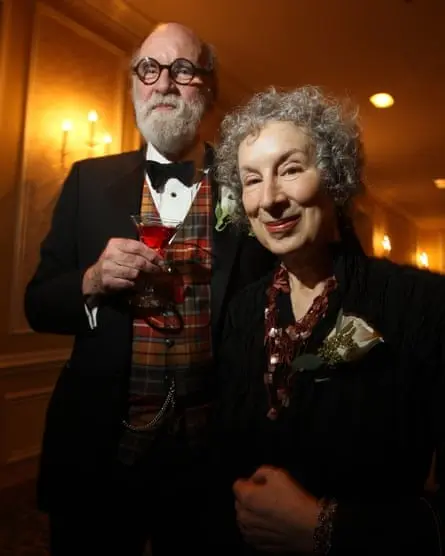
Decades later, Atwood found a kindred spirit in fellow Canadian novelist Graeme Gibson. While Atwood approached nature through the lens of myth, literature, and societal warning, Gibson approached it with the evangelical fervor of a dedicated birder. His literary tributes, including The Bedside Book of Birds, cemented a shared intellectual and domestic life dedicated to avian protection.
More than two decades ago, Atwood and Gibson co-founded the Pelee Island Bird Observatory (PIBO). Situated on the shores of Lake Erie, Pelee Island functions as a crucial pitstop for over 200 species of migratory birds traversing thousands of kilometres each year. What began as a modest monitoring station has steadily expanded into a vital hub for conservation biology.
The Opening of the Atwood-Gibson Bird Centre and the C$1 Million Gift
Weeks before Western University announced her seven-figure donation, Atwood celebrated the official opening of the newly expanded Atwood-Gibson Bird Centre on Pelee Island. Designed to house researchers, educators, and volunteers, the facility provides a fortified sanctuary against the elements—and the island’s infamous chiggers.
The momentum continued with the formal announcement of the Graeme Gibson Chair in Avian Biology at Western University. By channeling her personal resources into academic research, Atwood has cemented a bridge between grassroots conservation and cutting-edge laboratory science, ensuring that Gibson’s boundless curiosity outlives them both.
Supporting Context & Metrics: The Crisis Facing North American Migratory Birds
While institutions like Western University and the Pelee Island Bird Observatory celebrate victories in research and public engagement, the broader ecological landscape presents a sobering reality.
The Numbers Behind the Decline
The state of North American bird populations is in active freefall. According to comprehensive ecological studies, Canada and the United States have lost nearly 3 billion birds since 1970—a staggering drop of approximately 29% across overall populations. While select populations of waterfowl and birds of prey have rebounded due to targeted conservation policies, long-distance migrants are suffering catastrophic losses.
The Blackpoll Warbler: A prime example of this crisis is the blackpoll warbler. Breeding in the northern boreal forests and Arctic reaches, this tiny songbird embarks on a grueling, non-stop migratory journey of nearly 1,800 miles over open water to South America. Over the past five decades, its population has plummeted by more than 80%, making it one of the fastest-declining songbird species on the continent.
The Four Major Anthropogenic Threats: Atwood identifies four primary human-driven hazards responsible for avian mortality:
Glass Windows: Disorienting urban reflections that cause fatal collisions.
Domestic and Feral Cats: Predatory pressures from uncontained house pets.
Toxic Pollution: Agricultural chemicals and industrial runoff.
Habitat Destruction: The systemic fragmentation and elimination of specialized ecosystems.
The Myth of Interchangeable Habitats
Addressing habitat destruction remains the most contentious and challenging hurdle for conservationists. As Atwood points out, commercial and industrial interests often labor under a dangerous misconception:
"People think: we can cut down this forest, and we’ll just make another forest over there. It’s not going to be the same. Birds have specific habitats that they need, so it’s not like spreading butter on a piece of toast."
When old-growth Carolinian forests, wetlands, or boreal breeding grounds are cleared for real estate or resource extraction, the intricate ecological webs supporting specialized migratory species are permanently severed.
Official Statements & Scientific Perspectives: Unlocking Avian Mysteries
The C$1 million endowment gifted to Western University’s Advanced Facility for Avian Research (AFAR) arrives at a critical juncture. Led by prominent researchers like Dr. Chris Guglielmo, AFAR stands at the forefront of global avian science.
The Wonder of Navigation and Flight
Western University has earned international renown for developing cutting-edge infrastructure, including the world’s first hypobaric climatic wind tunnel designed specifically to study bird flight under varying atmospheric pressures. Yet, despite decades of technological advancement, foundational questions regarding avian physiology remain unanswered.
Dr. Chris Guglielmo, co-director of AFAR, emphasizes the profound knowledge gaps that the new endowment will help bridge:
"Look at navigation. We have a lot of descriptive understanding of what happens when we manipulate magnetic fields—for example, the bird changes its orientation. We know they have these senses. But how they actually work is still a big mystery, and very exciting for people to try to study."
Guglielmo notes that graduate students frequently struggle to formulate novel research questions simply because the unknown outweighs current human understanding:
"I have a whiteboard covered with potential questions. I just don’t have enough funding, people, and time to even begin answering them."
Validation from the Scientific Community
When Guglielmo received the initial phone call regarding Atwood’s transformative gift, colleagues joked that he needed to sit down. Beyond the undeniable utility of a seven-figure endowment, Guglielmo views the donation as a powerful cultural validation:
"It made me feel so good that we’re not only reaching and having impact in the scientific community, but that more broadly in the public sphere… It’s a validation of the work done by our university’s scientists."
Future Outlook: Passion, Pragmatism, and the Choice Between Utopia and Dystopia
As a writer who has spent decades mapping the psychological and political contours of authoritarian futures, Margaret Atwood maintains a remarkably clear-eyed, pragmatic view of humanity’s environmental trajectory.
The Psychology of Hope vs. Dystopia
Atwood rejects fatalistic despair, framing hope not as a naive emotional state, but as an evolutionary imperative built directly into the human psyche:
"Let’s say hope is a built-in human characteristic. Unless you’re deeply depressed, you wake up every morning thinking, what will this day bring? Maybe it will be a chocolate bar. Maybe there’ll be some surprises. If our ancestors didn’t have that, we probably wouldn’t be here. All of us trust this possibility that the doors are not locked. Yes, you may open door A and fall down a flight of stairs, but you may open door B and there will be a chocolate bar."
This perspective underpins her warnings regarding societal inertia. In Atwood’s view, systemic collapse is not an inevitability, but the default outcome of abandoning moral and ecological stewardship:
"Utopia is impossible, but if you don’t believe in the ability to attain something better, you will inevitably end up in a dystopia. Because dystopia is quite possible. Or to put it another way, we’re much better at creating hell than we are at creating heaven. Although I also think heaven would be quite boring."
Igniting Passion in the Next Generation
A glimmer of genuine optimism lies in the shifting demographics of conservation. Despite historical battles—such as the controversial omission of nature-themed words like "raven" from children’s dictionaries a decade ago—interest in birding and naturalism is surging among younger generations.
Atwood observes that children are naturally predisposed to engage with the living world:
"The passion is built in. They’re very interested in anything that moves, anything outside, and unless some grown-up teaches them to be afraid of such things, that interest will continue. We are part of the natural world. It’s your choice of how to be in it."
Ultimately, Atwood argues that protecting nature requires shifting public perception away from purely clinical, intellectual arguments and toward a deeper emotional connection. Drawing a parallel between human health and planetary integrity, she notes:
"It’s easy, for example, to raise money for kidneys. Because people think: ‘Everybody’s got kidneys. I’ve got kidneys. If anything happened to my kidneys, I would want there to be a kidney facility for me.’ But people don’t make that immediate connection between their bodies and the natural world. There’s so much research that shows just how beneficial it is for our bodies to spend time in nature."
Through her writing, her grassroots activism on Pelee Island, and now her visionary investment in Western University’s avian research laboratories, Margaret Atwood ensures that the stories—and the science—of the natural world continue to soar.