


Executive Overview
The global transition to a low-carbon economy hinges on a single, highly reactive alkali metal: lithium. Often referred to as "white gold," this foundational element is the lifeblood of modern energy storage, powering everything from the compact electronics in our pockets to the massive propulsion packs driving the electric vehicle (EV) revolution. However, according to the latest Energy Transition Outlook for Lithium published by premier research firm Wood Mackenzie, the path to a net-zero future is riddled with a formidable supply-side hurdle.
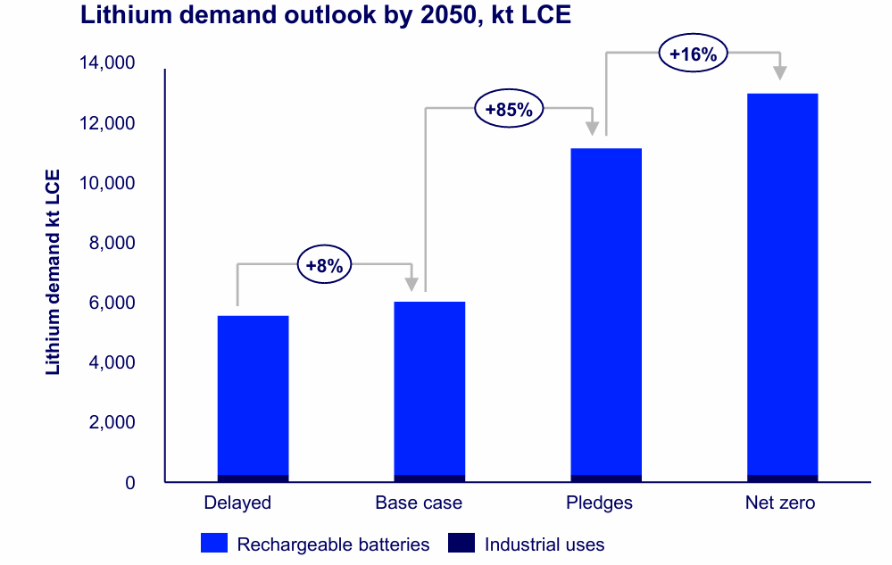
The findings are both stark and urgent. If the global community accelerates its clean energy mandates in alignment with ambitious climate goals, worldwide lithium demand could skyrocket to an unprecedented 13 million tonnes by 2050. More alarmingly, the market is hurtling toward a structural supply deficit much faster than industry stakeholders anticipate. Without immediate, aggressive capital investment and streamlined project execution, severe lithium shortages could materialize as early as 2028.
This report dives deep into the structural drivers of this impending crisis, analyzing the interplay between skyrocketing electric vehicle adoption, grid-scale energy storage expansion, the limitations of near-term recycling, and the monumental financial commitments required to avert a bottleneck that threatens to stall the global energy transition.
Detailed Chronology: The Evolution of the Lithium Deficit
To understand how the lithium market reached this precarious precipice, it is necessary to examine the trajectory of the metal’s demand cycle and the timeline of market pressures.
The Pre-2020s: A Niche Commodity
For decades, lithium was a specialty chemical utilized primarily in ceramics, glass, lubricating greases, and early-generation consumer electronics. The market was relatively small, highly specialized, and managed by a handful of legacy producers. Prices were stable, and capital expenditure (CapEx) cycles were modest, dictated by steady, incremental growth in portable electronics.
The Early 2020s: The EV Awakening
The turn of the decade marked a paradigm shift. Driven by aggressive regulatory pushes in Europe, China, and parts of North America—coupled with dramatic improvements in lithium-ion battery energy density and cost parity—the electric vehicle market shifted from a fringe novelty to mainstream commercial viability. Automakers committed hundreds of billions of dollars to electrification strategies, instantly upending traditional commodity forecasts. Lithium demand surged, leading to historic price volatility in 2021 and 2022 as mining and refining capacity scrambled to catch up with a runaway market.

The 2028 Horizon: The Imminent Crunch
According to Wood Mackenzie’s modeling, the brief periods of market stabilization seen recently are merely the calm before a much larger storm. As governments solidify and enforce policies targeting Net Zero emissions, industrial demand will outstrip primary production capabilities. The research indicates that under aggressive decarbonization pathways, structural market deficits will emerge by 2028. This leaves a perilously narrow window of just a few years for mining conglomerates, chemical refiners, and financial institutions to inject capital into shovel-ready projects.
The 2030–2034 Peak Investment Window
To bridge the yawning chasm between supply and demand, the industry must undergo its most capital-intensive expansion phase in history. Analysts project that global financial deployment will peak between 2030 and 2034. During this four-year window, massive capital outlays will be required to bring unconventional extraction technologies—such as direct lithium extraction (DLE) from oilfield brines and geothermal waters—online alongside traditional hard-rock and evaporation pond operations.
Mid-Century Projections: The 2050 Horizon
Looking toward the middle of the century, the scale of the industry will be unrecognizable compared to its 20th-century footprint. Depending on the global policy velocity, annual lithium demand by 2050 will range from a conservative 5.6 million tonnes of lithium carbonate equivalent (LCE) under a delayed transition scenario, up to a staggering 13.2 million tonnes LCE under a true net-zero framework.
Supporting Context & Metrics: The Drivers of Demand
To fully grasp the mechanics of the upcoming supply crunch, one must analyze the dual forces driving consumption: the electrification of transportation and the buildout of stationary energy storage systems (ESS).
The Dominance of Electric Vehicles
Electric vehicles represent the undisputed heavyweight champion of lithium consumption. Across all of Wood Mackenzie’s modeled energy transition pathways, EVs account for an overwhelming 72% to 80% of total global lithium demand.
The speed of EV penetration directly dictates the severity of the supply shortage:
- Country Pledges Pathway: Under current national climate commitments, EV adoption is projected to capture roughly 75% of global vehicle sales by 2040.
- Net Zero Pathway: Under an accelerated decarbonization framework designed to limit global warming to 1.5°C, EV market share must climb to an aggressive 95% of all new vehicle sales over the same timeframe.
Furthermore, when looking at cumulative lithium end-uses by mid-century, rechargeable batteries across all applications—including consumer electronics, mobility devices, and industrial applications—will command an astonishing 96% to 98% of total lithium demand.
Stationary Energy Storage Systems (ESS)
While passenger and commercial EVs capture the majority of headlines, stationary energy storage is quietly emerging as a critical secondary pillar of lithium consumption. As global electrical grids transition away from fossil fuels in favor of intermittent renewable generation sources like wind and solar, utility providers must deploy massive grid-scale battery installations to balance supply and demand profiles.
Wood Mackenzie models project that energy storage demand will expand at a robust compound annual growth rate (CAGR) of 6% to 7% in forward-looking scenarios. These large-scale battery energy storage systems (BESS) require significant lithium-ion capacity, compounding the pressure on upstream chemical refiners.
The Limits of Recycling in the Near Term
A common counter-argument to resource scarcity concerns is the promise of battery recycling. While recycling is destined to become the cornerstone of a circular economy for critical minerals, its near-term impact is severely constrained by material availability.
For a battery to be recycled, it must first reach the end of its operational lifecycle—which, in modern electric vehicles, spans anywhere from 10 to 20 years. Consequently, meaningful volumes of recycled lithium will not hit the market until the 2040s, as today’s newly manufactured EV fleets begin to retire en masse.
- Growth Trajectory: Recycled supply is projected to grow at a rapid clip of 13% to 16% annually.
- Mid-Century Impact: By 2050, ambitious transition scenarios suggest that recycling could supply between 2.3 million and 2.7 million tonnes LCE annually.
However, even with this aggressive recycling ramp-up, a monumental deficit remains. Under the Country Pledges scenario, the cumulative supply shortfall reaches 6.7 million tonnes LCE by 2050, while the Net Zero pathway widens this structural gap to an alarming 8.5 million tonnes LCE.

The Financial Magnitude: A $100 Billion to $276 Billion Buildout
Closing the supply-demand gap will require an unprecedented mobilization of capital across the mining, chemical, and manufacturing sectors. Wood Mackenzie’s economic modeling outlines total investment requirements that vary wildly depending on the aggressiveness of global climate policies:
- Delayed Transition Scenario: ~$104 billion required.
- Base Case: ~$114 billion required.
- Country Pledges Scenario: ~$236 billion required.
- Net Zero Scenario: ~$276 billion required.
These funds must be systematically allocated toward greenfield mining operations, expanding downstream refining facilities, and establishing robust, geographically diversified regional supply chains capable of withstanding geopolitical friction.
Official Statements and Expert Perspectives
Industry leaders and market analysts have pulled few punches regarding the precarious state of the global lithium supply chain. The consensus is unanimous: the timeline for intervention is shrinking rapidly.
"The lithium market is heading into a supply crunch much sooner than many industry players expect," warns Allan Pedersen, Research Director at Wood Mackenzie. "Under ambitious climate scenarios, we see deficits emerging from 2028. The industry needs to act now, as governments progress policies toward Net Zero."
Pedersen’s remarks underscore a fundamental disconnect between policy ambitions and raw material realities. While governments worldwide continue to pass sweeping legislation incentivizing EV adoption and renewable energy integration—such as the Bipartisan Infrastructure Law and the Inflation Reduction Act in the United States—the upstream mining sector faces persistent headwinds. Permitting delays, environmental scrutiny, community opposition, and capital expenditure hesitation have historically slowed down the development cycle of hard-rock pegmatite mines and brine extraction operations.
Mining executives echo these concerns, noting that bringing a modern lithium project from initial geological discovery to commercial production routinely takes anywhere from 7 to 10 years. This structural lag time means that any major supply injection required to prevent the projected 2028 deficit must already be deep within the exploration or construction pipeline today.

Future Outlook: Can the Industry Rise to the Challenge?
The overarching takeaway from Wood Mackenzie’s Energy Transition Outlook is that the trajectory of global decarbonization is no longer constrained by technological readiness or consumer demand. Instead, the energy transition faces a severe bottleneck in the physical availability of refined critical minerals.
No matter which policy pathway the global community ultimately pursues, lithium demand is guaranteed to outpace current supply projections. The central question facing the mining sector, automotive OEMs, and global policymakers is no longer whether more lithium will be needed, but whether the industry can move fast enough to fund, permit, and construct the required extraction and refining infrastructure before the 2028 deficit window slams shut.
To avert this crisis, several strategic pivots must occur over the next several years:
- Streamlining Permitting Processes: Governments aiming for net-zero targets must balance rigorous environmental protections with streamlined, predictable regulatory frameworks for critical mineral extraction.
- Technological Innovation: Continued investment in alternative extraction methodologies—such as Direct Lithium Extraction (DLE), which extracts lithium from geothermal brines and oilfield wastewater with a fraction of the land and water footprint of traditional evaporation ponds—will be vital.
- Cross-Sector Partnerships: Automakers must increasingly engage in direct equity investments, joint ventures, and off-take agreements with mining developers to secure long-term supply security and de-risk early-stage capital projects.
As the industry races toward the late 2020s, the success or failure of the global clean energy transition will be written in the chemistry labs, mining pits, and capital allocation spreadsheets of the global lithium market.



