

Executive Overview
The modern quest for technological convenience and industrial dominance has historically demanded a hidden toll, paid not in currency, but in human health and environmental degradation. More than a decade ago, the global automotive industry reeled when the World Health Organization (WHO) formally classified diesel engine exhaust as a known human carcinogen. Rather than reckoning with the toxic reality of their engineering, major European automakers engaged in elaborate science experiments designed to obfuscate the truth, culminating in corporate scandals that permanently reshaped public trust.
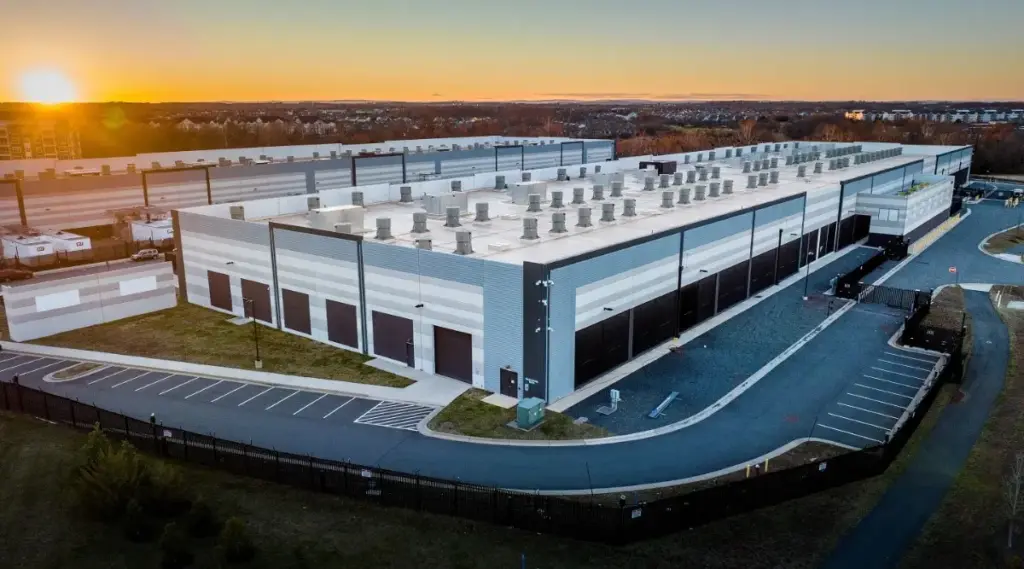
Today, humanity stands at a chillingly similar crossroads. The explosive, uncontrolled expansion of artificial intelligence infrastructure is driving an unprecedented demand for electricity. To feed power-hungry AI data centers, developers and tech moguls are increasingly turning to fossil-fueled stopgaps—ranging from portable methane generators to the extended lifespans of aging, highly polluting coal plants. Concurrently, federal rollbacks of environmental safeguards are actively clearing the path for accelerated infrastructure deployment at the direct expense of public wellbeing.
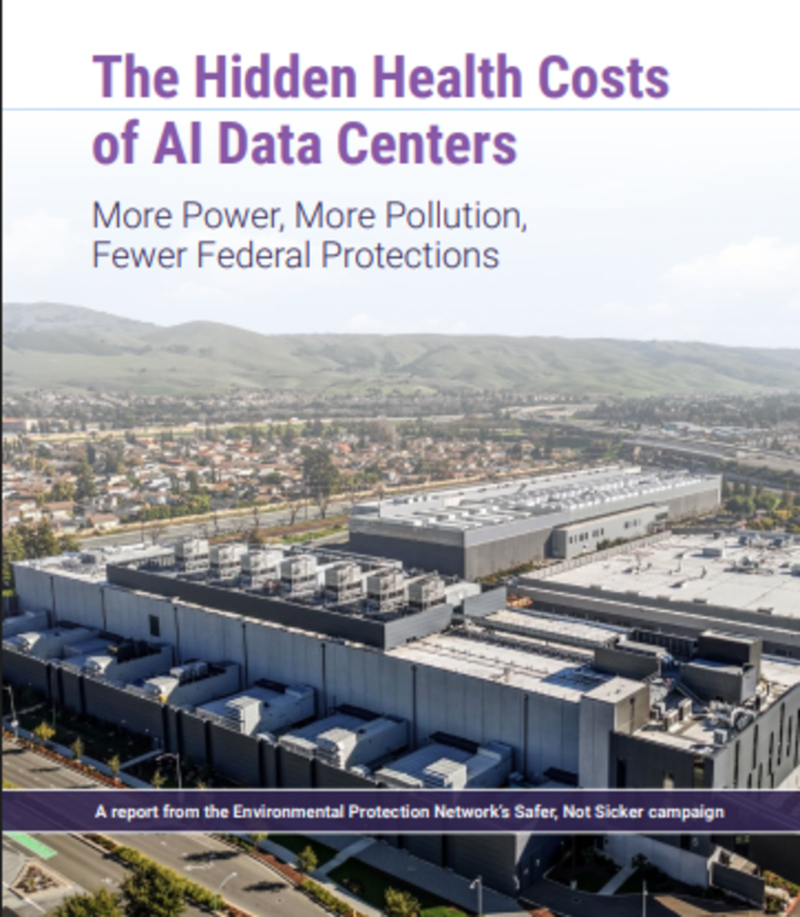
Recent research, including a landmark report by the Environmental Protection Network (EPN), reveals that unchecked air pollution from booming data centers could trigger hundreds of thousands of new asthma cases, thousands of premature deaths, and tens of billions of dollars in annual public health burdens by 2028. As regulatory oversight shrinks and emissions standards weaken, society is sleepwalking into a planetary experiment. Much like the captive test subjects of corporate pasts, the modern populace is unwittingly breathing in the toxic byproduct of digital advancement—placing convenience above survival.
Detailed Chronology: From the Diesel Deception to Corporate Denial
The 2012 Watershed: WHO and the Diesel Verdict
In June 2012, the International Agency for Research on Cancer (IARC), an arm of the World Health Organization, dropped a bombshell on the global transportation sector: diesel engine exhaust was officially classified as a Group 1 carcinogen, placing it in the same hazardous category as asbestos, arsenic, and tobacco smoke.
This determination struck at the heart of the European automotive industry—most notably German powerhouses Volkswagen, Mercedes-Benz, and BMW. Decades prior, in the wake of the 1970s OPEC oil embargoes, these manufacturers had aggressively pivoted toward diesel engines. Because diesel-powered vehicles achieved superior fuel economy compared to their gasoline counterparts, European governments deliberately instituted tax structures favoring diesel fuel. Adam Smith’s invisible hand took over; cheaper fuel drove astronomical demand, embedding the rhythmic, diesel rattle into the urban soundscapes of the continent for generations.
Desperate to break into the lucrative North American market, Volkswagen planned a massive marketing blitz in 2007 to champion its "clean diesel" TDI technology. Iconic commercials—such as a cross-country road trip in a Volkswagen Passat where passengers only learned Spanish via cassette tape because fuel stops were so infrequent—cemented the technology as an environmentally conscious, highly efficient marvel. The reality, however, was fundamentally fraudulent.

"Ten Monkeys": The Lengths of Corporate Concealment
The WHO’s 2012 classification infuriated German auto executives, threatening to dismantle their diesel empire. In response, Volkswagen, BMW, and Daimler formed a shadowy front group called the European Research Group on Environment and Health in the Transport Sector (EUGT). The explicit purpose of the EUGT was not to study environmental impacts objectively, but to fund research that would counter the WHO’s findings and prove that diesel emissions were benign.
The EUGT contracted the Lovelace Respiratory Research Institute in Albuquerque, New Mexico, to conduct animal testing. In one of the most infamous corporate science scandals of the modern era, researchers sequestered ten macaque monkeys in airtight chambers. For four hours, these animals were forced to inhale the exhaust fumes of a rigged Volkswagen Beetle diesel engine while watching cartoons. Unbeknownst to the institute staff, the test vehicle’s onboard emissions control system had been covertly manipulated to release artificially suppressed pollution levels—levels entirely divorced from actual driving conditions.
When the deception ultimately came to light, public outrage was swift. Top-tier executives across the automotive sector feigned shock, promptly scapegoated low-level employees, dissolved the EUGT, and issued sweeping apologies, promising never to engage in such misconduct again. Yet, the damage was done. Diesel’s market dominance evaporated; once commanding the lion’s share of new car sales in Europe, diesel vehicles account for roughly 7% of the market today.
Supporting Context & Metrics: The Modern AI Energy Crisis
While the automotive sector slowly retreated from its toxic zenith, a new, equally insidious environmental threat has emerged to take its place: the hyper-scaling of artificial intelligence and its insatiable appetite for electricity.
The Methane and Coal Resurgence
The race to build colossal data centers capable of training and running next-generation large language models has outpaced the development of renewable energy infrastructure. To bridge the gap, developers are bypassing traditional grid interconnection queues by deploying fleets of portable, methane-fired generators. High-profile figures who once championed sustainable technology—including Elon Musk—have integrated dozens of these polluting generators to power massive computational hubs like the Colossus data centers in Memphis and northern Mississippi. The industrial logic has even inverted commercial incentives; Musk’s acquisition of the very companies manufacturing these portable fossil generators signals a dangerous normalization of off-grid, high-emission computing.
Concurrently, federal interventions are actively propping up fading fossil infrastructure. Citing the immediate power demands of the digital economy, regulatory actions have mandated the continued operation of aging, coal-fired generating stations long past their scheduled retirement dates. Every electron is deemed precious, regardless of its atmospheric origin.
Quantifying the Public Health Toll
The cumulative emissions from this data center boom are staggering. According to a comprehensive analysis released by the Environmental Protection Network—a body comprising dozens of former Environmental Protection Agency (EPA) officials—air pollution generated by the rapid expansion of AI data centers will introduce unprecedented particulate loads into the atmosphere.
By 2028, the projected health consequences of this unchecked industrial expansion include:
- Roughly 600,000 new or exacerbated asthma symptom cases across vulnerable communities living in the shadow of data center clusters.
- Approximately 1,300 premature deaths driven by fine particulate matter ($PM_2.5$) and nitrogen oxide exposure.
- Exceeding $20 billion in annual public health costs, absorbed by local healthcare systems, insurance structures, and affected families.
Crucially, market intelligence tracked by infrastructure firms like Cleanview indicates that roughly 1,300 data centers currently operate across the United States, with an astonishing 2,000 additional facilities actively planned or under construction. Compounding this crisis are severe staffing reductions and deregulation initiatives within the EPA, rendering the agency structurally incapable of monitoring or enforcing emissions limits across this sprawling network.
Official Statements and Regulatory Backsliding
The institutional alignment between government deregulation and corporate tech expansion has alarmed public health advocates and medical professionals. Rather than acting as a bulwark against environmental degradation, current federal policy is actively dismantling clean air safeguards.
In tandem with data center buildouts, recent regulatory actions have rolled back automobile exhaust emissions standards, permitting manufacturers to produce light-duty trucks and cars that release higher volumes of pollutants—a deregulation measure that even major automakers did not actively lobby for.
Dr. Lynn Goldman, a pediatrician and former EPA assistant administrator, offered a sobering critique of these policy shifts in an interview with The New York Times:

"What concerns me now is the role EPA and other government agencies are playing and proudly touting — weakening the very safeguards designed to protect people from the pollution in the name of helping tech and power companies accelerate these data center build outs. These are decisions that can affect what Americans breathe, what gets into our water and, ultimately, what can make its way into our soil and food supply."
The Environmental Protection Network’s report highlights at least 30 distinct federal actions under the current administration that systematically compromise air and water quality protections to expedite AI infrastructure. While tech conglomerates post record valuations and pitch seamless digital futures, the regulatory apparatus charged with safeguarding human life has been effectively sidelined.
Future Outlook: Closing the Circle
The trajectory of modern industrial expansion evokes a grim sociological reality. Society has effectively recreated the conditions of the Lovelace macaque experiments on a planetary scale. "We the people" are now the test subjects, permanently sealed inside a global ecosystem subjected to escalating concentrations of industrial toxins.
Fine particulate matter and fossil fuel combustion byproducts are no longer confined to industrial zones; scientific studies routinely detect toxic micro-particles and pollutants embedded within human placentas and breast milk. Children are literally being infused with the chemical signatures of fossil fuel combustion before they draw their first breath.
This toxic accumulation is met not with fierce societal resistance, but with a collective shrug. The prevailing cultural narrative treats environmental degradation as an unavoidable "tax" for technological progress—driven by the persistent, false dichotomy that intermittent renewable energy cannot support modern computing demands. The public willingly embraces an infrastructure designed to monitor every digital footprint, trading away clean air, biological integrity, and future generations’ health for the sake of computational speed.
As data center footprints widen and regulatory guardrails dissolve, the ultimate irony of the AI revolution comes into sharp focus. We are building hyper-intelligent systems capable of calculating complex global variables, yet we remain utterly blind to the most basic equation of all: a society that poisons its own life-support systems in the pursuit of convenience is engineering its own obsolescence.



