

By Gabriela Sá Pessoa | Associated Press
With additional reporting from São Paulo
Executive Overview
Brazil stands at a critical environmental and political crossroads. As the nation prepares for its upcoming presidential election, the future of the Amazon rainforest—spanning roughly 60% of the world’s largest tropical biome—hangs in the balance. Political momentum could soon swing back to the right, with Senator Flávio Bolsonaro, the eldest son of former far-right President Jair Bolsonaro, positioning himself as a leading contender for the presidency.
Environmental scientists, indigenous leaders, and international policymakers are watching the unfolding political dynamics with acute anxiety. A victory for the Bolsonaro camp threatens to undo the hard-fought anti-deforestation gains achieved under the administration of current President Luiz Inácio Lula da Silva. Lula’s return to power in January 2023 marked an aggressive shift back toward environmental protection, re-establishing enforcement agencies and revitalizing conservation plans that yielded a dramatic drop in tree loss.
However, the political pendulum in South America’s largest economy remains volatile. While Senator Flávio Bolsonaro has publicly pledged to halt illegal deforestation by 2029, his campaign has conspicuously omitted concrete policy mechanisms or enforcement strategies to achieve this goal. Critics argue that his platform mirrors the deregulatory ethos of his father’s administration—a period during which Amazonian deforestation surged by approximately 60% due to weakened oversight, slashed budgets for environmental agencies, and rhetoric that tacitly encouraged land-grabbing and industrial exploitation.
This report examines the escalating stakes of Brazil’s electoral landscape, tracing the starkly divergent environmental trajectories of the Bolsonaro and Lula administrations, analyzing the metrics of forest loss and recovery, and evaluating what a change in government could mean for global climate stability.
Detailed Chronology: From Deregulation to Restoration and Back
To understand the magnitude of the upcoming election, one must trace the recent history of Brazil’s environmental policy, which has swung violently between extreme conservation and unbridled industrial expansion over the past decade.
2019–2022: The Jair Bolsonaro Era and the Great Surge
When Jair Bolsonaro assumed the presidency in January 2019, he campaigned heavily on opening the Amazon to commercial exploitation, mining, and cattle ranching, famously declaring that the forest was an obstacle to national economic growth. True to his word, his administration systematically dismantled Brazil’s robust environmental governance architecture.
Key regulatory bodies, such as IBAMA (the Brazilian Institute of Environment and Renewable Natural Resources) and ICMBio (the Chico Mendes Institute for Biodiversity Conservation), saw their budgets severely slashed, their enforcement powers curtailed, and their leadership replaced by political appointees sympathetic to agribusiness and mining lobbies.
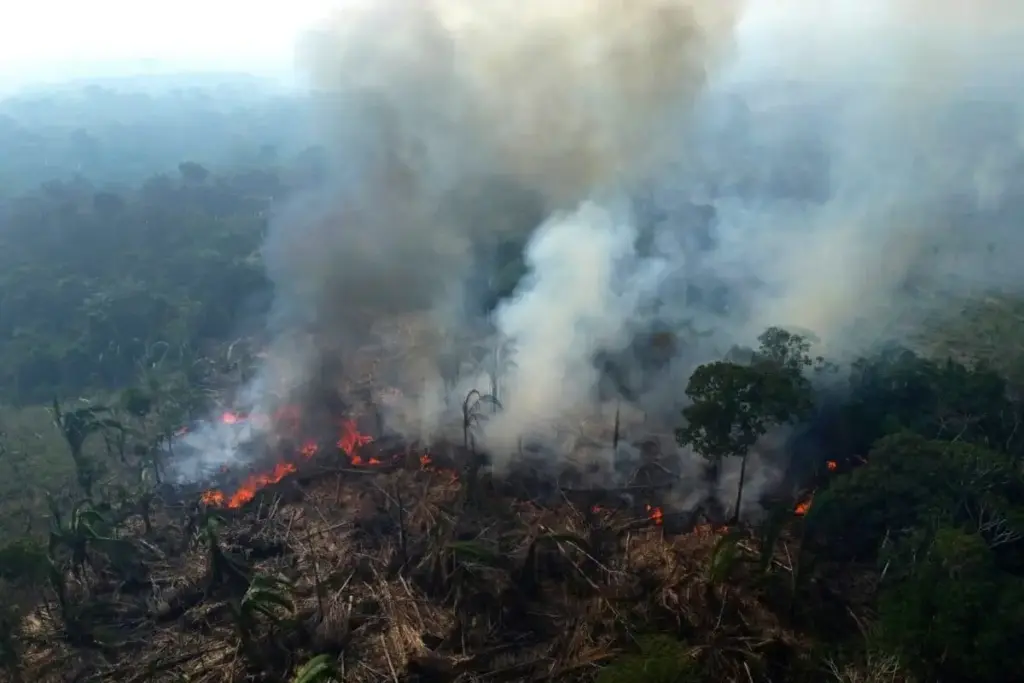
The consequences were immediate and catastrophic. Between 2019 and 2022, deforestation in the Brazilian Amazon surged by roughly 60% compared to the preceding four-year baseline. Vast swaths of ancient carbon sinks were systematically clear-cut, often illegally, and the region experienced record-breaking spikes in human-set wildfires that turned international skies hazy and drew global condemnation. Indigenous communities faced unprecedented invasions of their ancestral lands by illegal wildcat miners (garimpeiros) and land speculators (grileiros), leading to escalating human rights abuses and violence in the rainforest.
2023: Lula da Silva Returns and Re-engages the State
When Luiz Inácio Lula da Silva narrowly defeated Jair Bolsonaro in the turbulent late-2022 elections, environmental restoration formed the cornerstone of his early legislative agenda. Recognizing that the Amazon was central not only to Brazil’s national identity but to planetary climate stability, Lula moved swiftly upon taking office in January 2023.
His administration resurrected and updated the Action Plan for the Prevention and Control of Deforestation in the Legal Amazon (PPCDAm)—a multi-agency framework originally launched during Lula’s earlier presidential terms that had previously proven exceptionally effective at curbing forest loss.
Under Lula, IBAMA was re-empowered with increased funding, advanced satellite monitoring technology, and the political backing to conduct aggressive, unannounced raids against illegal logging and mining operations. The government also re-established international partnerships, unlocking billions of dollars in frozen conservation funds from global donors such as Norway and Germany.
2023–2024: Measurable Recovery and Ongoing Pressures
The impact of Lula’s renewed enforcement mechanisms was swift. By the end of 2023, data from Brazil’s national space research institute, INPE, revealed that deforestation in the Brazilian Amazon had plummeted by 45% year-over-year. This represented the lowest rate of forest loss in years and offered a tangible proof-of-concept that aggressive state intervention could successfully reverse environmental degradation.
However, the recovery remains fragile. The Amazon is currently grappling with compounding pressures from severe, climate change-induced droughts and historic low river levels, which complicate logistics for enforcement agencies and leave the dry forest acutely vulnerable to catastrophic wildfires. Simultaneously, rural political power blocs—deeply embedded in Congress and heavily aligned with the Bolsonaro political dynasty—continue to push legislative measures aimed at weakening land-use protections and granting amnesty to historical illegal land grabbers.
Supporting Context & Metrics: The Numbers That Define the Amazon Crisis
The debate over the Amazon’s future is fundamentally a numbers game—one where millions of hectares of rainforest and gigatons of carbon emissions hang in the balance. Examining historical data illuminates the direct correlation between political leadership and environmental health in the region.

Comparative Deforestation Metrics (2019–2024)
| Presidential Administration | Period Active | Average Annual Deforestation Rate / Trajectory | Key Policy Driver |
|---|---|---|---|
| Jair Bolsonaro | 2019 – 2022 | Surged by ~60% above the 2010s baseline | Slashing of IBAMA budgets, promotion of mining/agribusiness, political rhetoric favoring deregulation. |
| Luiz Inácio Lula da Silva | 2023 – Present | Decreased by 45% in 2023 alone; continued downward trend | Re-enactment of PPCDAm, empowering enforcement agencies, restoring international conservation funds. |
The Global Climate Stakes
The Brazilian Amazon stores an estimated 150 to 200 billion metric tons of carbon dioxide, acting as one of the planet’s most crucial terrestrial carbon sinks. When vast areas of the rainforest are deforested and burned, not only is that vital carbon absorption capacity lost, but massive quantities of greenhouse gases are instantly released back into the atmosphere, accelerating global heating.
Furthermore, the Amazon functions as an intricate hydrological engine. The forest generates billions of tons of moisture daily through evapotranspiration—phenomena known as "flying rivers." These atmospheric moisture plumes supply rainfall to agricultural heartlands across southern Brazil, Argentina, and Paraguay. Indiscriminate clearing of the forest disrupts this hydrological cycle, threatening not only global climate stability but also the long-term viability of South America’s multi-billion-dollar agricultural sector.
Official Statements and Political Positioning
As the electoral horizon approaches, the rhetorical battle lines between the political factions have hardened. The debate centers on economic pragmatism versus ecological preservation, though critics argue that the two are deeply interdependent.
The Bolsonaro Campaign: Promises Without a Blueprint
Senator Flávio Bolsonaro, stepping into the political spotlight as a standard-bearer for his father’s conservative base, has attempted to soften his public image on environmental issues while maintaining appeal to the powerful agribusiness lobby. In recent campaign addresses, Senator Bolsonaro has pledged to completely eliminate illegal deforestation in the Amazon by the year 2029.
However, environmental watchdogs and policy analysts have pointedly criticized the glaring absence of actionable details accompanying this pledge.
"Pledging to stop illegal deforestation by a specific date is a convenient talking point, but without a clear framework for how you intend to empower enforcement agencies, protect indigenous territories, and penalize violators, it amounts to little more than political theater," noted a prominent São Paulo-based environmental policy analyst who requested anonymity due to political sensitivities.
Critics remember the tenure of Jair Bolsonaro, during which environmental agencies were systematically hamstrung under the banner of eliminating "bureaucratic red tape" for rural landowners. They fear that a victory for Flávio Bolsonaro would result in a return to de facto impunity for illegal loggers, miners, and land speculators, regardless of official zero-deforestation rhetoric.
The Lula Administration: Defense of the Green Economy
The incumbent government maintains that environmental protection and economic development are not mutually exclusive. Administration officials argue that Brazil can—and must—modernize its agricultural sector through sustainable intensification on already cleared land, rather than continuing the historical cycle of "arc of deforestation" expansion.
Speaking at recent international climate forums, representatives of the Lula administration have emphasized that Brazil’s global standing depends on its credibility as an environmental steward.
"We proved in our first years back in office that when the state has the political will to enforce the law, the forest heals," a senior Brazilian environmental official stated. "Turning back now would not only destroy our biodiversity and violate the rights of indigenous peoples; it would render Brazil an economic pariah in an increasingly carbon-conscious global marketplace."
Future Outlook: What Lies Ahead for the Rainforest
The upcoming presidential election in Brazil will reverberate far beyond the nation’s borders, carrying profound implications for global climate diplomacy, biodiversity preservation, and the fundamental human rights of traditional forest communities.
Scenario A: Continuity and Enforcement
If the current coalition or a similarly conservation-minded administration remains in power, the trajectory established in 2023 is expected to deepen. Analysts project continued strengthening of satellite monitoring networks, expanded demarcation of indigenous reserves, and closer alignment with international climate finance architectures. While challenges will persist—particularly those exacerbated by regional climate change, such as severe droughts and shifting rainfall patterns—the state apparatus will remain fundamentally committed to penalizing environmental crimes.
Scenario B: Political Shift and Deregulatory Resurgence
Conversely, a victory for Senator Flávio Bolsonaro or a similarly aligned conservative candidate would likely trigger a swift rollback of current enforcement mandates. Federal support for IBAMA and ICMBio could be curtailed, regulatory oversight relaxed, and pressures from extractive industries—such as mining conglomerates and large-scale cattle ranching operations—renewed. As historical data demonstrates, such a shift risks unleashing a new wave of rapid forest destruction, pushing the Amazon dangerously close to its feared tipping point.
The Tipping Point Threshold
Scientists warn that if deforestation and climate degradation push the Amazon past a critical threshold—estimated to be between 20% and 25% of total forest loss (currently hovering near 15–18%)—the ecosystem could undergo an irreversible transition from a moist tropical rainforest into an impoverished savanna-like state. Such a collapse would release massive quantities of stored carbon into the atmosphere, permanently altering South American weather patterns and catastrophically undermining global efforts to cap global temperature increases.
Ultimately, the choice facing Brazilian voters at the ballot box is not merely a political preference between competing parties; it is a momentous decision regarding the ecological viability of the Earth’s most vital rainforest and the future habitability of our shared planet.



