

Executive Overview
The intersection of marine conservation, industrial exploitation, and climate change policy has reached a critical juncture. Across the globe, high-tech observation methods—from satellite monitoring in polar regions to AI-driven tracking systems—are revealing both encouraging signs of ecological resilience and alarming warnings of systemic collapse. At the same time, policy battles over fisheries management, deep-sea mining, aquaculture expansion, and fossil fuel extraction continue to threaten the very marine environments scientists are racing to understand.
Recent developments underscore a profound paradox in ocean governance. While international bodies and local governments expand marine protected areas (MPAs) and leverage space-age technology to monitor wildlife, commercial pressures are escalating. The United Nations is pushing for an unprecedented expansion in global aquaculture, raising alarms over wild-caught fish feed demands. Simultaneously, controversial seabed mining projects in Namibia, intensive bottom trawling in Scotland, and unchecked fishing quotas in the Northeast Atlantic threaten to undo decades of conservation gains.
This comprehensive review explores the current state of our oceans, integrating recent breakthroughs in marine science with the socioeconomic and geopolitical forces shaping the future of the blue economy.
Detailed Chronology
Technological Breakthroughs and Ecological Monitoring (Late August – September 2026)
- Satellite Conservation Milestones: Space technology has transitioned from meteorological and communication applications to front-line conservation. Researchers have successfully deployed high-resolution satellite imagery to track whale strandings in inaccessible regions, map elusive emperor penguin colonies, and evaluate shifts in Adélie penguin diets. By examining changes in what these seabirds consume, scientists are gaining vital real-time data on how climate change is restructuring lower trophic levels in the Antarctic.
- Great Barrier Reef Discoveries: Marine biologists working in the Great Barrier Reef announced the discovery of a rare whale specimen, shedding new light on regional biodiversity patterns and adding to the baseline data needed to protect Australia’s fragile reef ecosystems.
- Greenlandic Whales: Comprehensive surveys revealed that approximately 16,000 baleen whales congregated along the coast of East Greenland. This unprecedented gathering is directly linked to warming waters and retreating sea ice, which have shifted the distribution and abundance of the primary prey species upon which these giant cetaceans rely.
Fisheries, Industrial Policy, and Enforcement
- Scottish Immigration and Environmental Enforcement: Immigration authorities executed targeted raids on Scottish fishing vessels, resulting in the immediate arrest of nine individuals. Concurrently, environmental researchers published data demonstrating that bottom trawling is actively destroying Scotland’s carbon-rich sea lochs, tearing up seabed sediments and releasing centuries of sequestered carbon into the water column.
- Mackerel Quota Controversy: Despite explicit warnings and catch-reduction advisories from the International Council for the Exploration of the Sea (ICES)—which recommended a staggering 77 percent reduction in Northeast Atlantic mackerel catches—fishing fleets in Norwegian waters have continued intensive operations. Vessels have already landed over 19,000 tonnes this season. Adding to the concern, a new Danish biomass survey indicates that 42 percent of the current mackerel biomass resides in the North Sea, a zone heavily populated by vulnerable juvenile fish.
- Seafood Labelling and Aquaculture Expansion: Advocacy groups such as Follow the Fish have ramped up pressure on the European Union to mandate clearer, more transparent seafood labelling to empower consumers. Meanwhile, the UN’s newly proposed framework for expanding global aquaculture and fish farming has drawn sharp criticism from marine ecologists, who warn that an increased demand for wild-caught forage fish used as feed will place unsustainable pressure on fragile marine food webs.
Geopolitics and Marine Protection
- Falkland Islands Status: Diplomatic circles are closely watching shifting signals from the United States, with reports indicating that Washington may review its diplomatic and strategic stance regarding the Falkland Islands, directly impacting regional governance and maritime sovereignty in the South Atlantic.
- Jersey Marine Expansion: Demonstrating proactive regional management, the Government of Jersey officially expanded its network of Marine Protected Areas. Trawling and dredging restrictions now cover 21.7 per cent of Jersey’s territorial waters, creating safe havens for vulnerable benthic habitats to recover.
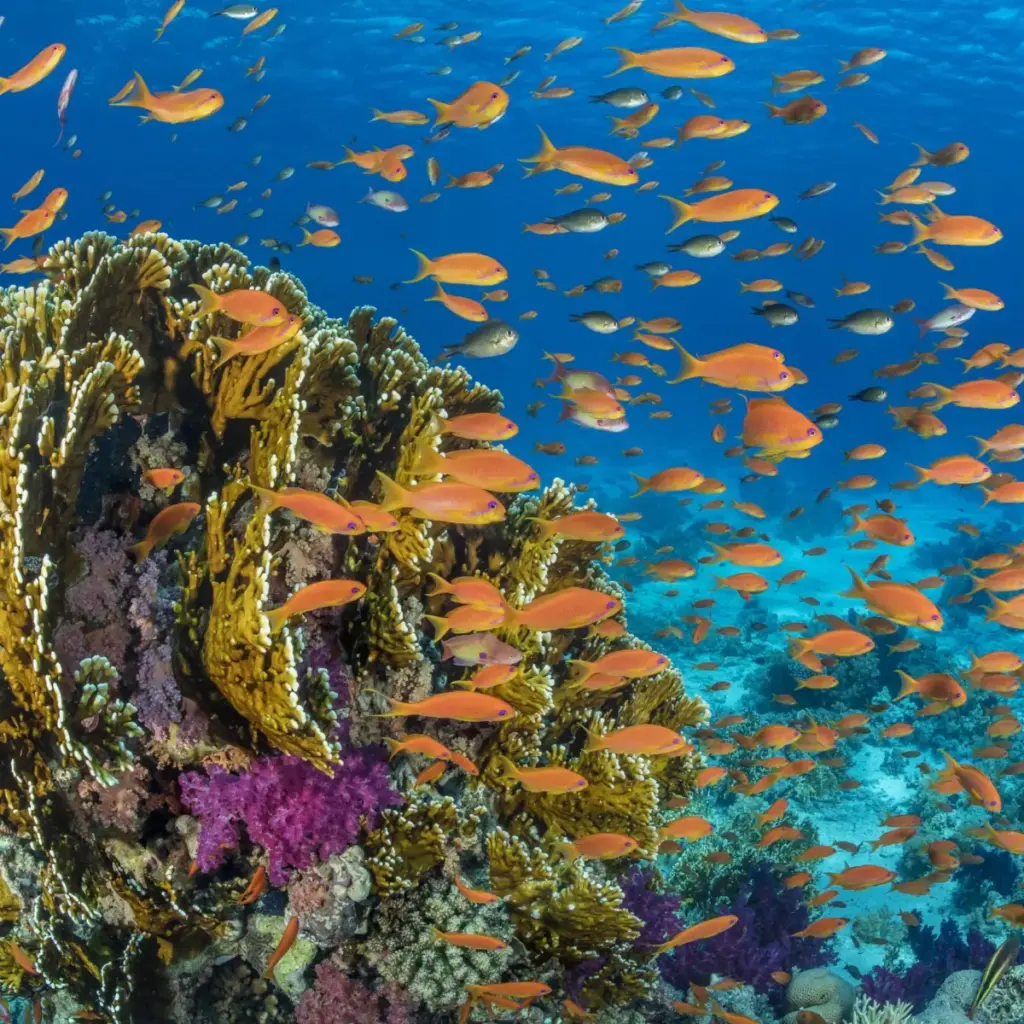
- Global Coral Assessment: The largest global assessment of coral reefs to date has delivered a sobering verdict: reefs are experiencing increasingly frequent, compounding bleaching events that deprive them of the recovery windows necessary for survival. Despite this existential crisis, the illicit global trade in coral continues to thrive, trafficking endangered marine life to international buyers.
Supporting Context & Metrics
The health of the global marine environment cannot be evaluated through isolated incidents; it requires a systemic review of ecological metrics, climate indicators, and industrial impacts.
The 1.5°C Threshold and the Ocean Carbon Sink
The United Nations has issued a definitive report warning that global average temperatures are on a trajectory to breach the critical 1.5°C warming threshold within the next few years. Without immediate, deep decarbonization, current national climate policies commit the planet to approximately 1.8°C of warming by the end of the century.
Oceans have historically acted as Earth’s primary thermal and carbon buffer, absorbing more than 90% of excess anthropogenic heat and roughly 25% of all carbon dioxide emissions. However, this ecological service comes at a catastrophic cost. Ocean acidification, deoxygenation, and marine heatwaves are driving structural alterations in marine habitats.
+-----------------------------------------------------------------+
|              GLOBAL CLIMATE & OCEAN METRICS (2026)              |
+------------------------------+----------------------------------+
| Projected Century Warming    | ~1.8°C (under current policies)  |
| ICES Mackerel Reduction Adv. | 77% catch reduction recommended  |
| East Greenland Baleen Whales | ~16,000 individuals recorded     |
| North Sea Mackerel Biomass   | 42% located in North Sea         |
| Jersey Protected Waters      | 21.7% under restricted trawling  |
+------------------------------+----------------------------------+
Industrial Pressures: Seabed Mining and Fossil Fuels
Beyond overfishing, the deep sea is facing an unprecedented industrial gold rush.
- Namibian Phosphate Mining: The Namibian government’s recent approval of a contentious seabed phosphate dredging project has ignited fierce opposition from conservationists and commercial fishing unions. Dredging the ocean floor risks creating massive sediment plumes that choke marine life and disrupt vital spawning grounds for commercially valuable species.
- North Sea Oil Expansion: In the United Kingdom, political debates remain intensely polarized. Both candidates in the Scottish Labour leadership contest have publicly backed the fast-track development of the Rosebank and Jackdaw oil and gas fields. Proponents argue for economic security and regional energy independence, while climate scientists and environmental NGOs condemn the move, arguing that opening new North Sea hydrocarbon reserves is incompatible with international climate commitments.
Official Statements and Grassroots Action
While geopolitical leaders grapple with policy contradictions, grassroots organizations, indigenous communities, and field scientists are stepping in to effect tangible change.
Indigenous Rangers and Divers on the Front Lines
- Ghost Net Removal in Australia: In northern Australia, indigenous ranger teams are utilizing traditional knowledge alongside modern navigation tools to locate and haul out "ghost nets"—abandoned, lost, or discarded commercial fishing gear. These synthetic webs drift silently through the currents, entangling and killing marine mammals, sharks, turtles, and seabirds indiscriminately.
- Honduran Lionfish Eradication: In the Caribbean, local diving communities in Honduras are actively fighting back against the ecological devastation caused by invasive lionfish. By organizing targeted culling dives and building consumer demand for lionfish meat in local markets, divers are successfully turning an invasive threat into a sustainable economic and culinary resource.
- The Blue Belt Programme: The UK government’s Blue Belt Programme released a visual chronicle highlighting the indispensable role of marine scientific expeditions. As marine scientist Loyiso Dunga aptly summarized in a recent interview: "You can’t protect what you don’t know." Scientific expeditions funded through initiatives like the Blue Belt provide the foundational data required to designate effective, enforceable marine reserves.
Future Outlook
The trajectory of the world’s oceans over the coming decade will depend entirely on regulatory fortitude and the enforcement of science-based management frameworks.
- Closing Fisheries Loopholes: Regional fisheries management organizations (RFMOs) must reconcile political pressures with biological realities. Ignoring scientific bodies like ICES regarding Northeast Atlantic mackerel risks repeating historical fishery collapses, such as the North Atlantic cod crash of the 1990s. Transparency initiatives, such as demands for stricter EU seafood labelling, must be paired with rigorous onboard monitoring to stamp out illegal, unreported, and unregulated (IUU) fishing.
- Balancing Renewable Energy and Deep-Sea Exploitation: As the global energy transition accelerates, the temptation to mine the seabed for minerals (such as phosphates and polymetallic nodules) must be weighed against irreversible ecosystem destruction. Policymakers must decide whether short-term resource extraction justifies compromising the planet’s largest carbon sinks.
- Scaling Up Marine Protection: The expansion of marine protected areas—exemplified by Jersey’s recent conservation milestones and Brazil’s remarkable post-whaling humpback recovery—proves that when human pressure is lifted, marine life can rebound. However, these zones must be protected not just on paper, but through active satellite surveillance, community stewardship, and robust international cooperation.
Ultimately, the survival of coral reefs, cetacean migrations, and coastal economies relies on a paradigm shift: viewing the ocean not as an endless resource pool and waste receptacle, but as a finite, interconnected life-support system that dictates the habitability of the planet itself.



