Executive Overview
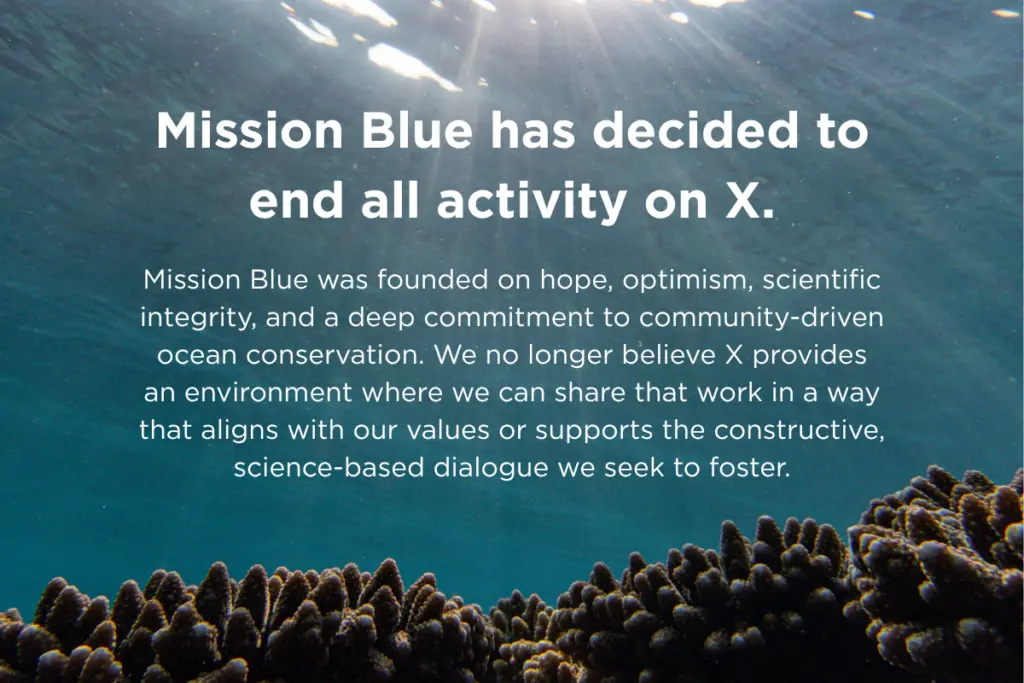
In an era defined by the rapid digitalization of environmental advocacy, non-profit organizations face complex strategic decisions regarding where and how they allocate their digital footprint. On [Date], marine conservation non-profit Mission Blue—founded by legendary oceanographer Dr. Sylvia Earle—announced a definitive shift in its social media strategy: the immediate cessation of active operations on X, formerly known as Twitter.
Founded on a bedrock of hope, optimism, and community-driven action, Mission Blue has long championed the concept of "Hope Spots"—special places scientificlly identified as critical to the health of the ocean. To share these vital messages, the organization initially embraced Twitter as an essential digital conduit, connecting field researchers, marine conservationists, and a passionate global public. However, the modern digital landscape has experienced seismic shifts. Citing a mounting tide of misinformation, targeted hostility, and an increasingly polarized discourse that frequently undermines empirical science, Mission Blue leadership determined that the platform no longer aligns with the organization’s core values.
This strategic departure marks a growing trend among scientific institutions, environmental NGOs, and academic bodies reassessing their participation on major social media platforms. As digital toxicity and algorithmic promotion of sensationalism outpace constructive dialogue, organizations dedicated to empirical truth and planetary stewardship are drawing a hard line. Mission Blue’s decision is not merely a retreat from a hostile virtual environment; it is a deliberate reallocation of resources toward digital communities—such as Instagram, Facebook, LinkedIn, YouTube, and direct-to-inbox newsletters—that foster respectful, solutions-oriented engagement.
This report provides an exhaustive examination of Mission Blue’s departure from X. It explores the shifting dynamics of digital conservation, the broader exodus of scientific institutions from toxic online spaces, and the structural imperatives guiding the modern non-profit communications strategy in an age of ecological and informational crisis.
Detailed Chronology: The Evolution of Mission Blue’s Digital Strategy
The Early Days: Optimism and Real-Time Marine Discovery
When Mission Blue first established its presence on Twitter over a decade ago, the platform was heralded as a revolutionary tool for democratization and real-time communication. For field scientists working on remote ocean expeditions—from the Galápagos Islands to the coral reefs of the Indian Ocean—Twitter offered an unprecedented lifeline. Researchers could tweet live updates, share photographs of newly discovered marine species, and instantly alert the global community to emerging environmental threats.
During this formative era, Mission Blue utilized the platform to rally support for Hope Spots. The digital strategy mirrored the organization’s overarching philosophy: inclusive, urgent, and deeply optimistic. Followers could engage directly with marine biologists, ask questions about deep-sea ecosystems, and participate in global advocacy campaigns with the click of a button. The platform functioned as a digital town square where science could be democratized and celebrated.
The Turning Point: Shifts in Algorithmic Priorities and Cultural Tone
Over the past several years, however, structural and cultural changes at X profoundly altered the user experience. Following high-profile ownership changes, corporate restructuring, and significant reductions in content moderation and trust-and-safety teams, the platform’s digital ecosystem underwent a radical transformation.
For Mission Blue, the warning signs accumulated gradually. Content related to climate science, biodiversity loss, and environmental protection—topics that inherently require nuance, peer-reviewed data, and constructive debate—began to encounter unprecedented levels of hostility. Trolls, bots, and organized networks increasingly utilized the platform to amplify anti-science rhetoric, climate change denialism, and personal attacks against researchers and conservationists.
Furthermore, platform algorithms appeared increasingly optimized to reward outrage, sensationalism, and divisive rhetoric over measured, fact-based discourse. Rather than serving as a fertile ground for ocean hope and collaborative problem-solving, the platform transformed into an adversarial landscape. For an organization whose foundational ethos is built upon constructive unity ("We are all connected to the same ocean"), the environment became fundamentally incompatible with its mission objectives.
The Decision to Archive: Pulling the Plug on Active Operations
The internal deliberations leading to Mission Blue’s exit were thorough and weighed against the potential loss of reach. Ultimately, leadership concluded that maintaining a presence on X carried a reputational and ethical cost that outweighed any logistical benefits. Continued engagement risked implicitly validating a space where scientific consensus and respectful discourse are routinely undermined.
Rather than deleting the account entirely—which would forfeit historical archives documenting years of conservation milestones—Mission Blue chose to freeze the profile. The official account remains archived, acting as a static digital library of past campaigns, but all active community management, publishing, and advocacy efforts have ceased.
Supporting Context & Metrics: The Modern Exodus of Science from Toxic Platforms
The Broader Flight of Scientific Institutions from X
Mission Blue is far from alone in its reassessment of X. Over the last twenty-four months, a quiet but profound migration has taken place across the scientific, academic, and non-profit sectors. Major universities, public health agencies, meteorological organizations, and international conservation bodies have either scaled back or completely abandoned their activities on the platform.
The primary catalyst for this exodus is the degradation of information integrity. Studies by digital media researchers indicate a sharp rise in the visibility of unverified, misleading, or outright false claims regarding environmental science, public health, and global economics on X. When algorithms prioritize engagement metrics above factual accuracy, complex ecological realities—such as ocean acidification, overfishing, and marine heatwaves—are frequently drowned out by noise, cynicism, and conspiracy theories.
For non-profits operating on tight budgets and relying on philanthropic trust, the allocation of staff time to moderate toxic comment sections represents an inefficient use of precious resources. Organizations are increasingly asking a fundamental question: Is the time spent fighting disinformation on a hostile platform worth the diminishing returns in genuine engagement?
The Economics of Digital Attention in Marine Conservation
Marine conservation faces a unique communication challenge. Unlike terrestrial issues that are often immediately visible to the public, the ocean suffers from "out of sight, out of mind" syndrome. Over 70 percent of the Earth’s surface is covered by water, yet the vast majority of marine ecosystems remain hidden beneath the surface.
Effectively communicating the plight of deep-sea corals, migratory whale pathways, and pelagic ecosystems requires rich visual media, immersive storytelling, and sustained intellectual engagement. Formats constrained by short character limits, or dominated by reactive hot takes, rarely provide the depth required to explain intricate marine ecological dynamics.
Platforms like Instagram, YouTube, and LinkedIn, conversely, offer structural advantages for environmental storytelling:
- Instagram and YouTube allow for high-definition visual and video content, bringing the vibrant colors of healthy coral reefs and the majesty of marine mammals directly to audiences, fostering visceral emotional connections.
- LinkedIn provides a professional networking environment where conservationists can engage corporate leaders, policymakers, and institutional donors in strategic discussions regarding sustainable blue economies.
- Direct-to-In-box Newsletters bypass algorithmic intermediaries entirely, establishing an unmediated, reliable line of communication with dedicated supporters who genuinely care about Hope Spots and actionable conservation measures.
Official Statements and Institutional Rationale
The formal announcement released by Mission Blue articulates a clear and uncompromised institutional stance. Key excerpts from the organization’s communication underscore the philosophical drivers behind the pivot:
"Mission Blue was founded with a spirit of hope, optimism, and dedication to community-driven ocean conservation… Over time, however, the environment on X has changed significantly. We have become increasingly concerned about the prevalence of misinformation, hostility, and divisive content on the platform, including content that undermines science and constructive dialogue around environmental issues."
This statement strikes directly at the heart of modern digital ethics. It highlights a vital distinction between open debate and destructive disruption. While scientific inquiry thrives on rigorous peer review, challenge, and debate, it cannot function productively within an ecosystem designed to reward bad-faith actors and weaponized disinformation.
Furthermore, the organization emphasized its foundational commitment to its digital community:
"We are all connected to the same ocean. Through our digital strategy, we seek to build a curious, welcoming online community. We cannot, in good faith, continue to use the X platform."
By explicitly stating that they cannot continue to use the platform "in good faith," Mission Blue elevates the decision from a mere marketing adjustment to a principled stand on institutional integrity. In an era where digital platforms wield immense influence over public perception, NGOs must ensure that their channels of communication do not inadvertently legitimize environments that subvert their core missions.
Future Outlook: Rebuilding Community in Mindful Digital Spaces
Cultivating Hope Spots Across Alternative Channels
As Mission Blue turns the page on its chapter with X, the organization is doubling down on its presence across alternative, values-aligned digital platforms. The strategy moving forward focuses on depth over breadth, quality over quantity, and community over sheer impression counts.
- Visual Storytelling on Instagram and YouTube: Recognizing that seeing is believing when it comes to the ocean, Mission Blue is expanding its production of short- and long-form video content. Documenting expeditions to Hope Spots, highlighting local marine guardians, and showcasing underwater biodiversity will take center stage, leveraging the visual strengths of these platforms to inspire awe and protective instincts.
- Strategic Partnerships on LinkedIn: To drive systemic change, conservation requires the engagement of industry leaders, policymakers, and financial institutions. Mission Blue’s increased focus on LinkedIn aims to foster high-level dialogues regarding sustainable fisheries, marine protected areas (MPAs), and corporate blue-carbon initiatives.
- Direct Engagement via Newsletters: By prioritizing newsletter subscriptions, Mission Blue is safeguarding its community against the unpredictable whims of social media algorithms. Direct-to-consumer communication ensures that supporters receive unvarnished updates, scientific breakthroughs, and actionable steps directly in their inboxes.
The Broader Implications for Non-Profit Communications
Mission Blue’s departure from X serves as a bellwether for the non-profit and scientific sectors. As digital spaces become increasingly polarized, organizations dedicated to empirical truth, human rights, and environmental protection must continually evaluate the trade-offs of their digital footprints.
The move signals a maturing of digital strategy within the environmental movement. Chasing viral reach at all costs is increasingly recognized as a losing battle when the terrain is hostile to scientific consensus. Instead, the future of effective conservation communications lies in building resilient, respectful, and deeply engaged communities where constructive dialogue can flourish.
Conclusion
Mission Blue’s exit from X marks the end of an era, but it also heralds a renewed clarity of purpose. By stepping away from a platform that no longer serves constructive, science-based discourse, the organization has reaffirmed its dedication to its foundational values: hope, optimism, and global unity in defense of our blue planet.
As the global community faces unprecedented marine crises—from rising ocean temperatures to widespread habitat destruction—the need for clear, unfettered, and inspiring communication has never been greater. Mission Blue’s pivot invites all ocean advocates, scientists, and supporters to follow them into digital spaces where curiosity is welcomed, science is respected, and the collective work of protecting our global ocean can continue unabated.