

Executive Overview
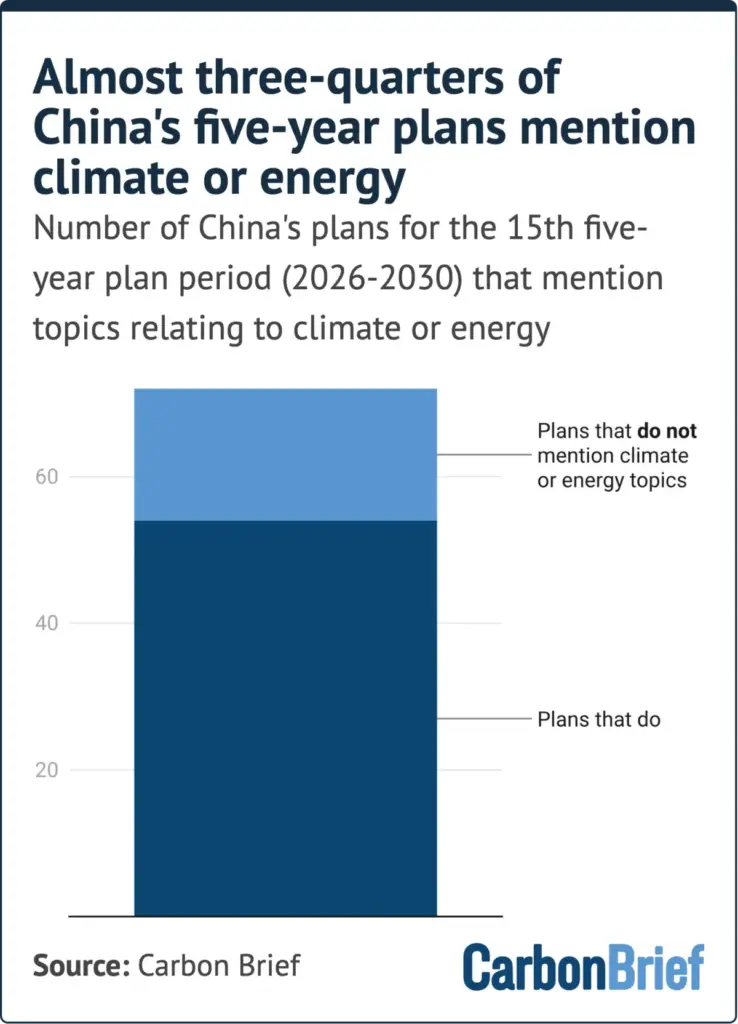
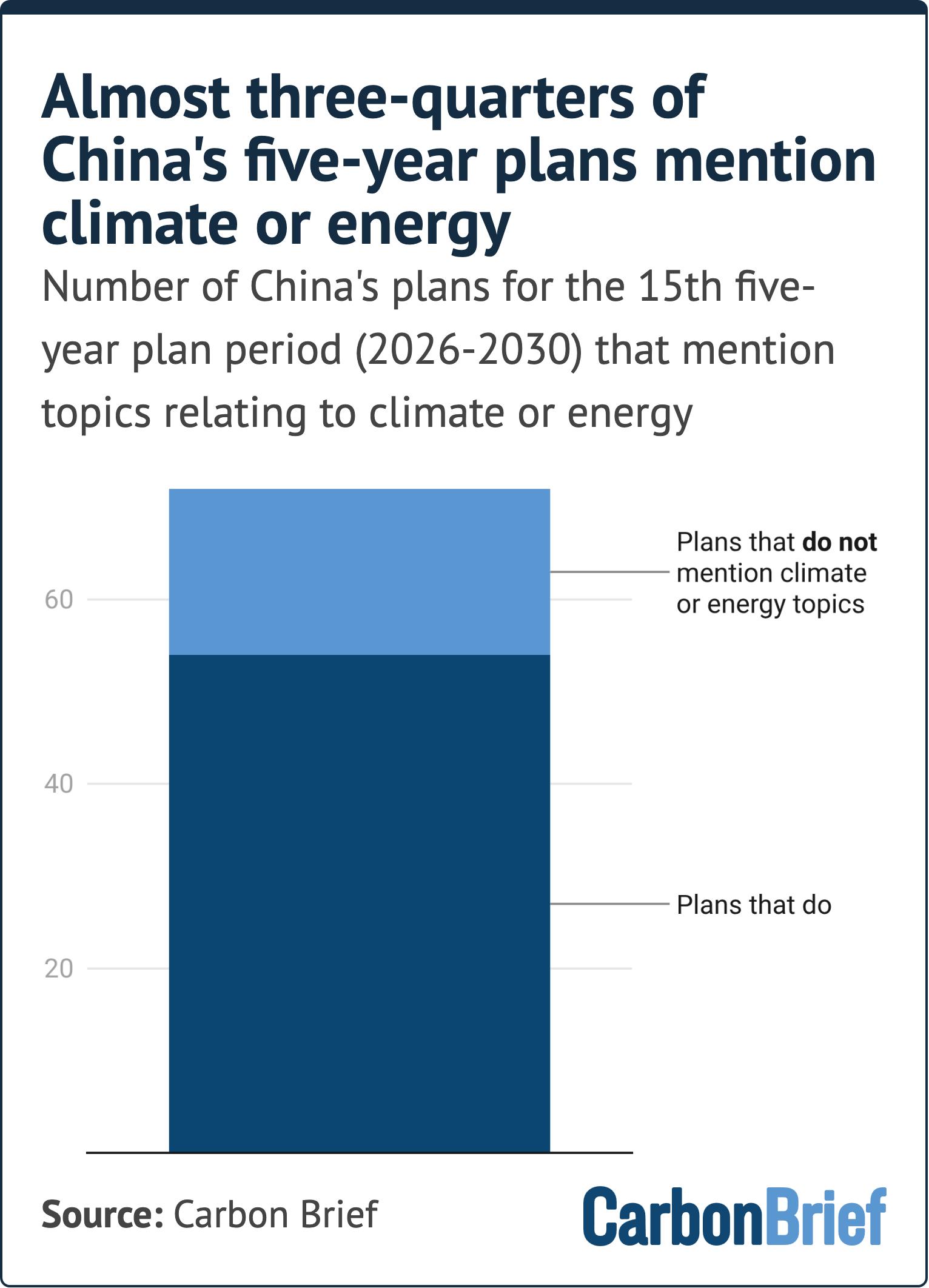
In a definitive signal that ecological transformation has moved from a specialized policy domain to the foundational core of Chinese governance, a comprehensive audit by Carbon Brief reveals that almost three-quarters of the country’s newly published 15th Five-Year Plans (FYPs) contain explicit climate- and energy-related policies or targets. Out of 72 central-government ministerial blueprints released to date for the 2026–2030 planning cycle, 54 formally integrate green transition mandates.
The 15th Five-Year Plan period represents the most critical policy window in modern climate history. Covering the precise runway leading up to China’s self-imposed target to peak carbon dioxide ($CO_2$) emissions "before 2030," these policy documents collectively outline how the world’s second-largest economy intends to retool its industrial, energy, and social apparatus.
While top-line energy frameworks from agencies like the National Development and Reform Commission (NDRC) and the National Energy Administration (NEA) drive the heavy lifting of decarbonization, the analysis demonstrates an unprecedented depth of policy penetration. Decarbonization guidelines, energy-efficiency benchmarks, and climate-resilience directives are no longer confined to environmental ministries; they now saturate secondary and peripheral sector plans, ranging from civil aviation, banking, and digital infrastructure to agricultural management, national archives, and traditional Chinese medicine.
This systematic cross-ministerial alignment underlines Beijing’s strategic approach: embedding climate compliance across all state machinery to ensure that economic development and carbon mitigation operate as synchronized imperatives rather than competing priorities.
Detailed Chronology: The Cascade of China’s Policy Architecture
The rollout of China’s five-year planning apparatus follows a strictly sequenced, top-down hierarchy. The current cycle’s policy execution unfolded across several key milestones:
[March 2026]
Overarching 15th FYP Approved at "Two Sessions"
  │
  ├──> [Mid-2026]
  │    Core Energy & Climate Blueprints Released (NDRC, NEA, MEE)
  │    (Renewables, New-Type Power System, Coal/Oil Sector Plans)
  │
  ├──> [Late 2026]
  │    Cross-Cutting Action & Implementation Plans Issued
  │    (Public Institutions, Digital-Greening Co-Transformation)
  │
  └──> [Ongoing]
       Peripheral & Sectoral Integration
       (Aviation, Finance, Cultural Heritage, TCM, Agriculture)
March 2026: The Master Blueprint Unveiled
The policy sequence formally commenced in March 2026 during the "Two Sessions" (the annual meeting of the National People’s Congress and the Chinese People’s Political Consultative Conference) in Beijing. The State Council unveiled the overarching 15th Five-Year Plan for National Economic and Social Development (2026–2030). As the supreme policy vector, this master document established high-level binding and non-binding national goals, establishing a macro target to reduce national carbon intensity—the volume of $CO_2$ emitted per unit of Gross Domestic Product (GDP)—by 17% over the five-year window.
Mid-2026: The Core Sectoral Rollout
Following the master plan, central ministries began cascading sector-specific blueprints. The Ministry of Ecology and Environment (MEE), the National Development and Reform Commission (NDRC), and the National Energy Administration (NEA) published thematic master plans focused specifically on clean energy deployment, power market restructuring, and fossil-fuel management:
- The New-Type Energy System 15th FYP and Renewable Energy Development 15th FYP laid down capacity expansion metrics for solar, wind, hydro, and green hydrogen.
- Parallel documents governing the Coal Industry and Oil & Gas Sector established strict directives on output caps, peak production timelines, and efficiency upgrades, framing fossil fuels as transitional, security-backing energy resources rather than primary growth engines.
Late 2026: Cross-Cutting Action Plans and Sector Integration
Concurrently, central bodies rolled out target-driven "action plans" and "implementation frameworks" designed to bridge administrative silos. Key documents included the Action Plan for Peaking Carbon Emissions in the 15th FYP Period and the Implementation Plan for Promoting Coordinated Transformation of Digitalisation and Greening (2026–2030).
Simultaneously, non-environmental ministries began publishing their sector-specific 15th FYPs, embedding "green and low-carbon" mandates into administrative domains previously detached from climate policy.
Supporting Context & Metrics: Categorizing the 15th Five-Year Plans
To evaluate the depth of climate integration, the Carbon Brief analysis tracked 72 publicly available ministerial plans for the 2026–2030 period, categorizing them based on their proximity to energy and environmental mandate structures.
                           TOTAL PLANS TRACKED: 72
                                      │
                 ┌────────────────────┴────────────────────┐
                 │                                         │
       Climate-Integrated: 54                    Non-Climate: 18
                 │
   ┌─────────────┼──────────────┬──────────────────────────┐
   │             │              │                          │
Overarching   Core Energy/    Action &                 Peripheral
  Plan (1)   Climate Plans   Implementation           Sector Plans
               (14)          Plans (4)                    (35)
1. The Overarching Master Plan
- Scope: Macroeconomic and social development roadmap.
- Primary Numerical Metrics: A mandatory 17% reduction in carbon intensity by 2030 against a 2025 baseline.
- Strategic Role: Serves as the policy anchor. It aligns short-term five-year economic performance metrics with China’s international commitment under the Paris Agreement to achieve net emissions reductions of 7–10% below peak levels by 2035.
2. Core Thematic Energy & Climate Plans
This category comprises 14 primary sectoral plans issued by leading energy and environment ministries.
| Plan Name | Primary Governing Bodies | Core Directives & Targets |
|---|---|---|
| New-Type Energy System 15th FYP | NDRC, NEA | Accelerate non-fossil energy dominance; establish market mechanisms for clean power trading. |
| Renewable Energy Development 15th FYP | NEA, NDRC | Scale up grid-connected wind and solar capacity; expand pumped-storage hydro and battery storage. |
| New-Type Power System 15th FYP | NEA | Modernize power grid architecture to handle high-penetration variable renewable energy (VRE). |
| National Response to Climate Change 15th FYP | MEE | Deepen climate adaptation strategies, expand regional carbon trading systems, improve emissions verification. |
| Coal Industry Development 15th FYP | NDRC, NEA | Mandate ultra-low emission retrofits for thermal power; constrain strategic coal expansion to energy security baseloads. |
| Smart & Connected NEV Industry FYP | MIIT, NDRC | Advance electric vehicle (EV) supply chains, expand fast-charging infrastructure, enforce smart-grid integration. |
3. Action and Implementation Frameworks
These policy instruments focus on actionable, cross-departmental operational strategies during the 2026–2030 window:
- Energy Conservation in Public Institutions Plan: Establishes strict energy consumption caps for government offices, public schools, and state-run research facilities.
- Digitalization and Greening Co-Transformation: Directs the rapid expansion of hyper-scale data centers while mandating that new digital infrastructure operate primarily on dedicated renewable power purchase agreements (PPAs).
4. Peripheral and Broad Sectoral Plans
The analysis found that 35 out of the 54 climate-linked plans belong to peripheral domains. These plans demonstrate how climate mitigation has been mainstreamed across government ministries:
- Financial & Banking Sector (People’s Bank of China Reform Plan): Mandates green credit expansion, risk disclosure metrics for carbon-intensive corporate lending, and central bank support for transition finance instruments.
- Transport & Logistics (Civil Aviation & Port Modernization FYPs): Sets binding targets for sustainable aviation fuel (SAF) blending ratios and mandates shore-power usage for marine vessels at coastal ports.
- Agriculture & Animal Husbandry (Livestock & Crop Production FYPs): Focuses on methane emissions abatement, reduction of synthetic fertilizer use, and promotion of agricultural waste energy conversion.
- Public Services & Heritage (Traditional Chinese Medicine, Tourism, Archives FYPs): Integrates green building standards for healthcare facilities, low-carbon tourist zone certifications, and energy-efficient digital preservation technologies for state archives.
Official Policy Discourse and Institutional Alignment
The pervasive integration of climate priorities across 72 ministerial plans reflects a deliberate shift in official administrative language and evaluation criteria. In China’s bureaucratic system, specific key terms act as regulatory commands that determine capital allocation, local project approvals, and cadre performance reviews.
       ┌─────────────────────────────────────────────────────────────┐
       │             Central Government Key Directives              │
       └──────────────────────────────┬──────────────────────────────┘
                                      │
         ┌────────────────────────────┼────────────────────────────┐
         ▼                            ▼                            ▼
  "Dual Carbon" Goals        "Beautiful China"           "New Quality
(双碳: Peaking & Neutrality)  (美丽中国 Initiative)    Productive Forces"
         │                            │                            │
         └────────────────────────────┼────────────────────────────┘
                                      │
                                      ▼
             Target Allocation Across Ministry Five-Year Plans
  (Energy Intensity, Carbon Intensity, Clean Tech Scale-Up, Green Finance)
Central to this policy alignment are key framework concepts:
- The "Dual Carbon" Goals ($text双碳$): Refers explicitly to the twin commitments of peaking $CO_2$ emissions before 2030 and reaching carbon neutrality before 2060.
- "Beautiful China" ($text美丽中国$): Serves as an umbrella directive elevating environmental protection, ecological restoration, and low-carbon industrial production to core civilizational metrics.
- "New Quality Productive Forces" ($text新质生产力$): A doctrine prioritizing high-tech, high-efficiency, and environmentally sustainable industrial outputs—such as lithium batteries, photovoltaics, and new energy vehicles (NEVs)—over heavy-polluting, energy-intensive growth models.
By embedding these core concepts into operational guidelines, central authorities ensure that non-environmental ministries (such as the Ministry of Culture and Tourism or the Ministry of Industry and Information Technology) align their five-year spending plans with broader national climate objectives.
Managing Internal Tensions: Energy Security vs. Decarbonization
The ministerial plans also reveal strategic compromises. The presence of detailed development plans for the Coal Industry and Oil & Gas Sector alongside aggressive renewable plans illustrates China’s dual strategy: aggressively expanding green energy while maintaining traditional energy reserves as an economic safety net.
Policy wording within the fossil-fuel blueprints emphasizes "clean and efficient utilization" and "strategic energy security baseloads," making clear that while the growth of coal is being curtailed, coal infrastructure remains a vital hedge against grid instability and external supply disruptions.
Future Outlook: Implementation Challenges and Global Impacts
The publication of these 54 climate-integrated plans establishes a complex legal and regulatory framework for the 2026–2030 period. However, translating these ministerial goals into physical emissions reductions involves navigating key operational and structural challenges.
┌─────────────────────────────────────────────────────────────────────────┐
│                      Primary Execution Challenges                       │
├───────────────────────────────┬─────────────────────────────────────────┤
│ Challenge Domain              │ Operational Bottleneck                  │
├───────────────────────────────┼─────────────────────────────────────────┤
│ Grid Capacity & Flexibility   │ VRE integration, inter-provincial power │
│                               │ spot-market expansion                   │
├───────────────────────────────┼─────────────────────────────────────────┤
│ Municipal Fiscal Alignment    │ Balancing local debt burdens with zero- │
│                               │ carbon infrastructure expenditure       │
├───────────────────────────────┼─────────────────────────────────────────┤
│ Industrial Decarbonization    │ Addressing hard-to-abate sectors (steel,│
│                               │ cement, heavy transport)                │
└───────────────────────────────┴─────────────────────────────────────────┘
Key Execution Obstacles
-
Grid Integration and Market Reform:
While renewable generation capacity continues to expand rapidly, the central grid infrastructure must adapt to absorb high levels of variable renewable energy (VRE). The targets outlined in the New-Type Power System 15th FYP rely heavily on expanding inter-provincial power trading spot markets and deploying long-duration energy storage. -
Local Government Execution and Debt Constraints:
Municipal governments and provincial authorities bear the primary burden of implementing these ministerial plans. Facing existing fiscal constraints and land-sale revenue declines, local cadre capacity to fund green infrastructure projects without increasing off-balance-sheet debt will test the reach of these mandates. -
Hard-to-Abate Heavy Industries:
Peripheral sector plans for heavy industry, civil explosives, and light manufacturing establish targets for energy efficiency. However, deep structural reductions in carbon emissions within primary materials sectors—such as steel, cement, and basic chemicals—will require commercial-scale deployment of green hydrogen, carbon capture, utilization, and storage (CCUS), and low-carbon feedstocks.
International and Macroeconomic Implications
China’s decision to integrate climate metrics across almost 75% of its ministerial blueprints carries significant international implications:
- Global Supply Chain Dynamics: By mandating green transformation metrics across its domestic manufacturing, logistics, and digital sectors, China is positioning its export industries to meet tightening international carbon accounting rules, such as the European Union’s Carbon Border Adjustment Mechanism (CBAM).
- Climate Diplomacy: The alignment of its 15th Five-Year Plans provides clear visibility into China’s real-economy preparations as the international community monitors progress toward global temperature limits established under the Paris Agreement.
The 15th Five-Year Plan cycle confirms that climate mitigation has moved beyond specialized environmental agencies in China. By systematically incorporating decarbonization mandates into nearly three-quarters of its economic planning documents, Beijing has established an administrative strategy that aims to bind every tier of state governance to its carbon peaking and neutrality targets.



