

As autonomous vehicle technology rapidly transitions from experimental novelty to mass-market reality, a profound ethical debate has emerged at the intersection of public safety and corporate profitability. Tesla’s Full Self-Driving (FSD) software—now operating on its advanced V14 iteration—has reached a level of functional maturity that forces a reevaluation of how life-saving automotive technologies are commercialized.
Earlier this year, CEO Elon Musk made a sweeping and consequential claim: Tesla’s FSD is so significantly safer than human drivers that it possesses the theoretical capacity to save up to 90% of the roughly one million lives lost annually in global traffic collisions. Against the backdrop of tens of thousands of annual traffic fatalities in the United States alone, this assertion transforms autonomous driving assistance from an optional luxury add-on into a critical public health intervention.
This reality creates a stark ethical contradiction. If FSD is genuinely capable of preventing catastrophic human loss on such a massive scale, treating it merely as a high-margin, software-as-a-service (SaaS) revenue stream—priced at $99 per month with an uptake rate of just 15% among eligible Tesla owners—becomes morally untenable. Drawing historical parallels to Nils Bohlin’s unpatented, universally gifted three-point seatbelt for Volvo in 1959, industry critics and consumer advocates alike are asking a fundamental question: Can a company claim a moral imperative to save lives while simultaneously placing a financial barrier in front of the very technology designed to protect them?
Detailed Chronology & Real-World Application
The evolution of Tesla’s autonomy stack has progressed from rudimentary lane-keeping assists to complex neural-net-driven navigation capable of handling intricate urban environments. By June 2026, the widespread deployment of FSD V14 on newer hardware suites—specifically Hardware 4 (HW4) equipped vehicles built from mid-2023 onward—has demonstrated a level of operational reliability that frequently mirrors or exceeds human driving capabilities under standard conditions.
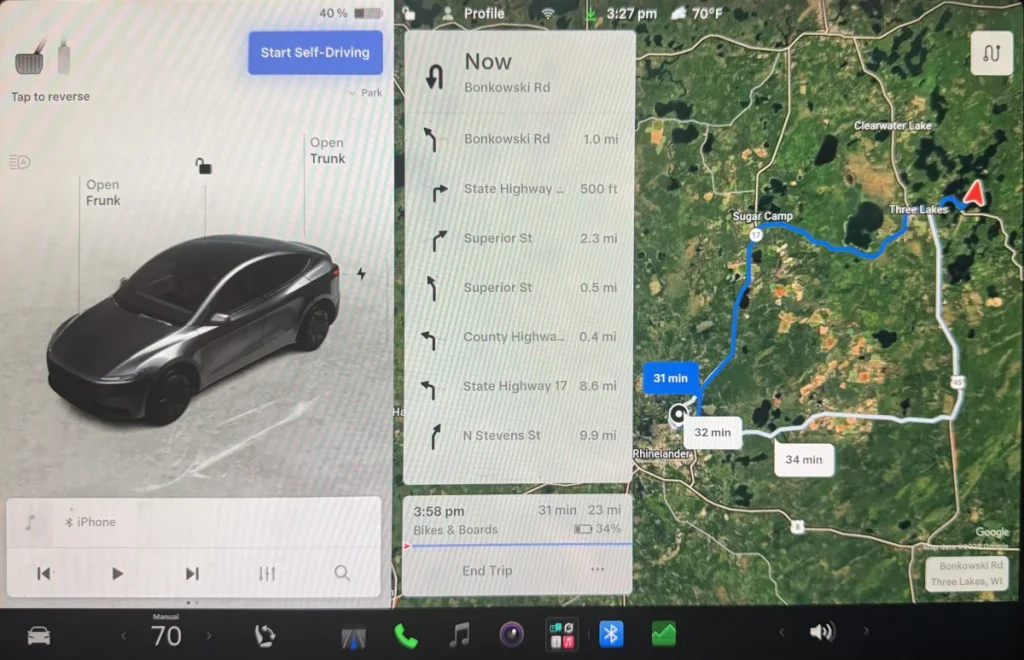
A clear snapshot of this capability occurred on June 11, 2026, in the small community of Three Lakes, Wisconsin. Documented during a routine drive in a base 2026 Tesla Model Y, FSD V14 encountered a sudden, high-stakes driving scenario: an emergency vehicle approaching head-on with active emergency lights and sirens. Without human intervention, the vehicle’s neural network instantly identified the hazard, autonomously maneuvered the car to the curb, executed a safe roadside stop, and remained parked until the emergency vehicle passed. Once the path was clear, FSD seamlessly resumed the journey, executing the entire sequence 100% autonomously.
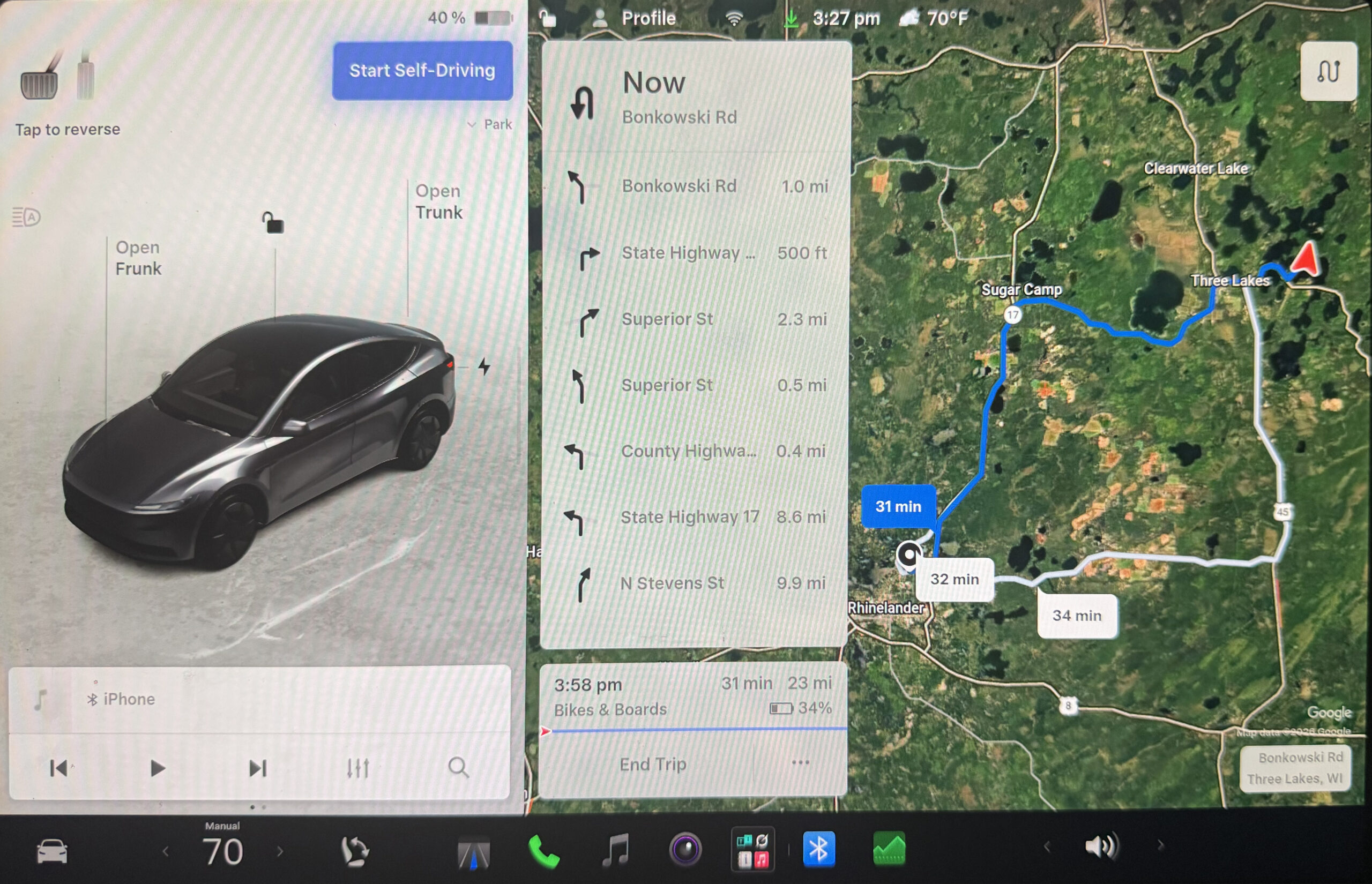
Despite such advanced operational feats, adoption rates across the broader Tesla fleet remain stagnant at approximately 15%. Even among owners who possess vehicles fully hardware-capable of running the latest software, millions choose not to pay the recurring subscription fee or simply fail to engage the system out of driving habit. The software currently requires a manual prompt—such as pressing the Start Self Driving button on the central touchscreen or clicking the right-hand steering wheel scroll button—meaning that default human operation remains the baseline, leaving safety enhancements up to individual consumer choice rather than systemic integration.
Supporting Context & Metrics
To understand the weight of the current debate, one must examine the hard metrics governing traffic safety and financial performance:
- Global and National Toll: In 2025 alone, the United States recorded an estimated 36,640 traffic fatalities. Globally, car crashes claim approximately one million lives every year.
- The Safety Claim: Elon Musk’s public assertion that FSD can mitigate up to 90% of these global fatalities highlights the unprecedented potential of autonomous intervention.
- Adoption Bottlenecks: Tesla’s current FSD uptake sits at roughly 15%. This means that 85% of drivers piloting HW4-equipped Teslas are navigating roadways without the direct benefit of this life-saving technology.
- Financial Trade-Offs: At $99 per month, FSD represents a lucrative income stream for Tesla, generating hundreds of millions of dollars annually (representing an estimated $800 million recurring revenue baseline based on current active user bases). Eliminating this fee entirely without structural compensation would severely impact this software division’s financial contributions.
- Usage Frequency & Insurance Incentives: Among power users, engagement remains high. Data retrieved via onboard AI diagnostics (such as vehicle-integrated assistant tools) indicates that dedicated users achieve up to 95% FSD route utilization. Concurrently, progressive insurance models—such as specialized pilot programs by carriers like Lemonade—have begun offering up to 50% discounts on mileage fees for verified FSD-engaged miles, though geographic availability remains strictly limited to a handful of U.S. states (including Arizona, Colorado, Indiana, Missouri, Oregon, and Tennessee).
Official Statements & Industry Perspectives
The ethical friction surrounding FSD’s pricing model has galvanized discussions regarding corporate social responsibility within the automotive sector.
Advocates for universal safety integration argue that corporate leadership cannot bifurcate its messaging—touting a product as a revolutionary safety savior while simultaneously gating it behind a monthly consumer paywall. The comparison to Nils Bohlin’s 1959 invention of the three-point seatbelt is frequently invoked. Recognizing the life-saving potential of his design, Bohlin and Volvo made the intellectual property freely available to all competing automakers, permanently altering global vehicular safety standards.
Critics of the current Tesla paradigm suggest alternative economic models that decouple software adoption from recurring individual fees. For instance, Tesla could absorb the loss of the $99/month subscription revenue by integrating a modest, one-time safety-infrastructure fee (estimated at roughly $500) into the initial purchase price of new hardware-equipped vehicles. This would instantly clear the economic hurdle for new buyers.

Furthermore, behavioral psychologists and automotive safety analysts point out that making FSD the default operational mode—rather than an opt-in feature requiring active driver engagement—is essential. Just as seatbelts and airbags deploy automatically upon ignition, safety-critical software designed to prevent collisions should arguably operate as the primary baseline, requiring conscious driver override to disengage, rather than conscious engagement to activate.
Industry stakeholders also remain divided on the technical roadmap. While Tesla relies exclusively on a high-definition, camera-based neural network architecture—arguing that human drivers operate successfully using only biological vision—other legacy and startup automakers insist that redundant sensor suites incorporating LiDAR and radar are necessary for safe operation in extreme weather conditions, such as heavy snow or blinding downpours. Nevertheless, proponents of the camera-only system counter that human drivers routinely pull off the road during blinding weather events, and that Tesla’s scalable, cost-effective approach achieves a sufficiently high safety threshold to justify mass deployment.
Future Outlook
As the autonomous vehicle industry moves toward the latter half of the decade, Tesla faces a defining philosophical crossroads. The technological capability of Full Self-Driving has largely outpaced its distribution model.
For FSD to transition from an exclusive, high-margin software perk for tech enthusiasts into a genuine public health asset, structural changes appear inevitable. Pressure will likely mount from consumer advocacy groups, regulatory bodies, and safety organizations for automakers to lower barriers to entry for advanced driver-assistance systems.
Whether Tesla will ultimately follow the historical precedent set by the unpatented seatbelt—or whether it will find innovative financial compromises, such as deeply integrated insurance subsidies, bundled vehicle pricing, or standardized licensing akin to its North American Charging Standard (NACS) breakthrough—remains to be seen. What is clear, however, is that as long as traffic fatalities remain a devastating global reality, the debate over who bears the moral and financial responsibility for deploying life-saving vehicle software will only intensify.



