

Executive Overview
In the modern fitness landscape, millions of hours and billions of dollars are dedicated to optimizing the human kinetic chain. Athletes and fitness enthusiasts meticulously track the hypertrophy of their glutes, the stability of their cores, the mobility of their shoulders, and the endurance of their quadriceps. Yet, the literal foundation of this entire mechanical system—the human foot—is routinely ignored, encased in heavily cushioned, structurally constricting footwear that acts as a sensory deprivation chamber.
The human foot is an evolutionary masterpiece of bioengineering. Comprising 26 bones, 33 joints, and 29 intrinsic muscles, it is designed to function as both a dynamic shock absorber and a rigid lever for propulsion. Despite this complexity, modern lifestyle habits have relegated the foot to an afterthought. We roll our IT bands and ice our hamstrings, yet we squeeze our feet into narrow-toed, highly cushioned sneakers, effectively casting our lower extremities and inducing muscular atrophy.
This investigative report explores a growing paradigm shift in sports science, orthopedics, and longevity medicine: the reclamation of foot health. By examining the biomechanical feedback loops between our soles and the brain, analyzing a structured one-month foot-reconditioning protocol, and synthesizing insights from leading clinical experts, we reveal how restoring intrinsic foot strength is not merely an athletic trend, but a critical prerequisite for lifetime mobility and systemic longevity.
Detailed Chronology: A One-Month Protocol for Kinetic Reclamation
To understand the practical realities of reversing years of footwear-induced dysfunction, this writer undertook a systematic, one-month self-experiment. The objective was simple: integrate targeted foot-reconditioning interventions into daily life and document the structural, neurological, and athletic outcomes.
Below is the chronological breakdown of this four-week transition from restrictive footwear to active, foot-centric movement.
[Phase 1: Days 1-10]       -->   [Phase 2: Days 11-20]        -->   [Phase 3: Days 21-30]
* Toe Spacers Introduced         * Intrinsic Strength Work          * Footwear Audit & Transition
* Barefoot Indoors               * Standing Desk Balance Drills     * Astral TR1 & Move Trainer Tests
* Initial Discomfort & Splay     * Neural Pathway Activation        * Enhanced Balance & Lower Fatigue
Phase 1 (Days 1–10): Sensory Awakening and Structural Realignment
The protocol initiated with two primary interventions: the introduction of silicone toe spacers during sedentary hours and the complete elimination of structured house slippers.

- The Toe Spacer Intervention: Designed to counteract the modern shoe’s tapered toe box—which forces the hallux (big toe) into a valgus position—toe spacers manually restore natural forefoot splay. Initial applications (30 minutes in the evening) yielded immediate, deep muscular discomfort. This was not acute pain, but rather the dull ache of severely restricted intrinsic muscles—such as the abductor hallucis—being forced to stretch and mobilize after years of compression.
- Ditching the Slippers: Removing cushioned house slippers exposed the soles directly to hardwood floors. The immediate sensation was cold and unyielding, revealing how heavily cushioned footwear cushions us not just from impact, but from sensory reality. By the end of Day 10, the initial discomfort of the toe spacers began to subside, replaced by a novel sensation of structural release across the metatarsal arch.
Phase 2 (Days 11–20): Active Neuromuscular Recruitment
With the structural alignment initiated, Phase 2 introduced daily, low-barrier physical therapy exercises targeted at the foot’s intrinsic and extrinsic musculature.
- Short-Foot Exercises: This drill involves pulling the ball of the foot toward the heel without curling the toes, actively lifting the medial longitudinal arch. Initially, the neural connection was incredibly weak; the brain struggled to send clean motor signals to the flexor digitorum brevis. Over several days of practice at a standing desk, the muscular contraction became distinct and repeatable.
- Eccentric Calf Raises: Executed slowly, with a four-second lowering phase, these raises targeted the Achilles tendon and the gastrocnemius-soleus complex, building strength in the lengthened state.
- Gym Training Adjustments: All heavy lifting, including squats and deadlifts, was performed either barefoot or in thin socks. Without the artificial wedge of a traditional training shoe, balance during single-leg movements (such as Bulgarian split squats) required intense, active stabilization from the toes, forcing the foot to grip the floor.
Phase 3 (Days 21–30): The Footwear Audit and Functional Transition
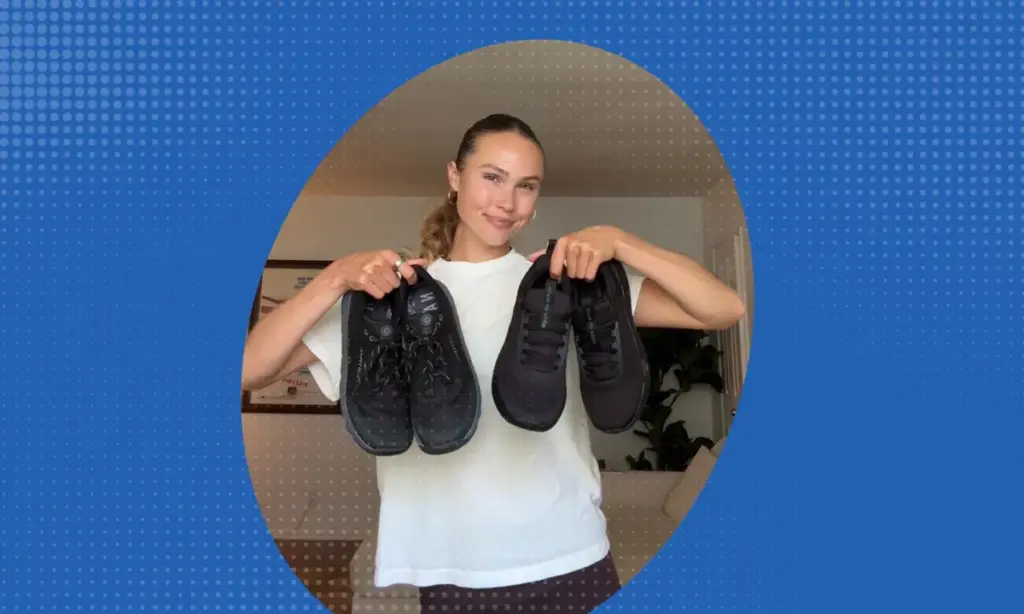
The final phase required a critical assessment of everyday footwear. Traditional athletic and casual shoes were audited for toe-box width, heel-to-toe drop, and sole flexibility. To transition safely without overloading the Achilles tendon, two specific functional models were introduced:
- Astral TR1 Sensi HT: A zero-drop shoe utilizing natural fibers and a wide toe box. Transitioning to this model for daily walks and light training immediately highlighted the restriction of previous footwear. The toes were allowed to splay naturally upon impact, distributing the load across the entire forefoot.
- while on earth’s Move Trainer: Designed with a wide toe box but incorporating a modest 6mm heel-to-toe drop and moderate cushioning, this trainer served as a bridge for high-impact activities. It provided a compromise for athletic training, offering the sensory feedback of a wide toe box while shielding the joints during explosive lateral cuts and high-impact movements.
By Day 30, the cumulative effects of the protocol were undeniable: single-leg stability was drastically improved, post-workout foot fatigue was virtually eliminated, and a heightened sense of proprioception—knowing exactly how the foot was interacting with the ground—became a permanent fixture of daily movement.
Supporting Context & Metrics: The Biomechanics of Neglect
The human foot does not operate in isolation. It is the anchor of the kinetic chain, and its dysfunction has a cascading effect on the entire musculoskeletal system.
+-------------------------------------------------------------+
|                THE KINETIC CHAIN CASCADE                    |
+-------------------------------------------------------------+
|  Restricted/Narrow Shoe Toe Box                             |
|    |                                                        |
|    v                                                        |
|  Atrophy of Intrinsic Foot Muscles & Muted Proprioception    |
|    |                                                        |
|    v                                                        |
|  Loss of Medial Arch Height (Overpronation)                 |
|    |                                                        |
|    v                                                        |
|  Internal Tibial Rotation & Knee Instability               |
|    |                                                        |
|    v                                                        |
|  Anterior Pelvic Tilt & Lumbar Spine Compression            |
+-------------------------------------------------------------+
The Proprioceptive Loop
The sole of the foot is densely populated with thousands of mechanoreceptors (specifically Pacinian corpuscles, Meissner’s corpuscles, and Merkel discs). These specialized nerve endings detect mechanical pressure, shear stress, and vibration. They form a real-time neurological feedback loop with the central nervous system, telling the brain precisely where the body is in space (proprioception) and how to distribute load.
When we wear highly cushioned, rigid shoes, we essentially mute this sensory input. The brain is forced to operate with degraded data, resulting in sub-optimal muscular recruitment patterns. To compensate for this lack of ground feel, the body often strikes the ground harder, paradoxically increasing joint impact forces rather than reducing them.
The Kinetic Chain Cascade
When the intrinsic muscles of the foot atrophy, the medial longitudinal arch collapses, leading to overpronation. The structural consequences of this collapse travel upward:
- The Ankle & Shin: Pronation forces the tibia to rotate internally.
- The Knee: Internal tibial rotation alters the patellar tracking angle, leading to lateral knee pain and patellofemoral syndrome.
- The Hip & Pelvis: The femur rotates internally to compensate, pulling the pelvis into an anterior tilt.
- The Spine: An anterior pelvic tilt increases lumbar lordosis, compressing the lower spinal discs and manifesting as chronic lower back tightness.
Key Biomechanical Metrics
Research in podiatry and sports medicine highlights several key metrics that demonstrate the impact of foot strength on overall health:
- Toe Flexor Strength: Studies indicate that toe flexor strength is a direct predictor of horizontal jump distance and sprinting velocity.
- Gait Speed & Balance: In older populations, a 10% reduction in foot muscular strength is associated with a significantly increased risk of falls and a measurable decline in self-selected walking speed—a key biomarker of biological aging.
- The Narrow Toe Box Penalty: Standard athletic footwear tapers at the toes by up to 20% compared to the natural shape of the human foot, reducing the contact area of the hallux and shifting load distribution laterally, which can lead to bunions (hallux valgus) and neuromas.
Official Statements & Expert Perspectives
To contextualize these findings, we look to leading experts in podiatric medicine, chiropractic neurology, and human gait mechanics.
Dr. Courtney Conley, M.D., a chiropractic physician, clinical director, and one of the world’s foremost authorities on foot and gait mechanics, has long advocated for a fundamental shift in how we view lower-extremity care.
"Declining foot strength correlates directly with reduced gait speed, increased fall risk, and a progressive loss of physical independence as we age," Dr. Conley notes. "These are not merely localized orthopedic concerns. These are systemic, measurable outcomes that accumulate long before most people think to pay attention to their feet."
Dr. Conley describes highly cushioned modern running shoes as "sensory deprivation chambers" for the human body. By dampening the input from the sole’s mechanoreceptors, these shoes strip the brain of vital environmental data. Under load—whether during a heavy barbell squat, a lateral cut on a sports court, or a simple step off a curb—this lack of sensory clarity introduces micro-instabilities. The muscles surrounding the ankle, knee, and hip must work overtime to stabilize the joints, leading to premature fatigue, chronic inflammation, and repetitive strain injuries.

Clinical consensus among progressive physical therapists suggests that treating chronic knee or lower back pain without assessing foot function is akin to repairing the upper floors of a tilting building while ignoring a cracking foundation. Restoring the foot’s natural splay and capacity for sensory feedback is increasingly recognized as a non-negotiable step in rehabilitation and performance training alike.
Future Outlook: The Footwear Paradigm Shift
The fitness and footwear industries are on the cusp of a major transformation. For decades, the commercial market was dominated by the "maximalist cushion" ethos—a marketing-driven race to build the thickest, softest foam midsoles possible. However, as consumer awareness of biomechanics increases, a counter-movement is gaining significant traction.
+-----------------------------------------------------------------------+
|                       THE FOOTWEAR PARADIGM SHIFT                     |
+-----------------------------------------------------------------------+
|  Historical Era (1980s - 2010s)     |  Emerging Era (2020s & Beyond)  |
+-----------------------------------------------------------------------+
|  * Narrow, tapered toe boxes        |  * Wide, anatomically shaped    |
|  * High heel-to-toe drops (10-12mm) |    toe boxes                    |
|  * Maximal, pillowy cushioning      |  * Zero-drop or minimal drop    |
|  * Rigid, supportive arch inserts   |  * Flexible, sensory-rich soles |
|  * Foot treated as passive/fragile  |  * Foot treated as an active,   |
|                                     |    adaptable kinetic engine     |
+-----------------------------------------------------------------------+
We are witnessing the mainstreaming of minimalist and functional footwear. Once reserved for a niche subculture of ultra-marathoners and barefoot purists, wide-toe-box and zero-drop shoes are now entering commercial gyms, cross-training facilities, and corporate offices. Brands like Astral and while on earth are leading this transition, developing shoes that respect human anatomy without sacrificing modern aesthetic standards.
This transition is also influencing the gym floor. Lifters are increasingly trading heavily cushioned running shoes for flat, wide-toed training shoes, or choosing to train in socks or barefoot. This shift is driven by a simple realization: you cannot build a strong, resilient body on top of weak, insulated feet.
In the coming years, we can expect:
- Anatomical Integration: Major athletic brands will likely be forced to widen their standard lasts to accommodate natural toe splay.
- Clinical Re-education: Physical therapy protocols will increasingly mandate barefoot assessment and intrinsic foot strengthening as standard care for lower-back and hip pathologies.
- Longevity Integration: Longevity medicine clinics will routinely measure foot grip strength and hallux deviation as standard biomarkers of physical healthspan.
Ultimately, the human foot is our primary interface with the earth. Every step we take, every load we lift, and every mile we run depends entirely on the 29 muscles working quietly beneath us. To prioritize longevity, athletic durability, and functional movement is to recognize a simple, structural truth: your movement longevity starts from the ground up.



