

Executive Overview
Zambia’s Ministry of Green Economy and Environment (MGEE) has launched a high-stakes, comprehensive investigation into a devastating chemical spill that has severely impacted the vital Kafue River ecosystem in the nation’s resource-rich Copperbelt Province. The contamination event, which came to light on September 28, has been traced back to infrastructure failures at Konkola Copper Mines (KCM)—a major mining asset predominantly owned and operated by U.K.-based multinational conglomerate Vedanta Resources.
Local residents and environmental watchdogs in the Chingola district first sounded the alarm after witnessing an alarming, unnatural discoloration of the Kafue River, accompanied by widespread fish die-offs. Subsequent preliminary water quality tests conducted by government regulators, local water utilities, and the mining corporation itself revealed profoundly elevated levels of turbidity and electrical conductivity downstream. These metrics point to a heavy, unmitigated influx of industrial pollutants into a waterway that serves as a critical lifeline for rural and urban communities alike.
The unfolding ecological crisis has reignited intense, long-standing controversies surrounding the social and environmental footprints of multinational extractive industries operating within Zambia’s foundational copper sector. It also arrives at a politically sensitive juncture: the Zambian government is actively pursuing an ambitious national economic strategy aimed at more than tripling the country’s copper output over the coming years. This push for aggressive industrial expansion heavily relies on recapitalizing key assets like KCM—raising urgent, difficult questions regarding how state regulators plan to balance rapid economic growth with the non-negotiable imperative of environmental protection and public health.
Detailed Chronology of the Disaster
The Discovery: September 28
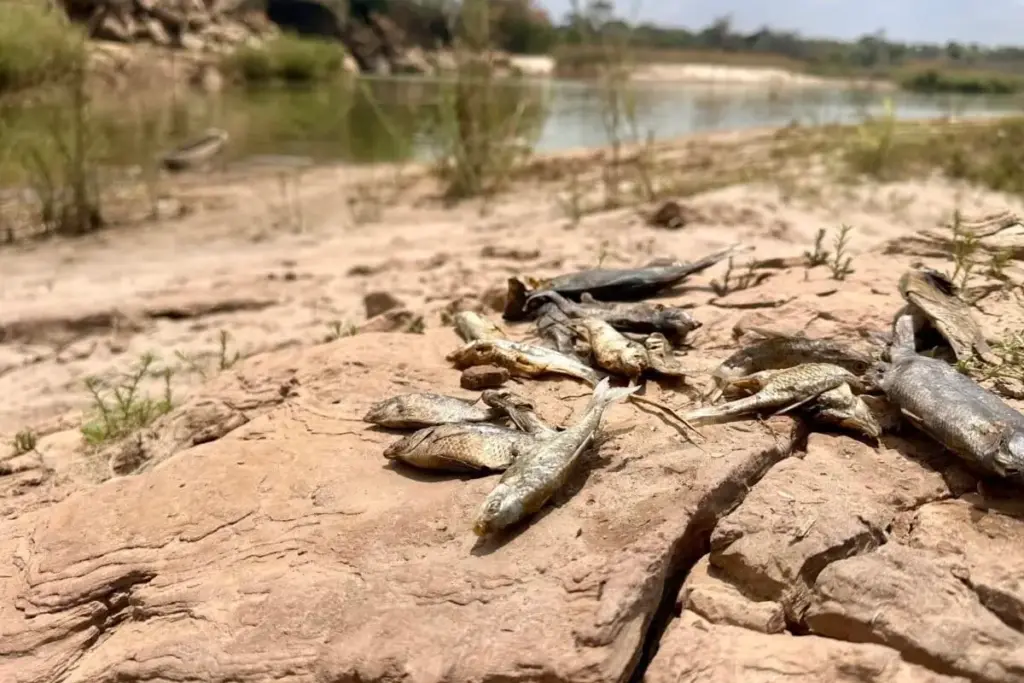
The unfolding catastrophe began in the early hours of September 28, when residents living along the banks of the Kafue River in the Chingola district observed immediate, deeply concerning shifts in their local environment. The river water, typically clear or carrying standard seasonal sediment, transformed into a murky, discolored fluid. Simultaneously, local fishers and community members discovered vast quantities of dead fish floating belly-up or washing ashore, particularly concentrated around biodiversity-rich zones such as the Hippo Pool north of Chingola, where the river narrows into a shallow valley.
For communities residing in the immediate vicinity of the industrial corridor, the sensory evidence of contamination was unmistakable. Local human rights defenders and civil society coordinators noted that the visual discoloration was matched by chemical odors emanating from the water source—a resource that many vulnerable households depend upon directly for daily consumption, bathing, and small-scale agriculture due to a lack of reliable municipal water alternatives.
Regulatory Intervention and Water Quality Testing
As reports of the fish kill and water discoloration circulated rapidly through local networks, regulatory and corporate bodies mobilized to assess the physical damage. Official evaluations were swiftly launched by the Zambia Environmental Management Agency (ZEMA), the local municipal water provider Mulonga Water Supply and Sanitation Company, and KCM’s internal technical teams.
Field assessments and laboratory analyses of water samples collected downstream from the facility confirmed significant anomalies. Key chemical and physical indicators, specifically water turbidity (clarity) and electrical conductivity (signaling high concentrations of dissolved ions and mineral salts), registered at abnormal, elevated levels. While comprehensive toxicology panels were immediately initiated to identify specific heavy metal concentrations and toxic compounds, the preliminary data provided undeniable proof that a substantial industrial discharge had breached the river system.
Official Admissions and Corporate Deflection: September 28 – October 1
By the close of September, government authorities had pinpointed the physical vectors of the spill. According to an official statement issued by Gilbert Siame, Minister of Green Economy and Environment, the disaster was twofold: it originated from a structurally compromised, leaking pipeline at KCM’s tailings leach plant, compounded by an unmitigated overflow from the company’s primary pollution control dam situated on the outskirts of Chingola.
Local activists quickly challenged the narrative of an isolated, accidental overflow. Eugene Mulenga, a Chingola-based human rights activist and coordinator for Caritas, stated publicly that the pollution control dam had reached full capacity prior to the disaster, making an overflow functionally inevitable under standard operational loads. Furthermore, Mulenga alleged that hazardous discharges of this nature are not isolated anomalies but represent a persistent, systemic issue, asserting that industrial releases frequently occur under the cover of darkness while local populations remain entirely exposed to the resulting contamination.
Despite the mounting physical evidence and initial regulatory findings, KCM adopted a defensive posture. On October 1, the corporation released a formal statement contesting direct liability for the spillage. While acknowledging that company representatives had formally notified ZEMA of an incident and requested a fact-based inquiry, KCM distanced itself from direct culpability for the widespread ecological damage. Inquiries directed to corporate communications representatives by investigative journalists remained unanswered by the time of publication, drawing further criticism from transparency advocates.
Supporting Context & Metrics: Infrastructure, Law, and History
The Anatomy of KCM’s Operations and Regulatory Framework
To fully grasp the magnitude of the September 28 spill, one must examine the scale and structural vulnerabilities of Konkola Copper Mines. KCM is widely recognized as one of the largest copper mining and processing entities in Zambia, operating sprawling open-pit and underground mines, concentrators, and a major tailings leach plant designed to extract metal from historical mining waste. Vedanta Resources holds a dominant 80% stake in the enterprise, directing its broader corporate governance and capital expenditure strategies.
Under the current legal framework governing Zambian industry, environmental infractions of this severity carry specific punitive measures. Minister Siame emphasized that the Ministry of Green Economy and Environment is actively consulting with relevant legal and technical stakeholders to determine the appropriate penal sanctions against the polluter, operating under the statutory provisions of the Zambian Environmental Management Act (ZEMA Act).
However, critics and legal experts have frequently pointed out the stark limitations embedded within these statutory penalties. Under the current provisions of the Environmental Management Act, major toxic discharges and hazardous waste violations cap financial penalties at a relatively modest 280,000 Zambian Kwacha (approximately $14,000 USD). For a multinational corporation managing billions of dollars in assets and generating vast revenues, critics argue that such statutory fines function merely as a minor cost of doing business rather than a meaningful deterrent against corporate negligence.
A Troubled Legacy: Historical Precedents and Legal Battles
The events of late September do not occur in a vacuum; rather, they represent the latest chapter in a long, contentious history of environmental degradation and community friction linked to KCM and the wider Zambian Copperbelt.

The most prominent historical precedent dates back to a catastrophic 2008 pollution incident, during which toxic effluent from KCM operations poured into local water systems, severely damaging livelihoods, poisoning agricultural lands, and sickening thousands of local residents. Recognizing the limitations of domestic judicial avenues at the time, approximately 2,500 affected Zambian villagers launched a landmark transnational legal action in the United Kingdom—where parent company Vedanta Resources is headquartered.
The protracted litigation set a vital international precedent regarding the direct legal duty of care owed by multinational parent companies for the environmental and human rights harms committed by their overseas subsidiaries. After more than a decade of fierce legal maneuvering, the landmark case was finally settled out of court in 2021. Under the terms of the settlement, KCM and Vedanta agreed to pay substantial financial compensation to the thousands of affected villagers. Crucially, however, the settlement was structured "without admission of liability," allowing the corporate entities to disclaim formal legal wrongdoing while distributing payouts to mitigate the public relations and legal pressure.
The Political and Economic Pendulum: Liquidation and Revival
The operational history of KCM over the past decade is equally defined by dramatic political interventions and corporate restructurings. In May 2019, the previous Zambian government took the dramatic step of placing KCM into provisional liquidation. State authorities justified the move by citing a catalog of severe corporate grievances, including persistent tax evasion, unpaid debts to local suppliers, chronically inadequate capital investment in upgrading aging mine infrastructure, and a repeated failure to meet basic environmental standards.
The liquidation effectively placed the mining giant into a state-managed limbo for several years, freezing major capital injections and fueling intense negotiations between the Zambian state and Vedanta Resources. However, the political landscape shifted, and by 2024, operations at KCM were officially handed back to Vedanta, allowing the multinational firm to resume active control of the mines and processing facilities.
This corporate revival is deeply tied to broader macroeconomic objectives. The current Zambian administration has staked a significant portion of its economic development platform on aggressively scaling up national mining output, setting an explicit target to more than triple national copper production within the decade. To achieve this ambitious production milestone, the government has welcomed the return of major foreign investors like Vedanta, prioritizing rapid industrial expansion, mineral capitalization, and foreign exchange generation. Yet, the recent disaster in Chingola starkly underscores the inherent perils of this developmental model: when production targets and capital inflows are prioritized over rigorous environmental oversight and infrastructure modernization, local ecosystems and vulnerable communities invariably bear the heaviest costs.
Official Statements and Regulatory Directives
The response from the Zambian government highlights an acute awareness of both the ecological crisis and the political sensitivity surrounding foreign-operated mining assets. In his official briefings, Minister Gilbert Siame outlined clear, mandatory directives issued directly to the leadership of Konkola Copper Mines.
Foremost among these administrative orders is a mandate requiring KCM to execute a comprehensive, independent structural assessment of its entire pollution control infrastructure. This includes an exhaustive audit of all tailings pipelines, holding facilities, retention dams, and associated industrial transit networks across the Chingola operational footprint. The objective of this audit is to identify latent structural weaknesses, prevent secondary leaks, and evaluate whether additional corporate facilities pose an imminent threat to regional ecosystems.
Furthermore, MGEE authorities have announced that independent laboratory testing of water and soil samples remains ongoing. These rigorous assays are designed to detect trace elements of heavy metals (such as copper, cobalt, cadmium, and lead) and other hazardous chemical contaminants that may have settled into the riverbed sediment or bioaccumulated within aquatic food chains.
Minister Siame’s formal communication closed with a stern warning regarding regulatory enforcement:
"The Ministry is consulting with relevant stakeholders on the appropriate penal sanctions against the polluter in accordance with the provisions of the Environmental Management Act."
Despite these strong official pronouncements, civil society groups and local community leaders maintain a posture of cautious skepticism. Past enforcement actions have frequently resulted in drawn-out bureaucratic delays, minimal financial penalties, and a failure to secure long-term infrastructural overhauls. For the residents of Chingola, whose daily lives and survival remain inextricably linked to the health of the Kafue River, government directives must translate into immediate, enforceable remediation and a permanent end to industrial pollution.
Future Outlook: Balancing Economic Ambitions with Ecological Survival
As the dust settles on the immediate emergency response to the September 28 chemical spill, the broader implications for Zambia’s mining sector and regulatory governance loom large. The incident serves as a critical test case for the Zambian government’s ability to enforce accountability upon powerful multinational corporations without stalling the country’s national growth objectives.
Moving forward, several critical pathways will determine the trajectory of environmental governance in the Copperbelt:
- Rigorous Accountability and Enforcement: The willingness of MGEE and ZEMA to apply the maximum punitive measures available under the law—and to push for legislative reforms that increase penalties beyond outdated statutory caps—will signal whether corporate polluters face genuine consequences for ecological damage.
- Infrastructure Modernization: KCM and Vedanta Resources face mounting pressure to move beyond defensive public relations strategies and invest heavily in modernizing aging environmental control infrastructure. Tailings dams and slurry pipelines dating back decades require state-of-the-art engineering upgrades to withstand extreme weather events and operational strain.
- Protection of Public Health and Alternative Livelihoods: Immediate remediation efforts must prioritize the restoration of the Kafue River ecosystem and the provision of safe, reliable, and independent municipal water supplies to vulnerable communities in Chingola, ensuring residents are no longer forced to choose between toxic water and basic survival.
- Balancing Mineral Growth with Sustainability: As Zambia presses forward with its national goal to triple copper production, policymakers must establish ironclad regulatory safeguards. The pursuit of green-transition minerals—such as copper, which is essential for global renewable energy infrastructure—cannot be permitted to destroy the very local environments that sustain the communities living in the shadow of the mines.
Ultimately, the Kafue River spill is far more than an isolated industrial accident; it is a stark reflection of the systemic tensions defining the global extractive economy. How the Zambian government, regulatory bodies, and multinational corporate stakeholders navigate the fallout from this disaster will set a defining precedent for environmental justice, corporate responsibility, and sustainable development across the African continent for years to come.



